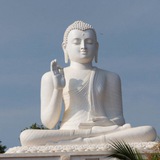
A Perfect Balance - Cultivating equanimity
By Sayadaw U Pandita and Gil Fronsdal
Equanimity, one of the most sublime emotions of Buddhist practice, is the ground for wisdom and freedom and the protector of compassion and love. While some may think of equanimity as dry neutrality or cool aloofness, mature equanimity produces a radiance and warmth of being. The Buddha described a mind filled with equanimity as “abundant, exalted, immeasurable, without hostility, and without ill-will.”
The English word “equanimity” translates two separate Pali words used by the Buddha, upekkha and tatramajjhattata. Upekkha, the more common term, means “to look over” and refers to the equanimity that arises from the power of observation—the ability to see without being caught by what we see. When well developed, such power gives rise to a great sense of peace.
Upekkha can also refer to the spaciousness that comes from seeing a bigger picture. Colloquially, in India the word was sometimes used to mean “to see with patience.” We might understand this as “seeing with understanding.” For example, when we know not to take offensive words personally, we are less likely to react to what was said. And by not reacting there is greater possibility to respond from wisdom and compassion. This form of equanimity is sometimes compared to grandmotherly love. The grandmother clearly loves her grandchildren but, thanks to her experience with her own children, is less likely to be caught up in the drama of the grandchildren’s lives.
Still more qualities of equanimity are revealed by the term tatramajjhattata, a long compound made of simple Pali words. Tatra, meaning “there,” sometimes refers to “all these things.” Majjha means “middle,” and tata means “to stand or to pose.” Put together, the word becomes “to stand in the middle of all this.” As a form of equanimity, this “being in the middle” refers to balance, to remaining centered in the middle of whatever is happening. This form of balance comes from some inner strength or stability. The strong presence of inner calm, well-being, confidence, vitality, or integrity can keep us upright, like ballast keeps a ship upright in strong winds (see “Seven Supports for Equanimity,”). As inner strength develops, for example, from the accumulation of mindfulness in the ordinary moments of life, equanimity follows.
Equanimity is a protection from what are called the Eight Worldly Winds: praise and blame, success and failure, pleasure and pain, fame and disrepute. Becoming attached to or excessively elated with success, praise, fame, or pleasure can be a setup for suffering when the winds of change shift. For example, success can be wonderful, but if it leads to arrogance, we have more to lose in future challenges. Becoming personally invested in praise can tend toward conceit. Identifying with failure, we may feel incompetent or inadequate. Reacting to pain, we may become discouraged. If we understand or feel that our sense of inner well-being is independent of the Eight Winds, we are more likely to remain on an even keel in their midst.
A simple definition of “equanimity,” considering the various Pali roots, is the capacity to not be caught up with what happens to us. We can practice with equanimity by studying the ways that we get caught. Instead of pursuing the ideal of balance and nonreactivity directly, we can give careful attention to how balance is lost and how reactivity is triggered. Trying to fit into some idealistic model of what being equanimous is supposed to look like can all too easily produce such threats to equanimity as indifference, aloofness, rigidity, or complacency. But when the obstacles are understood and removed, then the resulting equanimity can be the foundation for caring, presence, flexibility and diligence.
—Gil Fronsdal
Sayadaw U Pandita on Developing Equanimity
By Sayadaw U Pandita and Gil Fronsdal
Equanimity, one of the most sublime emotions of Buddhist practice, is the ground for wisdom and freedom and the protector of compassion and love. While some may think of equanimity as dry neutrality or cool aloofness, mature equanimity produces a radiance and warmth of being. The Buddha described a mind filled with equanimity as “abundant, exalted, immeasurable, without hostility, and without ill-will.”
The English word “equanimity” translates two separate Pali words used by the Buddha, upekkha and tatramajjhattata. Upekkha, the more common term, means “to look over” and refers to the equanimity that arises from the power of observation—the ability to see without being caught by what we see. When well developed, such power gives rise to a great sense of peace.
Upekkha can also refer to the spaciousness that comes from seeing a bigger picture. Colloquially, in India the word was sometimes used to mean “to see with patience.” We might understand this as “seeing with understanding.” For example, when we know not to take offensive words personally, we are less likely to react to what was said. And by not reacting there is greater possibility to respond from wisdom and compassion. This form of equanimity is sometimes compared to grandmotherly love. The grandmother clearly loves her grandchildren but, thanks to her experience with her own children, is less likely to be caught up in the drama of the grandchildren’s lives.
Still more qualities of equanimity are revealed by the term tatramajjhattata, a long compound made of simple Pali words. Tatra, meaning “there,” sometimes refers to “all these things.” Majjha means “middle,” and tata means “to stand or to pose.” Put together, the word becomes “to stand in the middle of all this.” As a form of equanimity, this “being in the middle” refers to balance, to remaining centered in the middle of whatever is happening. This form of balance comes from some inner strength or stability. The strong presence of inner calm, well-being, confidence, vitality, or integrity can keep us upright, like ballast keeps a ship upright in strong winds (see “Seven Supports for Equanimity,”). As inner strength develops, for example, from the accumulation of mindfulness in the ordinary moments of life, equanimity follows.
Equanimity is a protection from what are called the Eight Worldly Winds: praise and blame, success and failure, pleasure and pain, fame and disrepute. Becoming attached to or excessively elated with success, praise, fame, or pleasure can be a setup for suffering when the winds of change shift. For example, success can be wonderful, but if it leads to arrogance, we have more to lose in future challenges. Becoming personally invested in praise can tend toward conceit. Identifying with failure, we may feel incompetent or inadequate. Reacting to pain, we may become discouraged. If we understand or feel that our sense of inner well-being is independent of the Eight Winds, we are more likely to remain on an even keel in their midst.
A simple definition of “equanimity,” considering the various Pali roots, is the capacity to not be caught up with what happens to us. We can practice with equanimity by studying the ways that we get caught. Instead of pursuing the ideal of balance and nonreactivity directly, we can give careful attention to how balance is lost and how reactivity is triggered. Trying to fit into some idealistic model of what being equanimous is supposed to look like can all too easily produce such threats to equanimity as indifference, aloofness, rigidity, or complacency. But when the obstacles are understood and removed, then the resulting equanimity can be the foundation for caring, presence, flexibility and diligence.
—Gil Fronsdal
Sayadaw U Pandita on Developing Equanimity
Telegram
Buddha
Buddha dharma teachings from the suttas and commentaries
💯1🏆1
According to the Buddha, the way to bring about equanimity is wise attention: to be continually mindful from moment to moment, without a break, based on the intention to develop equanimity. One moment of equanimity causes a succeeding moment of equanimity to arise. Once equanimity is activated, it will be the cause for equanimity to continue and to deepen. It can bring one to deep levels of practice beyond the insight into the arising and passing away of phenomena.
Equanimity does not arise easily in the minds of beginning yogis. Though these yogis may be diligent in trying to be mindful from moment to moment, equanimity comes and goes. The mind will be well-balanced for a little while and then it will go off again. Step by step, equanimity is strengthened. The intervals when it is present grow more prolonged and frequent. Eventually, equanimity becomes strong enough to qualify as a factor of enlightenment. Along with this practice of wise attention, here are five more ways to develop equanimity:
1. Balanced emotion toward all living things
The first and foremost is to have an equanimous attitude toward all living beings. These are your loved ones, including animals. We have a lot of attachment and desire associated with people we love, and also with our pets. Sometimes we can be what we call “crazy” about someone. This experience does not contribute to equanimity, which is a state of balance.
To prepare the ground for equanimity to arise, one should try to cultivate an attitude of nonattachment and equanimity toward the people and animals we love. As worldly people, it may be necessary to have a certain amount of attachment in relationships, but excessive attachment is destructive to us as well as to loved ones. We begin to worry too much over their welfare. Especially in retreat, we should try to put aside such excessive concern and worry for the welfare of our friends.
One reflection that can develop nonattachment is to regard all beings as the heirs of their own karma. People reap the rewards of good karma and suffer the consequences of unwholesome acts. They created this karma under their own volition, and no one can prevent their experiencing the consequences. On the ultimate level, there is nothing you or anybody else can do to save them. If you think in this way, you may worry less about your loved ones.
You can also gain equanimity about beings by reflecting on ultimate reality. Perhaps you can tell yourself that, ultimately speaking, there is only mind and matter. Where is that person you are so wildly in love with? There is only nama and rupa, mind and body, arising and passing away from moment to moment. Which moment are you in love with? You may be able to drive some sense into your heart this way.
One might worry that reflections like this could turn into unfeeling indifference and lead us to abandon a mate or a dear person. This is not the case. Equanimity is not insensitivity, indifference, or apathy. It is simply nonpreferential. Under its influence, one does not push aside the things one dislikes or grasp at the things one prefers. The mind rests in an attitude of balance and acceptance of things as they are. When equanimity, this factor of enlightenment, is present, one abandons both attachment to beings and dislike for them. The texts tell us that equanimity is the cause for the cleansing and purification of one who has deep tendencies toward lust or desire, which is the opposite of equanimity.
2. Balanced emotion toward inanimate things
The second way of developing this factor of enlightenment is to adopt an attitude of balance toward inanimate things: property, clothing, the latest fad on the market. Clothing, for example, will be ripped and stained someday. It will decay and perish because it is impermanent, like everything else. Furthermore, we do not even own it, not in the ultimate sense. Everything is non-self; there is no one to own anything. To develop balance and to cut down attachment, it is helpful to look at material things as transient.
Equanimity does not arise easily in the minds of beginning yogis. Though these yogis may be diligent in trying to be mindful from moment to moment, equanimity comes and goes. The mind will be well-balanced for a little while and then it will go off again. Step by step, equanimity is strengthened. The intervals when it is present grow more prolonged and frequent. Eventually, equanimity becomes strong enough to qualify as a factor of enlightenment. Along with this practice of wise attention, here are five more ways to develop equanimity:
1. Balanced emotion toward all living things
The first and foremost is to have an equanimous attitude toward all living beings. These are your loved ones, including animals. We have a lot of attachment and desire associated with people we love, and also with our pets. Sometimes we can be what we call “crazy” about someone. This experience does not contribute to equanimity, which is a state of balance.
To prepare the ground for equanimity to arise, one should try to cultivate an attitude of nonattachment and equanimity toward the people and animals we love. As worldly people, it may be necessary to have a certain amount of attachment in relationships, but excessive attachment is destructive to us as well as to loved ones. We begin to worry too much over their welfare. Especially in retreat, we should try to put aside such excessive concern and worry for the welfare of our friends.
One reflection that can develop nonattachment is to regard all beings as the heirs of their own karma. People reap the rewards of good karma and suffer the consequences of unwholesome acts. They created this karma under their own volition, and no one can prevent their experiencing the consequences. On the ultimate level, there is nothing you or anybody else can do to save them. If you think in this way, you may worry less about your loved ones.
You can also gain equanimity about beings by reflecting on ultimate reality. Perhaps you can tell yourself that, ultimately speaking, there is only mind and matter. Where is that person you are so wildly in love with? There is only nama and rupa, mind and body, arising and passing away from moment to moment. Which moment are you in love with? You may be able to drive some sense into your heart this way.
One might worry that reflections like this could turn into unfeeling indifference and lead us to abandon a mate or a dear person. This is not the case. Equanimity is not insensitivity, indifference, or apathy. It is simply nonpreferential. Under its influence, one does not push aside the things one dislikes or grasp at the things one prefers. The mind rests in an attitude of balance and acceptance of things as they are. When equanimity, this factor of enlightenment, is present, one abandons both attachment to beings and dislike for them. The texts tell us that equanimity is the cause for the cleansing and purification of one who has deep tendencies toward lust or desire, which is the opposite of equanimity.
2. Balanced emotion toward inanimate things
The second way of developing this factor of enlightenment is to adopt an attitude of balance toward inanimate things: property, clothing, the latest fad on the market. Clothing, for example, will be ripped and stained someday. It will decay and perish because it is impermanent, like everything else. Furthermore, we do not even own it, not in the ultimate sense. Everything is non-self; there is no one to own anything. To develop balance and to cut down attachment, it is helpful to look at material things as transient.
❤1👍1
You might say to yourself, “I’m going to make use of this for a short time. It’s not going to last forever.”
People who get caught up in fads may be compelled to buy each new product that appears on the market. Once this gadget has been bought, another more sophisticated model will soon appear. Such persons throw away the old one and buy a new one. This behavior does not reflect equanimity.
3. Avoiding people who “go crazy”
The third method for developing equanimity as an enlightenment factor is avoiding the company of people who tend to be crazy about people and things. These people have a deep possessiveness. They cling to what they think belongs to them, both people and things. Some people find it difficult to see another person enjoying or using their property.
There is a case of an elder who had a great attachment to pets. It seems that in his monastery he bred a lot of dogs and cats. One day this elder came to my center in Rangoon to do a retreat. When he was meditating, he was practicing under favorable circumstances, but his practice was not very deep. Finally, I had an idea and asked him if he had any pets in his monastery. He brightened up and said, “Oh yes, I have so many dogs and cats. Ever since I came here I’ve been thinking about whether they have enough food to eat and how they’re doing.” I asked him to forget about the animals and concentrate on meditation, and quite soon he was making good progress.
Please do not allow overattachment to loved ones, or even pets, to prevent you from attending meditation retreats that will allow you to deepen your practice and to develop equanimity as a factor of enlightenment.
4. Choosing friends who stay cool
As a fourth method of arousing upekkha, you should choose friends who have no great attachment to beings or possessions. This method of developing equanimity is simply the converse of the preceding one. In choosing such a friend, if you happen to pick the elder I described just now, it could be a bit of a problem.
5. Inclining the mind toward balance
The fifth and last cause for this factor of enlightenment to arise is constantly to incline your mind toward the cultivation of equanimity. When your mind is inclined in this way, it will not wander off to thoughts of your dogs and cats at home, or of your loved ones. It will only become more balanced and harmonious.
Equanimity is of tremendous importance both in the practice and in everyday life. Generally we get either swept away by pleasant and enticing objects, or worked up into a great state of agitation when confronted by unpleasant, undesirable objects. This wild alternation of contraries is nearly universal among human beings. When we lack the ability to stay balanced and unfaltering, we are easily swept into extremes of craving or aversion.
The noscriptures say that when the mind indulges in sensual objects, it becomes agitated. This is the usual state of affairs in the world, as we can observe. In their quest for happiness, people mistake excitement of the mind for real happiness. They never have the chance to experience greater joy that comes with peace and tranquility.
Seven Supports for Equanimity from Gil Fronsdal
One approach to developing equanimity is to cultivate the qualities of mind that support it. Here are seven supports for equanimity:
1. Integrity
When we live and act with integrity or virtue, we feel confident about our actions and words, which results in the equanimity of blamelessness. The ancient Buddhist texts speak of being able to go into any assembly of people and feel blameless.
2. Faith
While any kind of faith can provide equanimity, faith grounded in wisdom is especially powerful. The Pali word for faith, saddha, is also translated as “conviction” or confidence. If we have confidence, for example, in our ability to engage in a spiritual practice, then we are more likely to meet its challenges with equanimity.
3. A well-developed mind
People who get caught up in fads may be compelled to buy each new product that appears on the market. Once this gadget has been bought, another more sophisticated model will soon appear. Such persons throw away the old one and buy a new one. This behavior does not reflect equanimity.
3. Avoiding people who “go crazy”
The third method for developing equanimity as an enlightenment factor is avoiding the company of people who tend to be crazy about people and things. These people have a deep possessiveness. They cling to what they think belongs to them, both people and things. Some people find it difficult to see another person enjoying or using their property.
There is a case of an elder who had a great attachment to pets. It seems that in his monastery he bred a lot of dogs and cats. One day this elder came to my center in Rangoon to do a retreat. When he was meditating, he was practicing under favorable circumstances, but his practice was not very deep. Finally, I had an idea and asked him if he had any pets in his monastery. He brightened up and said, “Oh yes, I have so many dogs and cats. Ever since I came here I’ve been thinking about whether they have enough food to eat and how they’re doing.” I asked him to forget about the animals and concentrate on meditation, and quite soon he was making good progress.
Please do not allow overattachment to loved ones, or even pets, to prevent you from attending meditation retreats that will allow you to deepen your practice and to develop equanimity as a factor of enlightenment.
4. Choosing friends who stay cool
As a fourth method of arousing upekkha, you should choose friends who have no great attachment to beings or possessions. This method of developing equanimity is simply the converse of the preceding one. In choosing such a friend, if you happen to pick the elder I described just now, it could be a bit of a problem.
5. Inclining the mind toward balance
The fifth and last cause for this factor of enlightenment to arise is constantly to incline your mind toward the cultivation of equanimity. When your mind is inclined in this way, it will not wander off to thoughts of your dogs and cats at home, or of your loved ones. It will only become more balanced and harmonious.
Equanimity is of tremendous importance both in the practice and in everyday life. Generally we get either swept away by pleasant and enticing objects, or worked up into a great state of agitation when confronted by unpleasant, undesirable objects. This wild alternation of contraries is nearly universal among human beings. When we lack the ability to stay balanced and unfaltering, we are easily swept into extremes of craving or aversion.
The noscriptures say that when the mind indulges in sensual objects, it becomes agitated. This is the usual state of affairs in the world, as we can observe. In their quest for happiness, people mistake excitement of the mind for real happiness. They never have the chance to experience greater joy that comes with peace and tranquility.
Seven Supports for Equanimity from Gil Fronsdal
One approach to developing equanimity is to cultivate the qualities of mind that support it. Here are seven supports for equanimity:
1. Integrity
When we live and act with integrity or virtue, we feel confident about our actions and words, which results in the equanimity of blamelessness. The ancient Buddhist texts speak of being able to go into any assembly of people and feel blameless.
2. Faith
While any kind of faith can provide equanimity, faith grounded in wisdom is especially powerful. The Pali word for faith, saddha, is also translated as “conviction” or confidence. If we have confidence, for example, in our ability to engage in a spiritual practice, then we are more likely to meet its challenges with equanimity.
3. A well-developed mind
👍2❤1
Much as we might develop physical strength, balance, and stability of the body in a gym, so too can we develop strength, balance, and stability of the mind. This is done through practices that cultivate calm, concentration, and mindfulness. When the mind is calm, we are less likely to be blown about by the worldly winds.
4. Well-being
In Buddhism, it’s considered appropriate and helpful to cultivate and enhance our well-being. It is all too easy to overlook the well-being that is easily available in daily life. Even taking time to enjoy one’s tea or the sunset can be a training in letting in well-being.
5. Wisdom
Wisdom can teach us to separate people’s actions from who they are. We can agree or disagree with their actions, but remain balanced in our relationship with a person. Or we can understand that our own thoughts and impulses are the result of impersonal conditions. By not taking them so personally, we are more likely to stay at ease with their arising.
One of the most powerful ways to use wisdom to facilitate equanimity is to be mindful of when equanimity is absent. Honest awareness of what makes us imbalanced helps us to learn how to find balance. Wisdom can also be an important factor in learning to have an accepting awareness, to be present without the mind or heart contracting or resisting.
6. Insight
Insight is a deep seeing into the nature of things as they are. One of the primary insights is the nature of impermanence. In the deepest forms of insight, we see that things change so quickly that we can’t hold onto anything, and eventually the mind lets go of clinging. Letting go brings equanimity; the greater the letting go, the deeper the equanimity.
7. Freedom
Freedom comes when we begin to let go of our reactive tendencies. We can get a taste of what this means by noticing areas in which we were once reactive but are no longer so. For example, some issues that upset us when we were teenagers prompt no reaction at all now that we are adults. In Buddhist practice, we work to expand the range of life experiences in which we are free.
The Buddha on Equanimity
As a solid mass of rock
Is not stirred by the wind,
So a sage is not moved
By praise and blame.
As a deep lake
Is clear and undisturbed,
So a sage becomes clear
Upon hearing the Dharma.
Virtuous people always let go.
They don’t prattle about pleasures and desires.
Touched by happiness and then by suffering,
The sage shows no sign of being elated or depressed.
—Dhammapada 81-83
When a practitioner has discerned formations by attributing the three characteristics [non-self, impermanence, and suffering] to them and seeing them as empty in this way, he abandons both terror and delight, and becomes indifferent to them and neutral. The practitioner neither takes them as ”I” nor as “mine” and is like a person who has divorced a spouse [and in so doing become unaffected by the doings of the ex-spouse).
—Visuddhimagga 21.61
Equanimity is characterized as promoting neutrality toward all beings. Its function is to see equality in beings. It is manifested as the quieting of resentment and approval. Its proximate cause is seeing ownership of deeds [karma] thus:
“Beings are owners of their deeds. Whose [if not theirsl is the choice by which they will become happy, or will get free from suffering, or will not fall away from the success they have reached?” It succeeds when it makes resentment and approval subside, and it fails when it produces the equanimity of unknowing.
—Visuddhimagga 9.96
Rahula, develop meditation that is like the earth, for then agreeable and disagreeable sensory impressions will not take charge of your mind. Just as when people throw what is clean and unclean on the earth—feces, urine, saliva, pus, or blood—the earth is not horrified, humiliated, or disgusted by it; in the same way, agreeable and disagreeable sensory impressions will not take charge of you mind when you develop meditation like the earth.
—Majjhima-nikaya 62
4. Well-being
In Buddhism, it’s considered appropriate and helpful to cultivate and enhance our well-being. It is all too easy to overlook the well-being that is easily available in daily life. Even taking time to enjoy one’s tea or the sunset can be a training in letting in well-being.
5. Wisdom
Wisdom can teach us to separate people’s actions from who they are. We can agree or disagree with their actions, but remain balanced in our relationship with a person. Or we can understand that our own thoughts and impulses are the result of impersonal conditions. By not taking them so personally, we are more likely to stay at ease with their arising.
One of the most powerful ways to use wisdom to facilitate equanimity is to be mindful of when equanimity is absent. Honest awareness of what makes us imbalanced helps us to learn how to find balance. Wisdom can also be an important factor in learning to have an accepting awareness, to be present without the mind or heart contracting or resisting.
6. Insight
Insight is a deep seeing into the nature of things as they are. One of the primary insights is the nature of impermanence. In the deepest forms of insight, we see that things change so quickly that we can’t hold onto anything, and eventually the mind lets go of clinging. Letting go brings equanimity; the greater the letting go, the deeper the equanimity.
7. Freedom
Freedom comes when we begin to let go of our reactive tendencies. We can get a taste of what this means by noticing areas in which we were once reactive but are no longer so. For example, some issues that upset us when we were teenagers prompt no reaction at all now that we are adults. In Buddhist practice, we work to expand the range of life experiences in which we are free.
The Buddha on Equanimity
As a solid mass of rock
Is not stirred by the wind,
So a sage is not moved
By praise and blame.
As a deep lake
Is clear and undisturbed,
So a sage becomes clear
Upon hearing the Dharma.
Virtuous people always let go.
They don’t prattle about pleasures and desires.
Touched by happiness and then by suffering,
The sage shows no sign of being elated or depressed.
—Dhammapada 81-83
When a practitioner has discerned formations by attributing the three characteristics [non-self, impermanence, and suffering] to them and seeing them as empty in this way, he abandons both terror and delight, and becomes indifferent to them and neutral. The practitioner neither takes them as ”I” nor as “mine” and is like a person who has divorced a spouse [and in so doing become unaffected by the doings of the ex-spouse).
—Visuddhimagga 21.61
Equanimity is characterized as promoting neutrality toward all beings. Its function is to see equality in beings. It is manifested as the quieting of resentment and approval. Its proximate cause is seeing ownership of deeds [karma] thus:
“Beings are owners of their deeds. Whose [if not theirsl is the choice by which they will become happy, or will get free from suffering, or will not fall away from the success they have reached?” It succeeds when it makes resentment and approval subside, and it fails when it produces the equanimity of unknowing.
—Visuddhimagga 9.96
Rahula, develop meditation that is like the earth, for then agreeable and disagreeable sensory impressions will not take charge of your mind. Just as when people throw what is clean and unclean on the earth—feces, urine, saliva, pus, or blood—the earth is not horrified, humiliated, or disgusted by it; in the same way, agreeable and disagreeable sensory impressions will not take charge of you mind when you develop meditation like the earth.
—Majjhima-nikaya 62
❤1👍1
Gil Fronsdal teaches at the Insight Meditation Center and at Spirit Rock Meditation Center. He has practiced extensively in the Soto Zen and Theravada Buddhist traditions. He is the author of The Issue at Hand: Essays on Buddhist Mindfulness Practice and the translator of The Dhammapada: A New Translation of the Buddhist Classic.
Sayadaw U Pandita (1921–2016) served as the abbot of Panditarama Monastery and Meditation Center in Yangon (Rangoon).
===
Buddha dharma teachings channel:
https://news.1rj.ru/str/lorddivinebuddha
_
Sayadaw U Pandita (1921–2016) served as the abbot of Panditarama Monastery and Meditation Center in Yangon (Rangoon).
===
Buddha dharma teachings channel:
https://news.1rj.ru/str/lorddivinebuddha
_
Telegram
Buddha
Buddha dharma teachings from the suttas and commentaries
💯1🏆1
Forwarded from Buddha Dharma books
Free Buddha Dharma ebook
Ovadakatha
By Mahasi Sayadaw Gyi
This “Ovadakatha” were delivered by Mahasi Sayadaw in 1972. It was translated into English by U Sunanda (Dr. Than Naung) and was printed in December 1995 by the Mahasi Buddha Sasana Nuggaha Organization. Venerable Mahasi Sayadaw dedicated these speeches (discourses) especially to the Dhamma Kathikas, the meditation teachers how to preach precisely and correctly to promote and encourage the Vipassana Insight Meditation in accordance with the Theravada Tradition.
I have also found that Mahasi Sayadaw was extremely strict upon his disciples, instructing how they should put their utmost effort upon practising Vipassana Meditation, and to observe and follow the teachings and rules of Buddhist Religion. He also instructed how they should teach, instruct and guide the meditator precisely, and to maintain the meditation master’s qualities.
He also stated how his disciples should practice themself the morality, concentration and wisdom to the fullest extent, also not to attach on dwelling, relatives and material properties. He taught how to avoid using statements and expression or criticisms those are detrimental or degrading ourselves.
So, after reading this book you will understand how Mahasi Sayadaw has the deep dedication effort on his disciples to become the eminent meditation masters, and his untiring effort upon propagating Mahasi Vipassana Meditation.
Free download available:
http://www.mediafire.com/file/c5gyswhatl9wt3n/
=============
Ovadakatha
By Mahasi Sayadaw Gyi
This “Ovadakatha” were delivered by Mahasi Sayadaw in 1972. It was translated into English by U Sunanda (Dr. Than Naung) and was printed in December 1995 by the Mahasi Buddha Sasana Nuggaha Organization. Venerable Mahasi Sayadaw dedicated these speeches (discourses) especially to the Dhamma Kathikas, the meditation teachers how to preach precisely and correctly to promote and encourage the Vipassana Insight Meditation in accordance with the Theravada Tradition.
I have also found that Mahasi Sayadaw was extremely strict upon his disciples, instructing how they should put their utmost effort upon practising Vipassana Meditation, and to observe and follow the teachings and rules of Buddhist Religion. He also instructed how they should teach, instruct and guide the meditator precisely, and to maintain the meditation master’s qualities.
He also stated how his disciples should practice themself the morality, concentration and wisdom to the fullest extent, also not to attach on dwelling, relatives and material properties. He taught how to avoid using statements and expression or criticisms those are detrimental or degrading ourselves.
So, after reading this book you will understand how Mahasi Sayadaw has the deep dedication effort on his disciples to become the eminent meditation masters, and his untiring effort upon propagating Mahasi Vipassana Meditation.
Free download available:
http://www.mediafire.com/file/c5gyswhatl9wt3n/
=============
🏆2💯1
Namakāra Gāthā
Araham Sammā-Sambuddho Bhagavā,
Buddham Bhagavantam abhivādemi.
Svākkhāto Bhagavatā Dhammo,
Dhammam namassāmi.
Supaṭipanno Bhagavato sāvaka-sangho,
Sangham namāmi.
The Blessed One is the Arahant, the Perfectly and Fully Awakened One;
I pay homage to the Buddha, the Blessed One.
The Dhamma is well-expounded by the Blessed One;
I pay homage to the Dhamma.
The Saṅgha of the Blessed One's disciples has practiced well;
I pay homage to the Saṅgha.
Araham Sammā-Sambuddho Bhagavā,
Buddham Bhagavantam abhivādemi.
Svākkhāto Bhagavatā Dhammo,
Dhammam namassāmi.
Supaṭipanno Bhagavato sāvaka-sangho,
Sangham namāmi.
The Blessed One is the Arahant, the Perfectly and Fully Awakened One;
I pay homage to the Buddha, the Blessed One.
The Dhamma is well-expounded by the Blessed One;
I pay homage to the Dhamma.
The Saṅgha of the Blessed One's disciples has practiced well;
I pay homage to the Saṅgha.
❤1🥰1
Dhammapada Verse 122
Bilalapadakasetthi Vatthu
Mavamannetha punnassa
na mandam agamissati
udabindunipatena
udakumbhopi purati
dhiro purati punnassa
thokam thokampi acinam.
Verse 122: One should not think lightly of doing good, imagining 'A little will not affect me'; just as a water-jar is filled up by falling drops of rain, so also, the wise one is filled up with merit, by accumulating it little by little.
The Story of Bilalapadaka
While residing at the Jetavana monastery, the Buddha uttered Verse (122) of this book, with reference to Bilalapadaka, a rich man.
Once, a man from Savatthi, having heard a discourse given by the Buddha, was very much impressed, and decided to practise what was taught by the Buddha. The exhortation was to give in charity not only by oneself but also to get others to do so and that by so doing one would gain much merit and have a large number of followers in the next existence. So, that man invited the Buddha and all the resident bhikkhus in the Jetavana monastery for alms-food the next day. Then he went round to each one of the houses and informed the residents that alms-food would he offered the next day to the Buddha and other bhikkhus and so to contribute according to their wishes. The rich man Bilalapadaka seeing the man goings round from house to house disapproved of his behaviour and felt a strong dislike for him and murmured to himself, "O this wretched man! Why did he not invite as many bhikkhus as he could himself offer alms, instead of going round coaxing people?" So he asked the man to bring his bowl and into this bowl, he put only a little rice, only a little butter, only a little molass. These were taken away separately and not mixed with what others had given. The rich men could not understand why his things were kept separately, and he thought perhaps that man wanted others to know that a rich man like him had contributed very little and so put him to shame. Therefore, he sent a servant to find out.
The promoter of charity put a little of everything that was given by the rich man into various pots of rice and curry and sweetmeats so that the rich man may gain much merit. His servant reported what he had seen; but Bilalapadaka did not get the meaning and was not sure of the intention of the promoter of charity. However, the next day he went to the place where alms-food was being offered. At the same time, he took a knife with him, intending to kill the chief promoter of charity, if he were to reveal in public just how little a rich man like him had contributed.
But this promoter of charity said to the Buddha, "Venerable Sir, this charity is a joint offering of all; whether one has given much or little is of no account; each one of us has given in faith and generosity; so may all of us gain equal merit." When he heard those words, Bilalpadaka realized that he had wronged the man and pondered that if he were not to own up his mistake and ask the promoter of charity to pardon him, he would he reborn in one of the four lower worlds (apayas). So he said, "My friend, I have done you a great wrong by thinking ill of you; please forgive me." The Buddha heard the rich man asking for pardon, and on enquiry found out the reason. So, the Buddha said, "My disciple, you should not think lightly of a good deed, however small it may be, for small deeds will become big if you do them habitually."
Then the Buddha spoke in verse as follows:
Verse 122: One should not think lightly of doing good, imagining 'A little will not affect me'; just as a water-jar is filled up by falling drops of rain, so also, the wise one is filled up with merit, by accumulating it little by little.
At the end of the discourse, Bilalapadaka the rich man attained Sotapatti Fruition.
Dhammapada, beloved and favorite teachings of the Buddha channel:
https://news.1rj.ru/str/dhammapadas
====================
Bilalapadakasetthi Vatthu
Mavamannetha punnassa
na mandam agamissati
udabindunipatena
udakumbhopi purati
dhiro purati punnassa
thokam thokampi acinam.
Verse 122: One should not think lightly of doing good, imagining 'A little will not affect me'; just as a water-jar is filled up by falling drops of rain, so also, the wise one is filled up with merit, by accumulating it little by little.
The Story of Bilalapadaka
While residing at the Jetavana monastery, the Buddha uttered Verse (122) of this book, with reference to Bilalapadaka, a rich man.
Once, a man from Savatthi, having heard a discourse given by the Buddha, was very much impressed, and decided to practise what was taught by the Buddha. The exhortation was to give in charity not only by oneself but also to get others to do so and that by so doing one would gain much merit and have a large number of followers in the next existence. So, that man invited the Buddha and all the resident bhikkhus in the Jetavana monastery for alms-food the next day. Then he went round to each one of the houses and informed the residents that alms-food would he offered the next day to the Buddha and other bhikkhus and so to contribute according to their wishes. The rich man Bilalapadaka seeing the man goings round from house to house disapproved of his behaviour and felt a strong dislike for him and murmured to himself, "O this wretched man! Why did he not invite as many bhikkhus as he could himself offer alms, instead of going round coaxing people?" So he asked the man to bring his bowl and into this bowl, he put only a little rice, only a little butter, only a little molass. These were taken away separately and not mixed with what others had given. The rich men could not understand why his things were kept separately, and he thought perhaps that man wanted others to know that a rich man like him had contributed very little and so put him to shame. Therefore, he sent a servant to find out.
The promoter of charity put a little of everything that was given by the rich man into various pots of rice and curry and sweetmeats so that the rich man may gain much merit. His servant reported what he had seen; but Bilalapadaka did not get the meaning and was not sure of the intention of the promoter of charity. However, the next day he went to the place where alms-food was being offered. At the same time, he took a knife with him, intending to kill the chief promoter of charity, if he were to reveal in public just how little a rich man like him had contributed.
But this promoter of charity said to the Buddha, "Venerable Sir, this charity is a joint offering of all; whether one has given much or little is of no account; each one of us has given in faith and generosity; so may all of us gain equal merit." When he heard those words, Bilalpadaka realized that he had wronged the man and pondered that if he were not to own up his mistake and ask the promoter of charity to pardon him, he would he reborn in one of the four lower worlds (apayas). So he said, "My friend, I have done you a great wrong by thinking ill of you; please forgive me." The Buddha heard the rich man asking for pardon, and on enquiry found out the reason. So, the Buddha said, "My disciple, you should not think lightly of a good deed, however small it may be, for small deeds will become big if you do them habitually."
Then the Buddha spoke in verse as follows:
Verse 122: One should not think lightly of doing good, imagining 'A little will not affect me'; just as a water-jar is filled up by falling drops of rain, so also, the wise one is filled up with merit, by accumulating it little by little.
At the end of the discourse, Bilalapadaka the rich man attained Sotapatti Fruition.
Dhammapada, beloved and favorite teachings of the Buddha channel:
https://news.1rj.ru/str/dhammapadas
====================
Telegram
Dhammapada - Buddha Dharma Teachings
Daily teachings of the Dhammapada, beloved and favorite teachings of the Buddha
🏆2💯1
Dhammapada Verse 123
Mahadhanavanija Vatthu
Vanijova bhayam maggam
appasattho mahaddhano
visam jivitukamova
papani parivajjaye.
Verse 123: Just as a wealthy merchant with few attendants avoids a dangerous road, just as one who desires to go on living avoids poison, so also, one should avoid evil.
The Story of Mahadhana
While residing at the Jetavana monastery, the Buddha uttered Verse (123) of this book, with reference to Mahadhana the merchant.
Mahadhana was a rich merchant from Savatthi. On one occasion, five hundred robbers were planning to rob him, but thy did not get the chance to rob him. In the meantime, they heard that the merchant would soon be going out with five hundred carts loaded with valuable merchandise. The merchant Mahadhana also invited the bhikkhus who would like to go on the same journey to accompany him, and he promised to look to their needs on the way. So five hundred bhikkhus accompanied him. The robbers got news of the trip and went ahead to lie in wait for the caravan of the merchant. But the merchant stopped at the outskirts of the forest where the robbers were waiting. The caravan was to move on after camping there for a few days. The robbers got the news of the impending departure and made ready to loot the caravan; the merchant, in his turn, also got news of the movements of the bandits and he decided to return home. The bandits now heard that the merchant would go home; so they waited on the homeward way. Some villagers sent word to the merchant about the movements of the bandits, and the merchant finally decided to remain in the village for some time. When he told the bhikkhus about his decision, the bhikkhus returned to Savatthi by themselves.
On arrival at the Jetavana monastery they went to the Buddha and informed him about the cancellation of their trip. To then, the Buddha said, "Bhikkhus, Mahadhana keeps away from the journey beset with bandits; one who does not want to die keeps away from poison; so also, a wise bhikkhu, realizing that the three levels of existence* are like a journey beset with, danger, should strive to keep away from doing evil."
Then the Buddha spoke in verse as follows:
Verse 123: Just as a wealthy merchant with few attendants avoids a dangerous road, just as one who desires to go on living avoids poison, so also, one should avoid evil.
At the end of the discourse, those five hundred bhikkhus attained Sotapatti Fruition.
*The three levels of existence are:
(a) Kamabhava, the level of sensuous existence; comprising the eleven realms of sense desire;
(b) Rupahbava, the level of fine material existence: comprising sixteen of the realms of Brahmas;
(c) Arupahbava, the level of non-material existence; comprising four realms of the upper Brahmas.
Buddha dharma teachings channel:
https://invite.viber.com/?g2=AQAKw1y3rv%2F6sk61PI2W4izuIiaEZj8YZujhY1tSzL%2B07s7rFnVFDAd0bAYFaMLw
====================
Mahadhanavanija Vatthu
Vanijova bhayam maggam
appasattho mahaddhano
visam jivitukamova
papani parivajjaye.
Verse 123: Just as a wealthy merchant with few attendants avoids a dangerous road, just as one who desires to go on living avoids poison, so also, one should avoid evil.
The Story of Mahadhana
While residing at the Jetavana monastery, the Buddha uttered Verse (123) of this book, with reference to Mahadhana the merchant.
Mahadhana was a rich merchant from Savatthi. On one occasion, five hundred robbers were planning to rob him, but thy did not get the chance to rob him. In the meantime, they heard that the merchant would soon be going out with five hundred carts loaded with valuable merchandise. The merchant Mahadhana also invited the bhikkhus who would like to go on the same journey to accompany him, and he promised to look to their needs on the way. So five hundred bhikkhus accompanied him. The robbers got news of the trip and went ahead to lie in wait for the caravan of the merchant. But the merchant stopped at the outskirts of the forest where the robbers were waiting. The caravan was to move on after camping there for a few days. The robbers got the news of the impending departure and made ready to loot the caravan; the merchant, in his turn, also got news of the movements of the bandits and he decided to return home. The bandits now heard that the merchant would go home; so they waited on the homeward way. Some villagers sent word to the merchant about the movements of the bandits, and the merchant finally decided to remain in the village for some time. When he told the bhikkhus about his decision, the bhikkhus returned to Savatthi by themselves.
On arrival at the Jetavana monastery they went to the Buddha and informed him about the cancellation of their trip. To then, the Buddha said, "Bhikkhus, Mahadhana keeps away from the journey beset with bandits; one who does not want to die keeps away from poison; so also, a wise bhikkhu, realizing that the three levels of existence* are like a journey beset with, danger, should strive to keep away from doing evil."
Then the Buddha spoke in verse as follows:
Verse 123: Just as a wealthy merchant with few attendants avoids a dangerous road, just as one who desires to go on living avoids poison, so also, one should avoid evil.
At the end of the discourse, those five hundred bhikkhus attained Sotapatti Fruition.
*The three levels of existence are:
(a) Kamabhava, the level of sensuous existence; comprising the eleven realms of sense desire;
(b) Rupahbava, the level of fine material existence: comprising sixteen of the realms of Brahmas;
(c) Arupahbava, the level of non-material existence; comprising four realms of the upper Brahmas.
Buddha dharma teachings channel:
https://invite.viber.com/?g2=AQAKw1y3rv%2F6sk61PI2W4izuIiaEZj8YZujhY1tSzL%2B07s7rFnVFDAd0bAYFaMLw
====================
Viber
Buddha
Buddha dharma teachings from the suttas and commentaries from Theravada tradition
🏆2👍1💯1
Forwarded from Buddha Dharma books
Free Buddha Dharma ebook
The Buddha and His Dhamma
By Dr. Bhimrao Ramji Ambedkar
The Buddha and His Dhamma, is a 1957 treatise on Buddha's life and philosophy. It was the last work of Indian/Bharat statesman and scholar B. R. Ambedkar. The text is treated as noscripture for those who follow Navayana Buddhism.
Navayāna (Devanagari: नवयान, IAST: Navayāna, meaning "New Vehicle"), otherwise known as Navayāna Buddhism, refers to the modern re-interpretation of Buddhism founded and developed by the Indian jurist, social reformer, and scholar B. R. Ambedkar, it is otherwise called Neo-Buddhism and Ambedkarite Buddhism.
Free download available:
http://ftp.budaedu.org/ebooks/pdf/EN079.pdf
=============
The Buddha and His Dhamma
By Dr. Bhimrao Ramji Ambedkar
The Buddha and His Dhamma, is a 1957 treatise on Buddha's life and philosophy. It was the last work of Indian/Bharat statesman and scholar B. R. Ambedkar. The text is treated as noscripture for those who follow Navayana Buddhism.
Navayāna (Devanagari: नवयान, IAST: Navayāna, meaning "New Vehicle"), otherwise known as Navayāna Buddhism, refers to the modern re-interpretation of Buddhism founded and developed by the Indian jurist, social reformer, and scholar B. R. Ambedkar, it is otherwise called Neo-Buddhism and Ambedkarite Buddhism.
Free download available:
http://ftp.budaedu.org/ebooks/pdf/EN079.pdf
=============
❤2👍1