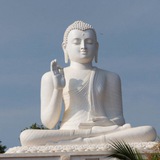
Dear One, I Am Here for You
Using mantras as an expression of love
By Thich Nhat Hanh
In the springtime, thousands of different kinds of flowers bloom. Your heart can also bloom. You can let your heart open up to the world. Love is possible—do not be afraid of it. Love is indispensable to life, and if in the past you have suffered because of love, you can learn how to love again.
The practice of mindfulness will help you to love properly, in such a way that harmony, freedom, and joy are possible. The true declaration of love is, “Dear one, I am here for you,” because the most precious gift you can give to your loved one is your true presence, with body and mind united in solidity and freedom.
You also have to learn how to speak all over again. When you speak with 100 percent of your being, your speech becomes a mantra. In Buddhism, a mantra is a sacred formula that has the power to transform reality. You don’t need to practice mantras in some foreign language like Sanskrit or Tibetan. You can practice in your own beautiful language: for if your body and mind are unified in mindfulness, then whatever you say becomes a mantra.
After you have practiced walking meditation or mindfulness of the breath for two or three minutes, you are here, really alive, truly present. You look at the person you love with a smile, and you say the first mantra: “Dear one, I am here for you.” You know that if you are here, then your beloved is here also. Life, with all its miracles, is here, and among those miracles is the person before you, the one you love.
You can say this mantra a few times a day: “Dear one, I am here for you.” And now that you have the ability to recognize the presence of this other person, you can practice a second mantra: “Dear one, I know that you are here, alive, and that makes me very happy.” This mantra enables you to recognize the presence of the other person as something very precious, a miracle. It is the mantra of deep appreciation for his or her presence.
When people feel appreciated in this way—when they feel embraced by the mindful attention of another—then they will open and blossom like a flower. There is no doubt that you can make this happen through the energy of mindfulness. You can do it right away, even today, and you will see that the transformation it brings about is instantaneous. In order to love, we must be here, and then our presence will embrace the presence of the other person. Only then will they have the feeling of being loved. So you must recognize the presence of the other person with the energy of mindfulness, with the genuine presence of your body and mind in oneness.
If the person you love is suffering, you can say a third mantra: “Dear one, I know that you are suffering. That’s why I am here for you.” You are here, and you recognize the fact that your loved one is suffering. You don’t need to make a big deal about it; you just generate your own presence and say this mantra. That’s all. “Dear one, I know that you are suffering. That’s why I am here for you.” This is the essence of love—to be there for the one you love when she is suffering.
A mantra can be expressed not only through speech but by the mind and body as a whole. The fact that you are there with the energy of your presence and understanding, and the fact that you recognize the presence of the other person and their suffering, will give them a great deal of relief. Some people suffer deeply but are completely ignored by others. They are alone and isolated, so cut off from the rest of the world that their suffering becomes overwhelming. You must go to them and open the door to their heart so they can see the love that is there.
Our bodies and minds are sustained by the cosmos. The clouds in the sky nourish us; the light of the sun nourishes us. The cosmos offers us vitality and love in every moment. Despite this fact, some people feel isolated and alienated from the world.
Using mantras as an expression of love
By Thich Nhat Hanh
In the springtime, thousands of different kinds of flowers bloom. Your heart can also bloom. You can let your heart open up to the world. Love is possible—do not be afraid of it. Love is indispensable to life, and if in the past you have suffered because of love, you can learn how to love again.
The practice of mindfulness will help you to love properly, in such a way that harmony, freedom, and joy are possible. The true declaration of love is, “Dear one, I am here for you,” because the most precious gift you can give to your loved one is your true presence, with body and mind united in solidity and freedom.
You also have to learn how to speak all over again. When you speak with 100 percent of your being, your speech becomes a mantra. In Buddhism, a mantra is a sacred formula that has the power to transform reality. You don’t need to practice mantras in some foreign language like Sanskrit or Tibetan. You can practice in your own beautiful language: for if your body and mind are unified in mindfulness, then whatever you say becomes a mantra.
After you have practiced walking meditation or mindfulness of the breath for two or three minutes, you are here, really alive, truly present. You look at the person you love with a smile, and you say the first mantra: “Dear one, I am here for you.” You know that if you are here, then your beloved is here also. Life, with all its miracles, is here, and among those miracles is the person before you, the one you love.
You can say this mantra a few times a day: “Dear one, I am here for you.” And now that you have the ability to recognize the presence of this other person, you can practice a second mantra: “Dear one, I know that you are here, alive, and that makes me very happy.” This mantra enables you to recognize the presence of the other person as something very precious, a miracle. It is the mantra of deep appreciation for his or her presence.
When people feel appreciated in this way—when they feel embraced by the mindful attention of another—then they will open and blossom like a flower. There is no doubt that you can make this happen through the energy of mindfulness. You can do it right away, even today, and you will see that the transformation it brings about is instantaneous. In order to love, we must be here, and then our presence will embrace the presence of the other person. Only then will they have the feeling of being loved. So you must recognize the presence of the other person with the energy of mindfulness, with the genuine presence of your body and mind in oneness.
If the person you love is suffering, you can say a third mantra: “Dear one, I know that you are suffering. That’s why I am here for you.” You are here, and you recognize the fact that your loved one is suffering. You don’t need to make a big deal about it; you just generate your own presence and say this mantra. That’s all. “Dear one, I know that you are suffering. That’s why I am here for you.” This is the essence of love—to be there for the one you love when she is suffering.
A mantra can be expressed not only through speech but by the mind and body as a whole. The fact that you are there with the energy of your presence and understanding, and the fact that you recognize the presence of the other person and their suffering, will give them a great deal of relief. Some people suffer deeply but are completely ignored by others. They are alone and isolated, so cut off from the rest of the world that their suffering becomes overwhelming. You must go to them and open the door to their heart so they can see the love that is there.
Our bodies and minds are sustained by the cosmos. The clouds in the sky nourish us; the light of the sun nourishes us. The cosmos offers us vitality and love in every moment. Despite this fact, some people feel isolated and alienated from the world.
Telegram
Ajahn Chah - Theravada Thailand Buddhism
Collection of teachings of Venerable Ajahn Chah, a foremost meditation and Buddhist teacher from Thailand
👍2❤1🏆1
As a bodhisattva, you can approach such a person, and with the miracle of the mantra you can open the door of his or her heart to the world and to the love that is always happening. “Dear one, I know that you are suffering a lot. I know this, and I am here for you, just as the trees are here for you and the flowers are here for you.” The suffering is there, but something else is also there: the miracle of life. With this mantra, you will help them to realize this and open the door of their closed heart.
The fourth mantra is a bit more difficult to practice, but I will transmit it to you because one day you will need it. It is: “Dear one, I am suffering. I need your help.” This fourth mantra is more difficult to practice because of the negative habit energy we call pride. When your suffering has been caused by the person you love the most in the world, the pain is very great. If someone else had said or done the same thing to you, you would suffer much less. But if the person who did it is the one who is dearest to you in the world, the suffering is really dreadful. You want to lock yourself away in a room and cry alone.
Now, when this person notices that something is wrong and tries to approach you about it, you might rebuff him or her. “Leave me alone,” you say. “I don’t need you.” The other might say, “Dear one, it seems to me that you are suffering,” but you do everything possible to prove you don’t need them.
This is exactly the opposite of what you should do. You should practice mindfulness of the breath with your body and mind in union, and with this total presence, go to the other person and say the mantra: “Dear one, I am suffering. I need your help. I need you to explain to me why you did this thing to me.”
If you are a real practitioner, please use this fourth mantra when you are in such a situation. You must not let pride come between you and your loved one. Many people suffer because of this obstacle called pride. You love someone, you need them, and so in these difficult moments, you should go and ask them for help.
In true love, there is no place for pride. I beg you to remember this. You share happiness and adversity with this person, so you must go to him or her and share the truth about your suffering. “Dear one, I am suffering too much. I want you to help me. Explain to me why you said that to me.”
When you do that, the Buddha does it at the same time with you, because the Buddha is in you. All of us practice this mantra along with you—you have the support of the Buddha, the dharma, and the sangha in uttering these words. These words will quickly transform the situation, so do not let things drag on for months or years. You should act decisively; the magic formulas have been transmitted to you for this purpose. Inscribe these four mantras in your heart, and use them. This is the practice of love, and its foundation is the energy of mindfulness.
From You Are Here: Discovering the Magic of the Present Moment by Thich Nhat Hanh.
Thich Nhat Hanh (1926–2022) was a Vietnamese Buddhist monk, author, and peace activist who was nominated for the Nobel Peace Prize by Martin Luther King Jr.
===
Ajahn Chah, Buddhist teacher of Thai forest meditation of Theravada Buddhism channel:
https://news.1rj.ru/str/ajahnchah_buddhism
_
The fourth mantra is a bit more difficult to practice, but I will transmit it to you because one day you will need it. It is: “Dear one, I am suffering. I need your help.” This fourth mantra is more difficult to practice because of the negative habit energy we call pride. When your suffering has been caused by the person you love the most in the world, the pain is very great. If someone else had said or done the same thing to you, you would suffer much less. But if the person who did it is the one who is dearest to you in the world, the suffering is really dreadful. You want to lock yourself away in a room and cry alone.
Now, when this person notices that something is wrong and tries to approach you about it, you might rebuff him or her. “Leave me alone,” you say. “I don’t need you.” The other might say, “Dear one, it seems to me that you are suffering,” but you do everything possible to prove you don’t need them.
This is exactly the opposite of what you should do. You should practice mindfulness of the breath with your body and mind in union, and with this total presence, go to the other person and say the mantra: “Dear one, I am suffering. I need your help. I need you to explain to me why you did this thing to me.”
If you are a real practitioner, please use this fourth mantra when you are in such a situation. You must not let pride come between you and your loved one. Many people suffer because of this obstacle called pride. You love someone, you need them, and so in these difficult moments, you should go and ask them for help.
In true love, there is no place for pride. I beg you to remember this. You share happiness and adversity with this person, so you must go to him or her and share the truth about your suffering. “Dear one, I am suffering too much. I want you to help me. Explain to me why you said that to me.”
When you do that, the Buddha does it at the same time with you, because the Buddha is in you. All of us practice this mantra along with you—you have the support of the Buddha, the dharma, and the sangha in uttering these words. These words will quickly transform the situation, so do not let things drag on for months or years. You should act decisively; the magic formulas have been transmitted to you for this purpose. Inscribe these four mantras in your heart, and use them. This is the practice of love, and its foundation is the energy of mindfulness.
From You Are Here: Discovering the Magic of the Present Moment by Thich Nhat Hanh.
Thich Nhat Hanh (1926–2022) was a Vietnamese Buddhist monk, author, and peace activist who was nominated for the Nobel Peace Prize by Martin Luther King Jr.
===
Ajahn Chah, Buddhist teacher of Thai forest meditation of Theravada Buddhism channel:
https://news.1rj.ru/str/ajahnchah_buddhism
_
Telegram
Ajahn Chah - Theravada Thailand Buddhism
Collection of teachings of Venerable Ajahn Chah, a foremost meditation and Buddhist teacher from Thailand
💯1🏆1
Dhammapada Verse 125
Kokasunakhaluddaka Vatthu
Yo appadutthassa narassa1 dussati
suddhassa posassa1 ananganassa
tameva balam pacceti papam
sukhumo rajo pativatamva khitto.
Verse 125: If one wrongs a person who should not be wronged, one who is pure and is free from moral defilements, viz., an arahat, the evil falls back upon that fool, like fine dust thrown against the wind.
1. Narassa/Posassa: an arahat.
The Story of Koka the Huntsman
While residing at the Jetavana monastery, the Buddha uttered Verse (125) of this book, with reference to Koka the huntsman.
One morning, as Koka was going out to hunt with his pack of hounds, he met a bhikkhu entering the city for alms-food. He took that as a bad omen and grumbled to himself, "Since I have seen this wretched one, I don't think I would get anything today," and he went on his way. As expected by him he did not get anything. On his way home also he again saw the same bhikkhu returning to the monastery after having had his alms-food in the city, and the hunter became very angry. So he set his hounds on the bhikkhu. Swiftly, the bhikkhu climbed up a tree to a level just out of reach of the hounds. Then the hunter went to the foot of the tree and pricked the heels of the bhikkhu with the tip of his arrow. The bhikkhu was in great pain and was not able to hold his robes on; so the robes slipped off his body on to the hunter who was at the foot of the tree.
The dogs seeing the yellow robe thought that the bhikkhu had fallen off the tree and pounced on the body, biting and pulling at it furiously. The bhikkhu, from his shelter in the tree, broke a dry branch and threw it at the dogs. Then the dogs discovered that they had been attacking their own master instead of the bhikkhu, and ran away into the forest. The bhikkhu came down from the tree and found that the hunter had died and felt sorry for him. He also wondered whether he could be held responsible for the death, since the hunter had died for having been covered up by his yellow robes.
So, he went to the Buddha to clear up his doubt. The Buddha said, "My son, rest assured and have no doubt; you are not responsible for the death of the hunter; your morality (sila) is also not soiled on account of that death. Indeed, that huntsman did a great wrong to one whom he should do no wrong and so had come to this grievous end."
Then the Buddha spoke in verse as follows:
Verse 125: If one wrongs a person who should not be wronged, one who is pure and is free from moral defilements, viz., an arahat, the evil falls back upon that fool, like fine dust thrown against the wind.
At the end of the discourse the bhikkhu attained arahatship.
Dhammapada, beloved and favorite teachings of the Buddha channel:
https://invite.viber.com/?g2=AQBLD6phsgvP%2F061YjEM3K%2BNeH1Yb372b9mtfQX2EmuBpgoLUoc99BDMfzHghrme
====================
Kokasunakhaluddaka Vatthu
Yo appadutthassa narassa1 dussati
suddhassa posassa1 ananganassa
tameva balam pacceti papam
sukhumo rajo pativatamva khitto.
Verse 125: If one wrongs a person who should not be wronged, one who is pure and is free from moral defilements, viz., an arahat, the evil falls back upon that fool, like fine dust thrown against the wind.
1. Narassa/Posassa: an arahat.
The Story of Koka the Huntsman
While residing at the Jetavana monastery, the Buddha uttered Verse (125) of this book, with reference to Koka the huntsman.
One morning, as Koka was going out to hunt with his pack of hounds, he met a bhikkhu entering the city for alms-food. He took that as a bad omen and grumbled to himself, "Since I have seen this wretched one, I don't think I would get anything today," and he went on his way. As expected by him he did not get anything. On his way home also he again saw the same bhikkhu returning to the monastery after having had his alms-food in the city, and the hunter became very angry. So he set his hounds on the bhikkhu. Swiftly, the bhikkhu climbed up a tree to a level just out of reach of the hounds. Then the hunter went to the foot of the tree and pricked the heels of the bhikkhu with the tip of his arrow. The bhikkhu was in great pain and was not able to hold his robes on; so the robes slipped off his body on to the hunter who was at the foot of the tree.
The dogs seeing the yellow robe thought that the bhikkhu had fallen off the tree and pounced on the body, biting and pulling at it furiously. The bhikkhu, from his shelter in the tree, broke a dry branch and threw it at the dogs. Then the dogs discovered that they had been attacking their own master instead of the bhikkhu, and ran away into the forest. The bhikkhu came down from the tree and found that the hunter had died and felt sorry for him. He also wondered whether he could be held responsible for the death, since the hunter had died for having been covered up by his yellow robes.
So, he went to the Buddha to clear up his doubt. The Buddha said, "My son, rest assured and have no doubt; you are not responsible for the death of the hunter; your morality (sila) is also not soiled on account of that death. Indeed, that huntsman did a great wrong to one whom he should do no wrong and so had come to this grievous end."
Then the Buddha spoke in verse as follows:
Verse 125: If one wrongs a person who should not be wronged, one who is pure and is free from moral defilements, viz., an arahat, the evil falls back upon that fool, like fine dust thrown against the wind.
At the end of the discourse the bhikkhu attained arahatship.
Dhammapada, beloved and favorite teachings of the Buddha channel:
https://invite.viber.com/?g2=AQBLD6phsgvP%2F061YjEM3K%2BNeH1Yb372b9mtfQX2EmuBpgoLUoc99BDMfzHghrme
====================
Viber
Dhammapada - Buddha Dharma Teachings
Daily teachings of the Dhammapada, beloved and favorite teachings of the Buddha
👍2💯1🏆1
Forwarded from Buddha Dharma books
Free Buddha Dharma ebook
Purpose Of Practising Kammatthana Meditation
By Mahasi Sayadaw Gyi
At the request of the Buddha Sasana Council on 13th November 1956 (to compile a book on Theravada Buddhism for distribution in Japan), Mahasi Sayadawgyi had composed a chapter on “Purpose of Practising Kammatthana Meditation”. This composition had been rendered into book form and first edition was published in 1957/1958. Up to now, this book has been reprinted for nineteen times.
An article about this book had been translated into English by U Pe Thin, a Mahasi yogi who had translated several books of Mahasi Sayadawgyi into English, under the noscript “Buddhist Meditation and its Forty Subjects” in December 1957. This was published in “The Light of the Dhamma” Volume(V)No.3, in July 1958 by the Buddha Sasana Council.
Again in 1980, the then President of the Buddha Sasana Nuggaha Organization, requested U Min Swe who was the Secretary of the Organization to translate the some book into English and U Min Swe’s translation in November 1980 was published by the Buddha Sasana Nuggaha Organization in December 1980. The Second edition was published in August 1995. Still another edition was published in the same year 1995 together with “Satipatthana-the only way”, one of the lectures by Mahasi Sayadawgyi on his World Missionary tour made in 1956.
Free download here:
http://www.mediafire.com/file/bh1fqdmw08wmin5/
=============
Purpose Of Practising Kammatthana Meditation
By Mahasi Sayadaw Gyi
At the request of the Buddha Sasana Council on 13th November 1956 (to compile a book on Theravada Buddhism for distribution in Japan), Mahasi Sayadawgyi had composed a chapter on “Purpose of Practising Kammatthana Meditation”. This composition had been rendered into book form and first edition was published in 1957/1958. Up to now, this book has been reprinted for nineteen times.
An article about this book had been translated into English by U Pe Thin, a Mahasi yogi who had translated several books of Mahasi Sayadawgyi into English, under the noscript “Buddhist Meditation and its Forty Subjects” in December 1957. This was published in “The Light of the Dhamma” Volume(V)No.3, in July 1958 by the Buddha Sasana Council.
Again in 1980, the then President of the Buddha Sasana Nuggaha Organization, requested U Min Swe who was the Secretary of the Organization to translate the some book into English and U Min Swe’s translation in November 1980 was published by the Buddha Sasana Nuggaha Organization in December 1980. The Second edition was published in August 1995. Still another edition was published in the same year 1995 together with “Satipatthana-the only way”, one of the lectures by Mahasi Sayadawgyi on his World Missionary tour made in 1956.
Free download here:
http://www.mediafire.com/file/bh1fqdmw08wmin5/
=============
👍1💯1
In Buddhism, a stupa is a sacred structure that typically contains relics, such as the remains of the Buddha or other revered figures, as well as sacred texts or objects. It is an important symbol of enlightenment and a place of meditation and worship for practitioners.
The word "stupa" comes from the Sanskrit word meaning "heap" or "mound," reflecting its traditional dome-shaped structure. Stupas represent the Buddha’s mind and the path to enlightenment, symbolizing key elements of Buddhist cosmology, such as the five elements (earth, water, fire, air, and space).
Practitioners often walk around a stupa in a clockwise direction, a practice known as circumambulation, as an act of devotion and to accumulate merit. Stupas vary in design and size across different Buddhist traditions, but they universally serve as focal points for spiritual inspiration.
The word "stupa" comes from the Sanskrit word meaning "heap" or "mound," reflecting its traditional dome-shaped structure. Stupas represent the Buddha’s mind and the path to enlightenment, symbolizing key elements of Buddhist cosmology, such as the five elements (earth, water, fire, air, and space).
Practitioners often walk around a stupa in a clockwise direction, a practice known as circumambulation, as an act of devotion and to accumulate merit. Stupas vary in design and size across different Buddhist traditions, but they universally serve as focal points for spiritual inspiration.
❤2🥰1🤩1
Dhammapada Verse 126
Manikarakulupaka Tissatthera Vatthu
Gabbhameke uppajjanti1
nirayam papakammino
saggam sugatino yanti
parinibbanti anasava2.
Verse 126: Some are reborn as human beings, the wicked are reborn in a place of continuous torment (niraya). The righteous go to the deva world, and those who are free from moral intoxicants (viz., the arahats) realize Nibbana.
1. Gabbhameke uppajjanti: lit., some enter the womb; in this context, "some are reborn as human beings."
2. anasava: free from moral intoxicants or passions. (Avas) i.e., they have become khinasava or anasava or arahatassa.
The Story of Thera Tissa
While residing at the Jetavana monastery, the Buddha uttered Verse (126) of this book, with reference to Thera Tissa.
Once, there was a gem polisher and his wife in Savatthi; there was also a thera, who was an arahat. Every day, the couple offered alms-food to the thera. One day, while the gem polisher was handling meat, a messenger of King Pasenadi of Kosala arrived with a ruby, which was to be cut and polished and sent back to the king. The gem polisher took the ruby with his hand which was covered with blood, put it on a table and went into the house to wash his hands. The pet crane of the family seeing the blood stained ruby and taking it for a piece of meat picked it up and swallowed it in the presence of the thera. When the gem polisher returned, he found that the ruby was missing. He asked his wife and his son and they answered that they had not taken it. Then, he asked the thera and the thera said that he did not take it; but he was not satisfied. As there was no one else in the house, the gem polisher concluded that it must be the thera who had taken the precious ruby: so he told his wife that he must torture the thera to get admission of theft.
But his wife replied, "This thera had been our guide and teacher for the last twelve years, and we have never seen him doing anything evil; please do not accuse the thera. It would be better to take the king's punishment than to accuse a noble one." But her husband paid no heed to her words; he took a rope and tied up the thera and beat him many times with a stick, as a result of which the thera bled profusely from the head, ears and nose, and dropped on the floor. The crane, seeing blood and wishing to take it, came close to the thera. The gem polisher, who was by then in a great rage, kicked the crane with all his might and the bird died instantaneously. Then, the thera said, "Please see whether the crane is dead or not," and the gem polisher replied, "You too shall die like this crane." When the thera was sure the crane had died, he said softly, "My disciple, the crane swallowed the ruby."
Hearing this, the gem polisher cut up the crane and found the ruby in the stomach. Then the gem polisher realized his mistake and trembled with fear. He pleaded with the thera to pardon him and also to continue standing at his door for alms. To him the thera replied, "My disciple, it is not your fault, nor is it mine. This has happened on account of what has been done in our previous existences; it is just our debt in samsara; I feel no ill will towards you. As a matter of fact, this has happened because I have entered a house. From today, I would not enter any house; I would only stand at the door." Soon after saying this, the thera expired as a result of his injuries.
Manikarakulupaka Tissatthera Vatthu
Gabbhameke uppajjanti1
nirayam papakammino
saggam sugatino yanti
parinibbanti anasava2.
Verse 126: Some are reborn as human beings, the wicked are reborn in a place of continuous torment (niraya). The righteous go to the deva world, and those who are free from moral intoxicants (viz., the arahats) realize Nibbana.
1. Gabbhameke uppajjanti: lit., some enter the womb; in this context, "some are reborn as human beings."
2. anasava: free from moral intoxicants or passions. (Avas) i.e., they have become khinasava or anasava or arahatassa.
The Story of Thera Tissa
While residing at the Jetavana monastery, the Buddha uttered Verse (126) of this book, with reference to Thera Tissa.
Once, there was a gem polisher and his wife in Savatthi; there was also a thera, who was an arahat. Every day, the couple offered alms-food to the thera. One day, while the gem polisher was handling meat, a messenger of King Pasenadi of Kosala arrived with a ruby, which was to be cut and polished and sent back to the king. The gem polisher took the ruby with his hand which was covered with blood, put it on a table and went into the house to wash his hands. The pet crane of the family seeing the blood stained ruby and taking it for a piece of meat picked it up and swallowed it in the presence of the thera. When the gem polisher returned, he found that the ruby was missing. He asked his wife and his son and they answered that they had not taken it. Then, he asked the thera and the thera said that he did not take it; but he was not satisfied. As there was no one else in the house, the gem polisher concluded that it must be the thera who had taken the precious ruby: so he told his wife that he must torture the thera to get admission of theft.
But his wife replied, "This thera had been our guide and teacher for the last twelve years, and we have never seen him doing anything evil; please do not accuse the thera. It would be better to take the king's punishment than to accuse a noble one." But her husband paid no heed to her words; he took a rope and tied up the thera and beat him many times with a stick, as a result of which the thera bled profusely from the head, ears and nose, and dropped on the floor. The crane, seeing blood and wishing to take it, came close to the thera. The gem polisher, who was by then in a great rage, kicked the crane with all his might and the bird died instantaneously. Then, the thera said, "Please see whether the crane is dead or not," and the gem polisher replied, "You too shall die like this crane." When the thera was sure the crane had died, he said softly, "My disciple, the crane swallowed the ruby."
Hearing this, the gem polisher cut up the crane and found the ruby in the stomach. Then the gem polisher realized his mistake and trembled with fear. He pleaded with the thera to pardon him and also to continue standing at his door for alms. To him the thera replied, "My disciple, it is not your fault, nor is it mine. This has happened on account of what has been done in our previous existences; it is just our debt in samsara; I feel no ill will towards you. As a matter of fact, this has happened because I have entered a house. From today, I would not enter any house; I would only stand at the door." Soon after saying this, the thera expired as a result of his injuries.
❤1👍1💯1🏆1
Later, the bhikkhus asked the Buddha where the various characters in the above episode were reborn, and the Buddha answered, "The crane was reborn as the son of the gem polisher; the gem polisher was reborn in niraya; the wife of the gem polisher was reborn in one of the deva worlds; and the thera, who was already an arahat when he was living, realized Parinibbana."
Then the Buddha spoke in verse as follows:
Verse 126: Some are reborn as human beings, the wicked are reborn in a place of continuous torment (niraya). The righteous go to the deva world, and those who are free from moral intoxicants (viz., the arahats) realize Nibbana.
Ajahn Chah, Buddhist teacher of Thai forest meditation of Theravada Buddhism channel:
https://news.1rj.ru/str/ajahnchah_buddhism
====================
Then the Buddha spoke in verse as follows:
Verse 126: Some are reborn as human beings, the wicked are reborn in a place of continuous torment (niraya). The righteous go to the deva world, and those who are free from moral intoxicants (viz., the arahats) realize Nibbana.
Ajahn Chah, Buddhist teacher of Thai forest meditation of Theravada Buddhism channel:
https://news.1rj.ru/str/ajahnchah_buddhism
====================
Telegram
Ajahn Chah - Theravada Thailand Buddhism
Collection of teachings of Venerable Ajahn Chah, a foremost meditation and Buddhist teacher from Thailand
👍1💯1🏆1
Forwarded from Buddha Dharma books
Free Buddha Dharma ebook
The Path of Purification
Visuddhimagga
By Bhadantacariya Buddhaghosa
Bhante Nanamoli
One of Buddhism’s foundational texts, the Visuddhimagga is a systematic examination and condensation of Buddhist doctrine and meditation technique. The various teachings of the Buddha found throughout the Pali canon are organized in a clear, comprehensive path leading to the final goal of nibbana, the state of complete purification. Originally composed in the fifth century, this new translation provides English speakers insights into this foundational text. In the course of this treatise full and detailed instructions are given on 40 subjects of meditation aimed at concentration, an elaborate account of Buddhist Abhidhamma philosophy, and explicit denoscriptions of the stages of insight culminating in final liberation.
Free download available:
http://ftp.budaedu.org/ebooks/pdf/EN081.pdf
=============
The Path of Purification
Visuddhimagga
By Bhadantacariya Buddhaghosa
Bhante Nanamoli
One of Buddhism’s foundational texts, the Visuddhimagga is a systematic examination and condensation of Buddhist doctrine and meditation technique. The various teachings of the Buddha found throughout the Pali canon are organized in a clear, comprehensive path leading to the final goal of nibbana, the state of complete purification. Originally composed in the fifth century, this new translation provides English speakers insights into this foundational text. In the course of this treatise full and detailed instructions are given on 40 subjects of meditation aimed at concentration, an elaborate account of Buddhist Abhidhamma philosophy, and explicit denoscriptions of the stages of insight culminating in final liberation.
Free download available:
http://ftp.budaedu.org/ebooks/pdf/EN081.pdf
=============
❤1👍1💯1🏆1
Dhammapada Verse 127
Tayojana Vatthu
Na antalikkhe na samuddamajihe
na pabbatanam vivaram pavissa
na vijjati so jagatippadeso
yatthatthito mucceyya papakamma.
Verse 127: Not in the sky, nor in the middle of the ocean, nor in the cave of a mountain, nor anywhere else, is there a place, where one may escape from the consequences of an evil deed.
The Story of Three Groups of Persons
While residing at the Jetavana monastery, the Buddha uttered Verse (127) of this book, with reference to questions raised by three groups of bhikkhus concerning three extraordinary incidents.
The first group: A group of bhikkhus were on their way to pay homage to the Buddha and they stopped at a village on the way. Some people were cooking alms-food for those bhikkhus when one of the houses caught fire and a ring of fire flew up into the air. At that moment, a crow came flying, got caught in the ring of fire and dropped dead in the central part of the village. The bhikkhus seeing the dead crow observed that only the Buddha would be able to explain for what evil deed this crow had to die in this manner. After taking alms-food they continued on their journey to pay homage to the Buddha, and also to ask about the unfortunate crow.
The second group: Another group of bhikkhus wore travelling in a boat; they too wore on their way to pay homage to the Buddha. When they were in the middle of the ocean the boat could not be moved. So, lots were drawn to find out who the unlucky one was; three times the lot fell on the wife of the skipper. Then the skipper said sorrowfully, "Many people should not die on account of this unlucky woman; tie a pot of sand to her neck and threw her into the water so that I would not see her." The woman was thrown into the sea as instructed by the skipper and the ship could move on. On arrival at their destination. the bhikkhus disembarked and continued on their way to the Buddha. They also intended to ask the Buddha due to what evil kamma the unfortunate woman was thrown overboard.
The third group: A group of seven bhikkhus were also on their way to pay homage to the Buddha. On the way, they enquired at a monastery whether there was any suitable place for them to take shelter for the night in the neighbourhood. They were directed to a cave, and there they spent the night; but in the middle of the night, a large boulder slipped off from above and effectively closed the entrance. In the morning, the bhikkhus from the nearby monastery coming to the cave saw what had happened and they went to bring people from seven villages. With the help of these people they tried to move the boulder, but it was of no avail. Thus, the seven bhikkhus were trapped in the cave without food or water for seven days. On the seventh day, the boulder moved miraculously by itself, and the bhikkhus came out and continued their way to the Buddha. They also intended to ask the Buddha due to what previous evil deed they were thus shut up for seven days in a cave.
The three groups of travellers met on the way and together they went to the Buddha. Each group related to the Buddha what they had seen or experienced on their way and the Buddha answered their questions.
The Buddha answer to the first group: "Bhikkhus, once there was a farmer who had an ox. The ox was very lazy and also very stubborn. It could not be coaxed to do any work; it would lie down chewing the cud or else go to sleep. The farmer lost his temper many times on account of this lazy, stubborn animal; so in anger he tied a straw rope round the neck of the ox and set fire to it, and the ox died. On account of this evil deed the, farmer had suffered for a long time in niraya, and in serving out the remaining part of his punishment, he had been burnt to death in the last seven existences."
Tayojana Vatthu
Na antalikkhe na samuddamajihe
na pabbatanam vivaram pavissa
na vijjati so jagatippadeso
yatthatthito mucceyya papakamma.
Verse 127: Not in the sky, nor in the middle of the ocean, nor in the cave of a mountain, nor anywhere else, is there a place, where one may escape from the consequences of an evil deed.
The Story of Three Groups of Persons
While residing at the Jetavana monastery, the Buddha uttered Verse (127) of this book, with reference to questions raised by three groups of bhikkhus concerning three extraordinary incidents.
The first group: A group of bhikkhus were on their way to pay homage to the Buddha and they stopped at a village on the way. Some people were cooking alms-food for those bhikkhus when one of the houses caught fire and a ring of fire flew up into the air. At that moment, a crow came flying, got caught in the ring of fire and dropped dead in the central part of the village. The bhikkhus seeing the dead crow observed that only the Buddha would be able to explain for what evil deed this crow had to die in this manner. After taking alms-food they continued on their journey to pay homage to the Buddha, and also to ask about the unfortunate crow.
The second group: Another group of bhikkhus wore travelling in a boat; they too wore on their way to pay homage to the Buddha. When they were in the middle of the ocean the boat could not be moved. So, lots were drawn to find out who the unlucky one was; three times the lot fell on the wife of the skipper. Then the skipper said sorrowfully, "Many people should not die on account of this unlucky woman; tie a pot of sand to her neck and threw her into the water so that I would not see her." The woman was thrown into the sea as instructed by the skipper and the ship could move on. On arrival at their destination. the bhikkhus disembarked and continued on their way to the Buddha. They also intended to ask the Buddha due to what evil kamma the unfortunate woman was thrown overboard.
The third group: A group of seven bhikkhus were also on their way to pay homage to the Buddha. On the way, they enquired at a monastery whether there was any suitable place for them to take shelter for the night in the neighbourhood. They were directed to a cave, and there they spent the night; but in the middle of the night, a large boulder slipped off from above and effectively closed the entrance. In the morning, the bhikkhus from the nearby monastery coming to the cave saw what had happened and they went to bring people from seven villages. With the help of these people they tried to move the boulder, but it was of no avail. Thus, the seven bhikkhus were trapped in the cave without food or water for seven days. On the seventh day, the boulder moved miraculously by itself, and the bhikkhus came out and continued their way to the Buddha. They also intended to ask the Buddha due to what previous evil deed they were thus shut up for seven days in a cave.
The three groups of travellers met on the way and together they went to the Buddha. Each group related to the Buddha what they had seen or experienced on their way and the Buddha answered their questions.
The Buddha answer to the first group: "Bhikkhus, once there was a farmer who had an ox. The ox was very lazy and also very stubborn. It could not be coaxed to do any work; it would lie down chewing the cud or else go to sleep. The farmer lost his temper many times on account of this lazy, stubborn animal; so in anger he tied a straw rope round the neck of the ox and set fire to it, and the ox died. On account of this evil deed the, farmer had suffered for a long time in niraya, and in serving out the remaining part of his punishment, he had been burnt to death in the last seven existences."
Telegram
Buddha
Buddha dharma teachings from the suttas and commentaries
👍1💯1🏆1
The Buddha's answer to the second group: "Bhikkhus, once there was a woman who had a pet dog. She used to take the dog along with her wherever she went and young boys of the city poked fun at her. She was very angry and felt so ashamed that she planned to kill the dog. She filled a pot with sand, tied it round the neck of the dog and threw it into the water; and the dog was drowned. On account of this evil deed that woman had suffered for a long time in niraya and in serving the remaining part of her punishment, she had been thrown into the water to drown in the last one hundred existences."
The Buddha's answer to the third group: "Bhikkhus, once, seven cowherds saw an iguana going into a mound and they dosed all the seven outlets of the mound with twigs and branches of trees. After closing the outlets they went away, completely forgetting the iguana that was trapped in the mound. Only after seven days, they remembered what they had done and hurriedly returned to the scene of their mischief and let out the iguana. On account of this evil deed, those seven had been imprisoned together for seven days without any food, in the last fourteen existences."
Then, a bhikkhu remarked, "O indeed! There is no escape from evil consequences for one who has done evil, even if he were in the sky, or in the ocean, or in a cave." To him, the Buddha said, "Yes, Bhikkhu! You are right; even in the sky or anywhere else, there is no place which is beyond the reach of evil consequences."
Then the Buddha spoke in verse as follows:
Verse 127: Not in the sky, nor in the middle of the ocean, nor in the cave of a mountain, nor anywhere else, is there a place, where one may escape from the consequences of an evil deed.
At the end of the discourse all the bhikkhus attained Sotapatti Fruition.
====================
Buddha dharma teachings channel:
https://news.1rj.ru/str/lorddivinebuddha
The Buddha's answer to the third group: "Bhikkhus, once, seven cowherds saw an iguana going into a mound and they dosed all the seven outlets of the mound with twigs and branches of trees. After closing the outlets they went away, completely forgetting the iguana that was trapped in the mound. Only after seven days, they remembered what they had done and hurriedly returned to the scene of their mischief and let out the iguana. On account of this evil deed, those seven had been imprisoned together for seven days without any food, in the last fourteen existences."
Then, a bhikkhu remarked, "O indeed! There is no escape from evil consequences for one who has done evil, even if he were in the sky, or in the ocean, or in a cave." To him, the Buddha said, "Yes, Bhikkhu! You are right; even in the sky or anywhere else, there is no place which is beyond the reach of evil consequences."
Then the Buddha spoke in verse as follows:
Verse 127: Not in the sky, nor in the middle of the ocean, nor in the cave of a mountain, nor anywhere else, is there a place, where one may escape from the consequences of an evil deed.
At the end of the discourse all the bhikkhus attained Sotapatti Fruition.
====================
Buddha dharma teachings channel:
https://news.1rj.ru/str/lorddivinebuddha
Telegram
Buddha
Buddha dharma teachings from the suttas and commentaries
👍1💯1🏆1