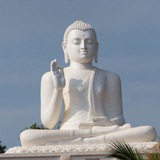
Bodhidharma’s Teachings
Excerpted from The Zen Teaching of Bodhidharma by Red Pine
If you use your mind to study reality, you won’t understand either your mind or reality. If you study reality without using your mind, you’ll understand both. Those who don’t understand, don’t understand understanding. And those who understand, understand not understanding. People capable of true vision know that the mind is empty. They transcend both understanding and not understanding. The absence of both understanding and not understanding is true understanding.
Seen with true vision, form isn’t simply form, because form depends on mind. And mind isn’t simply mind, because mind depends on form. Mind and form create and negate each other. That which exists exists in relation to that which doesn’t exist. And that which doesn’t exist doesn’t exist in relation to that which exists. This is true vision. By means of such vision nothing is seen and nothing is not seen. Such vision reaches throughout the ten directions without seeing: because nothing is seen; because not seeing is seen; because seeing isn’t seeing. What mortals see are delusions. True vision is detached from seeing.
The mind and the world are opposites, and vision arises where they meet. When your mind doesn’t stir inside, the world doesn’t arise outside. When the world and the mind are both transparent, this is true vision. And such understanding is true understanding.
To see nothing is to perceive the way, and to understand nothing is to know the dharma, because seeing is neither seeing nor not seeing and because understanding is neither understanding nor not understanding. Seeing without seeing is true vision. Understanding without understanding is true understanding.
True vision isn’t just seeing seeing. It’s also seeing not seeing. And true understanding isn’t just understanding understanding. It’s also understanding not understanding. If you understand anything, you don’t understand. Only when you understand nothing is it true understanding. Understanding is neither understanding nor not understanding.
The sutras say, “not to let go of wisdom is stupidity.” When the mind doesn’t exist, understanding and not understanding are both true. When the mind exists, understanding and not understanding are both false.
When you understand, reality depends on you. When you don’t understand, you depend on reality. When reality depends on you, that which isn’t real becomes real. When you depend on reality, that which is real becomes false. When you depend on reality, everything is false. When reality depends on you, everything is true. Thus, the sage doesn’t use his mind to look for reality, or reality to look for his mind, or his mind to look for his mind, or reality to look for reality. His mind doesn’t give rise to reality. And reality doesn’t give rise to his mind. And because both his mind and reality are still, he’s always in samadhi.
When the mortal mind appears, buddhahood disappears. When the mortal mind disappears, buddhahood appears. When the mind appears, reality disappears. When the mind disappears, reality appears. Whoever knows that nothing depends on anything has found the Way. And whoever knows that the mind depends on nothing is always at the place of enlightenment.
===
Dhammapada, beloved and favorite teachings of the Buddha channel:
https://news.1rj.ru/str/dhammapadas
===
Excerpted from The Zen Teaching of Bodhidharma by Red Pine
If you use your mind to study reality, you won’t understand either your mind or reality. If you study reality without using your mind, you’ll understand both. Those who don’t understand, don’t understand understanding. And those who understand, understand not understanding. People capable of true vision know that the mind is empty. They transcend both understanding and not understanding. The absence of both understanding and not understanding is true understanding.
Seen with true vision, form isn’t simply form, because form depends on mind. And mind isn’t simply mind, because mind depends on form. Mind and form create and negate each other. That which exists exists in relation to that which doesn’t exist. And that which doesn’t exist doesn’t exist in relation to that which exists. This is true vision. By means of such vision nothing is seen and nothing is not seen. Such vision reaches throughout the ten directions without seeing: because nothing is seen; because not seeing is seen; because seeing isn’t seeing. What mortals see are delusions. True vision is detached from seeing.
The mind and the world are opposites, and vision arises where they meet. When your mind doesn’t stir inside, the world doesn’t arise outside. When the world and the mind are both transparent, this is true vision. And such understanding is true understanding.
To see nothing is to perceive the way, and to understand nothing is to know the dharma, because seeing is neither seeing nor not seeing and because understanding is neither understanding nor not understanding. Seeing without seeing is true vision. Understanding without understanding is true understanding.
True vision isn’t just seeing seeing. It’s also seeing not seeing. And true understanding isn’t just understanding understanding. It’s also understanding not understanding. If you understand anything, you don’t understand. Only when you understand nothing is it true understanding. Understanding is neither understanding nor not understanding.
The sutras say, “not to let go of wisdom is stupidity.” When the mind doesn’t exist, understanding and not understanding are both true. When the mind exists, understanding and not understanding are both false.
When you understand, reality depends on you. When you don’t understand, you depend on reality. When reality depends on you, that which isn’t real becomes real. When you depend on reality, that which is real becomes false. When you depend on reality, everything is false. When reality depends on you, everything is true. Thus, the sage doesn’t use his mind to look for reality, or reality to look for his mind, or his mind to look for his mind, or reality to look for reality. His mind doesn’t give rise to reality. And reality doesn’t give rise to his mind. And because both his mind and reality are still, he’s always in samadhi.
When the mortal mind appears, buddhahood disappears. When the mortal mind disappears, buddhahood appears. When the mind appears, reality disappears. When the mind disappears, reality appears. Whoever knows that nothing depends on anything has found the Way. And whoever knows that the mind depends on nothing is always at the place of enlightenment.
===
Dhammapada, beloved and favorite teachings of the Buddha channel:
https://news.1rj.ru/str/dhammapadas
===
Telegram
Dhammapada - Buddha Dharma Teachings
Daily teachings of the Dhammapada, beloved and favorite teachings of the Buddha
👏1💯1
“Mendicants, there are eight causes and reasons that lead to acquiring the wisdom fundamental to the spiritual life, and to its increase, growth, and full development once it has been acquired. What eight?
5. They’re very learned, remembering and keeping what they’ve learned. These teachings are good in the beginning, good in the middle, and good in the end, meaningful and well-phrased, describing a spiritual practice that’s entirely full and pure. They are very learned in such teachings, remembering them, reinforcing them by recitation, mentally scrutinizing them, and comprehending them theoretically. This is the fifth cause.
8. They meditate observing rise and fall in the five grasping aggregates. ‘Such is form [feeling, perception, choices, consciousness] such is the origin of form [feeling, perception, choices, consciousness], such is the ending of form [feeling, perception, choices, consciousness]. This is the eighth cause.
Partial excerpts from AN 8.2 Paññāsutta: Wisdom
5. They’re very learned, remembering and keeping what they’ve learned. These teachings are good in the beginning, good in the middle, and good in the end, meaningful and well-phrased, describing a spiritual practice that’s entirely full and pure. They are very learned in such teachings, remembering them, reinforcing them by recitation, mentally scrutinizing them, and comprehending them theoretically. This is the fifth cause.
8. They meditate observing rise and fall in the five grasping aggregates. ‘Such is form [feeling, perception, choices, consciousness] such is the origin of form [feeling, perception, choices, consciousness], such is the ending of form [feeling, perception, choices, consciousness]. This is the eighth cause.
Partial excerpts from AN 8.2 Paññāsutta: Wisdom
🥰1😘1
Dhammapada Verse 173
Angulimalatthera Vatthu
Yassa papam katam kammam
kusalena1 pidhiyati
so'mam lokam pabhaseti
abbha muttova candima.
Verse 173: He who overwhelms with good the evil that he has done lights up this world (with the light of Magga Insight), as does the moon freed from clouds.
1. kusalena: with good deed; the good in this context means Arahatta Magga, the fourth and final Path knowledge. (The Commentary)
The Story of Thera Angulimala
While residing at the Jetavana monastery, the Buddha uttered Verse (173) of this book, with reference to Thera Angulimala.
Angulimala was the son of the Head Priest in the court of King Pasenadi of Kosala. His original name was Ahimsaka. When he was of age, he was sent to Taxila, a renowned university town. Ahimsaka was intelligent and was also obedient to his teacher. So he was liked by the teacher and his wife; as a result, other pupils were jealous of him. So they went to the teacher and falsely reported that Ahimsaka was having an affair with the teacher's wife. At first, the teacher did not believe them, but after being told a number of times he believed them; and so he vowed to have revenge on the boy. To kill the boy would reflect badly on him; so he thought of a plan which was worse than murder. He told Ahimsaka to kill one thousand men or women and in return he promised to give the boy priceless knowledge. The boy wanted to have this knowledge, but was very reluctant to take life. However, he agreed to do as he was told.
Thus, he kept on killing people, and not to lose count, he threaded a finger each of everyone he killed and wore them like a garland round his neck. In this way, he was known as Angulimala, and became the terror of the countryside. The king himself heard about the exploits of Angulimala, and he made preparations to capture him. When Mantani, the mother of Angulimala, heard about the king's intention, out of love for her son, she went into the forest in a desperate bid to save her son. By this time, the chain round the neck of Angulimala had nine hundred and ninety-nine fingers in it, just one finger short of one thousand.
Early in the morning on that day, the Buddha saw Angulimala in his vision, and reflected that if he did not intervene, Angulimala who was on the look out for the last person to make up the one thousand would see his mother and might kill her. In that case, Angulimala would have to suffer in niraya endlessly. So out of compassion, the Buddha left for the forest where Angulimala was.
Angulimala, after many sleepless days and nights, was very tired and near exhaustion. At the same time, he was very anxious to kill the last person to make up his full quota of one thousand and so complete his task. He made up his mind to kill the first person he met. Suddenly, as he looked out he saw the Buddha and ran after him with his knife raised. But the Buddha could not be reached while he himself was completely exhausted. Then, looking at the Buddha, he cried out, "O bhikkhu, stop! stop!" and the Buddha replied, "I have stopped, only you have not stopped." Angulimala did not get the significance of the words of the Buddha, so he asked, "O Bhikkhu! Why do you say that you have stopped and I have not stopped?"
The Buddha then said to him, "I say that I have stopped, because I have given up killing all beings, I have given up ill-treating all beings, and because I have established myself in universal love, patience, and knowledge through reflection. But, you have not given up killing or ill-treating others and you are not yet established in universal love and patience. Hence, you are the one who has not stopped." On hearing these words from the mouth of the Buddha, Angulimala reflected, "These are the words of a wise man. This bhikkhu is so very wise and so very brave ; he must be the ruler of the bhikkhus. Indeed, he must be the Buddha himself! He must have come here specially to make me see the light." So thinking, he threw away his weapon and asked the Buddha to admit him to the Order of the bhikkhus.
Angulimalatthera Vatthu
Yassa papam katam kammam
kusalena1 pidhiyati
so'mam lokam pabhaseti
abbha muttova candima.
Verse 173: He who overwhelms with good the evil that he has done lights up this world (with the light of Magga Insight), as does the moon freed from clouds.
1. kusalena: with good deed; the good in this context means Arahatta Magga, the fourth and final Path knowledge. (The Commentary)
The Story of Thera Angulimala
While residing at the Jetavana monastery, the Buddha uttered Verse (173) of this book, with reference to Thera Angulimala.
Angulimala was the son of the Head Priest in the court of King Pasenadi of Kosala. His original name was Ahimsaka. When he was of age, he was sent to Taxila, a renowned university town. Ahimsaka was intelligent and was also obedient to his teacher. So he was liked by the teacher and his wife; as a result, other pupils were jealous of him. So they went to the teacher and falsely reported that Ahimsaka was having an affair with the teacher's wife. At first, the teacher did not believe them, but after being told a number of times he believed them; and so he vowed to have revenge on the boy. To kill the boy would reflect badly on him; so he thought of a plan which was worse than murder. He told Ahimsaka to kill one thousand men or women and in return he promised to give the boy priceless knowledge. The boy wanted to have this knowledge, but was very reluctant to take life. However, he agreed to do as he was told.
Thus, he kept on killing people, and not to lose count, he threaded a finger each of everyone he killed and wore them like a garland round his neck. In this way, he was known as Angulimala, and became the terror of the countryside. The king himself heard about the exploits of Angulimala, and he made preparations to capture him. When Mantani, the mother of Angulimala, heard about the king's intention, out of love for her son, she went into the forest in a desperate bid to save her son. By this time, the chain round the neck of Angulimala had nine hundred and ninety-nine fingers in it, just one finger short of one thousand.
Early in the morning on that day, the Buddha saw Angulimala in his vision, and reflected that if he did not intervene, Angulimala who was on the look out for the last person to make up the one thousand would see his mother and might kill her. In that case, Angulimala would have to suffer in niraya endlessly. So out of compassion, the Buddha left for the forest where Angulimala was.
Angulimala, after many sleepless days and nights, was very tired and near exhaustion. At the same time, he was very anxious to kill the last person to make up his full quota of one thousand and so complete his task. He made up his mind to kill the first person he met. Suddenly, as he looked out he saw the Buddha and ran after him with his knife raised. But the Buddha could not be reached while he himself was completely exhausted. Then, looking at the Buddha, he cried out, "O bhikkhu, stop! stop!" and the Buddha replied, "I have stopped, only you have not stopped." Angulimala did not get the significance of the words of the Buddha, so he asked, "O Bhikkhu! Why do you say that you have stopped and I have not stopped?"
The Buddha then said to him, "I say that I have stopped, because I have given up killing all beings, I have given up ill-treating all beings, and because I have established myself in universal love, patience, and knowledge through reflection. But, you have not given up killing or ill-treating others and you are not yet established in universal love and patience. Hence, you are the one who has not stopped." On hearing these words from the mouth of the Buddha, Angulimala reflected, "These are the words of a wise man. This bhikkhu is so very wise and so very brave ; he must be the ruler of the bhikkhus. Indeed, he must be the Buddha himself! He must have come here specially to make me see the light." So thinking, he threw away his weapon and asked the Buddha to admit him to the Order of the bhikkhus.
Telegram
Words of the Buddha
Daily teachings of Buddha Dharma
👏1🏆1
Then and there, the Buddha made him a bhikkhu.
Angulimala's mother looked for her son everywhere in the forest shouting out his name, but failing to find him she returned home. When the king and his men came to capture Angulimala, they found him at the monastery of the Buddha. Finding that Angulimala had given up his evil ways and had become a bhikkhu, the king and his men went home. During his stay at the monastery, Angulimala ardently and diligently practised meditation, and within a short time he attained arahatship.
Then, one day, while he was on an alms-round, he came to a place where some people were quarrelling among themselves. As they were throwing stones at one another, some stray stones hit Thera Angulimala on the head and he was seriously injured. Yet, he managed to come back to the Buddha, and the Buddha said to him, "My son Angulimala! You have done away with evil. Have patience. You are paying in this existence for the deeds you have done. These deeds would have made you suffer for innumerable years in niraya." Soon afterwards, Angulimala passed away peacefully; he had realized parinibbana.
Other bhikkhus asked the Buddha where Angulimala was reborn, and when the Buddha replied "My son has realized parinibbana", they could hardly believe it. So they asked him whether it was possible that a man who had killed so many people could have realized parinibbana. To this question, the Buddha replied, "Bhikkhus! Angulimala had done much evil because he did not have good friends. But later, he found good friends and through their help and good advice he had been steadfast and mindful in his practice of the dhamma. Therefore, his evil deeds have been overwhelmed by good (i e., Arahatta Magga).
Then the Buddha spoke in verse as follows:
Verse 173: He who overwhelms with good the evil that he has done lights up this world (with the light of Magga Insight), as does the moon freed from clouds.
===
Words of the Buddha channel:
https://news.1rj.ru/str/wordsofbuddha
====================
Angulimala's mother looked for her son everywhere in the forest shouting out his name, but failing to find him she returned home. When the king and his men came to capture Angulimala, they found him at the monastery of the Buddha. Finding that Angulimala had given up his evil ways and had become a bhikkhu, the king and his men went home. During his stay at the monastery, Angulimala ardently and diligently practised meditation, and within a short time he attained arahatship.
Then, one day, while he was on an alms-round, he came to a place where some people were quarrelling among themselves. As they were throwing stones at one another, some stray stones hit Thera Angulimala on the head and he was seriously injured. Yet, he managed to come back to the Buddha, and the Buddha said to him, "My son Angulimala! You have done away with evil. Have patience. You are paying in this existence for the deeds you have done. These deeds would have made you suffer for innumerable years in niraya." Soon afterwards, Angulimala passed away peacefully; he had realized parinibbana.
Other bhikkhus asked the Buddha where Angulimala was reborn, and when the Buddha replied "My son has realized parinibbana", they could hardly believe it. So they asked him whether it was possible that a man who had killed so many people could have realized parinibbana. To this question, the Buddha replied, "Bhikkhus! Angulimala had done much evil because he did not have good friends. But later, he found good friends and through their help and good advice he had been steadfast and mindful in his practice of the dhamma. Therefore, his evil deeds have been overwhelmed by good (i e., Arahatta Magga).
Then the Buddha spoke in verse as follows:
Verse 173: He who overwhelms with good the evil that he has done lights up this world (with the light of Magga Insight), as does the moon freed from clouds.
===
Words of the Buddha channel:
https://news.1rj.ru/str/wordsofbuddha
====================
Telegram
Words of the Buddha
Daily teachings of Buddha Dharma
💯1🏆1
Forwarded from Buddha Dharma books
Free Buddha Dharma ebook
Food for the Thinking Mind
By Venerable Sri K Dhammananda
As the noscript suggests, this book is not directed at readers with a particular religious affiliation but is meant for anyone who wishes to reflect on what famous thinkers throughout the ages have written about the human condition. No one can deny that despite temporary flashes of happiness, on the whole, the human condition is far from satisfactory. Human beings have always dreamed of attaining perfect happiness by transcending human problems, generally without much success. However some great thinkers, widely separated in time and space have pondered over how this human condition can be understood and how happiness can be attained. They were able to crystallise these thoughts into clear, apt sayings which sound simple at first sight, but which draw deep from the well springs of human experience. This book is a collection of these thoughts and readers are invited to share them and benefit from them. By reflection, the reader gains an understanding of his or her condition and is thus enabled to live a happier more meaningful life. Most of our problems arise from the fact that we do not understand the cause of our feelings of discontentand unsatisfactoriness.
Free download here:
https://static.sariputta.com/pdf/tipitaka/883/en110pdf.pdf
===
Food for the Thinking Mind
By Venerable Sri K Dhammananda
As the noscript suggests, this book is not directed at readers with a particular religious affiliation but is meant for anyone who wishes to reflect on what famous thinkers throughout the ages have written about the human condition. No one can deny that despite temporary flashes of happiness, on the whole, the human condition is far from satisfactory. Human beings have always dreamed of attaining perfect happiness by transcending human problems, generally without much success. However some great thinkers, widely separated in time and space have pondered over how this human condition can be understood and how happiness can be attained. They were able to crystallise these thoughts into clear, apt sayings which sound simple at first sight, but which draw deep from the well springs of human experience. This book is a collection of these thoughts and readers are invited to share them and benefit from them. By reflection, the reader gains an understanding of his or her condition and is thus enabled to live a happier more meaningful life. Most of our problems arise from the fact that we do not understand the cause of our feelings of discontentand unsatisfactoriness.
Free download here:
https://static.sariputta.com/pdf/tipitaka/883/en110pdf.pdf
===
👍1👏1💯1
Dhammapada Verse 174
Pesakaradhita Vatthu
Andhabhuto ayam loko
tanuke'ttha vipassati
sakuno jalamuttova
appo saggaya gacchati.
Verse 174: Blind are the people of this world: only a few in this world see clearly (with Insight). Just as only a few birds escape from the net, so also, only a few get to the world of the devas, (and Nibbana).
The Story of the Weaver-Girl
While residing at the monastery near Aggavala shrine in the country of Alavi, the Buddha uttered Verse (174) of this book, with reference to a young maiden, who was a weaver.
At the conclusion of an alms-giving ceremony in Alavi, the Buddha gave a discourse on the impermanence of the aggregates (khandhas). The main points the Buddha stressed on that day may be expressed as follows:
"My life is impermanent; for me, death only is permanent. I must certainly die; my life ends in death. Life is not permanent; death is permanent."
The Buddha also exhorted the audience to be always mindful and to strive to perceive the true nature of the aggregate. He also said,"As one who is armed with a stick or a spear is prepared to meet an enemy (e.g. a poisonous snake), so also, one who is ever mindful of death will face death mindfully. He would then leave this world for a good destination (sugati)." Many people did not take the above exhortation seriously, but a young girl of sixteen who was a weaver clearly understood the message. After giving the discourse, the Buddha returned to the Jetavana monastery.
After a lapse of three years, when the Buddha surveyed the world, he saw the young weaver in his vision, and knew that time was ripe for the girl to attain Sotapatti Fruition. So the Buddha came to the country of Alavi to expound the dhamma for the second time. When the girl heard that the Buddha had come again with five hundred bhikkhus, she wanted to go and listen to the discourse which would be given by the Buddha. However, her father had also asked her to wind some thread spools which he needed urgently, so she promptly wound some spools and took them to her father. On the way to her father, she stopped for a moment at the outer fringe of the audience, who had come to listen to the Buddha.
Meanwhile, the Buddha knew that the young weaver would come to listen to his discourse; he also knew that the girl would die when she got to the weaving shed. Therefore, it was very important that she should listen to the Dhamma on her way to the weaving shed and not on her return. So, when the young weaver appeared on the fringe of the audience, the Buddha looked at her. When she saw him looking at her, she dropped her basket and respectfully approached the Buddha. Then, he put four questions to her and she answered all of them. The questions and answers are as given below.
Questions Answers
(1) Where have you come from? (1) I do not know.
(2) Where are you going? (2) I do not know.
(3) Don't you know? (3) Yes, I do know.
(4) Do you know? (4) I do not know, Venerable Sir.
Hearing her answers, the audience thought that the young weaver was being very disrespectful. Then, the Buddha asked her to explain what she meant by her answers, and she explained.
"Venerable Sir! Since you know that I have come from my house, I interpreted that, by your first question, you meant to ask me from what past existence I have come here. Hence my answer, 'I do not know.' The second question means, to what future existence I would be going from here; hence my answer, 'I do not know.' The third question means whether I do not know that I would die one day; hence my answer, 'yes, I do know.' The last question means whether I know when I would die; hence my answer, 'I do not know.
The Buddha was satisfied with her explanation and he said to the audience, "Most of you might not understand clearly the meaning of the answers given by the young weaver. Those who are ignorant are in darkness, they are just like the blind."
Pesakaradhita Vatthu
Andhabhuto ayam loko
tanuke'ttha vipassati
sakuno jalamuttova
appo saggaya gacchati.
Verse 174: Blind are the people of this world: only a few in this world see clearly (with Insight). Just as only a few birds escape from the net, so also, only a few get to the world of the devas, (and Nibbana).
The Story of the Weaver-Girl
While residing at the monastery near Aggavala shrine in the country of Alavi, the Buddha uttered Verse (174) of this book, with reference to a young maiden, who was a weaver.
At the conclusion of an alms-giving ceremony in Alavi, the Buddha gave a discourse on the impermanence of the aggregates (khandhas). The main points the Buddha stressed on that day may be expressed as follows:
"My life is impermanent; for me, death only is permanent. I must certainly die; my life ends in death. Life is not permanent; death is permanent."
The Buddha also exhorted the audience to be always mindful and to strive to perceive the true nature of the aggregate. He also said,"As one who is armed with a stick or a spear is prepared to meet an enemy (e.g. a poisonous snake), so also, one who is ever mindful of death will face death mindfully. He would then leave this world for a good destination (sugati)." Many people did not take the above exhortation seriously, but a young girl of sixteen who was a weaver clearly understood the message. After giving the discourse, the Buddha returned to the Jetavana monastery.
After a lapse of three years, when the Buddha surveyed the world, he saw the young weaver in his vision, and knew that time was ripe for the girl to attain Sotapatti Fruition. So the Buddha came to the country of Alavi to expound the dhamma for the second time. When the girl heard that the Buddha had come again with five hundred bhikkhus, she wanted to go and listen to the discourse which would be given by the Buddha. However, her father had also asked her to wind some thread spools which he needed urgently, so she promptly wound some spools and took them to her father. On the way to her father, she stopped for a moment at the outer fringe of the audience, who had come to listen to the Buddha.
Meanwhile, the Buddha knew that the young weaver would come to listen to his discourse; he also knew that the girl would die when she got to the weaving shed. Therefore, it was very important that she should listen to the Dhamma on her way to the weaving shed and not on her return. So, when the young weaver appeared on the fringe of the audience, the Buddha looked at her. When she saw him looking at her, she dropped her basket and respectfully approached the Buddha. Then, he put four questions to her and she answered all of them. The questions and answers are as given below.
Questions Answers
(1) Where have you come from? (1) I do not know.
(2) Where are you going? (2) I do not know.
(3) Don't you know? (3) Yes, I do know.
(4) Do you know? (4) I do not know, Venerable Sir.
Hearing her answers, the audience thought that the young weaver was being very disrespectful. Then, the Buddha asked her to explain what she meant by her answers, and she explained.
"Venerable Sir! Since you know that I have come from my house, I interpreted that, by your first question, you meant to ask me from what past existence I have come here. Hence my answer, 'I do not know.' The second question means, to what future existence I would be going from here; hence my answer, 'I do not know.' The third question means whether I do not know that I would die one day; hence my answer, 'yes, I do know.' The last question means whether I know when I would die; hence my answer, 'I do not know.
The Buddha was satisfied with her explanation and he said to the audience, "Most of you might not understand clearly the meaning of the answers given by the young weaver. Those who are ignorant are in darkness, they are just like the blind."
Telegram
Dhammapada - Buddha Dharma Teachings
Daily teachings of the Dhammapada, beloved and favorite teachings of the Buddha
👏1
The Buddha then spoke in verse as follows:
Verse 174: Blind are the people of this world: only a few in this world see clearly (with Insight). Just as only a few birds escape from the net, so also, only a few get to the world of the devas, (and Nibbana).
At the end of the discourse, the young weaver attained Sotapatti Fruition.
Then, she continued on her way to the weaving shed. When she got there, her father was asleep on the weaver's seat. As he woke up suddenly, he accidentally pulled the shuttle, and the point of the shuttle struck the girl at her breast. She died on the spot, and her father was broken-hearted. With eyes full of tears he went to the Buddha and asked the Buddha to admit him to the Order of the bhikkhus. So, he became a bhikkhu, and not long afterwards, attained arahatship.
===
Dhammapada, beloved and favorite teachings of the Buddha channel:
https://news.1rj.ru/str/dhammapadas
====================
Verse 174: Blind are the people of this world: only a few in this world see clearly (with Insight). Just as only a few birds escape from the net, so also, only a few get to the world of the devas, (and Nibbana).
At the end of the discourse, the young weaver attained Sotapatti Fruition.
Then, she continued on her way to the weaving shed. When she got there, her father was asleep on the weaver's seat. As he woke up suddenly, he accidentally pulled the shuttle, and the point of the shuttle struck the girl at her breast. She died on the spot, and her father was broken-hearted. With eyes full of tears he went to the Buddha and asked the Buddha to admit him to the Order of the bhikkhus. So, he became a bhikkhu, and not long afterwards, attained arahatship.
===
Dhammapada, beloved and favorite teachings of the Buddha channel:
https://news.1rj.ru/str/dhammapadas
====================
Telegram
Dhammapada - Buddha Dharma Teachings
Daily teachings of the Dhammapada, beloved and favorite teachings of the Buddha
👍1💯1
Dhammapada Verse 175
Timsabhikkhu Vatthu
Hamsa diccapathe yanti
ikase yanti iddhiya
niyanti dhira lokamha
jetva maram savahinim.
Verse 175: Swans travel in the sky; those with supernormal powers travel through space; the wise having conquered Mara together with his army, go out of this world (i.e., realize Nibbana).
The Story of Thirty Bhikkhus
While residing at the Jetavana monastery, the Buddha uttered Verse (175) of this book, with reference to thirty bhikkhus.
Once, thirty bhikkhus came to pay homage to the Buddha. When they came in, the Venerable Ananda, who was then attending on the Buddha, left the room and waited outside. After some time, Thera Ananda went in, but he did not find any of the bhikkhus. So, he asked the Buddha where all those bhikkhus had gone. The Buddha then replied, "Ananda, all those bhikkhus, after hearing my discourse, had attained arahatship, and with their supernormal powers, they let travelling through space."
Then the Buddha spoke in verse as follows:
Verse 175: Swans travel in the sky; those with supernormal powers travel through space; the wise having conquered Mara together with his army, go out of this world (i.e., realize Nibbana).
===
Buddha dharma teachings channel:
https://invite.viber.com/?g2=AQAKw1y3rv%2F6sk61PI2W4izuIiaEZj8YZujhY1tSzL%2B07s7rFnVFDAd0bAYFaMLw
====================
Timsabhikkhu Vatthu
Hamsa diccapathe yanti
ikase yanti iddhiya
niyanti dhira lokamha
jetva maram savahinim.
Verse 175: Swans travel in the sky; those with supernormal powers travel through space; the wise having conquered Mara together with his army, go out of this world (i.e., realize Nibbana).
The Story of Thirty Bhikkhus
While residing at the Jetavana monastery, the Buddha uttered Verse (175) of this book, with reference to thirty bhikkhus.
Once, thirty bhikkhus came to pay homage to the Buddha. When they came in, the Venerable Ananda, who was then attending on the Buddha, left the room and waited outside. After some time, Thera Ananda went in, but he did not find any of the bhikkhus. So, he asked the Buddha where all those bhikkhus had gone. The Buddha then replied, "Ananda, all those bhikkhus, after hearing my discourse, had attained arahatship, and with their supernormal powers, they let travelling through space."
Then the Buddha spoke in verse as follows:
Verse 175: Swans travel in the sky; those with supernormal powers travel through space; the wise having conquered Mara together with his army, go out of this world (i.e., realize Nibbana).
===
Buddha dharma teachings channel:
https://invite.viber.com/?g2=AQAKw1y3rv%2F6sk61PI2W4izuIiaEZj8YZujhY1tSzL%2B07s7rFnVFDAd0bAYFaMLw
====================
Viber
Buddha
Buddha dharma teachings from the suttas and commentaries from Theravada tradition
❤1👏1💯1🏆1