Forwarded from Words of the Buddha
Human Values
A Thai Forest Tradition teacher and meditation master provides practical techniques for finding our shared humanity.
By Ajaan Lee Dhammadharo
Everyone in the world wants justice. To give the world justice, we all—no matter what race or nationality we belong to—need to have human values in our hearts. Human values are not a creed or a religion. When people are born into the world, they want justice by their very nature. Sometimes they receive it, sometimes they don’t. This is because there are times when they let inhuman values interfere with human values. When this is the case, these inhuman values prevent them from receiving the justice they desire.
For this reason I would like to point out a way that will help people throughout the world keep their minds in line with human values. Even if we may have lapses from time to time, we’ll still be doing well as long as we can maintain long intervals between the lapses.
1. Have a sense of moderation in your likes and loves for people and objects. Don’t let yourself get carried away to the point of infatuation, causing your behavior with regard to people and objects to go out of bounds. To stumble in this way can—on the level of your conduct—hurt your reputation. On the level of your mind, it can cause you to be deluded and deceived. The results you reap will be sorrow afflicting your heart, all from lacking the human value of moderation.
2. In your interaction with people and objects, don’t let yourself get carried away with anger. Even if people behave in ways that are disagreeable, or if the objects that come your way aren’t what you had hoped for, you should still stop to consider whether those people have at least some good to them, and whether those objects may be of at least some use to you. When you can keep your mind in check in this way, you’ll loosen yourself from the grip of anger and displeasure, so that thoughts of goodwill can arise within you instead. The result will be that those people will become your friends and allies; the objects you get will be able to serve you in other ways. For instance, suppose you want a chisel but you get a nail. This means that your hopes aren’t fulfilled, but even so the nail can be of use to you in other ways in the future.
In addition, thoughts of goodwill can foster long-lasting composure and peace of mind. This, then, is a human value that should underlie our dealings with one another throughout the world.
3. Be upright and straightforward in all your dealings, behaving toward people behind their backs the same way you would behave to their faces. Even when confronted with frightening intimidation, you should make your heart audacious to the proper degree. Too much audacity can cause harm, and the same holds true for being too timid. For example, if you let yourself become intimidated in your business dealings, your business will suffer. If you’re too reckless or audacious, that too can lead to missteps in your work. Thus you should have a sense of moderation and proportion so that your relationships with people and the various objects in the world will run properly. Only then will you count as having human values.
4. Whatever you do in thought, word, or deed, dealing with people or objects in the world, you should first examine your motivations. Only if they’re sound and reasonable should you listen to them and act in line with them. This will keep you from coming under the sway of delusion. You have to be endowed with the human values of circumspect mindfulness and reasonable discernment. Those who can behave in this way will have friends no matter what social grouping they join. They’ll bring about the growth and development of the various objects they deal with, and will bring progress to themselves and to society at large—which is something that each and every one of us desires.
A Thai Forest Tradition teacher and meditation master provides practical techniques for finding our shared humanity.
By Ajaan Lee Dhammadharo
Everyone in the world wants justice. To give the world justice, we all—no matter what race or nationality we belong to—need to have human values in our hearts. Human values are not a creed or a religion. When people are born into the world, they want justice by their very nature. Sometimes they receive it, sometimes they don’t. This is because there are times when they let inhuman values interfere with human values. When this is the case, these inhuman values prevent them from receiving the justice they desire.
For this reason I would like to point out a way that will help people throughout the world keep their minds in line with human values. Even if we may have lapses from time to time, we’ll still be doing well as long as we can maintain long intervals between the lapses.
1. Have a sense of moderation in your likes and loves for people and objects. Don’t let yourself get carried away to the point of infatuation, causing your behavior with regard to people and objects to go out of bounds. To stumble in this way can—on the level of your conduct—hurt your reputation. On the level of your mind, it can cause you to be deluded and deceived. The results you reap will be sorrow afflicting your heart, all from lacking the human value of moderation.
2. In your interaction with people and objects, don’t let yourself get carried away with anger. Even if people behave in ways that are disagreeable, or if the objects that come your way aren’t what you had hoped for, you should still stop to consider whether those people have at least some good to them, and whether those objects may be of at least some use to you. When you can keep your mind in check in this way, you’ll loosen yourself from the grip of anger and displeasure, so that thoughts of goodwill can arise within you instead. The result will be that those people will become your friends and allies; the objects you get will be able to serve you in other ways. For instance, suppose you want a chisel but you get a nail. This means that your hopes aren’t fulfilled, but even so the nail can be of use to you in other ways in the future.
In addition, thoughts of goodwill can foster long-lasting composure and peace of mind. This, then, is a human value that should underlie our dealings with one another throughout the world.
3. Be upright and straightforward in all your dealings, behaving toward people behind their backs the same way you would behave to their faces. Even when confronted with frightening intimidation, you should make your heart audacious to the proper degree. Too much audacity can cause harm, and the same holds true for being too timid. For example, if you let yourself become intimidated in your business dealings, your business will suffer. If you’re too reckless or audacious, that too can lead to missteps in your work. Thus you should have a sense of moderation and proportion so that your relationships with people and the various objects in the world will run properly. Only then will you count as having human values.
4. Whatever you do in thought, word, or deed, dealing with people or objects in the world, you should first examine your motivations. Only if they’re sound and reasonable should you listen to them and act in line with them. This will keep you from coming under the sway of delusion. You have to be endowed with the human values of circumspect mindfulness and reasonable discernment. Those who can behave in this way will have friends no matter what social grouping they join. They’ll bring about the growth and development of the various objects they deal with, and will bring progress to themselves and to society at large—which is something that each and every one of us desires.
Telegram
Words of the Buddha
Daily teachings of Buddha Dharma
👍2💯1🆒1
Forwarded from Words of the Buddha
When people lack human values—when they trample human values underfoot by going overboard in exercising their power and influence—material progress can destroy the peace and well-being of human beings throughout the world.
The world we live in has been here since long before any of us were born. Even our creeds and religions all gradually came into being long after the world did. The history of the human world is that sometimes the world is advanced in both material and spiritual terms, leading to welfare for all; sometimes humanity is so degenerate in both material and spiritual terms that it practically sinks into the belly of the sea. Sometimes the spiritual side is advanced, with people living in peace and security, while the material side is undeveloped.
When human beings have human values in their hearts, material progress can bring happiness and well-being to all. When people lack human values—when they trample human values underfoot by going overboard in exercising their power and influence—material progress can destroy the peace and well-being of human beings throughout the world. There is a basic truth that when people are bad, even good material objects can cause harm to people at large; if people are moral and just, even harmful objects can become beneficial.
When all the people in the world establish themselves firmly in human values, then it’s as if we were all friends and relatives. If people don’t have human values in their hearts, even families fall apart, friends become enemies—and when relationships on the small scale are like this, war on the large scale will be unavoidable. How will we be able to escape it?
Thus everyone in the world should develop human values so that we can all view one another as friends, expressing in our behavior an attitude of goodwill and kindness for the sake of justice and fairness in the world.
The points I have made so far are principles of nature common to the entire world. Even people who adhere to different religions should assist one another. We should remember our common humanity and help one another on the human level. The Buddha praised those who help others on the basis of common humanity; and as for other religions, I myself have met with a number of Roman Catholics and Protestants who, when they’ve come to our country, seem to be well-mannered, well-educated, and possessed of strong human values. For example, some of them have helped donate money to build temples and monasteries. This has made me curious as to what their religion was, and when I asked them, they said that they were Christian. It struck me then that their hearts had human values in full measure, which is why they have progressed far in life.
As for the teachings of Buddhism, there is one point where the Buddha taught that when we deal with people outside of the religion, we should give thought to our common humanity and not make religion an obstacle. Otherwise, it will cause harm.
When this is the case, people who are well-versed in human values can fit perfectly into any society and can create strong bonds of friendship with one another.
Thus I ask all who read this to consider the matter using their own discernment.
===
From A Handbook for the Relief of Suffering: Three Essays by Ajaan Lee Dhammadharo, Translated from Thai by Thanissaro Bhikkhu.
Ajaan Lee (1907–1961) was one of the foremost teachers of the Thai Forest Tradition and helped to bring the teachings into the mainstream of Thai society.
===
Words of the Buddha channel:
https://news.1rj.ru/str/wordsofbuddha
===
The world we live in has been here since long before any of us were born. Even our creeds and religions all gradually came into being long after the world did. The history of the human world is that sometimes the world is advanced in both material and spiritual terms, leading to welfare for all; sometimes humanity is so degenerate in both material and spiritual terms that it practically sinks into the belly of the sea. Sometimes the spiritual side is advanced, with people living in peace and security, while the material side is undeveloped.
When human beings have human values in their hearts, material progress can bring happiness and well-being to all. When people lack human values—when they trample human values underfoot by going overboard in exercising their power and influence—material progress can destroy the peace and well-being of human beings throughout the world. There is a basic truth that when people are bad, even good material objects can cause harm to people at large; if people are moral and just, even harmful objects can become beneficial.
When all the people in the world establish themselves firmly in human values, then it’s as if we were all friends and relatives. If people don’t have human values in their hearts, even families fall apart, friends become enemies—and when relationships on the small scale are like this, war on the large scale will be unavoidable. How will we be able to escape it?
Thus everyone in the world should develop human values so that we can all view one another as friends, expressing in our behavior an attitude of goodwill and kindness for the sake of justice and fairness in the world.
The points I have made so far are principles of nature common to the entire world. Even people who adhere to different religions should assist one another. We should remember our common humanity and help one another on the human level. The Buddha praised those who help others on the basis of common humanity; and as for other religions, I myself have met with a number of Roman Catholics and Protestants who, when they’ve come to our country, seem to be well-mannered, well-educated, and possessed of strong human values. For example, some of them have helped donate money to build temples and monasteries. This has made me curious as to what their religion was, and when I asked them, they said that they were Christian. It struck me then that their hearts had human values in full measure, which is why they have progressed far in life.
As for the teachings of Buddhism, there is one point where the Buddha taught that when we deal with people outside of the religion, we should give thought to our common humanity and not make religion an obstacle. Otherwise, it will cause harm.
When this is the case, people who are well-versed in human values can fit perfectly into any society and can create strong bonds of friendship with one another.
Thus I ask all who read this to consider the matter using their own discernment.
===
From A Handbook for the Relief of Suffering: Three Essays by Ajaan Lee Dhammadharo, Translated from Thai by Thanissaro Bhikkhu.
Ajaan Lee (1907–1961) was one of the foremost teachers of the Thai Forest Tradition and helped to bring the teachings into the mainstream of Thai society.
===
Words of the Buddha channel:
https://news.1rj.ru/str/wordsofbuddha
===
Telegram
Words of the Buddha
Daily teachings of Buddha Dharma
👏1🏆1
heṭṭhā ... pādatalesu cakkāni jātāni, sahassārāni sanemikāni sanābhikāni sabbākāraparipūrāni...
Under the soles of His feet there are wheels, with a thousand rims and naves, complete in every way...
Thirty-two marks of a Great Man (mahā purisa lakkhaņa) in The Digha Nikaya, "Discourse of the Marks" (Pali: Lakkhaṇa Sutta) (DN 30)
Under the soles of His feet there are wheels, with a thousand rims and naves, complete in every way...
Thirty-two marks of a Great Man (mahā purisa lakkhaņa) in The Digha Nikaya, "Discourse of the Marks" (Pali: Lakkhaṇa Sutta) (DN 30)
❤1👏1
Forwarded from Buddha Dharma books
Free Buddha Dharma ebook
Discourse on the Snake Simile
Alagaddupama Sutta (MN 22)
by Nyanaponika Thera
The discourse of the Buddha on the Snake Simile (Alagaddúpama Sutta) that is presented here, together with explanatory notes taken mostly from the commentarial literature, is the 22nd text in the “Collection of Discourses of Medium Length” (Majjhima Nikáya).
It is a text rich of contents and graced by many similes. At the very beginning there is a sequence of ten pithy similes on the perils of sense desires; then follows the simile on correctly or wrongly getting hold of a snake (from which our text derives its name); further, and still better known, the parable of the raft; and finally the simile of the vegetation of the Jeta Grove. The evocative power of these similes will strengthen the impact of the sutta’s message, in him who ponders on them deeply and repeatedly.
The main concern of this discourse is to warn against misconceptions, misrepresentations and dilution of the Teaching.
Free download here:
https://www.accesstoinsight.org/lib/authors/nyanaponika/wheel048.pdf
===
Discourse on the Snake Simile
Alagaddupama Sutta (MN 22)
by Nyanaponika Thera
The discourse of the Buddha on the Snake Simile (Alagaddúpama Sutta) that is presented here, together with explanatory notes taken mostly from the commentarial literature, is the 22nd text in the “Collection of Discourses of Medium Length” (Majjhima Nikáya).
It is a text rich of contents and graced by many similes. At the very beginning there is a sequence of ten pithy similes on the perils of sense desires; then follows the simile on correctly or wrongly getting hold of a snake (from which our text derives its name); further, and still better known, the parable of the raft; and finally the simile of the vegetation of the Jeta Grove. The evocative power of these similes will strengthen the impact of the sutta’s message, in him who ponders on them deeply and repeatedly.
The main concern of this discourse is to warn against misconceptions, misrepresentations and dilution of the Teaching.
Free download here:
https://www.accesstoinsight.org/lib/authors/nyanaponika/wheel048.pdf
===
💯2👏1
Dhammapada Verse 251
Panca Upasaka Vatthu
Natthi ragasamo aggi
natthi dosasamo gaho
natthi mohasamam jalam
natthi tanhaisama nadi1.
Verse 251: There is no fire like passion, there is no grip like ill will, there is no net like ignorance, there is no river like craving.
1. natthi tanhasama nadi: There is no river like craving. This is because although a river can be full at times, craving can never be full, ie., satiated.
The Story of Five Lay-disciples
While residing at the Jetavana monastery, the Buddha uttered Verse (251) of this book, with reference to five lay disciples.
On one occasion, five lay-disciples were present while the Buddha was expounding the Dhamma at the Jetavana monastery. One of them was asleep while sitting, the second one was drawing lines with his fingers on the ground, the third was trying to shake a tree, the fourth was looking up at the sky. The fifth was the only one who was respectfully and attentively listening to the Buddha. Thera Ananda, who was near the Buddha fanning him saw the different behaviour of the five disciples and said to the Buddha, "Venerable Sir! While you were expounding the Dhamma like big drops of rain falling from the sky, only one out of those five people were listening attentively." Then Thera Ananda described the different behaviour of the other four to the Buddha and asked why they were behaving thus.
The Buddha then explained to Thera Ananda, "Ananda, these people could not get rid of their old habits. In their past existences, the first one was a snake; as a snake usually coils itself up and goes to sleep, so also, this man goes to sleep while listening to the Dhamma. The one who was scratching the earth with his hand was an earthworm, the one who was shaking the tree was a monkey, the one who was gazing up at the sky was an astronomer and the one who was listening attentively to the Dhamma was a learned astrologer. In this connection, Ananda, you must remember that one must be attentive to be able to understand the Dhamma and that there are many people who cannot follow what was being said."
Thera Ananda then asked the Buddha, "Venerable Sir! What are the things that prevent people from being able to take in the Dhamma?" And the Buddha replied, "Ananda, passion (raga), ill will (dosa) and ignorance (moha) are the three things that prevent people from taking in the Dhamma. Passion burns one; there is no fire like passion. The world may burn up when seven suns rise in the sky, but that happens very rarely. Passion burns always and without any break."
Then the Buddha spoke in verse as follows:
Verse 251: There is no fire like passion, there is no grip like ill will, there is no net like ignorance, there is no river like craving.
At the end of the discourse the one who was listening attentively attained Sotapatti Fruition.
===
Buddha dharma teachings channel:
https://invite.viber.com/?g2=AQAKw1y3rv%2F6sk61PI2W4izuIiaEZj8YZujhY1tSzL%2B07s7rFnVFDAd0bAYFaMLw
===
Panca Upasaka Vatthu
Natthi ragasamo aggi
natthi dosasamo gaho
natthi mohasamam jalam
natthi tanhaisama nadi1.
Verse 251: There is no fire like passion, there is no grip like ill will, there is no net like ignorance, there is no river like craving.
1. natthi tanhasama nadi: There is no river like craving. This is because although a river can be full at times, craving can never be full, ie., satiated.
The Story of Five Lay-disciples
While residing at the Jetavana monastery, the Buddha uttered Verse (251) of this book, with reference to five lay disciples.
On one occasion, five lay-disciples were present while the Buddha was expounding the Dhamma at the Jetavana monastery. One of them was asleep while sitting, the second one was drawing lines with his fingers on the ground, the third was trying to shake a tree, the fourth was looking up at the sky. The fifth was the only one who was respectfully and attentively listening to the Buddha. Thera Ananda, who was near the Buddha fanning him saw the different behaviour of the five disciples and said to the Buddha, "Venerable Sir! While you were expounding the Dhamma like big drops of rain falling from the sky, only one out of those five people were listening attentively." Then Thera Ananda described the different behaviour of the other four to the Buddha and asked why they were behaving thus.
The Buddha then explained to Thera Ananda, "Ananda, these people could not get rid of their old habits. In their past existences, the first one was a snake; as a snake usually coils itself up and goes to sleep, so also, this man goes to sleep while listening to the Dhamma. The one who was scratching the earth with his hand was an earthworm, the one who was shaking the tree was a monkey, the one who was gazing up at the sky was an astronomer and the one who was listening attentively to the Dhamma was a learned astrologer. In this connection, Ananda, you must remember that one must be attentive to be able to understand the Dhamma and that there are many people who cannot follow what was being said."
Thera Ananda then asked the Buddha, "Venerable Sir! What are the things that prevent people from being able to take in the Dhamma?" And the Buddha replied, "Ananda, passion (raga), ill will (dosa) and ignorance (moha) are the three things that prevent people from taking in the Dhamma. Passion burns one; there is no fire like passion. The world may burn up when seven suns rise in the sky, but that happens very rarely. Passion burns always and without any break."
Then the Buddha spoke in verse as follows:
Verse 251: There is no fire like passion, there is no grip like ill will, there is no net like ignorance, there is no river like craving.
At the end of the discourse the one who was listening attentively attained Sotapatti Fruition.
===
Buddha dharma teachings channel:
https://invite.viber.com/?g2=AQAKw1y3rv%2F6sk61PI2W4izuIiaEZj8YZujhY1tSzL%2B07s7rFnVFDAd0bAYFaMLw
===
Viber
Buddha
Buddha dharma teachings from the suttas and commentaries from Theravada tradition
👍1🏆1
Forwarded from Words of the Buddha
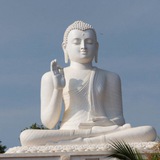
Big Buddhas of Wat Pha Sorn Kaew Buddhist temple, Phetchabun, Thailand
👏1😎1
Forwarded from Buddha Dharma books
Free Buddha Dharma ebook
Keeping the Breath in Mind & Lessons in Samadhi, by Ajaan Lee Dhammadharo. (revised Dec. 15, 2018) A fundamental guidebook for breath meditation and practicing the jhānas.
Free download here:
https://www.dhammatalks.org/Archive/Writings/Ebooks/KeepingtheBreathinMind_181215.pdf
===
Keeping the Breath in Mind & Lessons in Samadhi, by Ajaan Lee Dhammadharo. (revised Dec. 15, 2018) A fundamental guidebook for breath meditation and practicing the jhānas.
Free download here:
https://www.dhammatalks.org/Archive/Writings/Ebooks/KeepingtheBreathinMind_181215.pdf
===
💯2👏1🏆1
Dhammapada Verse 252
Mendakasetthi Vatthu
Sudassam vajjamannesam
attano pana duddsam
paresam hi so vajjani
opunati yatha bhusam
attano pana chadeti
kalimva kitava satho.1
Verse 252: It is easy to see the faults of others, but difficult to see one's own. A man broadcasts the fault; of others like winnowing chaff in the wind, but hides his own faults as a crafty fowler covers himself.
1. Satho: a cheat, a gambler. According to the Commentary, it means a crafty fowler.
The Story of Mendaka the Rich Man
While residing near the town of Baddiya, the Buddha uttered Verse (252) of this book with reference to the renowned rich man Mendaka and his family.
Once, during his tour of Anga and Uttara regions, the Buddha saw in his vision that time was ripe for Mendaka, his wife, his son, his daughter-in-law, his granddaughter and his servant, to attain Sotapatti Fruition. Seeing the prospect of these six people attaining Sotapatti Fruition, the Buddha went to the town of Baddiya.
Mendaka was an extremely rich man. It was said that he found a large number of life-size golden statues of goats in his backyard. For this reason, he was known as Mendaka (a goat) the rich man. Again, it was also said that during the time of Vipassi Buddha he had donated a monastery for Vipassi Buddha and a congregation hall complete with a platform for the preacher. On completion of these buildings he made offerings of alms-food to Vipassi Buddha and the bhikkhus for four months. Then, in yet another of his past existences, when he was a rich man in Baranasi, there was a famine throughout the region. One day, they had cooked a meal just enough for the members of the family when a paccekabuddha stood at the door for alms-food. Then and there he offered all the food. But due to his great faith and generosity, the rice pot was later found to be miraculously filled up again; so also were his granaries.
Mendaka and his family, hearing that the Buddha was coming to Baddiya, went to pay homage to him. After hearing the discourse given by the Buddha, Mendaka, his wife Candapaduma, his son Danancaya, his daughter-in-law Sumanadevi, his granddaughter Visakha and the servant Punna attained Sotapatti Fruition. Mendaka then told the Buddha how on his way, some ascetics had spoken ill of the Buddha and had tried to dissuade him from coming to see him. The Buddha then said, "My disciple, it is natural for people not to see one's own faults, and to exaggerate other people's faults and failings."
Then the Buddha spoke in verse as follows:
Verse 252: It is easy to see the faults of others, but difficult to see one's own. A man broadcasts the fault; of others like winnowing chaff in the wind, but hides his own faults as a crafty fowler covers himself.
===
Words of the Buddha channel:
https://invite.viber.com/?g2=AQAFqzqlj7FmI061PX17rxWMAtZ%2BRuso%2FH2KmHKZSgnv7v9DD8X0bDkKnZDr9JDq
===
Mendakasetthi Vatthu
Sudassam vajjamannesam
attano pana duddsam
paresam hi so vajjani
opunati yatha bhusam
attano pana chadeti
kalimva kitava satho.1
Verse 252: It is easy to see the faults of others, but difficult to see one's own. A man broadcasts the fault; of others like winnowing chaff in the wind, but hides his own faults as a crafty fowler covers himself.
1. Satho: a cheat, a gambler. According to the Commentary, it means a crafty fowler.
The Story of Mendaka the Rich Man
While residing near the town of Baddiya, the Buddha uttered Verse (252) of this book with reference to the renowned rich man Mendaka and his family.
Once, during his tour of Anga and Uttara regions, the Buddha saw in his vision that time was ripe for Mendaka, his wife, his son, his daughter-in-law, his granddaughter and his servant, to attain Sotapatti Fruition. Seeing the prospect of these six people attaining Sotapatti Fruition, the Buddha went to the town of Baddiya.
Mendaka was an extremely rich man. It was said that he found a large number of life-size golden statues of goats in his backyard. For this reason, he was known as Mendaka (a goat) the rich man. Again, it was also said that during the time of Vipassi Buddha he had donated a monastery for Vipassi Buddha and a congregation hall complete with a platform for the preacher. On completion of these buildings he made offerings of alms-food to Vipassi Buddha and the bhikkhus for four months. Then, in yet another of his past existences, when he was a rich man in Baranasi, there was a famine throughout the region. One day, they had cooked a meal just enough for the members of the family when a paccekabuddha stood at the door for alms-food. Then and there he offered all the food. But due to his great faith and generosity, the rice pot was later found to be miraculously filled up again; so also were his granaries.
Mendaka and his family, hearing that the Buddha was coming to Baddiya, went to pay homage to him. After hearing the discourse given by the Buddha, Mendaka, his wife Candapaduma, his son Danancaya, his daughter-in-law Sumanadevi, his granddaughter Visakha and the servant Punna attained Sotapatti Fruition. Mendaka then told the Buddha how on his way, some ascetics had spoken ill of the Buddha and had tried to dissuade him from coming to see him. The Buddha then said, "My disciple, it is natural for people not to see one's own faults, and to exaggerate other people's faults and failings."
Then the Buddha spoke in verse as follows:
Verse 252: It is easy to see the faults of others, but difficult to see one's own. A man broadcasts the fault; of others like winnowing chaff in the wind, but hides his own faults as a crafty fowler covers himself.
===
Words of the Buddha channel:
https://invite.viber.com/?g2=AQAFqzqlj7FmI061PX17rxWMAtZ%2BRuso%2FH2KmHKZSgnv7v9DD8X0bDkKnZDr9JDq
===
Viber
Words Of The Buddha
Daily teachings from Buddha Dharma
👍1👏1💯1