Free Buddhism Dharma ebook
Dhammapada, A practical guide to right living
By Venerable Sri Acharya Buddharakkhita
Free download available:
https://ftp.budaedu.org/ebooks/pdf/EN182.pdf
===
Dhammapada, A practical guide to right living
By Venerable Sri Acharya Buddharakkhita
Free download available:
https://ftp.budaedu.org/ebooks/pdf/EN182.pdf
===
👍1🏆1
Free Buddhism Dharma ebook
Dhammapada, A practical guide to right living
By Venerable Sri Acharya Buddharakkhita
From ancient times to the present, the Dhammapada has been regarded as the most succinct expression of the Buddha's teaching. In the countries following Theravada Buddhism, it is a guide book for everyday life. Even withdrawn contemplatives must possess a copy of the book. Yet the admiration of Dhammapada has not been confined to followers of Buddhism. Wherever it has become known its aphoristic wisdom and stirring message have won veneration of all.
Free download available:
https://ftp.budaedu.org/ebooks/pdf/EN182.pdf
===
Dhammapada, A practical guide to right living
By Venerable Sri Acharya Buddharakkhita
From ancient times to the present, the Dhammapada has been regarded as the most succinct expression of the Buddha's teaching. In the countries following Theravada Buddhism, it is a guide book for everyday life. Even withdrawn contemplatives must possess a copy of the book. Yet the admiration of Dhammapada has not been confined to followers of Buddhism. Wherever it has become known its aphoristic wisdom and stirring message have won veneration of all.
Free download available:
https://ftp.budaedu.org/ebooks/pdf/EN182.pdf
===
❤1💯1
Forwarded from Ajahn Chah - Theravada Thailand Buddhism
How to Heal Your Inner Child
Healing the pain of our wounded child within, says Thich Nhat Hanh, is key.
By Thich Nhat Hanh
Part 2 of 2
When someone touches the seed of anger by saying something or doing something that upsets us, that seed of anger will come up and manifest in mind consciousness as the mental formation (cittasamskara) of anger. The word “formation” is a Buddhist term for something that’s created by many conditions coming together. A marker pen is a formation; my hand, a flower, a table, a house, are all formations. A house is a physical formation. My hand is a physiological formation. My anger is a mental formation. In Buddhist psychology we speak about fifty-one varieties of seeds that can manifest as fifty-one mental formations. Anger is just one of them. In store consciousness, anger is called a seed. In mind consciousness, it’s called a mental formation.
Whenever a seed, say the seed of anger, comes up into our living room and manifests as a mental formation, the first thing we can do is to touch the seed of mindfulness and invite it to come up too. Now we have two mental formations in the living room. This is mindfulness of anger. Mindfulness is always mindfulness of something. When we breathe mindfully, that is mindfulness of breathing. When we walk mindfully, that is mindfulness of walking. When we eat mindfully, that’s mindfulness of eating. So in this case, mindfulness is mindfulness of anger. Mindfulness recognizes and embraces anger.
Our practice is based on the insight of nonduality—anger is not an enemy. Both mindfulness and anger are ourselves. Mindfulness is there not to suppress or fight against anger, but to recognize and take care of it—like a big brother helping a younger brother. So the energy of anger is recognized and embraced tenderly by the energy of mindfulness.
Every time we need the energy of mindfulness, we just touch that seed with our mindful breathing, mindful walking, smiling, and then we have the energy ready to do the work of recognizing, embracing, and later on looking deeply and transforming. Whatever we’re doing, whether it’s cooking, sweeping, washing, walking, being aware of our breathing, we can continue to generate the energy of mindfulness, and the seed of mindfulness in us will become strong. Within the seed of mindfulness is the seed of concentration. With these two energies, we can liberate ourselves from afflictions.
The Mind Needs Good Circulation
We know there are toxins in our body. If our blood doesn’t circulate well, these toxins accumulate. In order to remain healthy, our body works to expel the toxins. When the blood circulates well, the kidneys and the liver can do their job to dispel toxins. We can use massage to help the blood circulate better.
Our consciousness, too, may be in a state of bad circulation. We may have a block of suffering, pain, sorrow, or despair in us; it’s like a toxin in our consciousness. We call this an internal formation or internal knot. Embracing our pain and sorrow with the energy of mindfulness is the practice of massaging our consciousness. When the blood doesn’t circulate well, our organs can’t function properly, and we get sick. When our psyche doesn’t circulate well, our mind will become sick. Mindfulness stimulates and accelerates circulation throughout blocks of pain.
Occupying the Living Room
Our blocks of pain, sorrow, anger, and despair always want to come up into our mind consciousness, into our living room, because they’ve grown big and need our attention. They want to emerge, but we don’t want these uninvited guests to come up because they’re painful to look at. So we try to block their way. We want them to stay asleep down in the basement. We don’t want to face them, so our habit is to fill the living room with other guests. Whenever we have ten or fifteen minutes of free time, we do anything we can to keep our living room occupied. We call a friend. We pick up a book. We turn on the television. We go for a drive.
Healing the pain of our wounded child within, says Thich Nhat Hanh, is key.
By Thich Nhat Hanh
Part 2 of 2
When someone touches the seed of anger by saying something or doing something that upsets us, that seed of anger will come up and manifest in mind consciousness as the mental formation (cittasamskara) of anger. The word “formation” is a Buddhist term for something that’s created by many conditions coming together. A marker pen is a formation; my hand, a flower, a table, a house, are all formations. A house is a physical formation. My hand is a physiological formation. My anger is a mental formation. In Buddhist psychology we speak about fifty-one varieties of seeds that can manifest as fifty-one mental formations. Anger is just one of them. In store consciousness, anger is called a seed. In mind consciousness, it’s called a mental formation.
Whenever a seed, say the seed of anger, comes up into our living room and manifests as a mental formation, the first thing we can do is to touch the seed of mindfulness and invite it to come up too. Now we have two mental formations in the living room. This is mindfulness of anger. Mindfulness is always mindfulness of something. When we breathe mindfully, that is mindfulness of breathing. When we walk mindfully, that is mindfulness of walking. When we eat mindfully, that’s mindfulness of eating. So in this case, mindfulness is mindfulness of anger. Mindfulness recognizes and embraces anger.
Our practice is based on the insight of nonduality—anger is not an enemy. Both mindfulness and anger are ourselves. Mindfulness is there not to suppress or fight against anger, but to recognize and take care of it—like a big brother helping a younger brother. So the energy of anger is recognized and embraced tenderly by the energy of mindfulness.
Every time we need the energy of mindfulness, we just touch that seed with our mindful breathing, mindful walking, smiling, and then we have the energy ready to do the work of recognizing, embracing, and later on looking deeply and transforming. Whatever we’re doing, whether it’s cooking, sweeping, washing, walking, being aware of our breathing, we can continue to generate the energy of mindfulness, and the seed of mindfulness in us will become strong. Within the seed of mindfulness is the seed of concentration. With these two energies, we can liberate ourselves from afflictions.
The Mind Needs Good Circulation
We know there are toxins in our body. If our blood doesn’t circulate well, these toxins accumulate. In order to remain healthy, our body works to expel the toxins. When the blood circulates well, the kidneys and the liver can do their job to dispel toxins. We can use massage to help the blood circulate better.
Our consciousness, too, may be in a state of bad circulation. We may have a block of suffering, pain, sorrow, or despair in us; it’s like a toxin in our consciousness. We call this an internal formation or internal knot. Embracing our pain and sorrow with the energy of mindfulness is the practice of massaging our consciousness. When the blood doesn’t circulate well, our organs can’t function properly, and we get sick. When our psyche doesn’t circulate well, our mind will become sick. Mindfulness stimulates and accelerates circulation throughout blocks of pain.
Occupying the Living Room
Our blocks of pain, sorrow, anger, and despair always want to come up into our mind consciousness, into our living room, because they’ve grown big and need our attention. They want to emerge, but we don’t want these uninvited guests to come up because they’re painful to look at. So we try to block their way. We want them to stay asleep down in the basement. We don’t want to face them, so our habit is to fill the living room with other guests. Whenever we have ten or fifteen minutes of free time, we do anything we can to keep our living room occupied. We call a friend. We pick up a book. We turn on the television. We go for a drive.
Telegram
Words of the Buddha
Daily teachings of Buddha Dharma
👍1👏1🏆1
Forwarded from Ajahn Chah - Theravada Thailand Buddhism
We hope that if the living room is occupied, these unpleasant mental formations will not come up.
Just by holding this child gently, we are soothing our difficult emotions and we can begin to feel at ease.
But all mental formations need to circulate. If we don’t let them come up, it creates bad circulation in our psyche, and symptoms of mental illness and depression begin to manifest in our mind and body.
Sometimes when we have a headache, we take aspirin, but our headache doesn’t go away. Sometimes this kind of headache can be a symptom of mental illness. Perhaps we have allergies. We think it’s a physical problem, but allergies can also be a symptom of mental illness. We are advised by doctors to take drugs, but sometimes these will continue to suppress our internal formations, making our sickness worse.
Dismantling Barriers
If we can learn not to fear our knots of suffering, we slowly begin to let them circulate up into our living room. We begin to learn how to embrace them and transform them with the energy of mindfulness. When we dismantle the barrier between the basement and the living room, blocks of pain will come up and we will have to suffer a bit. Our inner child may have a lot of fear and anger stored up from being down in the basement for so long. There is no way to avoid it.
That is why the practice of mindfulness is so important. If mindfulness is not there, it is very unpleasant to have these seeds come up. But if we know how to generate the energy of mindfulness, it’s very healing to invite them up every day and embrace them. Mindfulness is a strong source of energy that can recognize, embrace, and take care of these negative energies. Perhaps these seeds don’t want to come up at first, perhaps there’s too much fear and distrust, so we may have to coax them a bit. After being embraced for some time, a strong emotion will return to the basement and become a seed again, weaker than before.
Every time you give your internal formations a bath of mindfulness, the blocks of pain in you become lighter. So give your anger, your despair, your fear, a bath of mindfulness every day. After several days or weeks of bringing them up daily and helping them go back down again, you create good circulation in your psyche.
The Function of Mindfulness
The first function of mindfulness is to recognize and not to fight. We can stop at any time and become aware of the child within us. When we recognize the wounded child for the first time, all we need to do is be aware of him or her and say hello. That’s all. Perhaps this child is sad. If we notice this we can just breathe in and say to ourselves, “Breathing in, I know that sorrow has manifested in me. Hello, my sorrow. Breathing out, I will take good care of you.”
Once we have recognized our inner child, the second function of mindfulness is to embrace him or her. This is a very pleasant practice. Instead of fighting our emotions, we are taking good care of ourselves. Mindfulness brings with her an ally—concentration. The first few minutes of recognizing and embracing our inner child with tenderness will bring some relief. The difficult emotions will still be there, but we won’t suffer as much anymore.
After recognizing and embracing our inner child, the third function of mindfulness is to soothe and relieve our difficult emotions. Just by holding this child gently, we are soothing our difficult emotions and we can begin to feel at ease. When we embrace our strong emotions with mindfulness and concentration, we’ll be able to see the roots of these mental formations. We’ll know where our suffering has come from. When we see the roots of things, our suffering will lessen. So mindfulness recognizes, embraces, and relieves.
The energy of mindfulness contains the energy of concentration as well as the energy of insight. Concentration helps us focus on just one thing. With concentration, the energy of looking becomes more powerful and insight is possible. Insight always has the power of liberating us.
Just by holding this child gently, we are soothing our difficult emotions and we can begin to feel at ease.
But all mental formations need to circulate. If we don’t let them come up, it creates bad circulation in our psyche, and symptoms of mental illness and depression begin to manifest in our mind and body.
Sometimes when we have a headache, we take aspirin, but our headache doesn’t go away. Sometimes this kind of headache can be a symptom of mental illness. Perhaps we have allergies. We think it’s a physical problem, but allergies can also be a symptom of mental illness. We are advised by doctors to take drugs, but sometimes these will continue to suppress our internal formations, making our sickness worse.
Dismantling Barriers
If we can learn not to fear our knots of suffering, we slowly begin to let them circulate up into our living room. We begin to learn how to embrace them and transform them with the energy of mindfulness. When we dismantle the barrier between the basement and the living room, blocks of pain will come up and we will have to suffer a bit. Our inner child may have a lot of fear and anger stored up from being down in the basement for so long. There is no way to avoid it.
That is why the practice of mindfulness is so important. If mindfulness is not there, it is very unpleasant to have these seeds come up. But if we know how to generate the energy of mindfulness, it’s very healing to invite them up every day and embrace them. Mindfulness is a strong source of energy that can recognize, embrace, and take care of these negative energies. Perhaps these seeds don’t want to come up at first, perhaps there’s too much fear and distrust, so we may have to coax them a bit. After being embraced for some time, a strong emotion will return to the basement and become a seed again, weaker than before.
Every time you give your internal formations a bath of mindfulness, the blocks of pain in you become lighter. So give your anger, your despair, your fear, a bath of mindfulness every day. After several days or weeks of bringing them up daily and helping them go back down again, you create good circulation in your psyche.
The Function of Mindfulness
The first function of mindfulness is to recognize and not to fight. We can stop at any time and become aware of the child within us. When we recognize the wounded child for the first time, all we need to do is be aware of him or her and say hello. That’s all. Perhaps this child is sad. If we notice this we can just breathe in and say to ourselves, “Breathing in, I know that sorrow has manifested in me. Hello, my sorrow. Breathing out, I will take good care of you.”
Once we have recognized our inner child, the second function of mindfulness is to embrace him or her. This is a very pleasant practice. Instead of fighting our emotions, we are taking good care of ourselves. Mindfulness brings with her an ally—concentration. The first few minutes of recognizing and embracing our inner child with tenderness will bring some relief. The difficult emotions will still be there, but we won’t suffer as much anymore.
After recognizing and embracing our inner child, the third function of mindfulness is to soothe and relieve our difficult emotions. Just by holding this child gently, we are soothing our difficult emotions and we can begin to feel at ease. When we embrace our strong emotions with mindfulness and concentration, we’ll be able to see the roots of these mental formations. We’ll know where our suffering has come from. When we see the roots of things, our suffering will lessen. So mindfulness recognizes, embraces, and relieves.
The energy of mindfulness contains the energy of concentration as well as the energy of insight. Concentration helps us focus on just one thing. With concentration, the energy of looking becomes more powerful and insight is possible. Insight always has the power of liberating us.
🥰1💯1
Forwarded from Ajahn Chah - Theravada Thailand Buddhism
If mindfulness is there, and we know how to keep mindfulness alive, concentration will be there, too. And if we know how to keep concentration alive, insight will also come. The energy of mindfulness enables us to look deeply and gain the insight we need so that transformation is possible.
Adapted from Reconciliation: Healing The Inner Child (2010) by Thich Nhat Hanh.
===
Thich Nhat Hanh (1926-2022) was a renowned Zen teacher and poet, the founder of the Engaged Buddhist movement, and the founder of nine monastic communities, including Plum Village Monastery in France. He was also the author of At Home in the World, The Other Shore, and more than a hundred other books that have sold millions of copies worldwide.
===
Part 1 of 2:
https://news.1rj.ru/str/wordsofbuddha/2644
Part 2 of 2:
https://news.1rj.ru/str/ajahnchah_buddhism/723
===
Words of the Buddha channel:
https://news.1rj.ru/str/wordsofbuddha
===
Adapted from Reconciliation: Healing The Inner Child (2010) by Thich Nhat Hanh.
===
Thich Nhat Hanh (1926-2022) was a renowned Zen teacher and poet, the founder of the Engaged Buddhist movement, and the founder of nine monastic communities, including Plum Village Monastery in France. He was also the author of At Home in the World, The Other Shore, and more than a hundred other books that have sold millions of copies worldwide.
===
Part 1 of 2:
https://news.1rj.ru/str/wordsofbuddha/2644
Part 2 of 2:
https://news.1rj.ru/str/ajahnchah_buddhism/723
===
Words of the Buddha channel:
https://news.1rj.ru/str/wordsofbuddha
===
Telegram
Words of the Buddha
How to Heal Your Inner Child
Healing the pain of our wounded child within, says Thich Nhat Hanh, is key.
By Thich Nhat Hanh
Part 1 of 2
In each of us, there is a young, suffering child. We have all had times of difficulty as children and many of us have…
Healing the pain of our wounded child within, says Thich Nhat Hanh, is key.
By Thich Nhat Hanh
Part 1 of 2
In each of us, there is a young, suffering child. We have all had times of difficulty as children and many of us have…
❤1😍1
Dhammapada Verses 266 and 267
Annatarabrahmana Vatthu
Na tena bhikkhu so hoti
yavata bhikkhate1 pare
vissam dhammam samadaya
bhikkhu hoti na tavata.
Yo'dha punnanca papanca
bahetva brahmacariyava
sankhaya loke carati
sa ve "bhikkhu" ti vuccati.
Verse 266: He does not become a bhikkhu merely because he stands at the door for alms. He cannot become a bhikkhu because he acts according to a faith which is not in conformity with the Dhamma.
Verse 267: In this world, he who lays aside both good and evil, who leads the life of purity, and lives meditating on the khandha aggregates is indeed called a bhikkhu.
1. bhikkhate: lit., begs.
The Story of a Brahmin
While residing at the Jetavana monastery, the Buddha uttered Verses (266) and (267) of this book, with reference to a brahmin.
Once, there was a brahmin who was in the habit of going round for alms. One day, he thought, "Samana Gotama has declared that one who lives by going round for alms is a bhikkhu. That being so, I should also be called a bhikkhu." So thinking, he went to the Buddha and said to him that he (the brahmin) should also be called a bhikkhu, because he also went round for alms-food. To him the Buddha replied, "Brahmin, I do not say that you are a bhikkhu simply because you go round for alms-food. One who professes a wrong faith and acts accordingly is not to be called a bhikkhu. Only he who lives meditating on the impermanence, unsatisfactoriness, and insubstantiality of the aggregates is to be called a bhikkhu."
Then the Buddha spoke in verse as follows:
Verse 266: He does not become a bhikkhu merely because he stands at the door for alms. He cannot become a bhikkhu because he acts according to a faith which is not in conformity with the Dhamma.
Verse 267: In this world, he who lays aside both good and evil, who leads the life of purity, and lives meditating on the khandha aggregates is indeed called a bhikkhu.
===
Words of the Buddha channel:
https://invite.viber.com/?g2=AQAFqzqlj7FmI061PX17rxWMAtZ%2BRuso%2FH2KmHKZSgnv7v9DD8X0bDkKnZDr9JDq
===
Annatarabrahmana Vatthu
Na tena bhikkhu so hoti
yavata bhikkhate1 pare
vissam dhammam samadaya
bhikkhu hoti na tavata.
Yo'dha punnanca papanca
bahetva brahmacariyava
sankhaya loke carati
sa ve "bhikkhu" ti vuccati.
Verse 266: He does not become a bhikkhu merely because he stands at the door for alms. He cannot become a bhikkhu because he acts according to a faith which is not in conformity with the Dhamma.
Verse 267: In this world, he who lays aside both good and evil, who leads the life of purity, and lives meditating on the khandha aggregates is indeed called a bhikkhu.
1. bhikkhate: lit., begs.
The Story of a Brahmin
While residing at the Jetavana monastery, the Buddha uttered Verses (266) and (267) of this book, with reference to a brahmin.
Once, there was a brahmin who was in the habit of going round for alms. One day, he thought, "Samana Gotama has declared that one who lives by going round for alms is a bhikkhu. That being so, I should also be called a bhikkhu." So thinking, he went to the Buddha and said to him that he (the brahmin) should also be called a bhikkhu, because he also went round for alms-food. To him the Buddha replied, "Brahmin, I do not say that you are a bhikkhu simply because you go round for alms-food. One who professes a wrong faith and acts accordingly is not to be called a bhikkhu. Only he who lives meditating on the impermanence, unsatisfactoriness, and insubstantiality of the aggregates is to be called a bhikkhu."
Then the Buddha spoke in verse as follows:
Verse 266: He does not become a bhikkhu merely because he stands at the door for alms. He cannot become a bhikkhu because he acts according to a faith which is not in conformity with the Dhamma.
Verse 267: In this world, he who lays aside both good and evil, who leads the life of purity, and lives meditating on the khandha aggregates is indeed called a bhikkhu.
===
Words of the Buddha channel:
https://invite.viber.com/?g2=AQAFqzqlj7FmI061PX17rxWMAtZ%2BRuso%2FH2KmHKZSgnv7v9DD8X0bDkKnZDr9JDq
===
Viber
Words Of The Buddha
Daily teachings from Buddha Dharma
💯1🆒1
Dhammapada Verses 268 and 269
Titthiya Vatthu
Na monena muni hotimulharupo aviddasu
yo ca tulamva paggayha
varama1 daya pandito.
Papani parivajjeti
sa muni tena so muni
yo munati ubho loke2
"muni" tena pavuccati.
Verses 268 & 269: Not by silence does one become a muni, if one is dull and ignorant. Like one holding a pair of scales, the wise one takes what is good and rejects what is evil. For this reason he is a muni. He who understands both internal and external aggregates is also, for that reason, called a muni.
1. varam: the best, the good, the noble. In this context, it means morality (sila), concentration (samadhi) and knowledge (panna), etc. (The Commentary)
2. ubho loke: lit., both worlds, meaning internal and external aggregates, or one's own aggregates as well as those of others.
The Story of the Followers of Non-Buddhist Doctrines
While residing at the Jetavana monastery, the Buddha uttered Verses (268) and (269) of this book, with reference to some non-Buddhist ascetics.
To those who offered them food or other things, those ascetics would say words of blessing. They would say, "May you be free from danger, may you prosper and get rich, may you live long," etc. At that time, the followers of the Buddha did not say anything after receiving something from their lay-disciples. This was because during the first twenty years after the Buddha's attainment of Buddhahood they were instructed to remain silent on receiving offerings. Since the followers of the Buddha were silent when ascetics of other doctrines were saying things which were pleasing to their disciples, people began to compare the two groups.
When the Buddha heard about this, he permitted the bhikkhus to say words of blessing to their disciples after receiving offerings. As a result of that, more and more people invited the followers of the Buddha for alms. Then, the ascetics of other doctrines remarked with disdain: "We adhere to the practice of the muni and keep silent, whereas the followers of Samana Gotama go about talking exuberantly in the eating places." On hearing those disparaging remarks, the Buddha said, "Bhikkhus! There are some who keep silent because they are ignorant and timid, and some who keep silent because they do not want to share their profound knowledge with others. Only one who has overcome evil is to be called a muni."
Then the Buddha spoke in verse as follows:
Verses 268 & 269: Not by silence does one become a muni, if one is dull and ignorant. Like one holding a pair of scales, the wise one takes what is good and rejects what is evil. For this reason he is a muni. He who understands both internal and external aggregates is also, for that reason, called a muni.
===
Dhammapada, beloved and favorite teachings of the Buddha channel:
https://invite.viber.com/?g2=AQBLD6phsgvP%2F061YjEM3K%2BNeH1Yb372b9mtfQX2EmuBpgoLUoc99BDMfzHghrme
===
Titthiya Vatthu
Na monena muni hotimulharupo aviddasu
yo ca tulamva paggayha
varama1 daya pandito.
Papani parivajjeti
sa muni tena so muni
yo munati ubho loke2
"muni" tena pavuccati.
Verses 268 & 269: Not by silence does one become a muni, if one is dull and ignorant. Like one holding a pair of scales, the wise one takes what is good and rejects what is evil. For this reason he is a muni. He who understands both internal and external aggregates is also, for that reason, called a muni.
1. varam: the best, the good, the noble. In this context, it means morality (sila), concentration (samadhi) and knowledge (panna), etc. (The Commentary)
2. ubho loke: lit., both worlds, meaning internal and external aggregates, or one's own aggregates as well as those of others.
The Story of the Followers of Non-Buddhist Doctrines
While residing at the Jetavana monastery, the Buddha uttered Verses (268) and (269) of this book, with reference to some non-Buddhist ascetics.
To those who offered them food or other things, those ascetics would say words of blessing. They would say, "May you be free from danger, may you prosper and get rich, may you live long," etc. At that time, the followers of the Buddha did not say anything after receiving something from their lay-disciples. This was because during the first twenty years after the Buddha's attainment of Buddhahood they were instructed to remain silent on receiving offerings. Since the followers of the Buddha were silent when ascetics of other doctrines were saying things which were pleasing to their disciples, people began to compare the two groups.
When the Buddha heard about this, he permitted the bhikkhus to say words of blessing to their disciples after receiving offerings. As a result of that, more and more people invited the followers of the Buddha for alms. Then, the ascetics of other doctrines remarked with disdain: "We adhere to the practice of the muni and keep silent, whereas the followers of Samana Gotama go about talking exuberantly in the eating places." On hearing those disparaging remarks, the Buddha said, "Bhikkhus! There are some who keep silent because they are ignorant and timid, and some who keep silent because they do not want to share their profound knowledge with others. Only one who has overcome evil is to be called a muni."
Then the Buddha spoke in verse as follows:
Verses 268 & 269: Not by silence does one become a muni, if one is dull and ignorant. Like one holding a pair of scales, the wise one takes what is good and rejects what is evil. For this reason he is a muni. He who understands both internal and external aggregates is also, for that reason, called a muni.
===
Dhammapada, beloved and favorite teachings of the Buddha channel:
https://invite.viber.com/?g2=AQBLD6phsgvP%2F061YjEM3K%2BNeH1Yb372b9mtfQX2EmuBpgoLUoc99BDMfzHghrme
===
Viber
Dhammapada - Buddha Dharma Teachings
Daily teachings of the Dhammapada, beloved and favorite teachings of the Buddha
👏1💯1
Forwarded from Words of the Buddha
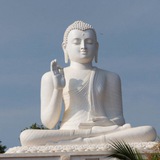
Phra Phuttha Mahanawamintra Sakayamunee Sri Visejchaicharn, Big Buddha at Wat Muang temple in Ang Thong Province, Thailand
🥰1🙏1😎1
Forwarded from Buddha Dharma books
Free Buddhism Dharma ebook
Present Moment Wonderful Moment
Mindfulness Verses for Daily Living
By Thich Nhat Hanh
When I, Thich Nhat Hanh, entered the Tu Hiêu Monastery as a novice in 1942, I received a copy of Gathas for Everyday Use, compiled by the Chinese meditation master Du Ti. Gathas are short verses which we can recite during our daily activities to help us dwell in mindfulness. Du Ti's book of fifty gathas was written for monks and nuns of former times. At Plum Village, where I live in France, we practice gathas when we wake up, when we enter the meditation hall, during meals, and when we wash the dishes. In fact, we recite gathas silently throughout the entire day to help us attend to the present moment. During the summer of 1982, in order to help the children and adults at Plum Village practice mindfulness, we began assembling gathas relevant for life today. The result is this handbook of practical, down-to-earth verses.
Free download here:
https://ftp.budaedu.org/ebooks/pdf/EN189.pdf
===
Present Moment Wonderful Moment
Mindfulness Verses for Daily Living
By Thich Nhat Hanh
When I, Thich Nhat Hanh, entered the Tu Hiêu Monastery as a novice in 1942, I received a copy of Gathas for Everyday Use, compiled by the Chinese meditation master Du Ti. Gathas are short verses which we can recite during our daily activities to help us dwell in mindfulness. Du Ti's book of fifty gathas was written for monks and nuns of former times. At Plum Village, where I live in France, we practice gathas when we wake up, when we enter the meditation hall, during meals, and when we wash the dishes. In fact, we recite gathas silently throughout the entire day to help us attend to the present moment. During the summer of 1982, in order to help the children and adults at Plum Village practice mindfulness, we began assembling gathas relevant for life today. The result is this handbook of practical, down-to-earth verses.
Free download here:
https://ftp.budaedu.org/ebooks/pdf/EN189.pdf
===
👏1🏆1
Dhammapada Verse 270
Balisika Vatthu
Na tena ariyo hoti
yena panani himsati
ahimsa sabbapapnam
"ariyo" ti pavuccati.
Verse 270: He who harms living beings is, for that reason, not an ariya (a Noble One); he who does not harm any living being is called an ariya1.
1. ariya: one who has realized one of the four maggas.
The Story of a Fisherman Named Ariya
While residing at the Jetavana monastery, the Buddha uttered Verse (270) of this book, with reference to a fisherman named Ariya.
Once, there was a fisherman who lived near the north gate of Savatthi. One day through his supernormal power, the Buddha found that time was ripe for the fisherman to attain Sotapatti Fruition. So on his return from the alms-round, the Buddha, followed by the bhikkhus, stopped near the place where Ariya was fishing. When the fisherman saw the Buddha, he threw away his fishing gear and came and stood near the Buddha. The Buddha then proceeded to ask the names of his bhikkhus in the presence of the fisherman, and finally, he asked the name of the fisherman. When the fisher man replied that his name was Ariya, the Buddha said that the Noble Ones (ariyas) do not harm any living being, but since the fisherman was taking the lives of fish he was not worthy of his name.
Then the Buddha spoke in verse as follows:
Verse 270: He who harms living beings is, for that reason, not an ariya (a Noble One); he who does not harm any living being is called an ariya.
At the end of the discourse the fisherman attained Sotapatti Fruition.
===
Ajahn Chah, Buddhist teacher of Thai forest meditation of Theravada Buddhism channel:
https://news.1rj.ru/str/ajahnchah_buddhism
===
Balisika Vatthu
Na tena ariyo hoti
yena panani himsati
ahimsa sabbapapnam
"ariyo" ti pavuccati.
Verse 270: He who harms living beings is, for that reason, not an ariya (a Noble One); he who does not harm any living being is called an ariya1.
1. ariya: one who has realized one of the four maggas.
The Story of a Fisherman Named Ariya
While residing at the Jetavana monastery, the Buddha uttered Verse (270) of this book, with reference to a fisherman named Ariya.
Once, there was a fisherman who lived near the north gate of Savatthi. One day through his supernormal power, the Buddha found that time was ripe for the fisherman to attain Sotapatti Fruition. So on his return from the alms-round, the Buddha, followed by the bhikkhus, stopped near the place where Ariya was fishing. When the fisherman saw the Buddha, he threw away his fishing gear and came and stood near the Buddha. The Buddha then proceeded to ask the names of his bhikkhus in the presence of the fisherman, and finally, he asked the name of the fisherman. When the fisher man replied that his name was Ariya, the Buddha said that the Noble Ones (ariyas) do not harm any living being, but since the fisherman was taking the lives of fish he was not worthy of his name.
Then the Buddha spoke in verse as follows:
Verse 270: He who harms living beings is, for that reason, not an ariya (a Noble One); he who does not harm any living being is called an ariya.
At the end of the discourse the fisherman attained Sotapatti Fruition.
===
Ajahn Chah, Buddhist teacher of Thai forest meditation of Theravada Buddhism channel:
https://news.1rj.ru/str/ajahnchah_buddhism
===
Telegram
Ajahn Chah - Theravada Thailand Buddhism
Collection of teachings of Venerable Ajahn Chah, a foremost meditation and Buddhist teacher from Thailand
👍1🏆1