Forwarded from Ajahn Chah - Theravada Thailand Buddhism
We hope that if the living room is occupied, these unpleasant mental formations will not come up.
Just by holding this child gently, we are soothing our difficult emotions and we can begin to feel at ease.
But all mental formations need to circulate. If we don’t let them come up, it creates bad circulation in our psyche, and symptoms of mental illness and depression begin to manifest in our mind and body.
Sometimes when we have a headache, we take aspirin, but our headache doesn’t go away. Sometimes this kind of headache can be a symptom of mental illness. Perhaps we have allergies. We think it’s a physical problem, but allergies can also be a symptom of mental illness. We are advised by doctors to take drugs, but sometimes these will continue to suppress our internal formations, making our sickness worse.
Dismantling Barriers
If we can learn not to fear our knots of suffering, we slowly begin to let them circulate up into our living room. We begin to learn how to embrace them and transform them with the energy of mindfulness. When we dismantle the barrier between the basement and the living room, blocks of pain will come up and we will have to suffer a bit. Our inner child may have a lot of fear and anger stored up from being down in the basement for so long. There is no way to avoid it.
That is why the practice of mindfulness is so important. If mindfulness is not there, it is very unpleasant to have these seeds come up. But if we know how to generate the energy of mindfulness, it’s very healing to invite them up every day and embrace them. Mindfulness is a strong source of energy that can recognize, embrace, and take care of these negative energies. Perhaps these seeds don’t want to come up at first, perhaps there’s too much fear and distrust, so we may have to coax them a bit. After being embraced for some time, a strong emotion will return to the basement and become a seed again, weaker than before.
Every time you give your internal formations a bath of mindfulness, the blocks of pain in you become lighter. So give your anger, your despair, your fear, a bath of mindfulness every day. After several days or weeks of bringing them up daily and helping them go back down again, you create good circulation in your psyche.
The Function of Mindfulness
The first function of mindfulness is to recognize and not to fight. We can stop at any time and become aware of the child within us. When we recognize the wounded child for the first time, all we need to do is be aware of him or her and say hello. That’s all. Perhaps this child is sad. If we notice this we can just breathe in and say to ourselves, “Breathing in, I know that sorrow has manifested in me. Hello, my sorrow. Breathing out, I will take good care of you.”
Once we have recognized our inner child, the second function of mindfulness is to embrace him or her. This is a very pleasant practice. Instead of fighting our emotions, we are taking good care of ourselves. Mindfulness brings with her an ally—concentration. The first few minutes of recognizing and embracing our inner child with tenderness will bring some relief. The difficult emotions will still be there, but we won’t suffer as much anymore.
After recognizing and embracing our inner child, the third function of mindfulness is to soothe and relieve our difficult emotions. Just by holding this child gently, we are soothing our difficult emotions and we can begin to feel at ease. When we embrace our strong emotions with mindfulness and concentration, we’ll be able to see the roots of these mental formations. We’ll know where our suffering has come from. When we see the roots of things, our suffering will lessen. So mindfulness recognizes, embraces, and relieves.
The energy of mindfulness contains the energy of concentration as well as the energy of insight. Concentration helps us focus on just one thing. With concentration, the energy of looking becomes more powerful and insight is possible. Insight always has the power of liberating us.
Just by holding this child gently, we are soothing our difficult emotions and we can begin to feel at ease.
But all mental formations need to circulate. If we don’t let them come up, it creates bad circulation in our psyche, and symptoms of mental illness and depression begin to manifest in our mind and body.
Sometimes when we have a headache, we take aspirin, but our headache doesn’t go away. Sometimes this kind of headache can be a symptom of mental illness. Perhaps we have allergies. We think it’s a physical problem, but allergies can also be a symptom of mental illness. We are advised by doctors to take drugs, but sometimes these will continue to suppress our internal formations, making our sickness worse.
Dismantling Barriers
If we can learn not to fear our knots of suffering, we slowly begin to let them circulate up into our living room. We begin to learn how to embrace them and transform them with the energy of mindfulness. When we dismantle the barrier between the basement and the living room, blocks of pain will come up and we will have to suffer a bit. Our inner child may have a lot of fear and anger stored up from being down in the basement for so long. There is no way to avoid it.
That is why the practice of mindfulness is so important. If mindfulness is not there, it is very unpleasant to have these seeds come up. But if we know how to generate the energy of mindfulness, it’s very healing to invite them up every day and embrace them. Mindfulness is a strong source of energy that can recognize, embrace, and take care of these negative energies. Perhaps these seeds don’t want to come up at first, perhaps there’s too much fear and distrust, so we may have to coax them a bit. After being embraced for some time, a strong emotion will return to the basement and become a seed again, weaker than before.
Every time you give your internal formations a bath of mindfulness, the blocks of pain in you become lighter. So give your anger, your despair, your fear, a bath of mindfulness every day. After several days or weeks of bringing them up daily and helping them go back down again, you create good circulation in your psyche.
The Function of Mindfulness
The first function of mindfulness is to recognize and not to fight. We can stop at any time and become aware of the child within us. When we recognize the wounded child for the first time, all we need to do is be aware of him or her and say hello. That’s all. Perhaps this child is sad. If we notice this we can just breathe in and say to ourselves, “Breathing in, I know that sorrow has manifested in me. Hello, my sorrow. Breathing out, I will take good care of you.”
Once we have recognized our inner child, the second function of mindfulness is to embrace him or her. This is a very pleasant practice. Instead of fighting our emotions, we are taking good care of ourselves. Mindfulness brings with her an ally—concentration. The first few minutes of recognizing and embracing our inner child with tenderness will bring some relief. The difficult emotions will still be there, but we won’t suffer as much anymore.
After recognizing and embracing our inner child, the third function of mindfulness is to soothe and relieve our difficult emotions. Just by holding this child gently, we are soothing our difficult emotions and we can begin to feel at ease. When we embrace our strong emotions with mindfulness and concentration, we’ll be able to see the roots of these mental formations. We’ll know where our suffering has come from. When we see the roots of things, our suffering will lessen. So mindfulness recognizes, embraces, and relieves.
The energy of mindfulness contains the energy of concentration as well as the energy of insight. Concentration helps us focus on just one thing. With concentration, the energy of looking becomes more powerful and insight is possible. Insight always has the power of liberating us.
🥰1💯1
Forwarded from Ajahn Chah - Theravada Thailand Buddhism
If mindfulness is there, and we know how to keep mindfulness alive, concentration will be there, too. And if we know how to keep concentration alive, insight will also come. The energy of mindfulness enables us to look deeply and gain the insight we need so that transformation is possible.
Adapted from Reconciliation: Healing The Inner Child (2010) by Thich Nhat Hanh.
===
Thich Nhat Hanh (1926-2022) was a renowned Zen teacher and poet, the founder of the Engaged Buddhist movement, and the founder of nine monastic communities, including Plum Village Monastery in France. He was also the author of At Home in the World, The Other Shore, and more than a hundred other books that have sold millions of copies worldwide.
===
Part 1 of 2:
https://news.1rj.ru/str/wordsofbuddha/2644
Part 2 of 2:
https://news.1rj.ru/str/ajahnchah_buddhism/723
===
Words of the Buddha channel:
https://news.1rj.ru/str/wordsofbuddha
===
Adapted from Reconciliation: Healing The Inner Child (2010) by Thich Nhat Hanh.
===
Thich Nhat Hanh (1926-2022) was a renowned Zen teacher and poet, the founder of the Engaged Buddhist movement, and the founder of nine monastic communities, including Plum Village Monastery in France. He was also the author of At Home in the World, The Other Shore, and more than a hundred other books that have sold millions of copies worldwide.
===
Part 1 of 2:
https://news.1rj.ru/str/wordsofbuddha/2644
Part 2 of 2:
https://news.1rj.ru/str/ajahnchah_buddhism/723
===
Words of the Buddha channel:
https://news.1rj.ru/str/wordsofbuddha
===
Telegram
Words of the Buddha
How to Heal Your Inner Child
Healing the pain of our wounded child within, says Thich Nhat Hanh, is key.
By Thich Nhat Hanh
Part 1 of 2
In each of us, there is a young, suffering child. We have all had times of difficulty as children and many of us have…
Healing the pain of our wounded child within, says Thich Nhat Hanh, is key.
By Thich Nhat Hanh
Part 1 of 2
In each of us, there is a young, suffering child. We have all had times of difficulty as children and many of us have…
❤1😍1
Dhammapada Verses 266 and 267
Annatarabrahmana Vatthu
Na tena bhikkhu so hoti
yavata bhikkhate1 pare
vissam dhammam samadaya
bhikkhu hoti na tavata.
Yo'dha punnanca papanca
bahetva brahmacariyava
sankhaya loke carati
sa ve "bhikkhu" ti vuccati.
Verse 266: He does not become a bhikkhu merely because he stands at the door for alms. He cannot become a bhikkhu because he acts according to a faith which is not in conformity with the Dhamma.
Verse 267: In this world, he who lays aside both good and evil, who leads the life of purity, and lives meditating on the khandha aggregates is indeed called a bhikkhu.
1. bhikkhate: lit., begs.
The Story of a Brahmin
While residing at the Jetavana monastery, the Buddha uttered Verses (266) and (267) of this book, with reference to a brahmin.
Once, there was a brahmin who was in the habit of going round for alms. One day, he thought, "Samana Gotama has declared that one who lives by going round for alms is a bhikkhu. That being so, I should also be called a bhikkhu." So thinking, he went to the Buddha and said to him that he (the brahmin) should also be called a bhikkhu, because he also went round for alms-food. To him the Buddha replied, "Brahmin, I do not say that you are a bhikkhu simply because you go round for alms-food. One who professes a wrong faith and acts accordingly is not to be called a bhikkhu. Only he who lives meditating on the impermanence, unsatisfactoriness, and insubstantiality of the aggregates is to be called a bhikkhu."
Then the Buddha spoke in verse as follows:
Verse 266: He does not become a bhikkhu merely because he stands at the door for alms. He cannot become a bhikkhu because he acts according to a faith which is not in conformity with the Dhamma.
Verse 267: In this world, he who lays aside both good and evil, who leads the life of purity, and lives meditating on the khandha aggregates is indeed called a bhikkhu.
===
Words of the Buddha channel:
https://invite.viber.com/?g2=AQAFqzqlj7FmI061PX17rxWMAtZ%2BRuso%2FH2KmHKZSgnv7v9DD8X0bDkKnZDr9JDq
===
Annatarabrahmana Vatthu
Na tena bhikkhu so hoti
yavata bhikkhate1 pare
vissam dhammam samadaya
bhikkhu hoti na tavata.
Yo'dha punnanca papanca
bahetva brahmacariyava
sankhaya loke carati
sa ve "bhikkhu" ti vuccati.
Verse 266: He does not become a bhikkhu merely because he stands at the door for alms. He cannot become a bhikkhu because he acts according to a faith which is not in conformity with the Dhamma.
Verse 267: In this world, he who lays aside both good and evil, who leads the life of purity, and lives meditating on the khandha aggregates is indeed called a bhikkhu.
1. bhikkhate: lit., begs.
The Story of a Brahmin
While residing at the Jetavana monastery, the Buddha uttered Verses (266) and (267) of this book, with reference to a brahmin.
Once, there was a brahmin who was in the habit of going round for alms. One day, he thought, "Samana Gotama has declared that one who lives by going round for alms is a bhikkhu. That being so, I should also be called a bhikkhu." So thinking, he went to the Buddha and said to him that he (the brahmin) should also be called a bhikkhu, because he also went round for alms-food. To him the Buddha replied, "Brahmin, I do not say that you are a bhikkhu simply because you go round for alms-food. One who professes a wrong faith and acts accordingly is not to be called a bhikkhu. Only he who lives meditating on the impermanence, unsatisfactoriness, and insubstantiality of the aggregates is to be called a bhikkhu."
Then the Buddha spoke in verse as follows:
Verse 266: He does not become a bhikkhu merely because he stands at the door for alms. He cannot become a bhikkhu because he acts according to a faith which is not in conformity with the Dhamma.
Verse 267: In this world, he who lays aside both good and evil, who leads the life of purity, and lives meditating on the khandha aggregates is indeed called a bhikkhu.
===
Words of the Buddha channel:
https://invite.viber.com/?g2=AQAFqzqlj7FmI061PX17rxWMAtZ%2BRuso%2FH2KmHKZSgnv7v9DD8X0bDkKnZDr9JDq
===
Viber
Words Of The Buddha
Daily teachings from Buddha Dharma
💯1🆒1
Dhammapada Verses 268 and 269
Titthiya Vatthu
Na monena muni hotimulharupo aviddasu
yo ca tulamva paggayha
varama1 daya pandito.
Papani parivajjeti
sa muni tena so muni
yo munati ubho loke2
"muni" tena pavuccati.
Verses 268 & 269: Not by silence does one become a muni, if one is dull and ignorant. Like one holding a pair of scales, the wise one takes what is good and rejects what is evil. For this reason he is a muni. He who understands both internal and external aggregates is also, for that reason, called a muni.
1. varam: the best, the good, the noble. In this context, it means morality (sila), concentration (samadhi) and knowledge (panna), etc. (The Commentary)
2. ubho loke: lit., both worlds, meaning internal and external aggregates, or one's own aggregates as well as those of others.
The Story of the Followers of Non-Buddhist Doctrines
While residing at the Jetavana monastery, the Buddha uttered Verses (268) and (269) of this book, with reference to some non-Buddhist ascetics.
To those who offered them food or other things, those ascetics would say words of blessing. They would say, "May you be free from danger, may you prosper and get rich, may you live long," etc. At that time, the followers of the Buddha did not say anything after receiving something from their lay-disciples. This was because during the first twenty years after the Buddha's attainment of Buddhahood they were instructed to remain silent on receiving offerings. Since the followers of the Buddha were silent when ascetics of other doctrines were saying things which were pleasing to their disciples, people began to compare the two groups.
When the Buddha heard about this, he permitted the bhikkhus to say words of blessing to their disciples after receiving offerings. As a result of that, more and more people invited the followers of the Buddha for alms. Then, the ascetics of other doctrines remarked with disdain: "We adhere to the practice of the muni and keep silent, whereas the followers of Samana Gotama go about talking exuberantly in the eating places." On hearing those disparaging remarks, the Buddha said, "Bhikkhus! There are some who keep silent because they are ignorant and timid, and some who keep silent because they do not want to share their profound knowledge with others. Only one who has overcome evil is to be called a muni."
Then the Buddha spoke in verse as follows:
Verses 268 & 269: Not by silence does one become a muni, if one is dull and ignorant. Like one holding a pair of scales, the wise one takes what is good and rejects what is evil. For this reason he is a muni. He who understands both internal and external aggregates is also, for that reason, called a muni.
===
Dhammapada, beloved and favorite teachings of the Buddha channel:
https://invite.viber.com/?g2=AQBLD6phsgvP%2F061YjEM3K%2BNeH1Yb372b9mtfQX2EmuBpgoLUoc99BDMfzHghrme
===
Titthiya Vatthu
Na monena muni hotimulharupo aviddasu
yo ca tulamva paggayha
varama1 daya pandito.
Papani parivajjeti
sa muni tena so muni
yo munati ubho loke2
"muni" tena pavuccati.
Verses 268 & 269: Not by silence does one become a muni, if one is dull and ignorant. Like one holding a pair of scales, the wise one takes what is good and rejects what is evil. For this reason he is a muni. He who understands both internal and external aggregates is also, for that reason, called a muni.
1. varam: the best, the good, the noble. In this context, it means morality (sila), concentration (samadhi) and knowledge (panna), etc. (The Commentary)
2. ubho loke: lit., both worlds, meaning internal and external aggregates, or one's own aggregates as well as those of others.
The Story of the Followers of Non-Buddhist Doctrines
While residing at the Jetavana monastery, the Buddha uttered Verses (268) and (269) of this book, with reference to some non-Buddhist ascetics.
To those who offered them food or other things, those ascetics would say words of blessing. They would say, "May you be free from danger, may you prosper and get rich, may you live long," etc. At that time, the followers of the Buddha did not say anything after receiving something from their lay-disciples. This was because during the first twenty years after the Buddha's attainment of Buddhahood they were instructed to remain silent on receiving offerings. Since the followers of the Buddha were silent when ascetics of other doctrines were saying things which were pleasing to their disciples, people began to compare the two groups.
When the Buddha heard about this, he permitted the bhikkhus to say words of blessing to their disciples after receiving offerings. As a result of that, more and more people invited the followers of the Buddha for alms. Then, the ascetics of other doctrines remarked with disdain: "We adhere to the practice of the muni and keep silent, whereas the followers of Samana Gotama go about talking exuberantly in the eating places." On hearing those disparaging remarks, the Buddha said, "Bhikkhus! There are some who keep silent because they are ignorant and timid, and some who keep silent because they do not want to share their profound knowledge with others. Only one who has overcome evil is to be called a muni."
Then the Buddha spoke in verse as follows:
Verses 268 & 269: Not by silence does one become a muni, if one is dull and ignorant. Like one holding a pair of scales, the wise one takes what is good and rejects what is evil. For this reason he is a muni. He who understands both internal and external aggregates is also, for that reason, called a muni.
===
Dhammapada, beloved and favorite teachings of the Buddha channel:
https://invite.viber.com/?g2=AQBLD6phsgvP%2F061YjEM3K%2BNeH1Yb372b9mtfQX2EmuBpgoLUoc99BDMfzHghrme
===
Viber
Dhammapada - Buddha Dharma Teachings
Daily teachings of the Dhammapada, beloved and favorite teachings of the Buddha
👏1💯1
Forwarded from Words of the Buddha
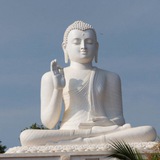
Phra Phuttha Mahanawamintra Sakayamunee Sri Visejchaicharn, Big Buddha at Wat Muang temple in Ang Thong Province, Thailand
🥰1🙏1😎1
Forwarded from Buddha Dharma books
Free Buddhism Dharma ebook
Present Moment Wonderful Moment
Mindfulness Verses for Daily Living
By Thich Nhat Hanh
When I, Thich Nhat Hanh, entered the Tu Hiêu Monastery as a novice in 1942, I received a copy of Gathas for Everyday Use, compiled by the Chinese meditation master Du Ti. Gathas are short verses which we can recite during our daily activities to help us dwell in mindfulness. Du Ti's book of fifty gathas was written for monks and nuns of former times. At Plum Village, where I live in France, we practice gathas when we wake up, when we enter the meditation hall, during meals, and when we wash the dishes. In fact, we recite gathas silently throughout the entire day to help us attend to the present moment. During the summer of 1982, in order to help the children and adults at Plum Village practice mindfulness, we began assembling gathas relevant for life today. The result is this handbook of practical, down-to-earth verses.
Free download here:
https://ftp.budaedu.org/ebooks/pdf/EN189.pdf
===
Present Moment Wonderful Moment
Mindfulness Verses for Daily Living
By Thich Nhat Hanh
When I, Thich Nhat Hanh, entered the Tu Hiêu Monastery as a novice in 1942, I received a copy of Gathas for Everyday Use, compiled by the Chinese meditation master Du Ti. Gathas are short verses which we can recite during our daily activities to help us dwell in mindfulness. Du Ti's book of fifty gathas was written for monks and nuns of former times. At Plum Village, where I live in France, we practice gathas when we wake up, when we enter the meditation hall, during meals, and when we wash the dishes. In fact, we recite gathas silently throughout the entire day to help us attend to the present moment. During the summer of 1982, in order to help the children and adults at Plum Village practice mindfulness, we began assembling gathas relevant for life today. The result is this handbook of practical, down-to-earth verses.
Free download here:
https://ftp.budaedu.org/ebooks/pdf/EN189.pdf
===
👏1🏆1
Dhammapada Verse 270
Balisika Vatthu
Na tena ariyo hoti
yena panani himsati
ahimsa sabbapapnam
"ariyo" ti pavuccati.
Verse 270: He who harms living beings is, for that reason, not an ariya (a Noble One); he who does not harm any living being is called an ariya1.
1. ariya: one who has realized one of the four maggas.
The Story of a Fisherman Named Ariya
While residing at the Jetavana monastery, the Buddha uttered Verse (270) of this book, with reference to a fisherman named Ariya.
Once, there was a fisherman who lived near the north gate of Savatthi. One day through his supernormal power, the Buddha found that time was ripe for the fisherman to attain Sotapatti Fruition. So on his return from the alms-round, the Buddha, followed by the bhikkhus, stopped near the place where Ariya was fishing. When the fisherman saw the Buddha, he threw away his fishing gear and came and stood near the Buddha. The Buddha then proceeded to ask the names of his bhikkhus in the presence of the fisherman, and finally, he asked the name of the fisherman. When the fisher man replied that his name was Ariya, the Buddha said that the Noble Ones (ariyas) do not harm any living being, but since the fisherman was taking the lives of fish he was not worthy of his name.
Then the Buddha spoke in verse as follows:
Verse 270: He who harms living beings is, for that reason, not an ariya (a Noble One); he who does not harm any living being is called an ariya.
At the end of the discourse the fisherman attained Sotapatti Fruition.
===
Ajahn Chah, Buddhist teacher of Thai forest meditation of Theravada Buddhism channel:
https://news.1rj.ru/str/ajahnchah_buddhism
===
Balisika Vatthu
Na tena ariyo hoti
yena panani himsati
ahimsa sabbapapnam
"ariyo" ti pavuccati.
Verse 270: He who harms living beings is, for that reason, not an ariya (a Noble One); he who does not harm any living being is called an ariya1.
1. ariya: one who has realized one of the four maggas.
The Story of a Fisherman Named Ariya
While residing at the Jetavana monastery, the Buddha uttered Verse (270) of this book, with reference to a fisherman named Ariya.
Once, there was a fisherman who lived near the north gate of Savatthi. One day through his supernormal power, the Buddha found that time was ripe for the fisherman to attain Sotapatti Fruition. So on his return from the alms-round, the Buddha, followed by the bhikkhus, stopped near the place where Ariya was fishing. When the fisherman saw the Buddha, he threw away his fishing gear and came and stood near the Buddha. The Buddha then proceeded to ask the names of his bhikkhus in the presence of the fisherman, and finally, he asked the name of the fisherman. When the fisher man replied that his name was Ariya, the Buddha said that the Noble Ones (ariyas) do not harm any living being, but since the fisherman was taking the lives of fish he was not worthy of his name.
Then the Buddha spoke in verse as follows:
Verse 270: He who harms living beings is, for that reason, not an ariya (a Noble One); he who does not harm any living being is called an ariya.
At the end of the discourse the fisherman attained Sotapatti Fruition.
===
Ajahn Chah, Buddhist teacher of Thai forest meditation of Theravada Buddhism channel:
https://news.1rj.ru/str/ajahnchah_buddhism
===
Telegram
Ajahn Chah - Theravada Thailand Buddhism
Collection of teachings of Venerable Ajahn Chah, a foremost meditation and Buddhist teacher from Thailand
👍1🏆1
Forwarded from Ajahn Chah - Theravada Thailand Buddhism
On Meditation
By Ajahn Chah
To calm the mind means to find the right balance. If you try to force your mind too much it goes too far; if you don't try enough it doesn't get there, it misses the point of balance.
Normally the mind isn't still, it's moving all the time. We must strengthen the mind. Making the mind strong and making the body strong are not the same. To make the body strong we have to exercise it, to push it, in order to make it strong, but to make the mind strong means to make it peaceful, not to go thinking of this and that. For most of us the mind has never been peaceful, it has never had the energy of samadhi, so we must establish it within a boundary. We sit in meditation, staying with the 'one who knows'.
If we force our breath to be too long or too short, we're not balanced, the mind won't become peaceful. It's like when we first start to use a pedal sewing machine. At first we just practise pedalling the machine to get our coordination right, before we actually sew anything. Following the breath is similar. We don't get concerned over how long or short, weak or strong it is, we just note it. We simply let it be, following the natural breathing.
When it's balanced, we take the breathing as our meditation object. When we breathe in, the beginning of the breath is at the nose-tip, the middle of the breath at the chest and the end of the breath at the abdomen. This is the path of the breath. When we breathe out, the beginning of the breath is at the abdomen, the middle at the chest and the end at the nose-tip. Simply take note of this path of the breath at the nosetip, the chest and the abdomen, then at the abdomen, the chest and the tip of the nose. We take note of these three points in order to make the mind firm, to limit mental activity so that mindfulness and self-awareness can easily arise.
When our attention settles on these three points, we can let them go and note the in and out breathing, concentrating solely at the nose-tip or the upper lip, where the air passes on its in and out passage. We don't have to follow the breath, just to establish mindfulness in front of us at the nose-tip, and note the breath at this one point - entering, leaving, entering, leaving.
There's no need to think of anything special, just concentrate on this simple task for now, having continuous presence of mind. There's nothing more to do, just breathing in and out. Soon the mind becomes peaceful, the breath refined. The mind and body become light. This is the right state for the work of meditation.
When sitting in meditation the mind becomes refined, but whatever state it's in we should try to be aware of it, to know it. Mental activity is there together with tranquillity. There is vitakka. Vitakka is the action of bringing the mind to the theme of contemplation. If there is not much mindfulness, there will be not much vitakka. Then vicara, the contemplation around that theme, follows. Various weak mental impressions may arise from time to time but our self-awareness is the important thing-whatever may be happening we know it continuously. As we go deeper we are constantly aware of the state of our meditation, knowing whether or not the mind is firmly established. Thus, both concentration and awareness are present.
To have a peaceful mind does not mean that there's nothing happening, mental impressions do arise. For instance, when we talk about the first level of absorption, we say it has five factors. Along with vitakka and vicāra, pīti (rapture) arises with the theme of contemplation and then sukha (happiness). These four things all lie together in the mind established in tranquillity. They are as one state.
The fifth factor is ekaggatā or one-pointedness. You may wonder how there can be one-pointedness when there are all these other factors as well. This is because they all become unified on that foundation of tranquillity. Together they are called a state of samādhi. They are not everyday states of mind, they are factors of absorption.
By Ajahn Chah
To calm the mind means to find the right balance. If you try to force your mind too much it goes too far; if you don't try enough it doesn't get there, it misses the point of balance.
Normally the mind isn't still, it's moving all the time. We must strengthen the mind. Making the mind strong and making the body strong are not the same. To make the body strong we have to exercise it, to push it, in order to make it strong, but to make the mind strong means to make it peaceful, not to go thinking of this and that. For most of us the mind has never been peaceful, it has never had the energy of samadhi, so we must establish it within a boundary. We sit in meditation, staying with the 'one who knows'.
If we force our breath to be too long or too short, we're not balanced, the mind won't become peaceful. It's like when we first start to use a pedal sewing machine. At first we just practise pedalling the machine to get our coordination right, before we actually sew anything. Following the breath is similar. We don't get concerned over how long or short, weak or strong it is, we just note it. We simply let it be, following the natural breathing.
When it's balanced, we take the breathing as our meditation object. When we breathe in, the beginning of the breath is at the nose-tip, the middle of the breath at the chest and the end of the breath at the abdomen. This is the path of the breath. When we breathe out, the beginning of the breath is at the abdomen, the middle at the chest and the end at the nose-tip. Simply take note of this path of the breath at the nosetip, the chest and the abdomen, then at the abdomen, the chest and the tip of the nose. We take note of these three points in order to make the mind firm, to limit mental activity so that mindfulness and self-awareness can easily arise.
When our attention settles on these three points, we can let them go and note the in and out breathing, concentrating solely at the nose-tip or the upper lip, where the air passes on its in and out passage. We don't have to follow the breath, just to establish mindfulness in front of us at the nose-tip, and note the breath at this one point - entering, leaving, entering, leaving.
There's no need to think of anything special, just concentrate on this simple task for now, having continuous presence of mind. There's nothing more to do, just breathing in and out. Soon the mind becomes peaceful, the breath refined. The mind and body become light. This is the right state for the work of meditation.
When sitting in meditation the mind becomes refined, but whatever state it's in we should try to be aware of it, to know it. Mental activity is there together with tranquillity. There is vitakka. Vitakka is the action of bringing the mind to the theme of contemplation. If there is not much mindfulness, there will be not much vitakka. Then vicara, the contemplation around that theme, follows. Various weak mental impressions may arise from time to time but our self-awareness is the important thing-whatever may be happening we know it continuously. As we go deeper we are constantly aware of the state of our meditation, knowing whether or not the mind is firmly established. Thus, both concentration and awareness are present.
To have a peaceful mind does not mean that there's nothing happening, mental impressions do arise. For instance, when we talk about the first level of absorption, we say it has five factors. Along with vitakka and vicāra, pīti (rapture) arises with the theme of contemplation and then sukha (happiness). These four things all lie together in the mind established in tranquillity. They are as one state.
The fifth factor is ekaggatā or one-pointedness. You may wonder how there can be one-pointedness when there are all these other factors as well. This is because they all become unified on that foundation of tranquillity. Together they are called a state of samādhi. They are not everyday states of mind, they are factors of absorption.
Telegram
Words of the Buddha
Daily teachings of Buddha Dharma
🥰1💯1
Forwarded from Ajahn Chah - Theravada Thailand Buddhism
There are these five characteristics, but they do not disturb the basic tranquillity. There is vitakka, but it does not disturb the mind; vicara, rapture and happiness arise but do not disturb the mind. The mind is therefore as one with these factors. The first level of absorption is like this.
We don't have to call it first jhana, second jhana, third jhana and so on, let's just call it 'a peaceful mind'. As the mind becomes progressively calmer it will dispense with vitakka and vicara, leaving only rapture and happiness. Why does the mind discard vitakka and vicara? This is because, as the mind becomes more refined, the activities of vitakka and vicara are too coarse to remain. At this stage, as the mind leaves off vitakka and vicara, feelings of great rapture can arise, tears may gush out. But as the samadhi deepens rapture, too, is discarded, leaving only happiness and one-pointedness, until finally even happiness goes and the mind reaches its greatest refinement. There are only equanimity and one-pointedness, all else has been left behind. The mind stands unmoving
Once the mind is peaceful this can happen. You don't have to think a lot about it, it just happens by itself when the causal factors are ripe. This is called the energy of a peaceful mind. In this state the mind is not drowsy; the five hindrances, sense desire, aversion, restlessness, dullness and doubt, have all fled.
But if mental energy is still not strong and mindfulness weak, there will occasionally arise intruding mental impressions. The mind is peaceful but it's as if there's a 'cloudiness' within the calm. It's not a normal sort of drowsiness though, some impressions will manifest - maybe we'll hear a sound or see a dog or something. It's not really clear but it's not a dream either. This is because these five factors have become unbalanced and weak.
The mind tends to play tricks within these levels of tranquillity. 'Imagery' will sometimes arise when the mind is in this state, through any of the senses, and the meditator may not be able to tell exactly what is happening. ''Am I sleeping? No. Is it a dream? No, it's not a dream...'' These impressions arise from a middling sort of tranquillity; but if the mind is truly calm and clear we don't doubt the various mental impressions or imagery which arise. Questions like, ''Did I drift off then? Was I sleeping? Did I get lost?...'' don't arise, for they are characteristics of a mind which is still doubting. ''Am I asleep or awake?''... Here, the mind is fuzzy. This is the mind getting lost in its moods. It's like the moon going behind a cloud. You can still see the moon but the clouds covering it render it hazy. It's not like the moon which has emerged from behind the clouds clear, sharp and bright.
When the mind is peaceful and established firmly in mindfulness and self-awareness, there will be no doubt concerning the various phenomena which we encounter. The mind will truly be beyond the hindrances. We will clearly know everything which arises in the mind as it is. We do not doubt because the mind is clear and bright. The mind which reaches samadhi is like this
Some people find it hard to enter samadhi because they don't have the right tendencies. There is samadhi, but it's not strong or firm. However, one can attain peace through the use of wisdom, through contemplating and seeing the truth of things, solving problems that way. This is using wisdom rather than the power of samadhi. To attain calm in practice, it's not necessary to be sitting in meditation, for instance. Just ask yourself, ''Eh, what is that?... '' and solve your problem right there! A person with wisdom is like this. Perhaps he can't really attain high levels of samadhi, although there must be some, just enough to cultivate wisdom. It's like the difference between farming rice and farming corn. One can depend on rice more than corn for one's livelihood. Our practice can be like this, we depend more on wisdom to solve problems. When we see the truth, peace arises.
We don't have to call it first jhana, second jhana, third jhana and so on, let's just call it 'a peaceful mind'. As the mind becomes progressively calmer it will dispense with vitakka and vicara, leaving only rapture and happiness. Why does the mind discard vitakka and vicara? This is because, as the mind becomes more refined, the activities of vitakka and vicara are too coarse to remain. At this stage, as the mind leaves off vitakka and vicara, feelings of great rapture can arise, tears may gush out. But as the samadhi deepens rapture, too, is discarded, leaving only happiness and one-pointedness, until finally even happiness goes and the mind reaches its greatest refinement. There are only equanimity and one-pointedness, all else has been left behind. The mind stands unmoving
Once the mind is peaceful this can happen. You don't have to think a lot about it, it just happens by itself when the causal factors are ripe. This is called the energy of a peaceful mind. In this state the mind is not drowsy; the five hindrances, sense desire, aversion, restlessness, dullness and doubt, have all fled.
But if mental energy is still not strong and mindfulness weak, there will occasionally arise intruding mental impressions. The mind is peaceful but it's as if there's a 'cloudiness' within the calm. It's not a normal sort of drowsiness though, some impressions will manifest - maybe we'll hear a sound or see a dog or something. It's not really clear but it's not a dream either. This is because these five factors have become unbalanced and weak.
The mind tends to play tricks within these levels of tranquillity. 'Imagery' will sometimes arise when the mind is in this state, through any of the senses, and the meditator may not be able to tell exactly what is happening. ''Am I sleeping? No. Is it a dream? No, it's not a dream...'' These impressions arise from a middling sort of tranquillity; but if the mind is truly calm and clear we don't doubt the various mental impressions or imagery which arise. Questions like, ''Did I drift off then? Was I sleeping? Did I get lost?...'' don't arise, for they are characteristics of a mind which is still doubting. ''Am I asleep or awake?''... Here, the mind is fuzzy. This is the mind getting lost in its moods. It's like the moon going behind a cloud. You can still see the moon but the clouds covering it render it hazy. It's not like the moon which has emerged from behind the clouds clear, sharp and bright.
When the mind is peaceful and established firmly in mindfulness and self-awareness, there will be no doubt concerning the various phenomena which we encounter. The mind will truly be beyond the hindrances. We will clearly know everything which arises in the mind as it is. We do not doubt because the mind is clear and bright. The mind which reaches samadhi is like this
Some people find it hard to enter samadhi because they don't have the right tendencies. There is samadhi, but it's not strong or firm. However, one can attain peace through the use of wisdom, through contemplating and seeing the truth of things, solving problems that way. This is using wisdom rather than the power of samadhi. To attain calm in practice, it's not necessary to be sitting in meditation, for instance. Just ask yourself, ''Eh, what is that?... '' and solve your problem right there! A person with wisdom is like this. Perhaps he can't really attain high levels of samadhi, although there must be some, just enough to cultivate wisdom. It's like the difference between farming rice and farming corn. One can depend on rice more than corn for one's livelihood. Our practice can be like this, we depend more on wisdom to solve problems. When we see the truth, peace arises.
👍1😍1
Forwarded from Ajahn Chah - Theravada Thailand Buddhism
The two ways are not the same. Some people have insight and are strong in wisdom but do not have much samadhi. When they sit in meditation they aren't very peaceful. They tend to think a lot, contemplating this and that, until eventually they contemplate happiness and suffering and see the truth of them. Some incline more towards this than samadhi. Whether standing, walking, sitting or lying, enlightenment of the Dhamma can take place. Through seeing, through relinquishing, they attain peace. They attain peace through knowing the truth, through going beyond doubt, because they have seen it for themselves.
Other people have only little wisdom but their samadhi is very strong. They can enter very deep samadhi quickly, but not having much wisdom, they cannot catch their defilements, they don't know them. They can't solve their problems.
But regardless of whichever approach we use, we must do away with wrong thinking, leaving only right view. We must get rid of confusion, leaving only peace.
Either way we end up at the same place. There are these two sides to practice, but these two things, calm and insight, go together. We can't do away with either of them. They must go together.
That which 'looks over' the various factors which arise in meditation is sati, mindfulness. This sati is a condition which, through practice, can help other factors to arise. Sati is life. Whenever we don't have sati, when we are heedless, it's as if we are dead. If we have no sati, then our speech and actions have no meaning. Sati is simply recollection. It's a cause for the arising of self-awareness and wisdom. Whatever virtues we have cultivated are imperfect if lacking in sati. Sati is that which watches over us while standing, walking, sitting and lying. Even when we are no longer in samādhi, sati should be present throughout.
Whatever we do we take care. A sense of shame will arise. We will feel ashamed about the things we do which aren't correct. As shame increases, our collectedness will increase as well. When collectedness increases, heedlessness will disappear. Even if we don't sit in meditation, these factors will be present in the mind.
And this arises because of cultivating sati. Develop sati! This is the quality which looks over the work we are doing in the present. It has real value. We should know ourselves at all times. If we know ourselves like this, right will distinguish itself from wrong, the path will become clear, and cause for all shame will dissolve. Wisdom will arise.
We can bring the practice all together as morality, concentration and wisdom. To be collected, to be controlled, this is morality. The firm establishing of the mind within that control is concentration. Complete, overall knowledge within the activity in which we are engaged is wisdom. The practice in brief is just morality, concentration and wisdom, or in other words, the path. There is no other way.
===
Words of the Buddha channel:
https://news.1rj.ru/str/wordsofbuddha
===
Other people have only little wisdom but their samadhi is very strong. They can enter very deep samadhi quickly, but not having much wisdom, they cannot catch their defilements, they don't know them. They can't solve their problems.
But regardless of whichever approach we use, we must do away with wrong thinking, leaving only right view. We must get rid of confusion, leaving only peace.
Either way we end up at the same place. There are these two sides to practice, but these two things, calm and insight, go together. We can't do away with either of them. They must go together.
That which 'looks over' the various factors which arise in meditation is sati, mindfulness. This sati is a condition which, through practice, can help other factors to arise. Sati is life. Whenever we don't have sati, when we are heedless, it's as if we are dead. If we have no sati, then our speech and actions have no meaning. Sati is simply recollection. It's a cause for the arising of self-awareness and wisdom. Whatever virtues we have cultivated are imperfect if lacking in sati. Sati is that which watches over us while standing, walking, sitting and lying. Even when we are no longer in samādhi, sati should be present throughout.
Whatever we do we take care. A sense of shame will arise. We will feel ashamed about the things we do which aren't correct. As shame increases, our collectedness will increase as well. When collectedness increases, heedlessness will disappear. Even if we don't sit in meditation, these factors will be present in the mind.
And this arises because of cultivating sati. Develop sati! This is the quality which looks over the work we are doing in the present. It has real value. We should know ourselves at all times. If we know ourselves like this, right will distinguish itself from wrong, the path will become clear, and cause for all shame will dissolve. Wisdom will arise.
We can bring the practice all together as morality, concentration and wisdom. To be collected, to be controlled, this is morality. The firm establishing of the mind within that control is concentration. Complete, overall knowledge within the activity in which we are engaged is wisdom. The practice in brief is just morality, concentration and wisdom, or in other words, the path. There is no other way.
===
Words of the Buddha channel:
https://news.1rj.ru/str/wordsofbuddha
===
Telegram
Words of the Buddha
Daily teachings of Buddha Dharma
👏1🤗1
Dhammapada Verses 271 and 272
Sambahulasiladisampannabhikkhu Vatthu
Na silabbatamattena
bahusaccena va pana
atha va samadhilabhena
vivittasayanena va.
Phusami nekkhammasukham1
aputhujjanasevitam
bhikkhu vissasamapadi
appatto asavakkhayam.
Verses 271 & 272: Not only by mere moral practice, nor by much learning, nor by acquiring concentration, nor by dwelling in seclusion, nor by assuring oneself, "I enjoy the bliss of Anagami Fruition that is not enjoyed by common worldlings (puthujjanas)," should the bhikkhu, rest content without attaining the extinction of moral intoxicants (asavas) [i.e., without attaining arahatship].
1. nekkhammasukham: In this context, Anagamisukham. i.e., Anagami Fruition, the fruition that follows the attainment ot Anagami Magga.
The Story of Some Bhikkhus
While residing at the Jetavana monastery, the Buddha uttered Verses (271) and (272) of this book, with reference to some bhikkhus.
Once, there were some bhikkhus who were endowed with virtue; some of them had strictly observed the austere practices (dhutanga), some had wide knowledge of' the Dhamma, some had achieved mental absorption (jhana), some had achieved Anagami Phala, etc. All of them thought that since they had achieved that much, it would be quite easy for them to attain Arahatta Phala. With this thought they went to the Buddha.
The Buddha asked them, "Bhikkhus, have you attained Arahatta Phala?" Then they replied that they were in such a condition that it would not be difficult for them to attain Arahatta Phala at any time. To them the Buddha said, "Bhikkhus! Just because you are endowed with morality (sila), just because you have attained Anagami Phala, you should not be complacent and think that there is just a little more to be done; unless you have eradicated all moral intoxicants (asavas), you must not think that you have realized perfect bliss of Arahatta Fruition."
Then the Buddha spoke in verse as follows:
Verses 271 & 272: Not only by mere moral practice, nor by much learning, nor by acquiring concentration, nor by dwelling in seclusion, nor by assuring oneself, "I enjoy the bliss of Anagami Fruition that is not enjoyed by common worldlings (puthujjanas)," should the bhikkhu, rest content without attaining the extinction of moral intoxicants (asavas) [i.e., without attaining arahatship].
At the end of the discourse all those bhikkhus attained arahatship.
End of Chapter Nineteen: The Just or the Righteous
===
Free Buddhism books, teachings, podcasts and videos from Theravada, Mahayana and Vajrayana traditions:
https://news.1rj.ru/str/buddha_ebooks
===
Sambahulasiladisampannabhikkhu Vatthu
Na silabbatamattena
bahusaccena va pana
atha va samadhilabhena
vivittasayanena va.
Phusami nekkhammasukham1
aputhujjanasevitam
bhikkhu vissasamapadi
appatto asavakkhayam.
Verses 271 & 272: Not only by mere moral practice, nor by much learning, nor by acquiring concentration, nor by dwelling in seclusion, nor by assuring oneself, "I enjoy the bliss of Anagami Fruition that is not enjoyed by common worldlings (puthujjanas)," should the bhikkhu, rest content without attaining the extinction of moral intoxicants (asavas) [i.e., without attaining arahatship].
1. nekkhammasukham: In this context, Anagamisukham. i.e., Anagami Fruition, the fruition that follows the attainment ot Anagami Magga.
The Story of Some Bhikkhus
While residing at the Jetavana monastery, the Buddha uttered Verses (271) and (272) of this book, with reference to some bhikkhus.
Once, there were some bhikkhus who were endowed with virtue; some of them had strictly observed the austere practices (dhutanga), some had wide knowledge of' the Dhamma, some had achieved mental absorption (jhana), some had achieved Anagami Phala, etc. All of them thought that since they had achieved that much, it would be quite easy for them to attain Arahatta Phala. With this thought they went to the Buddha.
The Buddha asked them, "Bhikkhus, have you attained Arahatta Phala?" Then they replied that they were in such a condition that it would not be difficult for them to attain Arahatta Phala at any time. To them the Buddha said, "Bhikkhus! Just because you are endowed with morality (sila), just because you have attained Anagami Phala, you should not be complacent and think that there is just a little more to be done; unless you have eradicated all moral intoxicants (asavas), you must not think that you have realized perfect bliss of Arahatta Fruition."
Then the Buddha spoke in verse as follows:
Verses 271 & 272: Not only by mere moral practice, nor by much learning, nor by acquiring concentration, nor by dwelling in seclusion, nor by assuring oneself, "I enjoy the bliss of Anagami Fruition that is not enjoyed by common worldlings (puthujjanas)," should the bhikkhu, rest content without attaining the extinction of moral intoxicants (asavas) [i.e., without attaining arahatship].
At the end of the discourse all those bhikkhus attained arahatship.
End of Chapter Nineteen: The Just or the Righteous
===
Free Buddhism books, teachings, podcasts and videos from Theravada, Mahayana and Vajrayana traditions:
https://news.1rj.ru/str/buddha_ebooks
===
Telegram
Buddha Dharma books
Free Buddhism books, teachings, podcasts and videos from Theravada, Mahayana and Vajrayana traditions
👏1🆒1