The king next ordered his men to further investigate the murder of Sundari. On investigation, they found out that Sundari had died at the hands of some drunkards. So they were brought to the king. When questioned, the drunkards disclosed that they were hired by the ascetics to kill Sundari and put her body near the Jetavana monastery. The king then sent for the non-Buddhist ascetics, and they finally confessed their role in the murder of Sundari. The king then ordered them to go round the town and confess their guilt to the people. So they went round the town saying, "We are the ones who killed Sundari. We have falsely accused the disciples of Gotama just to bring disgrace on Gotama.
The disciples of Gotama are innocent, only we are guilty of the crime." As a result of this episode, the power, the glory and the fortune of the Buddha were very much enhanced.
===
Tibetan Buddhism - Vajrayana, Tantrayana and esoteric Buddhism channel:
https://news.1rj.ru/str/tibetanbuddha
Vajrayana Tantrayana Buddhism channel:
https://news.1rj.ru/str/tantrayanabuddhism
===
The disciples of Gotama are innocent, only we are guilty of the crime." As a result of this episode, the power, the glory and the fortune of the Buddha were very much enhanced.
===
Tibetan Buddhism - Vajrayana, Tantrayana and esoteric Buddhism channel:
https://news.1rj.ru/str/tibetanbuddha
Vajrayana Tantrayana Buddhism channel:
https://news.1rj.ru/str/tantrayanabuddhism
===
Telegram
Tibetan Buddhism Vajrayana Tantrayana esoteric tradition
Buddha Dharma teachings from the esoteric Vajrayana or Tantrayana Buddhism, includes all major schools Nyingma, Kagyu, Gelug, Sakya, Jonang and Bonpo.
👍1👏1
Who is the individual like a line drawn in stone? It’s an individual who is often angry, & their anger lingers for a long time. It’s like a line drawn in stone, which isn’t quickly worn away by wind & water, but lasts for a long time. In the same way, an individual is often angry, & their anger lingers for a long time.
... like a line drawn in sand? It’s someone is often angry, but their anger doesn’t linger long. It’s like a line drawn in sand, which is quickly worn away by wind & water, & doesn’t last long. In the same way, someone is often angry, but their anger doesn’t linger long.
... like a line drawn in water? It’s someone who, though spoken to by someone in a rough, harsh, & disagreeable manner, still stays in touch, interacts with, & greets them. It’s like a line drawn in water, which vanishes right away, & doesn’t last long. In the same way, someone, though spoken to by someone in a rough, harsh, & disagreeable manner, still stays in touch, interacts with, & greets them.
AN 3.123 : Lekha sutta
... like a line drawn in sand? It’s someone is often angry, but their anger doesn’t linger long. It’s like a line drawn in sand, which is quickly worn away by wind & water, & doesn’t last long. In the same way, someone is often angry, but their anger doesn’t linger long.
... like a line drawn in water? It’s someone who, though spoken to by someone in a rough, harsh, & disagreeable manner, still stays in touch, interacts with, & greets them. It’s like a line drawn in water, which vanishes right away, & doesn’t last long. In the same way, someone, though spoken to by someone in a rough, harsh, & disagreeable manner, still stays in touch, interacts with, & greets them.
AN 3.123 : Lekha sutta
❤3🤗1😎1
Free Buddhism Dharma ebook
The Illustrated Dhammapada
By Venerable K. Sri Dhammananda
Free download available:
https://ftp.budaedu.org/ebooks/pdf/EN214.pdf
===
The Illustrated Dhammapada
By Venerable K. Sri Dhammananda
Free download available:
https://ftp.budaedu.org/ebooks/pdf/EN214.pdf
===
❤1🥰1🤗1
Free Buddhism Dharma ebook
The Illustrated Dhammapada
By Venerable K. Sri Dhammananda
The stories recorded in the Dhammapada give us a vivid picture of the Supreme Teacher. Among the Buddha's lay disciples were kings like Bimbisara and Pasenadi; millionaires like Anātha Pindika, courtesans like Sirima, together with a host of ordinary citizens: barbers, goldsmiths, elephant trainers, acrobats, slaves, hunters, fishermen, florists, butchers, weavers and boatmen. Many benefited from his teachings. Some went on their own way, unable to gain anything.
The stories of the Dhammapada have touched the hearts and minds of mankind because they deal with true human feelings. They have pathos, as when Patacara lost her whole family in a series of accidents: they have humour as when we are told that a monk who repeatedly rejoined the Order had his head shaved so many times that it was 'like a whetting stone'; they have romance, as when Nanda pines for the bride he has left behind to join the Order; they have intrigue, as when the heretics employ a courtesan to accuse the Buddha of adultery and as when Magandiya successfully plots against the death of saintly queen who is a follower of the Buddha; they have politics, as when the Buddha's relatives are poised for battle on both sides ofthe Rohini river because of a quarrel over irrigation and they have drama, as when Devadatta tries repeatedly to battle the Buddha for supremacy and meets a woeful end.
Free download available:
https://ftp.budaedu.org/ebooks/pdf/EN214.pdf
===
The Illustrated Dhammapada
By Venerable K. Sri Dhammananda
The stories recorded in the Dhammapada give us a vivid picture of the Supreme Teacher. Among the Buddha's lay disciples were kings like Bimbisara and Pasenadi; millionaires like Anātha Pindika, courtesans like Sirima, together with a host of ordinary citizens: barbers, goldsmiths, elephant trainers, acrobats, slaves, hunters, fishermen, florists, butchers, weavers and boatmen. Many benefited from his teachings. Some went on their own way, unable to gain anything.
The stories of the Dhammapada have touched the hearts and minds of mankind because they deal with true human feelings. They have pathos, as when Patacara lost her whole family in a series of accidents: they have humour as when we are told that a monk who repeatedly rejoined the Order had his head shaved so many times that it was 'like a whetting stone'; they have romance, as when Nanda pines for the bride he has left behind to join the Order; they have intrigue, as when the heretics employ a courtesan to accuse the Buddha of adultery and as when Magandiya successfully plots against the death of saintly queen who is a follower of the Buddha; they have politics, as when the Buddha's relatives are poised for battle on both sides ofthe Rohini river because of a quarrel over irrigation and they have drama, as when Devadatta tries repeatedly to battle the Buddha for supremacy and meets a woeful end.
Free download available:
https://ftp.budaedu.org/ebooks/pdf/EN214.pdf
===
🕊1💯1
Forwarded from Words of the Buddha
Chùa Thầy temple, "Temple of Heavenly Blessings", a Zen Buddhism temple built in the 11th century during the reign of Emperor Lý Nhân Tông of the Lý dynasty, Quốc Oai District, Hanoi, Vietnam.
👍3❤1👏1😍1🏆1
Forwarded from Words of the Buddha
How to overcome fear
Meet a Teacher: Phra Ajahn Suchart Abhijato
Like many Thai Forest teachers before him, Ajahn Suchart eschews noscriptural study and places emphasis on meditation, including concentration practices like anapanasati (mindfulness of the breath) and repeatedly chanting Buddho (“Buddha”) as a mantra. “Dhamma that comes from just studying is different from Dhamma that comes from meditation practice,” Ajahn Suchart writes. “We call Dhamma that is the result of meditation practice ‘genuine Dhamma.’ ”
“I never laid out a plan or my life’s goal.… My destination is the coffin. How I get there is another matter.”
Every Saturday, Sunday, national holiday, and Observance day, Ajahn Suchart gives a dhamma talk outside his kuti (meditation hut). Some of the talks are recorded and distributed freely on his website, along with his books. In addition to his work at the monastery, Ajahn Suchart also hosts weekly Zoom meetings to answer questions in Thai and English for domestic and international audiences alike. But beyond these brief windows of communication, Ajahn Suchart chooses not to interact with the outside world, spending most of his time practicing instead. “When the day’s Dhamma talk is over, my day is done. I do not further engage with anyone,” he writes.
Despite receiving numerous offers to travel and teach abroad, Ajahn Suchart seems content doing exactly what he’s doing, exactly where he is. “I never laid out a plan or my life’s goal.… My destination is the coffin. How I get there is another matter.”
Q: How do you overcome fear?
By teaching yourself the truth of the three characteristics: anicca (impermanence), dukkha (suffering), and anatta (nonself). When you know that you will die one day, you will not be afraid. We are afraid because we want to live forever. We don’t want to die. We cannot accept the truth. Once you see that life is like the rising and setting of the sun, you will not be afraid of dying; it is like the setting of the sun. You have to teach yourself all the time that one day you will die, using this as your meditation object. It will make your mind calm and peaceful.
Monks live in the forest in order to be close to life-threatening situations that will spur us to let go of our attachment to our bodies. When we have truly let go, we will not be affected by whatever happens to the body. It’s better to live without fear for one day than to live with fear for a hundred years, because fear is very damaging to the mind. You can get rid of fear by accepting the truth through the practice of meditation.
You will need a calm mind to reflect on this truth. If your mind is not calm, you will be prevented by your aversion from contemplating this truth. Aversion is delusion’s protective mechanism, but the truth will liberate you from it.
You must first calm your mind by concentrating on your breathing. Once you have achieved some calm, you can then contemplate the three characteristics of existence, the fact that you will die one day. You may be able to do this for a while. But eventually, the calm will disappear and the delusion will come back, bringing with it an aversion to the truth. You must then meditate to calm your mind again. When the mind becomes calm, you can then return to contemplating impermanence. Go back and forth like this until the truth sinks deeply into your mind, and you will find that accepting it is more beneficial than denying it.
Denial of the truth will always cause you to be afraid. But once you have accepted it, you will never be afraid. That’s all there is to it. The problem is in your mind. You can’t change external things. Whether you think about it or not, you will die anyway. But by thinking about it and accepting it, you will get rid of your fear; if you don’t think about it and deny it instead, you will always be afraid.
===
From Dhamma for the Asking Volume 2 by Ajahn Suchart Abhijato.
===
Dhammapada, beloved and favorite teachings of the Buddha channel:
https://news.1rj.ru/str/dhammapadas
===
Meet a Teacher: Phra Ajahn Suchart Abhijato
Like many Thai Forest teachers before him, Ajahn Suchart eschews noscriptural study and places emphasis on meditation, including concentration practices like anapanasati (mindfulness of the breath) and repeatedly chanting Buddho (“Buddha”) as a mantra. “Dhamma that comes from just studying is different from Dhamma that comes from meditation practice,” Ajahn Suchart writes. “We call Dhamma that is the result of meditation practice ‘genuine Dhamma.’ ”
“I never laid out a plan or my life’s goal.… My destination is the coffin. How I get there is another matter.”
Every Saturday, Sunday, national holiday, and Observance day, Ajahn Suchart gives a dhamma talk outside his kuti (meditation hut). Some of the talks are recorded and distributed freely on his website, along with his books. In addition to his work at the monastery, Ajahn Suchart also hosts weekly Zoom meetings to answer questions in Thai and English for domestic and international audiences alike. But beyond these brief windows of communication, Ajahn Suchart chooses not to interact with the outside world, spending most of his time practicing instead. “When the day’s Dhamma talk is over, my day is done. I do not further engage with anyone,” he writes.
Despite receiving numerous offers to travel and teach abroad, Ajahn Suchart seems content doing exactly what he’s doing, exactly where he is. “I never laid out a plan or my life’s goal.… My destination is the coffin. How I get there is another matter.”
Q: How do you overcome fear?
By teaching yourself the truth of the three characteristics: anicca (impermanence), dukkha (suffering), and anatta (nonself). When you know that you will die one day, you will not be afraid. We are afraid because we want to live forever. We don’t want to die. We cannot accept the truth. Once you see that life is like the rising and setting of the sun, you will not be afraid of dying; it is like the setting of the sun. You have to teach yourself all the time that one day you will die, using this as your meditation object. It will make your mind calm and peaceful.
Monks live in the forest in order to be close to life-threatening situations that will spur us to let go of our attachment to our bodies. When we have truly let go, we will not be affected by whatever happens to the body. It’s better to live without fear for one day than to live with fear for a hundred years, because fear is very damaging to the mind. You can get rid of fear by accepting the truth through the practice of meditation.
You will need a calm mind to reflect on this truth. If your mind is not calm, you will be prevented by your aversion from contemplating this truth. Aversion is delusion’s protective mechanism, but the truth will liberate you from it.
You must first calm your mind by concentrating on your breathing. Once you have achieved some calm, you can then contemplate the three characteristics of existence, the fact that you will die one day. You may be able to do this for a while. But eventually, the calm will disappear and the delusion will come back, bringing with it an aversion to the truth. You must then meditate to calm your mind again. When the mind becomes calm, you can then return to contemplating impermanence. Go back and forth like this until the truth sinks deeply into your mind, and you will find that accepting it is more beneficial than denying it.
Denial of the truth will always cause you to be afraid. But once you have accepted it, you will never be afraid. That’s all there is to it. The problem is in your mind. You can’t change external things. Whether you think about it or not, you will die anyway. But by thinking about it and accepting it, you will get rid of your fear; if you don’t think about it and deny it instead, you will always be afraid.
===
From Dhamma for the Asking Volume 2 by Ajahn Suchart Abhijato.
===
Dhammapada, beloved and favorite teachings of the Buddha channel:
https://news.1rj.ru/str/dhammapadas
===
Telegram
Dhammapada - Buddha Dharma Teachings
Daily teachings of the Dhammapada, beloved and favorite teachings of the Buddha
👍1👌1
Dhammapada Verse 307
Duccaritaphalapilita Vatthu
Kasavakantha bahavo
papadhamma asannata
papa papehi kammehi
nirayam te upapajjare.
Verse 307: Many men wearing the yellow robe up to their necks who have an evil disposition and are unrestrained in thought, word and deed are reborn in niraya on account of their evil deeds.
The Story of Those Who Suffered for Their Evil Deeds
While residing at the Veluvana monastery, the Buddha uttered Verse (307) of this book, with reference to some petas.
Once, the Venerable Maha Moggallana was coming down the Gijjhakuta hill with Thera Lakkhana when he saw some petas. When they were back at the monastery, Thera Maha Moggallana told Thera Lakkhana, in the presence of the Buddha, that he had seen a peta who was just a skeleton. Then he added that he had also seen five bhikkhus with their body burning in flames. On hearing the statement about those bhikkhus, the Buddha said, "During the time of Kassapa Buddha, those bhikkhus had done much evil. For those evil deeds they had suffered in niraya and now they are serving out the remaining term of suffering as petas."
Then the Buddha spoke in verse as follows:
Verse 307: Many men wearing the yellow robe up to their necks who have an evil disposition and are unrestrained in thought, word and deed are reborn in niraya on account of their evil deeds.
===
Words of the Buddha channel:
https://news.1rj.ru/str/wordsofbuddha
===
Duccaritaphalapilita Vatthu
Kasavakantha bahavo
papadhamma asannata
papa papehi kammehi
nirayam te upapajjare.
Verse 307: Many men wearing the yellow robe up to their necks who have an evil disposition and are unrestrained in thought, word and deed are reborn in niraya on account of their evil deeds.
The Story of Those Who Suffered for Their Evil Deeds
While residing at the Veluvana monastery, the Buddha uttered Verse (307) of this book, with reference to some petas.
Once, the Venerable Maha Moggallana was coming down the Gijjhakuta hill with Thera Lakkhana when he saw some petas. When they were back at the monastery, Thera Maha Moggallana told Thera Lakkhana, in the presence of the Buddha, that he had seen a peta who was just a skeleton. Then he added that he had also seen five bhikkhus with their body burning in flames. On hearing the statement about those bhikkhus, the Buddha said, "During the time of Kassapa Buddha, those bhikkhus had done much evil. For those evil deeds they had suffered in niraya and now they are serving out the remaining term of suffering as petas."
Then the Buddha spoke in verse as follows:
Verse 307: Many men wearing the yellow robe up to their necks who have an evil disposition and are unrestrained in thought, word and deed are reborn in niraya on account of their evil deeds.
===
Words of the Buddha channel:
https://news.1rj.ru/str/wordsofbuddha
===
Telegram
Words of the Buddha
Daily teachings of Buddha Dharma
👍1💯1
Forwarded from Words of the Buddha
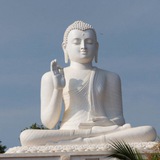
Phra Phuttha Mahanawamintra Sakayamunee Sri Visejchaicharn, Big Buddha at Wat Muang temple in Ang Thong Province, Thailand
👍1🤩1🏆1😎1
Forwarded from Buddha Dharma books
Free Buddhism Dharma ebook
Stories of the Enlightened Beings
Jatakas 101 - 150
By Kurunegoda Piyatissa Maha Thera
Free download here:
https://ftp.budaedu.org/ebooks/pdf/EN401.pdf
https://ftp.budaedu.org/ebooks/pdf/EN402.pdf
https://ftp.budaedu.org/ebooks/pdf/EN258.pdf
https://ftp.budaedu.org/ebooks/pdf/EN404.pdf
https://ftp.budaedu.org/ebooks/pdf/EN405.pdf
===
Stories of the Enlightened Beings
Jatakas 101 - 150
By Kurunegoda Piyatissa Maha Thera
Free download here:
https://ftp.budaedu.org/ebooks/pdf/EN401.pdf
https://ftp.budaedu.org/ebooks/pdf/EN402.pdf
https://ftp.budaedu.org/ebooks/pdf/EN258.pdf
https://ftp.budaedu.org/ebooks/pdf/EN404.pdf
https://ftp.budaedu.org/ebooks/pdf/EN405.pdf
===
🏆1😘1
Dhammapada Verse 308
Vaggumudatiriya Bhikkhu Vatthu
Seyyo ayogulo bhutto
tatto aggisikhupamo
yance bhunjeyya dussilo
ratthapindamasannato.
Verse 308: It is better for one to eat a red-hot lump of iron burning like a flame than to eat alms-food offered by the people, if one is without morality (sila) and unrestrained in thought, word and deed.
The Bhikkhus Who Lived on the Bank of the Vaggumuda River
While residing at the Mahavana forest near Vesali, the Buddha uttered Verse (308) of this book, with reference to the bhikkhus who spent the vassa on the bank of the Vaggumuda River.
At that time, there was a famine in the country of the Vajjis. So, to enable them to have enough food, those bhikkhus made it appear to the people that they had attained Magga and Phala although they had not done so. The people from the village, believing them and respecting them, offered much food to them leaving very little for themselves.
At the end of the vasa, as was customary, bhikkhus from all parts of the country came to pay homage to the Buddha. The bhikkhus from the bank of the river Vaggumuda also came. They looked hale and hearty while the other bhikkhus looked pale and worn out. The Buddha talked to all the bhikkhus and enquired how they fared during the vassa. To the bhikkhus from Vaggumuda River the Buddha specifically asked whether they had any difficulty in getting alms-food on account of the famine. They answered that they had no difficulty at all in getting alms-food.
The Buddha knew how those bhikkhus had managed to get enough alms-food. But he wanted to teach them on this point, so he asked, "How did you manage so well in getting alms-food throughout the vassa ?" Then the bhikkhus told him how they discussed among themselves and decided that they should address one another in such a way that the villagers would think that they had really attained jhana, Magga and Phala. Then the Buddha asked them whether they had really attained jhana, Magga and Phala. When they answered in the negative, the Buddha reprimanded them.
Then the Buddha spoke in verse as follows:
Verse 308: It is better for one to eat a red-hot lump of iron burning like a flame than to eat alms-food offered by the people, if one is without morality (sila) and unrestrained in thought, word and deed.
===
Dhammapada, beloved and favorite teachings of the Buddha channel:
https://news.1rj.ru/str/dhammapadas
===
Vaggumudatiriya Bhikkhu Vatthu
Seyyo ayogulo bhutto
tatto aggisikhupamo
yance bhunjeyya dussilo
ratthapindamasannato.
Verse 308: It is better for one to eat a red-hot lump of iron burning like a flame than to eat alms-food offered by the people, if one is without morality (sila) and unrestrained in thought, word and deed.
The Bhikkhus Who Lived on the Bank of the Vaggumuda River
While residing at the Mahavana forest near Vesali, the Buddha uttered Verse (308) of this book, with reference to the bhikkhus who spent the vassa on the bank of the Vaggumuda River.
At that time, there was a famine in the country of the Vajjis. So, to enable them to have enough food, those bhikkhus made it appear to the people that they had attained Magga and Phala although they had not done so. The people from the village, believing them and respecting them, offered much food to them leaving very little for themselves.
At the end of the vasa, as was customary, bhikkhus from all parts of the country came to pay homage to the Buddha. The bhikkhus from the bank of the river Vaggumuda also came. They looked hale and hearty while the other bhikkhus looked pale and worn out. The Buddha talked to all the bhikkhus and enquired how they fared during the vassa. To the bhikkhus from Vaggumuda River the Buddha specifically asked whether they had any difficulty in getting alms-food on account of the famine. They answered that they had no difficulty at all in getting alms-food.
The Buddha knew how those bhikkhus had managed to get enough alms-food. But he wanted to teach them on this point, so he asked, "How did you manage so well in getting alms-food throughout the vassa ?" Then the bhikkhus told him how they discussed among themselves and decided that they should address one another in such a way that the villagers would think that they had really attained jhana, Magga and Phala. Then the Buddha asked them whether they had really attained jhana, Magga and Phala. When they answered in the negative, the Buddha reprimanded them.
Then the Buddha spoke in verse as follows:
Verse 308: It is better for one to eat a red-hot lump of iron burning like a flame than to eat alms-food offered by the people, if one is without morality (sila) and unrestrained in thought, word and deed.
===
Dhammapada, beloved and favorite teachings of the Buddha channel:
https://news.1rj.ru/str/dhammapadas
===
Telegram
Dhammapada - Buddha Dharma Teachings
Daily teachings of the Dhammapada, beloved and favorite teachings of the Buddha
🥰1🙏1💯1