Dhammapada Verse 307
Duccaritaphalapilita Vatthu
Kasavakantha bahavo
papadhamma asannata
papa papehi kammehi
nirayam te upapajjare.
Verse 307: Many men wearing the yellow robe up to their necks who have an evil disposition and are unrestrained in thought, word and deed are reborn in niraya on account of their evil deeds.
The Story of Those Who Suffered for Their Evil Deeds
While residing at the Veluvana monastery, the Buddha uttered Verse (307) of this book, with reference to some petas.
Once, the Venerable Maha Moggallana was coming down the Gijjhakuta hill with Thera Lakkhana when he saw some petas. When they were back at the monastery, Thera Maha Moggallana told Thera Lakkhana, in the presence of the Buddha, that he had seen a peta who was just a skeleton. Then he added that he had also seen five bhikkhus with their body burning in flames. On hearing the statement about those bhikkhus, the Buddha said, "During the time of Kassapa Buddha, those bhikkhus had done much evil. For those evil deeds they had suffered in niraya and now they are serving out the remaining term of suffering as petas."
Then the Buddha spoke in verse as follows:
Verse 307: Many men wearing the yellow robe up to their necks who have an evil disposition and are unrestrained in thought, word and deed are reborn in niraya on account of their evil deeds.
===
Words of the Buddha channel:
https://news.1rj.ru/str/wordsofbuddha
===
Duccaritaphalapilita Vatthu
Kasavakantha bahavo
papadhamma asannata
papa papehi kammehi
nirayam te upapajjare.
Verse 307: Many men wearing the yellow robe up to their necks who have an evil disposition and are unrestrained in thought, word and deed are reborn in niraya on account of their evil deeds.
The Story of Those Who Suffered for Their Evil Deeds
While residing at the Veluvana monastery, the Buddha uttered Verse (307) of this book, with reference to some petas.
Once, the Venerable Maha Moggallana was coming down the Gijjhakuta hill with Thera Lakkhana when he saw some petas. When they were back at the monastery, Thera Maha Moggallana told Thera Lakkhana, in the presence of the Buddha, that he had seen a peta who was just a skeleton. Then he added that he had also seen five bhikkhus with their body burning in flames. On hearing the statement about those bhikkhus, the Buddha said, "During the time of Kassapa Buddha, those bhikkhus had done much evil. For those evil deeds they had suffered in niraya and now they are serving out the remaining term of suffering as petas."
Then the Buddha spoke in verse as follows:
Verse 307: Many men wearing the yellow robe up to their necks who have an evil disposition and are unrestrained in thought, word and deed are reborn in niraya on account of their evil deeds.
===
Words of the Buddha channel:
https://news.1rj.ru/str/wordsofbuddha
===
Telegram
Words of the Buddha
Daily teachings of Buddha Dharma
👍1💯1
Forwarded from Words of the Buddha
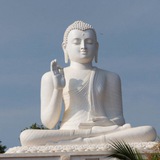
Phra Phuttha Mahanawamintra Sakayamunee Sri Visejchaicharn, Big Buddha at Wat Muang temple in Ang Thong Province, Thailand
👍1🤩1🏆1😎1
Forwarded from Buddha Dharma books
Free Buddhism Dharma ebook
Stories of the Enlightened Beings
Jatakas 101 - 150
By Kurunegoda Piyatissa Maha Thera
Free download here:
https://ftp.budaedu.org/ebooks/pdf/EN401.pdf
https://ftp.budaedu.org/ebooks/pdf/EN402.pdf
https://ftp.budaedu.org/ebooks/pdf/EN258.pdf
https://ftp.budaedu.org/ebooks/pdf/EN404.pdf
https://ftp.budaedu.org/ebooks/pdf/EN405.pdf
===
Stories of the Enlightened Beings
Jatakas 101 - 150
By Kurunegoda Piyatissa Maha Thera
Free download here:
https://ftp.budaedu.org/ebooks/pdf/EN401.pdf
https://ftp.budaedu.org/ebooks/pdf/EN402.pdf
https://ftp.budaedu.org/ebooks/pdf/EN258.pdf
https://ftp.budaedu.org/ebooks/pdf/EN404.pdf
https://ftp.budaedu.org/ebooks/pdf/EN405.pdf
===
🏆1😘1
Dhammapada Verse 308
Vaggumudatiriya Bhikkhu Vatthu
Seyyo ayogulo bhutto
tatto aggisikhupamo
yance bhunjeyya dussilo
ratthapindamasannato.
Verse 308: It is better for one to eat a red-hot lump of iron burning like a flame than to eat alms-food offered by the people, if one is without morality (sila) and unrestrained in thought, word and deed.
The Bhikkhus Who Lived on the Bank of the Vaggumuda River
While residing at the Mahavana forest near Vesali, the Buddha uttered Verse (308) of this book, with reference to the bhikkhus who spent the vassa on the bank of the Vaggumuda River.
At that time, there was a famine in the country of the Vajjis. So, to enable them to have enough food, those bhikkhus made it appear to the people that they had attained Magga and Phala although they had not done so. The people from the village, believing them and respecting them, offered much food to them leaving very little for themselves.
At the end of the vasa, as was customary, bhikkhus from all parts of the country came to pay homage to the Buddha. The bhikkhus from the bank of the river Vaggumuda also came. They looked hale and hearty while the other bhikkhus looked pale and worn out. The Buddha talked to all the bhikkhus and enquired how they fared during the vassa. To the bhikkhus from Vaggumuda River the Buddha specifically asked whether they had any difficulty in getting alms-food on account of the famine. They answered that they had no difficulty at all in getting alms-food.
The Buddha knew how those bhikkhus had managed to get enough alms-food. But he wanted to teach them on this point, so he asked, "How did you manage so well in getting alms-food throughout the vassa ?" Then the bhikkhus told him how they discussed among themselves and decided that they should address one another in such a way that the villagers would think that they had really attained jhana, Magga and Phala. Then the Buddha asked them whether they had really attained jhana, Magga and Phala. When they answered in the negative, the Buddha reprimanded them.
Then the Buddha spoke in verse as follows:
Verse 308: It is better for one to eat a red-hot lump of iron burning like a flame than to eat alms-food offered by the people, if one is without morality (sila) and unrestrained in thought, word and deed.
===
Dhammapada, beloved and favorite teachings of the Buddha channel:
https://news.1rj.ru/str/dhammapadas
===
Vaggumudatiriya Bhikkhu Vatthu
Seyyo ayogulo bhutto
tatto aggisikhupamo
yance bhunjeyya dussilo
ratthapindamasannato.
Verse 308: It is better for one to eat a red-hot lump of iron burning like a flame than to eat alms-food offered by the people, if one is without morality (sila) and unrestrained in thought, word and deed.
The Bhikkhus Who Lived on the Bank of the Vaggumuda River
While residing at the Mahavana forest near Vesali, the Buddha uttered Verse (308) of this book, with reference to the bhikkhus who spent the vassa on the bank of the Vaggumuda River.
At that time, there was a famine in the country of the Vajjis. So, to enable them to have enough food, those bhikkhus made it appear to the people that they had attained Magga and Phala although they had not done so. The people from the village, believing them and respecting them, offered much food to them leaving very little for themselves.
At the end of the vasa, as was customary, bhikkhus from all parts of the country came to pay homage to the Buddha. The bhikkhus from the bank of the river Vaggumuda also came. They looked hale and hearty while the other bhikkhus looked pale and worn out. The Buddha talked to all the bhikkhus and enquired how they fared during the vassa. To the bhikkhus from Vaggumuda River the Buddha specifically asked whether they had any difficulty in getting alms-food on account of the famine. They answered that they had no difficulty at all in getting alms-food.
The Buddha knew how those bhikkhus had managed to get enough alms-food. But he wanted to teach them on this point, so he asked, "How did you manage so well in getting alms-food throughout the vassa ?" Then the bhikkhus told him how they discussed among themselves and decided that they should address one another in such a way that the villagers would think that they had really attained jhana, Magga and Phala. Then the Buddha asked them whether they had really attained jhana, Magga and Phala. When they answered in the negative, the Buddha reprimanded them.
Then the Buddha spoke in verse as follows:
Verse 308: It is better for one to eat a red-hot lump of iron burning like a flame than to eat alms-food offered by the people, if one is without morality (sila) and unrestrained in thought, word and deed.
===
Dhammapada, beloved and favorite teachings of the Buddha channel:
https://news.1rj.ru/str/dhammapadas
===
Telegram
Dhammapada - Buddha Dharma Teachings
Daily teachings of the Dhammapada, beloved and favorite teachings of the Buddha
🥰1🙏1💯1
Dhammapada Verses 309 and 310
Khemakasetthiputta Vatthu
Cattari thanani naro pamatto
apajjati paradarupasevi
apunnalabham na nikamaseyyam
nindam tatiyam nirayam catuttham.
Apunnalahho ca gati ca papika
bhitassa bhitaya rati ca thokika
raja ca dandam garukam paneti
tasma naro paradaram na seve.
Verse 309: Four misfortunes befall a man who is unmindful of right conduct and commit sexual misconduct with another man's wife: acquisition of demerit, disturbed sleep, reproach, and suffering in niraya.
Verse 310: Thus, there is the acquisition of demerit, and there is rebirth in the evil apaya realms. The enjoyment of a scared man with a scared woman is short-lived, and the king also metes out severe punishment. Therefore, a man should not commit misconduct with another man's wife.
The Story of Khemaka, the Son of a Rich Man
While residing at the Jetavana monastery, the Buddha uttered Verses (309) and (310) of this book, with reference to Khemaka, the son of a rich man. Khemaka was also the nephew of the renowned Anathapindika.
Khemaka, in addition to being rich, was also very good-looking and women were very much attracted to him. They could hardly resist him and naturally fell a prey to him. Khemaka committed adultery without compunction. The king's men caught him three times for sexual misconduct and brought him to the presence of the king. But King Pasenadi of Kosala did not take action because Khemaka was the nephew of Anathapindika. So Anathapindika himself took his nephew to the Buddha. The Buddha talked to Khemaka about the depravity of sexual misconduct and the seriousness of the consequences.
Verse 309: Four misfortunes befall a man who is unmindful of right conduct and commit sexual misconduct with another man's wife: acquisition of demerit, disturbed sleep, reproach, and suffering in niraya.
Verse 310: Thus, there is the acquisition of demerit, and there is rebirth in the evil apaya realms. The enjoyment of a scared man with a scared woman is short-lived, and the king also metes out severe punishment. Therefore, a man should not commit misconduct with another man's wife.
At the end of the discourse Khemaka attained Sotapatti Fruition.
===
Buddha dharma teachings channel:
https://invite.viber.com/?g2=AQAKw1y3rv%2F6sk61PI2W4izuIiaEZj8YZujhY1tSzL%2B07s7rFnVFDAd0bAYFaMLw
===
Khemakasetthiputta Vatthu
Cattari thanani naro pamatto
apajjati paradarupasevi
apunnalabham na nikamaseyyam
nindam tatiyam nirayam catuttham.
Apunnalahho ca gati ca papika
bhitassa bhitaya rati ca thokika
raja ca dandam garukam paneti
tasma naro paradaram na seve.
Verse 309: Four misfortunes befall a man who is unmindful of right conduct and commit sexual misconduct with another man's wife: acquisition of demerit, disturbed sleep, reproach, and suffering in niraya.
Verse 310: Thus, there is the acquisition of demerit, and there is rebirth in the evil apaya realms. The enjoyment of a scared man with a scared woman is short-lived, and the king also metes out severe punishment. Therefore, a man should not commit misconduct with another man's wife.
The Story of Khemaka, the Son of a Rich Man
While residing at the Jetavana monastery, the Buddha uttered Verses (309) and (310) of this book, with reference to Khemaka, the son of a rich man. Khemaka was also the nephew of the renowned Anathapindika.
Khemaka, in addition to being rich, was also very good-looking and women were very much attracted to him. They could hardly resist him and naturally fell a prey to him. Khemaka committed adultery without compunction. The king's men caught him three times for sexual misconduct and brought him to the presence of the king. But King Pasenadi of Kosala did not take action because Khemaka was the nephew of Anathapindika. So Anathapindika himself took his nephew to the Buddha. The Buddha talked to Khemaka about the depravity of sexual misconduct and the seriousness of the consequences.
Verse 309: Four misfortunes befall a man who is unmindful of right conduct and commit sexual misconduct with another man's wife: acquisition of demerit, disturbed sleep, reproach, and suffering in niraya.
Verse 310: Thus, there is the acquisition of demerit, and there is rebirth in the evil apaya realms. The enjoyment of a scared man with a scared woman is short-lived, and the king also metes out severe punishment. Therefore, a man should not commit misconduct with another man's wife.
At the end of the discourse Khemaka attained Sotapatti Fruition.
===
Buddha dharma teachings channel:
https://invite.viber.com/?g2=AQAKw1y3rv%2F6sk61PI2W4izuIiaEZj8YZujhY1tSzL%2B07s7rFnVFDAd0bAYFaMLw
===
Viber
Buddha
Buddha dharma teachings from the suttas and commentaries from Theravada tradition
👍1👌1😘1
Forwarded from Buddha Dharma books
Free Buddha Dharma ebook
Debate of King Milinda
By Bhikkhu Pesala
The Milinda Panha is a Pali book written in about the 1st century B.C. King Milinda, a Bactrian king who ruled the northeast of India, met a learned monk called Nagasena and the king put a number of questions on the philosophy, psychology and ethics of Buddhism. I presume this debate was conducted in the Bactrian Greek language but was later translated into Pali and Sanskrit.
This well-known Pali book called Milinda Panha or Questions of King Milindah as twice been translated into English: in 1890, and in 1969. Both translations are literary and, in many places literal, therefore they were mainly confined to scholars. This present work is, however, not a literal but a free rendering making an abridgement and aimed at the reader who prefers to take a short cut rather than the long way, notwithstanding that the latter may be very beautiful.
The framework remains the same as the original, but in many cases the number of similes used to make a point has been reduced.
The author, Bhikkhu Pesala, is a Buddhist monk who had training in Myanmar and Thailand whose knowledge of Pali has enabled him to check areas of ambiguous translation to compile this concise and readable work in elegant, modern English while his knowledge of Buddhism has enabled him to clarify some obscure ideas.
This book will certainly serve its intended aim by the uncomplicated presentation of the original work.
Free download available:
https://ftp.budaedu.org/ebooks/pdf/EN328.pdf
===
Debate of King Milinda
By Bhikkhu Pesala
The Milinda Panha is a Pali book written in about the 1st century B.C. King Milinda, a Bactrian king who ruled the northeast of India, met a learned monk called Nagasena and the king put a number of questions on the philosophy, psychology and ethics of Buddhism. I presume this debate was conducted in the Bactrian Greek language but was later translated into Pali and Sanskrit.
This well-known Pali book called Milinda Panha or Questions of King Milindah as twice been translated into English: in 1890, and in 1969. Both translations are literary and, in many places literal, therefore they were mainly confined to scholars. This present work is, however, not a literal but a free rendering making an abridgement and aimed at the reader who prefers to take a short cut rather than the long way, notwithstanding that the latter may be very beautiful.
The framework remains the same as the original, but in many cases the number of similes used to make a point has been reduced.
The author, Bhikkhu Pesala, is a Buddhist monk who had training in Myanmar and Thailand whose knowledge of Pali has enabled him to check areas of ambiguous translation to compile this concise and readable work in elegant, modern English while his knowledge of Buddhism has enabled him to clarify some obscure ideas.
This book will certainly serve its intended aim by the uncomplicated presentation of the original work.
Free download available:
https://ftp.budaedu.org/ebooks/pdf/EN328.pdf
===
👌1🆒1
Forwarded from Words of the Buddha
A Home for the Mind
If you’re going to let go of defilements, you first need something better to hold on to.
By Phra Ajaan Suwat Suvaco, translated from the Thai by Thanissaro Bhikkhu
“Knowing the dhamma” means knowing the truth. Where does the dhamma lie? Not far off at all. Where are rupa-dhammas (physical phenomena)? Are there any physical phenomena within us? Are any nama-dhammas (mental phenomena) within us? They’re both within us, but we don’t know how to read them, to decipher them, because we haven’t yet studied them. Or even when we have tried to study them, we still can’t decipher them in line with the standards set by the Buddha.
So let’s try to decipher our body, our actions in thought, word, and deed. Our actions don’t lie anywhere else. They show themselves in the activity of the body. So we use the body in line with the dhamma, abstaining from the activities that defile it: killing, stealing, engaging in illicit sex. When we abstain from these things, we’ve begun practicing the dhamma. We abstain from telling lies, from divisive speech, from abusive speech, from idle chatter. When we’re mindful to show restraint in what we say, we won’t encounter any dangers coming from our speech. There are no dangers when we practice in line with the Buddha’s way.
As for the mind, we cleanse it by meditating. We use mindfulness to look after the heart, to make sure it doesn’t get involved in anything defiling or unclean. We keep it cheerful, blooming and bright in its meditation, in investigating the dhamma, knowing the dhamma, seeing the dhamma, until it settles down in the stillness that we’ve developed and kept composed. We keep it blooming and bright. Wherever you go, this is how you should practice. Make your composure continuous. The mind will then gain strength, so that it can let go of its external preoccupations and stay focused exclusively within: at peace and at ease, bright and clear, staying right here.
Then, when you want to gain discernment, you can investigate. Focus mindfulness on keeping the body in mind, and then investigate it. This is called dhamma-vicaya, investigating phenomena. You investigate the physical phenomena in the body to see them in line with the four noble truths. You look at the arising of physical phenomena right here. You look at the aging, the illness, the death of phenomena right here within you. If you really look for it, you’ll see that the body is full of death.
How do we see death when the body is still breathing and able to walk around? We can see it if our discernment is subtle and precise. The Buddha saw death with every in-and-out breath, so why can’t we? He once asked Ven. Ananda how often he paid attention to death in the course of a day, and Ananda answered, “One hundred times.” The Buddha’s response was: “You’re still too complacent. You should pay attention to death with every in-and-out breath.” What kind of death can you look at with every in-and-out breath? Whatever fades away, ends, and disappears: that’s death. As for the death of the whole body, that comes closer every day, closer with each in-and-out breath. This runs down, that wears out. We have to keep creating things to replace what gets worn out. And whatever we create keeps wearing out too.
So we should keep track of the wearing out—what’s called vaya-dhamma, degeneration. The Buddha saw this with every moment. This is the sort of seeing that allows us to see the noble truth that birth is stressful, aging is stressful. There’s no ease in aging. Look so that you see this clearly. Pain and illness are stressful, death is stressful, all the affairs that come with birth create hardships, turmoil, and stress.
He once asked Ven. Ananda how often he paid attention to death in the course of a day, and Ananda answered, “One hundred times.” The Buddha’s response was: “You’re still too complacent. You should pay attention to death with every in-and-out breath.”
If you’re going to let go of defilements, you first need something better to hold on to.
By Phra Ajaan Suwat Suvaco, translated from the Thai by Thanissaro Bhikkhu
“Knowing the dhamma” means knowing the truth. Where does the dhamma lie? Not far off at all. Where are rupa-dhammas (physical phenomena)? Are there any physical phenomena within us? Are any nama-dhammas (mental phenomena) within us? They’re both within us, but we don’t know how to read them, to decipher them, because we haven’t yet studied them. Or even when we have tried to study them, we still can’t decipher them in line with the standards set by the Buddha.
So let’s try to decipher our body, our actions in thought, word, and deed. Our actions don’t lie anywhere else. They show themselves in the activity of the body. So we use the body in line with the dhamma, abstaining from the activities that defile it: killing, stealing, engaging in illicit sex. When we abstain from these things, we’ve begun practicing the dhamma. We abstain from telling lies, from divisive speech, from abusive speech, from idle chatter. When we’re mindful to show restraint in what we say, we won’t encounter any dangers coming from our speech. There are no dangers when we practice in line with the Buddha’s way.
As for the mind, we cleanse it by meditating. We use mindfulness to look after the heart, to make sure it doesn’t get involved in anything defiling or unclean. We keep it cheerful, blooming and bright in its meditation, in investigating the dhamma, knowing the dhamma, seeing the dhamma, until it settles down in the stillness that we’ve developed and kept composed. We keep it blooming and bright. Wherever you go, this is how you should practice. Make your composure continuous. The mind will then gain strength, so that it can let go of its external preoccupations and stay focused exclusively within: at peace and at ease, bright and clear, staying right here.
Then, when you want to gain discernment, you can investigate. Focus mindfulness on keeping the body in mind, and then investigate it. This is called dhamma-vicaya, investigating phenomena. You investigate the physical phenomena in the body to see them in line with the four noble truths. You look at the arising of physical phenomena right here. You look at the aging, the illness, the death of phenomena right here within you. If you really look for it, you’ll see that the body is full of death.
How do we see death when the body is still breathing and able to walk around? We can see it if our discernment is subtle and precise. The Buddha saw death with every in-and-out breath, so why can’t we? He once asked Ven. Ananda how often he paid attention to death in the course of a day, and Ananda answered, “One hundred times.” The Buddha’s response was: “You’re still too complacent. You should pay attention to death with every in-and-out breath.” What kind of death can you look at with every in-and-out breath? Whatever fades away, ends, and disappears: that’s death. As for the death of the whole body, that comes closer every day, closer with each in-and-out breath. This runs down, that wears out. We have to keep creating things to replace what gets worn out. And whatever we create keeps wearing out too.
So we should keep track of the wearing out—what’s called vaya-dhamma, degeneration. The Buddha saw this with every moment. This is the sort of seeing that allows us to see the noble truth that birth is stressful, aging is stressful. There’s no ease in aging. Look so that you see this clearly. Pain and illness are stressful, death is stressful, all the affairs that come with birth create hardships, turmoil, and stress.
He once asked Ven. Ananda how often he paid attention to death in the course of a day, and Ananda answered, “One hundred times.” The Buddha’s response was: “You’re still too complacent. You should pay attention to death with every in-and-out breath.”
Telegram
Words of the Buddha
Daily teachings of Buddha Dharma
🥰1🙏1