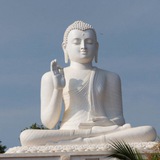
Forwarded from Words of the Buddha
When you investigate in line with the Buddha’s dhamma, you’ll see the truth for yourself in every way just as the Buddha did. For it’s all right here. You’ll gain discernment and intelligence, no longer deluded into grasping hold of suffering and making it your self, no longer grasping hold of inconstant things and making them your self. Whatever’s inconstant, leave it as inconstant and don’t make it you. Whatever’s stressful, leave it as stressful and don’t make it you. There’s no you in any of those things. When you aim your investigation in the direction of seeing this clearly, the mind will let go and attain peace, inner solitude, free from clinging.
It’s as when we carry something heavy on our shoulder. We know it’s heavy because it’s weighing on our shoulder. But when we put it down, it’s no longer heavy on us. In the same way, when we see that birth is stressful, aging is stressful, illness is stressful, death is stressful, then we should examine those things as they arise to see that they’re not us. Then we’ll be able to let them go. We should look after our mind to make sure that it doesn’t give rise to the assumption that any of those things are us or ours, or that they lie within us. Those things are just objects, elements, and we leave them at that. Stress then has no owner on the receiving end. It’s just like when you put down a burden: There’s nothing heavy about it at all.
So stress is nothing more than things coming together to make contact. Suppose that we have a big hunk of limestone. When we lift it up, it’s heavy. But if we burn it in a fire, pound it into dust, and the wind blows it away, then where’s the heaviness? It’s nowhere at all. Before, when the limestone was still in the ground, they had to use explosives to get it out. It was so heavy that they needed cranes to lift it up. But now that it’s pulverized, the heaviness is gone.
It’s the same with suffering and stress. If we investigate them down to the details, so that we can see them clearly for what they truly are, there’s no self there at all. We get down to the basic elements of experience, and we see that they’re not our self in the least little bit. If we look at the hair of the head, it’s not self. Fingernails and toenails are not self. Look at every part of the body in detail. Or look at its elementary properties. Exactly where are you in any of those things? There’s no you in there at all.
The same is true when you look at feelings. There’s no you in there at all. There’s simply contact, the contact of objects against the senses, that’s all. If you let go so that the mind can come to rest, none of these things will touch it in a way that weighs on it. Only deluded people grab hold of these things, which is why they feel weighed down. If we let them go, we don’t feel weighed down at all.
When we let go of the aggregates (khandhas), they’re not stressful. But we don’t know how to let them go because of birth. Like the mental state you’ve given rise to here: You’ve created it so that it will take birth. Once you’ve given rise to it, then—unless you’re given a good reason —there’s no way you’ll be willing to let it go. It’s the same as when someone suddenly comes to chase us out of our home. Who would be willing to go? We’d go only if we were offered a better place to stay—a safer, more comfortable place to stay. If we were offered such a place, who would be willing to stay? If we had a better place to go, we could abandon our old home with no problem. In the same way, if we’re going to let go of the blatant aggregates, we need a better place to stay, a home for the mind: a state of concentration. Just like the Buddha and his noble disciples: When they let go of the blatant aggregates, they entered cessation, they entered jhana (Sanskrit: dhyana). When they fully let go of all aggregates, they entered nibbana.
It’s as when we carry something heavy on our shoulder. We know it’s heavy because it’s weighing on our shoulder. But when we put it down, it’s no longer heavy on us. In the same way, when we see that birth is stressful, aging is stressful, illness is stressful, death is stressful, then we should examine those things as they arise to see that they’re not us. Then we’ll be able to let them go. We should look after our mind to make sure that it doesn’t give rise to the assumption that any of those things are us or ours, or that they lie within us. Those things are just objects, elements, and we leave them at that. Stress then has no owner on the receiving end. It’s just like when you put down a burden: There’s nothing heavy about it at all.
So stress is nothing more than things coming together to make contact. Suppose that we have a big hunk of limestone. When we lift it up, it’s heavy. But if we burn it in a fire, pound it into dust, and the wind blows it away, then where’s the heaviness? It’s nowhere at all. Before, when the limestone was still in the ground, they had to use explosives to get it out. It was so heavy that they needed cranes to lift it up. But now that it’s pulverized, the heaviness is gone.
It’s the same with suffering and stress. If we investigate them down to the details, so that we can see them clearly for what they truly are, there’s no self there at all. We get down to the basic elements of experience, and we see that they’re not our self in the least little bit. If we look at the hair of the head, it’s not self. Fingernails and toenails are not self. Look at every part of the body in detail. Or look at its elementary properties. Exactly where are you in any of those things? There’s no you in there at all.
The same is true when you look at feelings. There’s no you in there at all. There’s simply contact, the contact of objects against the senses, that’s all. If you let go so that the mind can come to rest, none of these things will touch it in a way that weighs on it. Only deluded people grab hold of these things, which is why they feel weighed down. If we let them go, we don’t feel weighed down at all.
When we let go of the aggregates (khandhas), they’re not stressful. But we don’t know how to let them go because of birth. Like the mental state you’ve given rise to here: You’ve created it so that it will take birth. Once you’ve given rise to it, then—unless you’re given a good reason —there’s no way you’ll be willing to let it go. It’s the same as when someone suddenly comes to chase us out of our home. Who would be willing to go? We’d go only if we were offered a better place to stay—a safer, more comfortable place to stay. If we were offered such a place, who would be willing to stay? If we had a better place to go, we could abandon our old home with no problem. In the same way, if we’re going to let go of the blatant aggregates, we need a better place to stay, a home for the mind: a state of concentration. Just like the Buddha and his noble disciples: When they let go of the blatant aggregates, they entered cessation, they entered jhana (Sanskrit: dhyana). When they fully let go of all aggregates, they entered nibbana.
❤1👍1🤩1
Forwarded from Words of the Buddha
We, however, don’t yet have anything else to depend on, which is why we can’t let go. We first have to create a refuge for ourselves. At the very least, we should try to keep buddho, buddho, in mind. When we really reach buddho—when the mind is really a mind awake—then we can depend on it.
At the moment, though, we haven’t reached the mind awake. We’ve reached nothing but the demons of defilement, and they keep haunting us. We’re embroiled with nothing but demons; we lie under their power. For instance, maccu-mara: the demon of death, whose followers—aging and illness—we fear so much. Kilesa-mara: delusions and defilements. These are all demons. Khandha-mara: our attachments to the five aggregates are all demons.
Abhisankhara-mara: The thoughts we create, good or bad, are all demons if we fall for them—meritorious creations, demeritorious creations, imperturbable creations. These are the subtle demons, the demons that bedeviled the Buddha on the way to awakening, dressing themselves up as this and that. If we’re going to let go of these things, we first need something better to hold on to. At the very least we need jhana, levels of mental stillness more refined than what we have at present.
So we should all try to give rise to the refined levels of peace and ease I’ve mentioned here. When we get disenchanted with turmoil, we can enter a state of stillness. When we get disenchanted with defilement, we can cleanse the heart and make it bright with the dhamma. We’ll have our home in the dhamma, in concentration. The heart can then delight, with rapture and ease as its food. We’ll have no desire for coarse food. When we let go of the blatant aggregates, we enter the Brahma level of refined rapture and ease.
Even the sensual devas don’t eat coarse food like ours. As for the Brahmas, they’re even clearer than that, more radiant within themselves. Their jhana is pure, and their concentration radiant. The food of this concentration is the rapture and ease they experience. Even here on the human level, when we gain rapture from concentration, we feel full and happy. If we abandon the blatant aggregates, leaving just the mind in its attainment of concentration, imagine how much pleasure and ease there will be. We’ll no longer have to be involved in these heavy burdens of ours. We won’t have to worry about the five or the eight precepts because we’ll be in a pure state of jhana, with no thought of getting stuck on anything defiling. The mind will be bright.
When you understand this, focus back on your heart. Examine it carefully. Be intent on practicing heedfully, and you’ll meet with prosperity and ease.
The article was excerpted and adapted from Fistful of Sand, by Ajaan Suwat Suvaco, translated from Thai by Thanissaro Bhikkhu.
===
Phra Ajaan Suwat Suvaco (1919–2001) was an abbot in the Thai Forest Tradition. In the 1980s, he came to the United States, where he established his four monasteries: one near Seattle, Washington; two near Los Angeles; and one in the hills of San Diego County (Metta Forest Monastery).
===
Words of the Buddha channel:
https://news.1rj.ru/str/wordsofbuddha
===
At the moment, though, we haven’t reached the mind awake. We’ve reached nothing but the demons of defilement, and they keep haunting us. We’re embroiled with nothing but demons; we lie under their power. For instance, maccu-mara: the demon of death, whose followers—aging and illness—we fear so much. Kilesa-mara: delusions and defilements. These are all demons. Khandha-mara: our attachments to the five aggregates are all demons.
Abhisankhara-mara: The thoughts we create, good or bad, are all demons if we fall for them—meritorious creations, demeritorious creations, imperturbable creations. These are the subtle demons, the demons that bedeviled the Buddha on the way to awakening, dressing themselves up as this and that. If we’re going to let go of these things, we first need something better to hold on to. At the very least we need jhana, levels of mental stillness more refined than what we have at present.
So we should all try to give rise to the refined levels of peace and ease I’ve mentioned here. When we get disenchanted with turmoil, we can enter a state of stillness. When we get disenchanted with defilement, we can cleanse the heart and make it bright with the dhamma. We’ll have our home in the dhamma, in concentration. The heart can then delight, with rapture and ease as its food. We’ll have no desire for coarse food. When we let go of the blatant aggregates, we enter the Brahma level of refined rapture and ease.
Even the sensual devas don’t eat coarse food like ours. As for the Brahmas, they’re even clearer than that, more radiant within themselves. Their jhana is pure, and their concentration radiant. The food of this concentration is the rapture and ease they experience. Even here on the human level, when we gain rapture from concentration, we feel full and happy. If we abandon the blatant aggregates, leaving just the mind in its attainment of concentration, imagine how much pleasure and ease there will be. We’ll no longer have to be involved in these heavy burdens of ours. We won’t have to worry about the five or the eight precepts because we’ll be in a pure state of jhana, with no thought of getting stuck on anything defiling. The mind will be bright.
When you understand this, focus back on your heart. Examine it carefully. Be intent on practicing heedfully, and you’ll meet with prosperity and ease.
The article was excerpted and adapted from Fistful of Sand, by Ajaan Suwat Suvaco, translated from Thai by Thanissaro Bhikkhu.
===
Phra Ajaan Suwat Suvaco (1919–2001) was an abbot in the Thai Forest Tradition. In the 1980s, he came to the United States, where he established his four monasteries: one near Seattle, Washington; two near Los Angeles; and one in the hills of San Diego County (Metta Forest Monastery).
===
Words of the Buddha channel:
https://news.1rj.ru/str/wordsofbuddha
===
Telegram
Words of the Buddha
Daily teachings of Buddha Dharma
👍1👏1
Dhammapada Verses 311, 312 and 313
Dubbacabhikkhu Vatthu
Kuso yatha duggahito
hatthameva' nukantati
samannam dupparamattham
nirayayu' pakadhati.
Yam kinci sithilam kammam
samkilitthanca yam vatam
sankassaram brahmacariyam
na tam hoti mahapphalam.
Kayira ce kayirathenam
dalhamenam parakkame
sithilo hi paribbajo
bhiyyo akirate rajam.
Verse 311: Just as kusa grass if badly held cuts that very hand, so also, the ill-led life of a bhikkhu drags that bhikkhu down to niraya.
Verse 312: An act perfunctorily performed, or a practice that is depraved, or a questionable conduct of a bhikkhu is not of much benefit.
Verse 313: If there is anything to be done, do it well; do it firmly and energetically; for the slack life of a bhikkhu scatters much dust (of moral defilements).
The Story of the Obstinate Bhikkhu
While residing at the Jetavana monastery, the Buddha uttered Verses (311), (312) and (313) of this book, with reference to an obstinate bhikkhu.
Once, there was a bhikkhu who was feeling remorse for having unwittingly cut some grass. He confided about this to another bhikkhu. The latter was reckless and stubborn by nature, and he did not think much about committing small misdeeds. So he replied to the first bhikkhu, "Cutting grass is a very minor offence; if you just confide and confess to another bhikkhu you are automatically exonerated. There is nothing to worry about." So saying, he proceeded to uproot some grass with both hands to show that he thought very little of such trivial offences. When the Buddha was told about this, he reprimanded the reckless, stubborn bhikkhu.
Then the Buddha spoke in verse as follows:
Verse 311: Just as kusa grass if badly held cuts that very hand, so also, the ill-led life of a bhikkhu drags that bhikkhu down to niraya.
Verse 312: An act perfunctorily performed, or a practice that is depraved, or a questionable conduct of a bhikkhu is not of much benefit.
Verse 313: If there is anything to be done, do it well; do it firmly and energetically; for the slack life of a bhikkhu scatters much dust (of moral defilements).
At the end of the discourse the reckless obstinate bhikkhu realized the importance of restraint in the life of a bhikkhu and strictly obeyed the Fundamental Precepts for the bhikkhus. Later, through practice of Insight Meditation, that bhikkhu attained arahatship.
===
Words of the Buddha channel:
https://invite.viber.com/?g2=AQAFqzqlj7FmI061PX17rxWMAtZ%2BRuso%2FH2KmHKZSgnv7v9DD8X0bDkKnZDr9JDq
===
Dubbacabhikkhu Vatthu
Kuso yatha duggahito
hatthameva' nukantati
samannam dupparamattham
nirayayu' pakadhati.
Yam kinci sithilam kammam
samkilitthanca yam vatam
sankassaram brahmacariyam
na tam hoti mahapphalam.
Kayira ce kayirathenam
dalhamenam parakkame
sithilo hi paribbajo
bhiyyo akirate rajam.
Verse 311: Just as kusa grass if badly held cuts that very hand, so also, the ill-led life of a bhikkhu drags that bhikkhu down to niraya.
Verse 312: An act perfunctorily performed, or a practice that is depraved, or a questionable conduct of a bhikkhu is not of much benefit.
Verse 313: If there is anything to be done, do it well; do it firmly and energetically; for the slack life of a bhikkhu scatters much dust (of moral defilements).
The Story of the Obstinate Bhikkhu
While residing at the Jetavana monastery, the Buddha uttered Verses (311), (312) and (313) of this book, with reference to an obstinate bhikkhu.
Once, there was a bhikkhu who was feeling remorse for having unwittingly cut some grass. He confided about this to another bhikkhu. The latter was reckless and stubborn by nature, and he did not think much about committing small misdeeds. So he replied to the first bhikkhu, "Cutting grass is a very minor offence; if you just confide and confess to another bhikkhu you are automatically exonerated. There is nothing to worry about." So saying, he proceeded to uproot some grass with both hands to show that he thought very little of such trivial offences. When the Buddha was told about this, he reprimanded the reckless, stubborn bhikkhu.
Then the Buddha spoke in verse as follows:
Verse 311: Just as kusa grass if badly held cuts that very hand, so also, the ill-led life of a bhikkhu drags that bhikkhu down to niraya.
Verse 312: An act perfunctorily performed, or a practice that is depraved, or a questionable conduct of a bhikkhu is not of much benefit.
Verse 313: If there is anything to be done, do it well; do it firmly and energetically; for the slack life of a bhikkhu scatters much dust (of moral defilements).
At the end of the discourse the reckless obstinate bhikkhu realized the importance of restraint in the life of a bhikkhu and strictly obeyed the Fundamental Precepts for the bhikkhus. Later, through practice of Insight Meditation, that bhikkhu attained arahatship.
===
Words of the Buddha channel:
https://invite.viber.com/?g2=AQAFqzqlj7FmI061PX17rxWMAtZ%2BRuso%2FH2KmHKZSgnv7v9DD8X0bDkKnZDr9JDq
===
Viber
Words Of The Buddha
Daily teachings from Buddha Dharma
👏1🤗1
Forwarded from Words of the Buddha
Big golden buddha statue at Wat Muang temple in Ang Thong Province, Thailand. One of the largest Buddha statue in the world.
❤2🏆1🆒1
Forwarded from Buddha Dharma books
Free Buddha Dharma ebook
The Skill of Release: Teachings of Ajaan Lee Dhammadharo, translated by Ṭhānissaro Bhikkhu.
A selection of Ajaan Lee’s teachings, including a few full talks, some short passages, and sometimes even half-thoughts, if they seemed provocative enough. Although the passages presented here have been arranged so that the book will stand on its own, they are also meant to fill in some of the gaps left by Ajaan Lee’s other writings.
Free download here:
https://www.dhammatalks.org/Archive/Writings/Ebooks/TheSkillofRelease_181215.pdf
===
The Skill of Release: Teachings of Ajaan Lee Dhammadharo, translated by Ṭhānissaro Bhikkhu.
A selection of Ajaan Lee’s teachings, including a few full talks, some short passages, and sometimes even half-thoughts, if they seemed provocative enough. Although the passages presented here have been arranged so that the book will stand on its own, they are also meant to fill in some of the gaps left by Ajaan Lee’s other writings.
Free download here:
https://www.dhammatalks.org/Archive/Writings/Ebooks/TheSkillofRelease_181215.pdf
===
👏1🏆1
Dhammapada Verse 314
Issapakata Itthi Vatthu
Akatam dukkatam seyyo
paccha tappati dukkatam
katanca sukatam seyyo
yam katva nanutappati.
Verse 314: It is better not to do an evil deed; an evil deed torments one later on. It is better to do a good deed as one does not have to repent for having done it.
The Story of a Woman of Jealous Disposition
While residing at the Jetavana monastery, the Buddha uttered Verse (314) of this book, with reference to a woman who was by nature very jealous.
Once, a woman with a very strong sense of jealousy lived with her husband in Savatthi. She found that her husband was having an affair with her maid. So one day, she tied up the girl with strong ropes, cut off her ears and nose, and shut her up in a room. After doing that, she asked her husband to accompany her to the Jetavana monastery. Soon after they left, some relatives of the maid arrived at their house and found the maid tied up and locked up in a room. They broke into the room, untied her and took her to the monastery. They arrived at the monastery while the Buddha was expounding the Dhamma. The girl related to the Buddha what her mistress had done to her, how she had been beaten, and how her nose and ears had been cut off. She stood in the midst of the crowd for all to see how she had been mistreated. So the Buddha said, "Do no evil, thinking that people will not know about it. An evil deed done in secret, when discovered, will bring much pain and sorrow; but a good deed may be done secretly, for it can only bring happiness and not sorrow."
Then the Buddha spoke in verse as follows:
Verse 314: It is better not to do an evil deed; an evil deed torments one later on. It is better to do a good deed as one does not have to repent for having done it.
At the end of the discourse the couple attained Sotapatti Fruition.
===
Dhammapada, beloved and favorite teachings of the Buddha channel:
https://invite.viber.com/?g2=AQBLD6phsgvP%2F061YjEM3K%2BNeH1Yb372b9mtfQX2EmuBpgoLUoc99BDMfzHghrme
===
Issapakata Itthi Vatthu
Akatam dukkatam seyyo
paccha tappati dukkatam
katanca sukatam seyyo
yam katva nanutappati.
Verse 314: It is better not to do an evil deed; an evil deed torments one later on. It is better to do a good deed as one does not have to repent for having done it.
The Story of a Woman of Jealous Disposition
While residing at the Jetavana monastery, the Buddha uttered Verse (314) of this book, with reference to a woman who was by nature very jealous.
Once, a woman with a very strong sense of jealousy lived with her husband in Savatthi. She found that her husband was having an affair with her maid. So one day, she tied up the girl with strong ropes, cut off her ears and nose, and shut her up in a room. After doing that, she asked her husband to accompany her to the Jetavana monastery. Soon after they left, some relatives of the maid arrived at their house and found the maid tied up and locked up in a room. They broke into the room, untied her and took her to the monastery. They arrived at the monastery while the Buddha was expounding the Dhamma. The girl related to the Buddha what her mistress had done to her, how she had been beaten, and how her nose and ears had been cut off. She stood in the midst of the crowd for all to see how she had been mistreated. So the Buddha said, "Do no evil, thinking that people will not know about it. An evil deed done in secret, when discovered, will bring much pain and sorrow; but a good deed may be done secretly, for it can only bring happiness and not sorrow."
Then the Buddha spoke in verse as follows:
Verse 314: It is better not to do an evil deed; an evil deed torments one later on. It is better to do a good deed as one does not have to repent for having done it.
At the end of the discourse the couple attained Sotapatti Fruition.
===
Dhammapada, beloved and favorite teachings of the Buddha channel:
https://invite.viber.com/?g2=AQBLD6phsgvP%2F061YjEM3K%2BNeH1Yb372b9mtfQX2EmuBpgoLUoc99BDMfzHghrme
===
Viber
Dhammapada - Buddha Dharma Teachings
Daily teachings of the Dhammapada, beloved and favorite teachings of the Buddha
❤1👍1
Dhammapada Verse 315
Sambahulabhikkhu Vatthu
Nagaram yatha paccantam
guttam santarabahiram
evam gopetha attanam1
khano vo ma upaccaga
khanatita hi socanti
nirayamhi samappita.
Verse 315: As a border town is guarded both inside and outside, so guard yourself. Let not the right moment go by for those who miss this moment come to grief when they fall into niraya.
1. evam gopetha attanam: so guard yourself; i.e., to guard the internal as well as the external senses. The six internal senses (sense bases) are eye, ear, nose, tongue, body and mind; the six external senses (sense objects) are visible object, sound, odour, taste, touch and idea.
The Story of Many Bhikkhus
While residing at the Jetavana monastery, the Buddha uttered Verse (315) of this book, with reference to a group of bhikkhus who spent the vassa in a border town.
In the first month of their stay in that border town, the bhikkhus were well provided and well looked after by the townsfolk. During the next month the town was plundered by some robbers and some people were taken away as hostages. The people of the town, therefore, had to rehabilitate their town and reinforce fortifications. Thus, they were unable to look to the needs of the bhikkhus as much as they would like to and the bhikkhus had to fend for themselves. At the end of the vassa, those bhikkhus came to pay homage to the Buddha at the Jetavana monastery in Savatthi. On learning about the hardships they had undergone during the vassa, the Buddha said to them "Bhikkhus, do not keep thinking about this or anything else; it is always difficult to have a carefree, effortless living. Just as the townsfolk guard their town, so also, a bhikkhu should be on guard and keep his mind steadfastly on his body."
Then the Buddha spoke in verse as follows:
Verse 315: As a border town is guarded both inside and outside, so guard yourself. Let not the right moment go by for those who miss this moment come to grief when they fall into niraya.
At the end of the discourse those bhikkhus attained arahatship.
===
Ajahn Chah, Buddhist teacher of Thai forest meditation of Theravada Buddhism channel:
https://news.1rj.ru/str/ajahnchah_buddhism
===
Sambahulabhikkhu Vatthu
Nagaram yatha paccantam
guttam santarabahiram
evam gopetha attanam1
khano vo ma upaccaga
khanatita hi socanti
nirayamhi samappita.
Verse 315: As a border town is guarded both inside and outside, so guard yourself. Let not the right moment go by for those who miss this moment come to grief when they fall into niraya.
1. evam gopetha attanam: so guard yourself; i.e., to guard the internal as well as the external senses. The six internal senses (sense bases) are eye, ear, nose, tongue, body and mind; the six external senses (sense objects) are visible object, sound, odour, taste, touch and idea.
The Story of Many Bhikkhus
While residing at the Jetavana monastery, the Buddha uttered Verse (315) of this book, with reference to a group of bhikkhus who spent the vassa in a border town.
In the first month of their stay in that border town, the bhikkhus were well provided and well looked after by the townsfolk. During the next month the town was plundered by some robbers and some people were taken away as hostages. The people of the town, therefore, had to rehabilitate their town and reinforce fortifications. Thus, they were unable to look to the needs of the bhikkhus as much as they would like to and the bhikkhus had to fend for themselves. At the end of the vassa, those bhikkhus came to pay homage to the Buddha at the Jetavana monastery in Savatthi. On learning about the hardships they had undergone during the vassa, the Buddha said to them "Bhikkhus, do not keep thinking about this or anything else; it is always difficult to have a carefree, effortless living. Just as the townsfolk guard their town, so also, a bhikkhu should be on guard and keep his mind steadfastly on his body."
Then the Buddha spoke in verse as follows:
Verse 315: As a border town is guarded both inside and outside, so guard yourself. Let not the right moment go by for those who miss this moment come to grief when they fall into niraya.
At the end of the discourse those bhikkhus attained arahatship.
===
Ajahn Chah, Buddhist teacher of Thai forest meditation of Theravada Buddhism channel:
https://news.1rj.ru/str/ajahnchah_buddhism
===
Telegram
Ajahn Chah - Theravada Thailand Buddhism
Collection of teachings of Venerable Ajahn Chah, a foremost meditation and Buddhist teacher from Thailand
👏1😍1
Forwarded from Words of the Buddha
Big White Buddha at Wat Tham Khao Prang Buddhist temple, Lopburi, Thailand.
👏1👌1🏆1
Forwarded from Buddha Dharma books
Free Buddha Dharma ebook
Now is the Knowing
By Ajahn Sumedho
The Buddha said that the greatest gift is the gift of Dhamma. This small book represents the wish of some of those fortunate enough to have received Dhamma teachings from Venerable Ajahn Sumedho to share them with others. A certain amount of editing of the talks was felt necessary so as to translate the free form of direct speech into a more ordered printed record. This was always done judiciously and with great respect.
The second section, ‘Anapanasati’, is in fact composed of passages from three or four different talks on the subject of mindfulness of breathing. It seemed very useful to have so much pertinent advice gathered in a single place.
It is by sincerely using the Ajahn’s teachings as ‘tools to reflect on the way things are’ that we can begin to repay our great debt of gratitude to him. May we all constantly do so.
Free download available:
https://static.sariputta.com/pdf/tipitaka/215/now_know_pdf.pdf
===
Now is the Knowing
By Ajahn Sumedho
The Buddha said that the greatest gift is the gift of Dhamma. This small book represents the wish of some of those fortunate enough to have received Dhamma teachings from Venerable Ajahn Sumedho to share them with others. A certain amount of editing of the talks was felt necessary so as to translate the free form of direct speech into a more ordered printed record. This was always done judiciously and with great respect.
The second section, ‘Anapanasati’, is in fact composed of passages from three or four different talks on the subject of mindfulness of breathing. It seemed very useful to have so much pertinent advice gathered in a single place.
It is by sincerely using the Ajahn’s teachings as ‘tools to reflect on the way things are’ that we can begin to repay our great debt of gratitude to him. May we all constantly do so.
Free download available:
https://static.sariputta.com/pdf/tipitaka/215/now_know_pdf.pdf
===
👏2😘1
Forwarded from Words of the Buddha
Then with the passing of those seven days, the Gracious One arose from that concentration. Then the Nāga King Mucalinda, having understood that the sky was now clear without a cloud, having unravelled his coils from the Gracious One’s body, and after withdrawing his own form, and creating the appearance of a young brāhmaṇa, stood in front of the Gracious One, revering the Gracious One with raised hands.
Then the Gracious One, having understood the significance of it, on that occasion uttered this exalted utterance:
“There is happiness and detachment for the one who is satisfied,
who has heard the Dhamma, and who sees,
There is happiness for him who is free from ill-will in the world,
who is restrained towards breathing beings.
“The state of dispassion in the world is happiness,
the complete transcending of sense desires,
But for he who has removed the conceit ‘I am’—
this is indeed the highest happiness.”
Udāna 2.1
Mucalindasuttaṁ 11
Then the Gracious One, having understood the significance of it, on that occasion uttered this exalted utterance:
“There is happiness and detachment for the one who is satisfied,
who has heard the Dhamma, and who sees,
There is happiness for him who is free from ill-will in the world,
who is restrained towards breathing beings.
“The state of dispassion in the world is happiness,
the complete transcending of sense desires,
But for he who has removed the conceit ‘I am’—
this is indeed the highest happiness.”
Udāna 2.1
Mucalindasuttaṁ 11
❤2👏1👌1🕊1