Forwarded from Buddha Dharma books
Free Buddha Dharma ebook
The Skill of Release: Teachings of Ajaan Lee Dhammadharo, translated by Ṭhānissaro Bhikkhu.
A selection of Ajaan Lee’s teachings, including a few full talks, some short passages, and sometimes even half-thoughts, if they seemed provocative enough. Although the passages presented here have been arranged so that the book will stand on its own, they are also meant to fill in some of the gaps left by Ajaan Lee’s other writings.
Free download here:
https://www.dhammatalks.org/Archive/Writings/Ebooks/TheSkillofRelease_181215.pdf
===
The Skill of Release: Teachings of Ajaan Lee Dhammadharo, translated by Ṭhānissaro Bhikkhu.
A selection of Ajaan Lee’s teachings, including a few full talks, some short passages, and sometimes even half-thoughts, if they seemed provocative enough. Although the passages presented here have been arranged so that the book will stand on its own, they are also meant to fill in some of the gaps left by Ajaan Lee’s other writings.
Free download here:
https://www.dhammatalks.org/Archive/Writings/Ebooks/TheSkillofRelease_181215.pdf
===
👏1🏆1
Dhammapada Verse 314
Issapakata Itthi Vatthu
Akatam dukkatam seyyo
paccha tappati dukkatam
katanca sukatam seyyo
yam katva nanutappati.
Verse 314: It is better not to do an evil deed; an evil deed torments one later on. It is better to do a good deed as one does not have to repent for having done it.
The Story of a Woman of Jealous Disposition
While residing at the Jetavana monastery, the Buddha uttered Verse (314) of this book, with reference to a woman who was by nature very jealous.
Once, a woman with a very strong sense of jealousy lived with her husband in Savatthi. She found that her husband was having an affair with her maid. So one day, she tied up the girl with strong ropes, cut off her ears and nose, and shut her up in a room. After doing that, she asked her husband to accompany her to the Jetavana monastery. Soon after they left, some relatives of the maid arrived at their house and found the maid tied up and locked up in a room. They broke into the room, untied her and took her to the monastery. They arrived at the monastery while the Buddha was expounding the Dhamma. The girl related to the Buddha what her mistress had done to her, how she had been beaten, and how her nose and ears had been cut off. She stood in the midst of the crowd for all to see how she had been mistreated. So the Buddha said, "Do no evil, thinking that people will not know about it. An evil deed done in secret, when discovered, will bring much pain and sorrow; but a good deed may be done secretly, for it can only bring happiness and not sorrow."
Then the Buddha spoke in verse as follows:
Verse 314: It is better not to do an evil deed; an evil deed torments one later on. It is better to do a good deed as one does not have to repent for having done it.
At the end of the discourse the couple attained Sotapatti Fruition.
===
Dhammapada, beloved and favorite teachings of the Buddha channel:
https://invite.viber.com/?g2=AQBLD6phsgvP%2F061YjEM3K%2BNeH1Yb372b9mtfQX2EmuBpgoLUoc99BDMfzHghrme
===
Issapakata Itthi Vatthu
Akatam dukkatam seyyo
paccha tappati dukkatam
katanca sukatam seyyo
yam katva nanutappati.
Verse 314: It is better not to do an evil deed; an evil deed torments one later on. It is better to do a good deed as one does not have to repent for having done it.
The Story of a Woman of Jealous Disposition
While residing at the Jetavana monastery, the Buddha uttered Verse (314) of this book, with reference to a woman who was by nature very jealous.
Once, a woman with a very strong sense of jealousy lived with her husband in Savatthi. She found that her husband was having an affair with her maid. So one day, she tied up the girl with strong ropes, cut off her ears and nose, and shut her up in a room. After doing that, she asked her husband to accompany her to the Jetavana monastery. Soon after they left, some relatives of the maid arrived at their house and found the maid tied up and locked up in a room. They broke into the room, untied her and took her to the monastery. They arrived at the monastery while the Buddha was expounding the Dhamma. The girl related to the Buddha what her mistress had done to her, how she had been beaten, and how her nose and ears had been cut off. She stood in the midst of the crowd for all to see how she had been mistreated. So the Buddha said, "Do no evil, thinking that people will not know about it. An evil deed done in secret, when discovered, will bring much pain and sorrow; but a good deed may be done secretly, for it can only bring happiness and not sorrow."
Then the Buddha spoke in verse as follows:
Verse 314: It is better not to do an evil deed; an evil deed torments one later on. It is better to do a good deed as one does not have to repent for having done it.
At the end of the discourse the couple attained Sotapatti Fruition.
===
Dhammapada, beloved and favorite teachings of the Buddha channel:
https://invite.viber.com/?g2=AQBLD6phsgvP%2F061YjEM3K%2BNeH1Yb372b9mtfQX2EmuBpgoLUoc99BDMfzHghrme
===
Viber
Dhammapada - Buddha Dharma Teachings
Daily teachings of the Dhammapada, beloved and favorite teachings of the Buddha
❤1👍1
Dhammapada Verse 315
Sambahulabhikkhu Vatthu
Nagaram yatha paccantam
guttam santarabahiram
evam gopetha attanam1
khano vo ma upaccaga
khanatita hi socanti
nirayamhi samappita.
Verse 315: As a border town is guarded both inside and outside, so guard yourself. Let not the right moment go by for those who miss this moment come to grief when they fall into niraya.
1. evam gopetha attanam: so guard yourself; i.e., to guard the internal as well as the external senses. The six internal senses (sense bases) are eye, ear, nose, tongue, body and mind; the six external senses (sense objects) are visible object, sound, odour, taste, touch and idea.
The Story of Many Bhikkhus
While residing at the Jetavana monastery, the Buddha uttered Verse (315) of this book, with reference to a group of bhikkhus who spent the vassa in a border town.
In the first month of their stay in that border town, the bhikkhus were well provided and well looked after by the townsfolk. During the next month the town was plundered by some robbers and some people were taken away as hostages. The people of the town, therefore, had to rehabilitate their town and reinforce fortifications. Thus, they were unable to look to the needs of the bhikkhus as much as they would like to and the bhikkhus had to fend for themselves. At the end of the vassa, those bhikkhus came to pay homage to the Buddha at the Jetavana monastery in Savatthi. On learning about the hardships they had undergone during the vassa, the Buddha said to them "Bhikkhus, do not keep thinking about this or anything else; it is always difficult to have a carefree, effortless living. Just as the townsfolk guard their town, so also, a bhikkhu should be on guard and keep his mind steadfastly on his body."
Then the Buddha spoke in verse as follows:
Verse 315: As a border town is guarded both inside and outside, so guard yourself. Let not the right moment go by for those who miss this moment come to grief when they fall into niraya.
At the end of the discourse those bhikkhus attained arahatship.
===
Ajahn Chah, Buddhist teacher of Thai forest meditation of Theravada Buddhism channel:
https://news.1rj.ru/str/ajahnchah_buddhism
===
Sambahulabhikkhu Vatthu
Nagaram yatha paccantam
guttam santarabahiram
evam gopetha attanam1
khano vo ma upaccaga
khanatita hi socanti
nirayamhi samappita.
Verse 315: As a border town is guarded both inside and outside, so guard yourself. Let not the right moment go by for those who miss this moment come to grief when they fall into niraya.
1. evam gopetha attanam: so guard yourself; i.e., to guard the internal as well as the external senses. The six internal senses (sense bases) are eye, ear, nose, tongue, body and mind; the six external senses (sense objects) are visible object, sound, odour, taste, touch and idea.
The Story of Many Bhikkhus
While residing at the Jetavana monastery, the Buddha uttered Verse (315) of this book, with reference to a group of bhikkhus who spent the vassa in a border town.
In the first month of their stay in that border town, the bhikkhus were well provided and well looked after by the townsfolk. During the next month the town was plundered by some robbers and some people were taken away as hostages. The people of the town, therefore, had to rehabilitate their town and reinforce fortifications. Thus, they were unable to look to the needs of the bhikkhus as much as they would like to and the bhikkhus had to fend for themselves. At the end of the vassa, those bhikkhus came to pay homage to the Buddha at the Jetavana monastery in Savatthi. On learning about the hardships they had undergone during the vassa, the Buddha said to them "Bhikkhus, do not keep thinking about this or anything else; it is always difficult to have a carefree, effortless living. Just as the townsfolk guard their town, so also, a bhikkhu should be on guard and keep his mind steadfastly on his body."
Then the Buddha spoke in verse as follows:
Verse 315: As a border town is guarded both inside and outside, so guard yourself. Let not the right moment go by for those who miss this moment come to grief when they fall into niraya.
At the end of the discourse those bhikkhus attained arahatship.
===
Ajahn Chah, Buddhist teacher of Thai forest meditation of Theravada Buddhism channel:
https://news.1rj.ru/str/ajahnchah_buddhism
===
Telegram
Ajahn Chah - Theravada Thailand Buddhism
Collection of teachings of Venerable Ajahn Chah, a foremost meditation and Buddhist teacher from Thailand
👏1😍1
Forwarded from Words of the Buddha
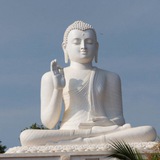
Big White Buddha at Wat Tham Khao Prang Buddhist temple, Lopburi, Thailand.
👏1👌1🏆1
Forwarded from Buddha Dharma books
Free Buddha Dharma ebook
Now is the Knowing
By Ajahn Sumedho
The Buddha said that the greatest gift is the gift of Dhamma. This small book represents the wish of some of those fortunate enough to have received Dhamma teachings from Venerable Ajahn Sumedho to share them with others. A certain amount of editing of the talks was felt necessary so as to translate the free form of direct speech into a more ordered printed record. This was always done judiciously and with great respect.
The second section, ‘Anapanasati’, is in fact composed of passages from three or four different talks on the subject of mindfulness of breathing. It seemed very useful to have so much pertinent advice gathered in a single place.
It is by sincerely using the Ajahn’s teachings as ‘tools to reflect on the way things are’ that we can begin to repay our great debt of gratitude to him. May we all constantly do so.
Free download available:
https://static.sariputta.com/pdf/tipitaka/215/now_know_pdf.pdf
===
Now is the Knowing
By Ajahn Sumedho
The Buddha said that the greatest gift is the gift of Dhamma. This small book represents the wish of some of those fortunate enough to have received Dhamma teachings from Venerable Ajahn Sumedho to share them with others. A certain amount of editing of the talks was felt necessary so as to translate the free form of direct speech into a more ordered printed record. This was always done judiciously and with great respect.
The second section, ‘Anapanasati’, is in fact composed of passages from three or four different talks on the subject of mindfulness of breathing. It seemed very useful to have so much pertinent advice gathered in a single place.
It is by sincerely using the Ajahn’s teachings as ‘tools to reflect on the way things are’ that we can begin to repay our great debt of gratitude to him. May we all constantly do so.
Free download available:
https://static.sariputta.com/pdf/tipitaka/215/now_know_pdf.pdf
===
👏2😘1
Forwarded from Words of the Buddha
Then with the passing of those seven days, the Gracious One arose from that concentration. Then the Nāga King Mucalinda, having understood that the sky was now clear without a cloud, having unravelled his coils from the Gracious One’s body, and after withdrawing his own form, and creating the appearance of a young brāhmaṇa, stood in front of the Gracious One, revering the Gracious One with raised hands.
Then the Gracious One, having understood the significance of it, on that occasion uttered this exalted utterance:
“There is happiness and detachment for the one who is satisfied,
who has heard the Dhamma, and who sees,
There is happiness for him who is free from ill-will in the world,
who is restrained towards breathing beings.
“The state of dispassion in the world is happiness,
the complete transcending of sense desires,
But for he who has removed the conceit ‘I am’—
this is indeed the highest happiness.”
Udāna 2.1
Mucalindasuttaṁ 11
Then the Gracious One, having understood the significance of it, on that occasion uttered this exalted utterance:
“There is happiness and detachment for the one who is satisfied,
who has heard the Dhamma, and who sees,
There is happiness for him who is free from ill-will in the world,
who is restrained towards breathing beings.
“The state of dispassion in the world is happiness,
the complete transcending of sense desires,
But for he who has removed the conceit ‘I am’—
this is indeed the highest happiness.”
Udāna 2.1
Mucalindasuttaṁ 11
❤2👏1👌1🕊1
Dhammapada Verses 316 and 317
Nigantha Vatthu
Alajjitaye lajjanti
lajjitaye na lajjare
micchaditthisamadana
satta gacchanti duggatim.
Abhaye thayadassino
bhaye cabhayadassino
micchaditthisamadana
satta gacchanti duggatim.
Verse 316: Those beings who are ashamed of what should not be ashamed of, who are not ashamed of what should be ashamed of, and who hold wrong views go to a lower plane of existence (duggati).
Verse 317: Those beings who see danger in what is not dangerous, who do not see danger in what is dangerous, and who hold wrong views go to a lower plane of existence (duggati).
The Story of the Nigantha Ascetics
While residing at the Jetavana monastery, the Buddha uttered Verses (316) and (317) of this book, with reference to Nigantha ascetics, who covered only the front part of their bodies.
One day, some Niganthas went on an alms-round with their bowls covered with a piece of cloth. Some bhikkhus seeing them commented, "These Nigantha ascetics who cover the front part of the body are more respectable compared to those Acelaka ascetics who go about without wearing anything." Hearing this comment, those ascetics retorted, "Yes, indeed, we do cover up our front part (by covering our bowls); but we cover it up not out of shame in going naked. We only cover up our bowls to keep away dust from our food, for even dust contains life in it."
When the bhikkhus reported what the Nigantha ascetics said, the Buddha replied, "Bhikkhus, those ascetics who go about covering only the front part of their bodies are not ashamed of what they should be ashamed of, but they are ashamed of what they should not be ashamed of; because of their wrong view they would only go to bad destinations."
Then the Buddha spoke in verse as follows:
Verse 316: Those beings who are ashamed of what should not be ashamed of, who are not ashamed of what should be ashamed of, and who hold wrong views go to a lower plane of existence (duggati).
Verse 317: Those beings who see danger in what is not dangerous, who do not see danger in what is dangerous, and who hold wrong views go to a lower plane of existence (duggati).
At the end of the discourse many Nigantha ascetics became frightened and joined the Buddhist Order.
===
Free Buddhism books, teachings, podcasts and videos from Theravada, Mahayana and Vajrayana traditions:
https://news.1rj.ru/str/buddha_ebooks
===
Nigantha Vatthu
Alajjitaye lajjanti
lajjitaye na lajjare
micchaditthisamadana
satta gacchanti duggatim.
Abhaye thayadassino
bhaye cabhayadassino
micchaditthisamadana
satta gacchanti duggatim.
Verse 316: Those beings who are ashamed of what should not be ashamed of, who are not ashamed of what should be ashamed of, and who hold wrong views go to a lower plane of existence (duggati).
Verse 317: Those beings who see danger in what is not dangerous, who do not see danger in what is dangerous, and who hold wrong views go to a lower plane of existence (duggati).
The Story of the Nigantha Ascetics
While residing at the Jetavana monastery, the Buddha uttered Verses (316) and (317) of this book, with reference to Nigantha ascetics, who covered only the front part of their bodies.
One day, some Niganthas went on an alms-round with their bowls covered with a piece of cloth. Some bhikkhus seeing them commented, "These Nigantha ascetics who cover the front part of the body are more respectable compared to those Acelaka ascetics who go about without wearing anything." Hearing this comment, those ascetics retorted, "Yes, indeed, we do cover up our front part (by covering our bowls); but we cover it up not out of shame in going naked. We only cover up our bowls to keep away dust from our food, for even dust contains life in it."
When the bhikkhus reported what the Nigantha ascetics said, the Buddha replied, "Bhikkhus, those ascetics who go about covering only the front part of their bodies are not ashamed of what they should be ashamed of, but they are ashamed of what they should not be ashamed of; because of their wrong view they would only go to bad destinations."
Then the Buddha spoke in verse as follows:
Verse 316: Those beings who are ashamed of what should not be ashamed of, who are not ashamed of what should be ashamed of, and who hold wrong views go to a lower plane of existence (duggati).
Verse 317: Those beings who see danger in what is not dangerous, who do not see danger in what is dangerous, and who hold wrong views go to a lower plane of existence (duggati).
At the end of the discourse many Nigantha ascetics became frightened and joined the Buddhist Order.
===
Free Buddhism books, teachings, podcasts and videos from Theravada, Mahayana and Vajrayana traditions:
https://news.1rj.ru/str/buddha_ebooks
===
Telegram
Buddha Dharma books
Free Buddhism books, teachings, podcasts and videos from Theravada, Mahayana and Vajrayana traditions
👌1🏆1
Forwarded from Words of the Buddha
Nalagiri, the king elephant, highly intoxicated, was raging like a forest fire and was terrible as a thunderbolt. Sprinkling the waters of loving-kindness, this ferocious beast, did Buddha, the Lord of Sages subdue. By the grace of this, may joyous victory be mine.
Jaya Mangala Gatha
Jaya Mangala Gatha
💯2👏1👌1🏆1
Forwarded from Words of the Buddha
Goodwill for the Real World
A Theravada monk explores the application of boundless metta for a broken world.
By Thanissaro Bhikkhu
Part 1 of 2
Years ago, after the 9/11 attacks, there was a Buddhist teacher who said that the attacks had burst his “complacent Buddhist bubble.” That’s a contradiction in terms: “complacent” and “Buddhist.” After all, the Buddha said that all skillful qualities come from heedfulness, and heedfulness means having a very strong sense of danger. There are dangers in the world. There are dangers in your own mind. The reason we try to develop skillful qualities in the mind is that we see that we have to prepare for these dangers.
Now, it’s true that some of the Buddhist teachings sound like they’re not designed for the real world. One of them is “goodwill for all beings.” A lot of beings are really misbehaving, so it seems difficult or impossible to have goodwill for everybody, but actually, universal goodwill is not only possible, it’s necessary for our own survival: the survival of our goodness. If you act on ill will toward other people, you’re going to be creating a bad state of mind within yourself and bad conditions in the world through your karma. The first thought in generating goodwill has to be that you’re doing this for yourself so that you can protect yourself from your greed, your aversion, your delusion, and especially from your ill will.
The Buddha admits that there are a lot of people for whom it’s difficult to have goodwill. A chant from the Paritta Sutta describes a monk who was sitting out in the forest meditating when a snake fell out of a tree on top of him, bit him, and he died. The monks went to report this to the Buddha, and he responded that the monk had not spread goodwill to the four families of snakes. Then he proceeded to teach the monks that particular chant for spreading goodwill for beings with no feet, beings with two feet, beings with four, and beings with many feet. He goes through a list of all the creepy crawly things that there are out in the forest—and those are just the small ones. There are other places where he talks about having goodwill for little beings, big beings, short beings and long. Some of the big beings in the forest, of course, are pretty scary too: elephants, bears, rhinoceroses. There were also bands of thieves that might kill monks just for the fun of it. So the Buddha lived in a dangerous world.
Universal goodwill is not only possible, it’s necessary for our own survival: the survival of our goodness.
One of the things you notice about that chant of goodwill for snakes and creepy crawly things is that it says, “I have goodwill for you all, but may you all now depart.” Goodwill doesn’t mean that you’re going to be there for them or you’re going to be loving to them. There are lots of cases where goodwill basically means, “You’re looking for happiness in your way and I’m looking for happiness in my way, and as long as I can live in a world where I’m behaving in a skillful way, may we go our separate ways.” The snakes will be happier to be away from you anyhow, and you’ll be happy to be away from the snakes.
So goodwill doesn’t mean love. I read a while back someone saying that even the word loving-kindness is too weak a translation for metta, that the Buddha would want to have you have love, love, love for everybody because, of course, everybody loves love. Well, the Buddha didn’t teach anything just because people liked to hear it. The attitude he taught is goodwill: “May these people be happy.” But you have to think about it: What does it mean for a person or an animal to be happy? They have to behave skillfully—people especially. Your wish, basically, is, “May all beings behave skillfully.” That’s a wish you can have for anybody without hypocrisy, including people who have been really misbehaving, people you intensely dislike.
A Theravada monk explores the application of boundless metta for a broken world.
By Thanissaro Bhikkhu
Part 1 of 2
Years ago, after the 9/11 attacks, there was a Buddhist teacher who said that the attacks had burst his “complacent Buddhist bubble.” That’s a contradiction in terms: “complacent” and “Buddhist.” After all, the Buddha said that all skillful qualities come from heedfulness, and heedfulness means having a very strong sense of danger. There are dangers in the world. There are dangers in your own mind. The reason we try to develop skillful qualities in the mind is that we see that we have to prepare for these dangers.
Now, it’s true that some of the Buddhist teachings sound like they’re not designed for the real world. One of them is “goodwill for all beings.” A lot of beings are really misbehaving, so it seems difficult or impossible to have goodwill for everybody, but actually, universal goodwill is not only possible, it’s necessary for our own survival: the survival of our goodness. If you act on ill will toward other people, you’re going to be creating a bad state of mind within yourself and bad conditions in the world through your karma. The first thought in generating goodwill has to be that you’re doing this for yourself so that you can protect yourself from your greed, your aversion, your delusion, and especially from your ill will.
The Buddha admits that there are a lot of people for whom it’s difficult to have goodwill. A chant from the Paritta Sutta describes a monk who was sitting out in the forest meditating when a snake fell out of a tree on top of him, bit him, and he died. The monks went to report this to the Buddha, and he responded that the monk had not spread goodwill to the four families of snakes. Then he proceeded to teach the monks that particular chant for spreading goodwill for beings with no feet, beings with two feet, beings with four, and beings with many feet. He goes through a list of all the creepy crawly things that there are out in the forest—and those are just the small ones. There are other places where he talks about having goodwill for little beings, big beings, short beings and long. Some of the big beings in the forest, of course, are pretty scary too: elephants, bears, rhinoceroses. There were also bands of thieves that might kill monks just for the fun of it. So the Buddha lived in a dangerous world.
Universal goodwill is not only possible, it’s necessary for our own survival: the survival of our goodness.
One of the things you notice about that chant of goodwill for snakes and creepy crawly things is that it says, “I have goodwill for you all, but may you all now depart.” Goodwill doesn’t mean that you’re going to be there for them or you’re going to be loving to them. There are lots of cases where goodwill basically means, “You’re looking for happiness in your way and I’m looking for happiness in my way, and as long as I can live in a world where I’m behaving in a skillful way, may we go our separate ways.” The snakes will be happier to be away from you anyhow, and you’ll be happy to be away from the snakes.
So goodwill doesn’t mean love. I read a while back someone saying that even the word loving-kindness is too weak a translation for metta, that the Buddha would want to have you have love, love, love for everybody because, of course, everybody loves love. Well, the Buddha didn’t teach anything just because people liked to hear it. The attitude he taught is goodwill: “May these people be happy.” But you have to think about it: What does it mean for a person or an animal to be happy? They have to behave skillfully—people especially. Your wish, basically, is, “May all beings behave skillfully.” That’s a wish you can have for anybody without hypocrisy, including people who have been really misbehaving, people you intensely dislike.
Telegram
Words of the Buddha
Daily teachings of Buddha Dharma
👏1🆒1