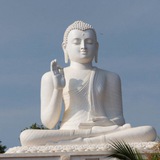
Free Buddha Dharma ebook
Simply This Moment
A collection of talks about Buddhist practice
By Ajahn Brahm
Simply This Moment is a collection of talks given by Ajahn Brahm on the practice of Buddhism. Many of the talks were given to monks during the Rains Retreat at Bodhinyana. The subject topics are therefore less mundane, and more attention is given to meditation, in particular, jhana meditation. Readers will find very useful instructions and insights on the breath meditation as instructed in the Anapanasati Sutta (Mindfulness of Breathing).
Free download available:
https://static.sariputta.com/pdf/tipitaka/210/Simply-This-Moment_pdf.pdf
===
Simply This Moment
A collection of talks about Buddhist practice
By Ajahn Brahm
Simply This Moment is a collection of talks given by Ajahn Brahm on the practice of Buddhism. Many of the talks were given to monks during the Rains Retreat at Bodhinyana. The subject topics are therefore less mundane, and more attention is given to meditation, in particular, jhana meditation. Readers will find very useful instructions and insights on the breath meditation as instructed in the Anapanasati Sutta (Mindfulness of Breathing).
Free download available:
https://static.sariputta.com/pdf/tipitaka/210/Simply-This-Moment_pdf.pdf
===
🥰1👏1
Free Buddha Dharma ebook
Simply This Moment
A collection of talks about Buddhist practice
By Ajahn Brahm
Simply This Moment is a collection of talks given by Ajahn Brahm on the practice of Buddhism. Many of the talks were given to monks during the Rains Retreat at Bodhinyana. The subject topics are therefore less mundane, and more attention is given to meditation, in particular, jhana meditation. Readers will find very useful instructions and insights on the breath meditation as instructed in the Anapanasati Sutta (Mindfulness of Breathing).
Free download available:
https://static.sariputta.com/pdf/tipitaka/210/Simply-This-Moment_pdf.pdf
===
Simply This Moment
A collection of talks about Buddhist practice
By Ajahn Brahm
Simply This Moment is a collection of talks given by Ajahn Brahm on the practice of Buddhism. Many of the talks were given to monks during the Rains Retreat at Bodhinyana. The subject topics are therefore less mundane, and more attention is given to meditation, in particular, jhana meditation. Readers will find very useful instructions and insights on the breath meditation as instructed in the Anapanasati Sutta (Mindfulness of Breathing).
Free download available:
https://static.sariputta.com/pdf/tipitaka/210/Simply-This-Moment_pdf.pdf
===
👍1💯1
Free Buddha Dharma ebook
Simply This Moment
A collection of talks about Buddhist practice
By Ajahn Brahm
Free download available:
https://static.sariputta.com/pdf/tipitaka/210/Simply-This-Moment_pdf.pdf
===
Simply This Moment
A collection of talks about Buddhist practice
By Ajahn Brahm
Free download available:
https://static.sariputta.com/pdf/tipitaka/210/Simply-This-Moment_pdf.pdf
===
👌1🏆1
Dhammapada Verse 348
Uggasena Vatthu
Muncapure1munca pacchato2
majjhe3munca bhavassa paragu4
sabbattha vimuttamanaso
na punam jatijaram upehisi.
Verse 348: Give up the past, give up the future, give up the present. Having reached the end of existences, with a mind freed from all (conditioned things), you will not again undergo birth and decay.
1, 2, 3. pure, pacchato, majjhe: the reference is to attachment to the past, future and present Khandha aggregates.
4. bhavassa paragu: one who has gane to the other shore or end of existences (i.e., Nibbana); an arahat.
The Story of Uggasena
While residing at the Jetavana monastery, the Buddha uttered Verse (348) of this book, with reference to Uggasena, a rich man's son who fell in love with a dancer.
Once, a wandering theatrical troupe consisting of five hundred dancers and some acrobats came to Rajagaha and performed on the grounds of the palace of King Bimbisara for seven days. There, a young dancer who was the daughter of an acrobat sang and danced on top of a long bamboo pole. Uggasena, the young son of a rich man, fell desperately in love with this dancer and his parents could not stop him from marrying her. He married the young dancer and followed the troupe. As he was not a dancer nor an acrobat, he was not of much use to the party. So, as the party moved from place to place, he had to help carry boxes, to drive the carts, etc.
In course of time, a son was born to Uggasena and his wife, the dancer. To this child, the dancer would often sing a song which ran thus: "O you, son of the man who keeps watch over the carts; the man who carries boxes and bundles! O , you, son of the ignorant one who can do nothing!" Uggasena heard the song; he knew that his wife was referring to him and he was very much hurt and depressed. So he went to his father-in-law, the acrobat, and requested him to teach him acrobatics. After a year's training, Uggasena became a skilful acrobat.
Then, Uggasena went back to Rajagaha, and it was proclaimed that Uggasena would publicly demonstrate his skill in seven days' time. On the seventh day, a long pole was put up and Uggasena stood on top of it. At a signal given from below he somersaulted seven times on the pole. At about this time, the Buddha saw Uggasena in his vision and knew that time was ripe for Uggasena to attain arahatship. So, he entered Rajagaha and willed that the audience should turn their attention to him instead of applauding Uggasena for his acrobatic feats. When Uggasena saw that he was being neglected and ignored, he just sat on top of the pole, feeling very discontented and depressed. The Buddha then addressed Uggasena, "Uggasena, a wise man should abandon all attachment to the khandha aggregates and strive to gain liberation from the round of rebirths."
Then the Buddha spoke in verse as follows:
Verse 348: Give up the past, give up the future, give up the present. Having reached the end of existences, with a mind freed from all (conditioned things), you will not again undergo birth and decay.
At the end of the discourse Uggasena, who was still on top of the pole, attained arahatship. He came down and was soon admitted to the Order by the Buddha.
===
Dhammapada, beloved and favorite teachings of the Buddha channel:
https://news.1rj.ru/str/dhammapadas
===
Uggasena Vatthu
Muncapure1munca pacchato2
majjhe3munca bhavassa paragu4
sabbattha vimuttamanaso
na punam jatijaram upehisi.
Verse 348: Give up the past, give up the future, give up the present. Having reached the end of existences, with a mind freed from all (conditioned things), you will not again undergo birth and decay.
1, 2, 3. pure, pacchato, majjhe: the reference is to attachment to the past, future and present Khandha aggregates.
4. bhavassa paragu: one who has gane to the other shore or end of existences (i.e., Nibbana); an arahat.
The Story of Uggasena
While residing at the Jetavana monastery, the Buddha uttered Verse (348) of this book, with reference to Uggasena, a rich man's son who fell in love with a dancer.
Once, a wandering theatrical troupe consisting of five hundred dancers and some acrobats came to Rajagaha and performed on the grounds of the palace of King Bimbisara for seven days. There, a young dancer who was the daughter of an acrobat sang and danced on top of a long bamboo pole. Uggasena, the young son of a rich man, fell desperately in love with this dancer and his parents could not stop him from marrying her. He married the young dancer and followed the troupe. As he was not a dancer nor an acrobat, he was not of much use to the party. So, as the party moved from place to place, he had to help carry boxes, to drive the carts, etc.
In course of time, a son was born to Uggasena and his wife, the dancer. To this child, the dancer would often sing a song which ran thus: "O you, son of the man who keeps watch over the carts; the man who carries boxes and bundles! O , you, son of the ignorant one who can do nothing!" Uggasena heard the song; he knew that his wife was referring to him and he was very much hurt and depressed. So he went to his father-in-law, the acrobat, and requested him to teach him acrobatics. After a year's training, Uggasena became a skilful acrobat.
Then, Uggasena went back to Rajagaha, and it was proclaimed that Uggasena would publicly demonstrate his skill in seven days' time. On the seventh day, a long pole was put up and Uggasena stood on top of it. At a signal given from below he somersaulted seven times on the pole. At about this time, the Buddha saw Uggasena in his vision and knew that time was ripe for Uggasena to attain arahatship. So, he entered Rajagaha and willed that the audience should turn their attention to him instead of applauding Uggasena for his acrobatic feats. When Uggasena saw that he was being neglected and ignored, he just sat on top of the pole, feeling very discontented and depressed. The Buddha then addressed Uggasena, "Uggasena, a wise man should abandon all attachment to the khandha aggregates and strive to gain liberation from the round of rebirths."
Then the Buddha spoke in verse as follows:
Verse 348: Give up the past, give up the future, give up the present. Having reached the end of existences, with a mind freed from all (conditioned things), you will not again undergo birth and decay.
At the end of the discourse Uggasena, who was still on top of the pole, attained arahatship. He came down and was soon admitted to the Order by the Buddha.
===
Dhammapada, beloved and favorite teachings of the Buddha channel:
https://news.1rj.ru/str/dhammapadas
===
Telegram
Dhammapada - Buddha Dharma Teachings
Daily teachings of the Dhammapada, beloved and favorite teachings of the Buddha
👏1🙏1🏆1
Forwarded from Words of the Buddha
Big Buddhas of Wat Pha Sorn Kaew Buddhist temple, Phetchabun, Thailand
👍1👏1🤩1😍1😎1
Dhammapada Verses 349 and 350
Culadhanuggaha Pandita Vatthu
Vitakkamathitassa jantuno
tibbaragassa subbhanupassino
bhiyyo tanha pavaddhati
esa kho dalham karoti bandhanam.
Vitakkupasame ca yo rato
asubham bhavayate sada sato
esa kho byanti kahiti
esa cheechati marabandhanam.
Verse 349: In a man who is disturbed by (sensual) thoughts, whose passions are strong, and who keeps seeing objects as being pleasant, craving grows more and more. Indeed, he makes his bondage strong.
Verse 350: A man who takes delight in calming (sensual) thoughts, who is ever mindful, and meditates on the impurity (of the body, etc.) will certainly get rid (of craving); this man will cut the bond of Mara.
The Story of Culadhanuggaha, the Skilful Archer
While residing at the Jetavana monastery, the Buddha uttered Verses (349) and (350) of this book, with reference to a young bhikkhu, who was a skilful archer in one of his previous existences.
Once a young bhikkhu took his alms-food in one of the shelters specially built for bhikkhus in town. After his meal he felt like drinking water. So he went to a house and asked for some drinking water, and a young woman came out to give him some water. As soon as this young woman saw the young bhikkhu she fell in love with him. Wishing to entice him, she invited the young bhikkhu to come to her house whenever he felt thirsty. After some time, she invited him to her house for alms-food. On that day, she told him that they had everything they could wish for in the house, but that there was no male to look after their affairs, etc. Hearing those words, the young bhikkhu took the hint and he soon found himself to be more and more attached to the young, attractive woman. He became very much dissatisfied with his life as a bhikkhu and was getting thin. Other bhikkhus reported about him to the Buddha.
The Buddha called the young bhikkhu to his presence and said to him, "My son, listen to me. This young woman will be your undoing just as she had been to you in a previous existence. In one of your previous existences you were a very skilful archer and she was your wife. On one occasion, while the two of you were travelling, you came upon a gang of highwaymen. She fell in love with the gang leader. So, while you and the gang leader were engaged in fighting and you called out to her to give you the sword, she gave the sword to the robber who promptly killed you. Thus, she was the cause of your death. Now, too, she will be the cause of your ruin if you go after her and leave my Order for her sake."
Then the Buddha spoke in verse as follows:
Verse 349: In a man who is disturbed by (sensual) thoughts, whose passions are strong, and who keeps seeing objects as being pleasant, craving grows more and more. Indeed, he makes his bondage strong.
Verse 350: A man who takes delight in calming (sensual) thoughts, who is ever mindful, and meditates on the impurity (of the body, etc.) will certainly get rid (of craving); this man will cut the bond of Mara.
At the end of the discourse, the young bhikkhu attained Sotapatti Fruition.
===
Buddha dharma teachings channel:
https://invite.viber.com/?g2=AQAKw1y3rv%2F6sk61PI2W4izuIiaEZj8YZujhY1tSzL%2B07s7rFnVFDAd0bAYFaMLw
===
Culadhanuggaha Pandita Vatthu
Vitakkamathitassa jantuno
tibbaragassa subbhanupassino
bhiyyo tanha pavaddhati
esa kho dalham karoti bandhanam.
Vitakkupasame ca yo rato
asubham bhavayate sada sato
esa kho byanti kahiti
esa cheechati marabandhanam.
Verse 349: In a man who is disturbed by (sensual) thoughts, whose passions are strong, and who keeps seeing objects as being pleasant, craving grows more and more. Indeed, he makes his bondage strong.
Verse 350: A man who takes delight in calming (sensual) thoughts, who is ever mindful, and meditates on the impurity (of the body, etc.) will certainly get rid (of craving); this man will cut the bond of Mara.
The Story of Culadhanuggaha, the Skilful Archer
While residing at the Jetavana monastery, the Buddha uttered Verses (349) and (350) of this book, with reference to a young bhikkhu, who was a skilful archer in one of his previous existences.
Once a young bhikkhu took his alms-food in one of the shelters specially built for bhikkhus in town. After his meal he felt like drinking water. So he went to a house and asked for some drinking water, and a young woman came out to give him some water. As soon as this young woman saw the young bhikkhu she fell in love with him. Wishing to entice him, she invited the young bhikkhu to come to her house whenever he felt thirsty. After some time, she invited him to her house for alms-food. On that day, she told him that they had everything they could wish for in the house, but that there was no male to look after their affairs, etc. Hearing those words, the young bhikkhu took the hint and he soon found himself to be more and more attached to the young, attractive woman. He became very much dissatisfied with his life as a bhikkhu and was getting thin. Other bhikkhus reported about him to the Buddha.
The Buddha called the young bhikkhu to his presence and said to him, "My son, listen to me. This young woman will be your undoing just as she had been to you in a previous existence. In one of your previous existences you were a very skilful archer and she was your wife. On one occasion, while the two of you were travelling, you came upon a gang of highwaymen. She fell in love with the gang leader. So, while you and the gang leader were engaged in fighting and you called out to her to give you the sword, she gave the sword to the robber who promptly killed you. Thus, she was the cause of your death. Now, too, she will be the cause of your ruin if you go after her and leave my Order for her sake."
Then the Buddha spoke in verse as follows:
Verse 349: In a man who is disturbed by (sensual) thoughts, whose passions are strong, and who keeps seeing objects as being pleasant, craving grows more and more. Indeed, he makes his bondage strong.
Verse 350: A man who takes delight in calming (sensual) thoughts, who is ever mindful, and meditates on the impurity (of the body, etc.) will certainly get rid (of craving); this man will cut the bond of Mara.
At the end of the discourse, the young bhikkhu attained Sotapatti Fruition.
===
Buddha dharma teachings channel:
https://invite.viber.com/?g2=AQAKw1y3rv%2F6sk61PI2W4izuIiaEZj8YZujhY1tSzL%2B07s7rFnVFDAd0bAYFaMLw
===
Viber
Buddha
Buddha dharma teachings from the suttas and commentaries from Theravada tradition
Free Buddha Dharma ebook
Dhamma In Practice
-- A Collection Of Works
By Phra Nirodharansigambhira pannacariya of Hin Mark Peng Monastery, Thailand
Free download here:
https://ftp.budaedu.org/ebooks/pdf/EN340.pdf
===
Dhamma In Practice
-- A Collection Of Works
By Phra Nirodharansigambhira pannacariya of Hin Mark Peng Monastery, Thailand
Free download here:
https://ftp.budaedu.org/ebooks/pdf/EN340.pdf
===
👍1💯1
Free Buddha Dharma ebook
Dhamma In Practice
-- A Collection Of Works
By Phra Nirodharansigambhira pannacariya of Hin Mark Peng Monastery, Thailand
The book here presented is meant to serve as a guide for those who aspire for mind-development. Written in the light of what actually takes place in the course of that development, it might in places sound unfamiliar to some. It was in view of a number of aspirants that this attempt was made. Most of those aspirants, despite their sincere faith and devotion, are not so well-informed, but they are fervently earnest in the practice of Kammatthana (Insight Meditation). Because of this drawback they often do not know how to come to terms with what they have to encounter in their development process. Thus they cannot decide for themselves how well, or how far, they have progressed, and as a result are known to have fallen back or been deluded in some cases.This is a deplorable situation showing that the practical aspect of Dhamma cannot be determined entirely by the intellectual, academical aspect.
Free download here:
https://ftp.budaedu.org/ebooks/pdf/EN340.pdf
===
Dhamma In Practice
-- A Collection Of Works
By Phra Nirodharansigambhira pannacariya of Hin Mark Peng Monastery, Thailand
The book here presented is meant to serve as a guide for those who aspire for mind-development. Written in the light of what actually takes place in the course of that development, it might in places sound unfamiliar to some. It was in view of a number of aspirants that this attempt was made. Most of those aspirants, despite their sincere faith and devotion, are not so well-informed, but they are fervently earnest in the practice of Kammatthana (Insight Meditation). Because of this drawback they often do not know how to come to terms with what they have to encounter in their development process. Thus they cannot decide for themselves how well, or how far, they have progressed, and as a result are known to have fallen back or been deluded in some cases.This is a deplorable situation showing that the practical aspect of Dhamma cannot be determined entirely by the intellectual, academical aspect.
Free download here:
https://ftp.budaedu.org/ebooks/pdf/EN340.pdf
===
👌1🏆1
Forwarded from Words of the Buddha
The Corpse on Her Lap
A Thai ghost story told by the late Forest Tradition teacher Ajaan Suwat Suvaco
By Phra Ajaan Suwat Suvaco, translated by Thanissaro Bhikkhu
The following excerpt is from a conversation that took place at Insight Meditation Society (IMS) in Barre, Massachusetts, in the summer of 1989 between Ajaan Suwat Suvaco and one of the retreatants.
I understand that Tibetan monks use visualization when they meditate. Have you ever used visualization in your meditation? Visualization of what?
I’m not really sure. Maybe of the unattractiveness of the body? Visualization, if it’s done in the proper way, can be useful. If it’s done in the wrong way, it can lead to delusion. The process of visualization, in the language of the dhamma, is called sankhara, or fabrication. The Buddha taught us to be wise to the true nature of fabrication, that it’s inconstant and undependable. When we know this truth, we don’t get attached to the things that arise. When knowledge arises and we don’t get attached to it, then we don’t get deluded by it. That’s when it can be useful.
One of the principles of the dhamma is that if you visualize anything in your meditation, you should visualize only things lying within you, so that you see physical fabrication in the body and mental fabrication in the mind in line with their true nature. For example: At present, you’re not yet old, but you’re taught to visualize yourself as growing old in the same way you’ve seen other people grow old. Remind yourself that as the years pass, you’ll have to age in just the same way. Aging is stressful. Your eyes won’t be able to see as clearly as when you were young. Your ears won’t be able to hear in the same way as when you were young. It’ll be painful to sit down, to stand, to walk. There will be all kinds of obstacles. Now, before you grow old, you should accelerate your efforts at developing goodness so that it’ll be a refuge for the heart when old age comes. In other words, accelerate your efforts at practicing the dhamma and training the mind to find peace.
One of the ten recollections (anussati) taught by the Buddha is recollection of death: When you see other people dying, other animals dying, you should reflect on the fact that you will have to die just like everyone else. Repeat the word maranam, maranam (death, death) in the mind and look at yourself: You’re going to have to die for sure. As you reflect maranam, maranam, it may happen that as your mind grows still, a vision of your own death will appear within you. If your mindfulness is good and you have your wits about you, then the more clearly you see death in this way, the more the mind will grow still with an even greater sense of well-being. As you watch death clearly, seeing the body decay, concentration grows even stronger. If you visualize death so that you can see it clearly, you’ll realize that there’s nothing to be gained by growing attached to the body.
When you see the truth in this way, you’ll see that your past greed for things served no real purpose. The anger you’ve felt in the past: What purpose did it serve? You’ll see that greed, anger, and delusion are stressful and serve no purpose—for ultimately, we’ll have to let go of everything that comes along with them. You’ll see that this sense of peace and ease in the mind is what serves a real purpose. When the mind is at peace in this way, it doesn’t want anything else. All it wants is peace, and that’s enough.
I’ll tell you a story. It’s time you listened to something light for a change, so that you won’t be so tense and grim. It’s important that you first let yourself relax. Once, Ajaan Funn, my teacher, was wandering through the forest in Baan Phyy district, Udon Thani province, and stopped to spend the night not far from a certain village. He saw that it was a congenial place and so stayed on there to practice meditation. A woman living in the village would often come in the morning to give him alms, and then again in the evening to hear his dhamma talks.
A Thai ghost story told by the late Forest Tradition teacher Ajaan Suwat Suvaco
By Phra Ajaan Suwat Suvaco, translated by Thanissaro Bhikkhu
The following excerpt is from a conversation that took place at Insight Meditation Society (IMS) in Barre, Massachusetts, in the summer of 1989 between Ajaan Suwat Suvaco and one of the retreatants.
I understand that Tibetan monks use visualization when they meditate. Have you ever used visualization in your meditation? Visualization of what?
I’m not really sure. Maybe of the unattractiveness of the body? Visualization, if it’s done in the proper way, can be useful. If it’s done in the wrong way, it can lead to delusion. The process of visualization, in the language of the dhamma, is called sankhara, or fabrication. The Buddha taught us to be wise to the true nature of fabrication, that it’s inconstant and undependable. When we know this truth, we don’t get attached to the things that arise. When knowledge arises and we don’t get attached to it, then we don’t get deluded by it. That’s when it can be useful.
One of the principles of the dhamma is that if you visualize anything in your meditation, you should visualize only things lying within you, so that you see physical fabrication in the body and mental fabrication in the mind in line with their true nature. For example: At present, you’re not yet old, but you’re taught to visualize yourself as growing old in the same way you’ve seen other people grow old. Remind yourself that as the years pass, you’ll have to age in just the same way. Aging is stressful. Your eyes won’t be able to see as clearly as when you were young. Your ears won’t be able to hear in the same way as when you were young. It’ll be painful to sit down, to stand, to walk. There will be all kinds of obstacles. Now, before you grow old, you should accelerate your efforts at developing goodness so that it’ll be a refuge for the heart when old age comes. In other words, accelerate your efforts at practicing the dhamma and training the mind to find peace.
One of the ten recollections (anussati) taught by the Buddha is recollection of death: When you see other people dying, other animals dying, you should reflect on the fact that you will have to die just like everyone else. Repeat the word maranam, maranam (death, death) in the mind and look at yourself: You’re going to have to die for sure. As you reflect maranam, maranam, it may happen that as your mind grows still, a vision of your own death will appear within you. If your mindfulness is good and you have your wits about you, then the more clearly you see death in this way, the more the mind will grow still with an even greater sense of well-being. As you watch death clearly, seeing the body decay, concentration grows even stronger. If you visualize death so that you can see it clearly, you’ll realize that there’s nothing to be gained by growing attached to the body.
When you see the truth in this way, you’ll see that your past greed for things served no real purpose. The anger you’ve felt in the past: What purpose did it serve? You’ll see that greed, anger, and delusion are stressful and serve no purpose—for ultimately, we’ll have to let go of everything that comes along with them. You’ll see that this sense of peace and ease in the mind is what serves a real purpose. When the mind is at peace in this way, it doesn’t want anything else. All it wants is peace, and that’s enough.
I’ll tell you a story. It’s time you listened to something light for a change, so that you won’t be so tense and grim. It’s important that you first let yourself relax. Once, Ajaan Funn, my teacher, was wandering through the forest in Baan Phyy district, Udon Thani province, and stopped to spend the night not far from a certain village. He saw that it was a congenial place and so stayed on there to practice meditation. A woman living in the village would often come in the morning to give him alms, and then again in the evening to hear his dhamma talks.
👍1🥰1🙏1
Forwarded from Words of the Buddha
Ajaan Funn taught her to meditate, something she had never done before.
It so happened that she was afraid of ghosts. Wherever she went, she was afraid of ghosts, and so she never went anywhere alone. Especially at night, she was really afraid. When Ajaan Funn taught her to meditate, she didn’t want to, because she was afraid that she’d see a corpse or a ghost. On the following days, Ajaan Funn asked her how her meditation was going, and she couldn’t answer him because she hadn’t meditated. After a while she began to feel embarrassed: “He keeps teaching me to meditate, and yet all I do is hold on to my fear of ghosts.” She decided, “Whatever may happen, I’m going to meditate.” So she started to meditate.
When the mind is at peace in this way, it doesn’t want anything else. All it wants is peace, and that’s enough.
At first she simply focused on repeating the word buddho as she watched her breath come in and out. As her mind began to relax, it began to drift a bit and a vision arose: She saw a corpse lying stretched out in front of her. When she saw the corpse, she began to feel afraid. Then the corpse moved in so that it was lying on her lap. With the corpse on her lap, she couldn’t get up to run away. That’s when she remembered her buddho. She wanted buddho to come and help her. So she kept thinking, buddho, buddho, more and more intensely. As she was doing this, one part of her mind was afraid, the other part kept recollecting buddho, buddho, until the corpse disappeared from her lap and turned into herself. That was when she had a vision of her chest bursting wide open. Her heart was bright, very bright. In the brightness of her heart she could see all kinds of things. She could see what other people were thinking, what animals were thinking. She knew all kinds of things and felt really amazed. From that point on her fear of ghosts disappeared. Her heart grew peaceful and at ease.
The next day she went to see Ajaan Funn. Ajaan Funn was sick with a fever, but he forced himself to get up to greet her and give her a dhamma talk, as he had on previous days, just as if he wasn’t sick at all. After the talk, she immediately said to him, “Than Ajaan, your heart isn’t bright and blooming at all. It looks withered and dry. You must be very sick.” Ajaan Funn was surprised: “How does she know the state of my mind?” But he had noticed that her manner was different from what it had been on previous days. She was very composed and polite. She had bowed down very politely, her words had been gentle and very respectful. When she commented on his heart that way, he wondered: “Does she really know the state of my mind?” So when she returned to the village, he forced himself to sit and meditate to the point where the fever broke and went away. His heart grew peaceful, bright, and at ease. The next day, when the time came that the woman would come, he decided to play sick in order to test her. When she arrived, he didn’t get up to greet her and stayed lying down as if he were sick. After she bowed down, she sat to meditate for a moment, and then said, “Why, your lotus”—meaning his heart—your lotus is really blooming!” That was when Ajaan Funn realized that she was really meditating well.
From that point on, she could come in the evening without the slightest fear of ghosts or spirits. And she continued to meditate well. Her mind never deteriorated. To tell the truth, she had never studied in school and didn’t know much of the dhamma, but because of her respect for Ajaan Funn, when he taught her to meditate, she followed his instructions. Whether it was because of her past merit or what, I don’t know, but she gained peace of mind, developed her discernment, and was able to know her own heart and the hearts of other people.
Those of you who have come here to meditate: Don’t underestimate yourselves, thinking that you won’t gain anything or come to any insights. Don’t be so sure! If you keep up your efforts and practice correctly, it might very well happen that you’ll gain insight.
It so happened that she was afraid of ghosts. Wherever she went, she was afraid of ghosts, and so she never went anywhere alone. Especially at night, she was really afraid. When Ajaan Funn taught her to meditate, she didn’t want to, because she was afraid that she’d see a corpse or a ghost. On the following days, Ajaan Funn asked her how her meditation was going, and she couldn’t answer him because she hadn’t meditated. After a while she began to feel embarrassed: “He keeps teaching me to meditate, and yet all I do is hold on to my fear of ghosts.” She decided, “Whatever may happen, I’m going to meditate.” So she started to meditate.
When the mind is at peace in this way, it doesn’t want anything else. All it wants is peace, and that’s enough.
At first she simply focused on repeating the word buddho as she watched her breath come in and out. As her mind began to relax, it began to drift a bit and a vision arose: She saw a corpse lying stretched out in front of her. When she saw the corpse, she began to feel afraid. Then the corpse moved in so that it was lying on her lap. With the corpse on her lap, she couldn’t get up to run away. That’s when she remembered her buddho. She wanted buddho to come and help her. So she kept thinking, buddho, buddho, more and more intensely. As she was doing this, one part of her mind was afraid, the other part kept recollecting buddho, buddho, until the corpse disappeared from her lap and turned into herself. That was when she had a vision of her chest bursting wide open. Her heart was bright, very bright. In the brightness of her heart she could see all kinds of things. She could see what other people were thinking, what animals were thinking. She knew all kinds of things and felt really amazed. From that point on her fear of ghosts disappeared. Her heart grew peaceful and at ease.
The next day she went to see Ajaan Funn. Ajaan Funn was sick with a fever, but he forced himself to get up to greet her and give her a dhamma talk, as he had on previous days, just as if he wasn’t sick at all. After the talk, she immediately said to him, “Than Ajaan, your heart isn’t bright and blooming at all. It looks withered and dry. You must be very sick.” Ajaan Funn was surprised: “How does she know the state of my mind?” But he had noticed that her manner was different from what it had been on previous days. She was very composed and polite. She had bowed down very politely, her words had been gentle and very respectful. When she commented on his heart that way, he wondered: “Does she really know the state of my mind?” So when she returned to the village, he forced himself to sit and meditate to the point where the fever broke and went away. His heart grew peaceful, bright, and at ease. The next day, when the time came that the woman would come, he decided to play sick in order to test her. When she arrived, he didn’t get up to greet her and stayed lying down as if he were sick. After she bowed down, she sat to meditate for a moment, and then said, “Why, your lotus”—meaning his heart—your lotus is really blooming!” That was when Ajaan Funn realized that she was really meditating well.
From that point on, she could come in the evening without the slightest fear of ghosts or spirits. And she continued to meditate well. Her mind never deteriorated. To tell the truth, she had never studied in school and didn’t know much of the dhamma, but because of her respect for Ajaan Funn, when he taught her to meditate, she followed his instructions. Whether it was because of her past merit or what, I don’t know, but she gained peace of mind, developed her discernment, and was able to know her own heart and the hearts of other people.
Those of you who have come here to meditate: Don’t underestimate yourselves, thinking that you won’t gain anything or come to any insights. Don’t be so sure! If you keep up your efforts and practice correctly, it might very well happen that you’ll gain insight.
😍1💯1
Forwarded from Words of the Buddha
If things come together properly, the day will come when you know, when you see the dhamma. It could very well happen.
So keep up your efforts. After the retreat is over, when you go back home, keep using your mindfulness to keep watch over yourself. In your comings and goings, keep training your mindfulness as you do while you’re here, as a means of maintaining the state of your mind through practicing restraint of the senses. This will develop your mindfulness and give it power. That way, you’ll find that things go more smoothly when the time comes to train the mind to be still.
The article was excerpted and adapted from Fistful of Sand, by Ajaan Suwat Suvaco, translated from Thai by Thanissaro Bhikkhu.
===
Thanissaro Bhikkhu is an American Theravada Buddhist monk trained in the Thai Forest Tradition. He currently serves as abbot of the Metta Forest Monastery in San Diego County, California and is a frequent contributor to Tricycle. His latest book is Good Heart, Good Mind: The Practice of the Ten Perfections. Thanissaro Bhikkhu’s talks, writings, and translations are all freely available at his website, www.dhammatalks.org
Phra Ajaan Suwat Suvaco (1919–2001) was an abbot in the Thai Forest Tradition. In the 1980s, he came to the United States, where he established his four monasteries: one near Seattle, Washington; two near Los Angeles; and one in the hills of San Diego County (Metta Forest Monastery).
===
Dhammapada, beloved and favorite teachings of the Buddha channel:
https://news.1rj.ru/str/dhammapadas
===
So keep up your efforts. After the retreat is over, when you go back home, keep using your mindfulness to keep watch over yourself. In your comings and goings, keep training your mindfulness as you do while you’re here, as a means of maintaining the state of your mind through practicing restraint of the senses. This will develop your mindfulness and give it power. That way, you’ll find that things go more smoothly when the time comes to train the mind to be still.
The article was excerpted and adapted from Fistful of Sand, by Ajaan Suwat Suvaco, translated from Thai by Thanissaro Bhikkhu.
===
Thanissaro Bhikkhu is an American Theravada Buddhist monk trained in the Thai Forest Tradition. He currently serves as abbot of the Metta Forest Monastery in San Diego County, California and is a frequent contributor to Tricycle. His latest book is Good Heart, Good Mind: The Practice of the Ten Perfections. Thanissaro Bhikkhu’s talks, writings, and translations are all freely available at his website, www.dhammatalks.org
Phra Ajaan Suwat Suvaco (1919–2001) was an abbot in the Thai Forest Tradition. In the 1980s, he came to the United States, where he established his four monasteries: one near Seattle, Washington; two near Los Angeles; and one in the hills of San Diego County (Metta Forest Monastery).
===
Dhammapada, beloved and favorite teachings of the Buddha channel:
https://news.1rj.ru/str/dhammapadas
===
Telegram
Dhammapada - Buddha Dharma Teachings
Daily teachings of the Dhammapada, beloved and favorite teachings of the Buddha
👍1🤗1
Dhammapada Verses 351 and 352
Mara Vatthu
Nitthangato asantasi
vitatanho anangano
acchindi bhavasallani
antimoyam samussayo.
Vitatanho anadano
niruttipadakovido1
akkharanam sannipatam
janna pubbaparani ca
sa ve "antimasariro
mahpanno mahapuriso" ti vuccati.
Verse 351: He who has attained arahatship is free from fear, free from craving, and free from moral defilements. He has cut off the thorns of existence (such as lust). This is the last existence2 (for him).
Verse 352: He who is free from craving and from attachment, who is skilled in the knowledge of the significance of terms, who knows the grouping of letters and their sequence is indeed called "one who has lived his last, a man of great wisdom, a great man."
1. niruttipadakovido: skilled in niruttipatisambhida i.e., skilled in the knowledge of words.
2. lit., body.
The Story of Mara
While residing at the Jetavana monastery, the Buddha uttered Verses (351) and (352) of this book, with reference to Mara who had come to frighten Samanera Rahula, son of Gotama Buddha.
On one occasion, a large number of bhikkhus arrived at the Jetavana monastery. To put up the guest bhikkhus, Samanera Rahula had to go and sleep near the door, just outside the chamber of the Buddha. Mara, wanting to annoy the Buddha through his son, took the form of an elephant and encircling the head of the samanera with his trunk made an alarming noise hoping to frighten him. But Rahula was unmoved. The Buddha, from his chamber, knew what was happening, and said, "O wicked Mara! Even a thousand such as you would not be able to frighten my son. My son has no fear, he is free from craving, he is vigilant, he is wise."
Then the Buddha spoke in verse as follows:
Verse 351: He who has attained arahatship is free from fear, free from craving, and free from moral defilements. He has cut off the thorns of existence (such as lust). This is the last existence (for him).
Verse 352: He who is free from craving and from attachment, who is skilled in the knowledge of the significance of terms, who knows the grouping of letters and their sequence is indeed called "one who has lived his last, a man of great wisdom, a great man."
Hearing the above words, Mara realized that the Buddha knew about his tricks and instantly disappeared.
===
Words of the Buddha channel:
https://invite.viber.com/?g2=AQAFqzqlj7FmI061PX17rxWMAtZ%2BRuso%2FH2KmHKZSgnv7v9DD8X0bDkKnZDr9JDq
===
Mara Vatthu
Nitthangato asantasi
vitatanho anangano
acchindi bhavasallani
antimoyam samussayo.
Vitatanho anadano
niruttipadakovido1
akkharanam sannipatam
janna pubbaparani ca
sa ve "antimasariro
mahpanno mahapuriso" ti vuccati.
Verse 351: He who has attained arahatship is free from fear, free from craving, and free from moral defilements. He has cut off the thorns of existence (such as lust). This is the last existence2 (for him).
Verse 352: He who is free from craving and from attachment, who is skilled in the knowledge of the significance of terms, who knows the grouping of letters and their sequence is indeed called "one who has lived his last, a man of great wisdom, a great man."
1. niruttipadakovido: skilled in niruttipatisambhida i.e., skilled in the knowledge of words.
2. lit., body.
The Story of Mara
While residing at the Jetavana monastery, the Buddha uttered Verses (351) and (352) of this book, with reference to Mara who had come to frighten Samanera Rahula, son of Gotama Buddha.
On one occasion, a large number of bhikkhus arrived at the Jetavana monastery. To put up the guest bhikkhus, Samanera Rahula had to go and sleep near the door, just outside the chamber of the Buddha. Mara, wanting to annoy the Buddha through his son, took the form of an elephant and encircling the head of the samanera with his trunk made an alarming noise hoping to frighten him. But Rahula was unmoved. The Buddha, from his chamber, knew what was happening, and said, "O wicked Mara! Even a thousand such as you would not be able to frighten my son. My son has no fear, he is free from craving, he is vigilant, he is wise."
Then the Buddha spoke in verse as follows:
Verse 351: He who has attained arahatship is free from fear, free from craving, and free from moral defilements. He has cut off the thorns of existence (such as lust). This is the last existence (for him).
Verse 352: He who is free from craving and from attachment, who is skilled in the knowledge of the significance of terms, who knows the grouping of letters and their sequence is indeed called "one who has lived his last, a man of great wisdom, a great man."
Hearing the above words, Mara realized that the Buddha knew about his tricks and instantly disappeared.
===
Words of the Buddha channel:
https://invite.viber.com/?g2=AQAFqzqlj7FmI061PX17rxWMAtZ%2BRuso%2FH2KmHKZSgnv7v9DD8X0bDkKnZDr9JDq
===
Viber
Words Of The Buddha
Daily teachings from Buddha Dharma
👏1🏆1
Forwarded from Words of the Buddha
Ulun Danu Beratan water temple, Lake Beratan, Bedugul highlands, North Bali, Indonesia.
❤1🥰1💯1
The Kandy Esala Perahera (the Sri Dalada Perahara procession of Kandy) or The Festival of the Tooth is a historical procession held annually to pay homage to the Sacred Tooth Relic of Buddha housed at the Sri Dalada Maligawa in Kandy. The festival ends with the traditional Diya-kepeema ritual, a water cutting ceremony which is held at the Mahaweli River at Getambe, Kandy.
❤2🎉1😘1