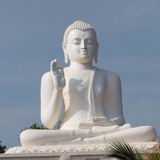
Forwarded from Words of the Buddha
All forms of good and evil are present within you. You already know which path is the good one, which path is the shoddy one, so all you have to do is train your heart to hold on to the good path. Stop and take a look at yourself right now: Are you on the right path? Whatever is wrong, don’t latch on to it. Let go of it. Past, future, whatever, let go of it, leaving only the present. Keep the mind open and at ease in the present at all times, and then start investigating.
You already know that things outside aren’t you or yours, but inside you there are many levels you have to examine. Even the mind isn’t really yours. There are still inconstant and stressful things inside it. Sometimes it wants to do this, sometimes to do that, it’s not really yours. So don’t get too attached to it.
Everything that arises, the Buddha said, is inconstant and not self. Even the understandings that arise in the mind aren’t constant.
Thought constructs are the big issue. Sometimes they form good thoughts, sometimes evil thoughts, even though you know better. You don’t want to think those things, and yet they keep appearing in the mind, in spite of your intentions. So you have to regard them as not being yours. Examine them. There’s nothing dependable about them. They don’t last. They’re impersonal events, so let them go in line with their own nature.
And what is there that’s lasting, solid, dependable, and true? Keep looking on in. Focus your mindfulness on the breath, and ask yourself right there. Eventually you’ll come to see what’s what within you. Whenever you have any doubts or problems in the practice, focus down on the breath and ask the mind right there, and understanding will arise, to loosen up your wrong views and help you past your impasse.
But even this understanding is inconstant, stressful, and not-self. Sabbe dhamma anatta: Everything that arises, the Buddha said, is inconstant and not self. Even the understandings that arise in the mind aren’t constant. Sometimes they arise, sometimes they don’t. So don’t get too attached to them. When they arise, take note of them, and then let them follow their own course. Let your views be right views: i.e., just right, not going overboard. If you go overboard with them, you latch on tight to them, and then they turn wrong on you, for you’ve lost sight of what you’re doing.
What this all boils down to is that the more mindfulness in your practice, the better. As your mindfulness gets more and more mature, more and more complete, it turns into something transcendent. The transcendent discernment we mentioned above arises from the power of your mindfulness as it becomes more and more complete.
You already know that things outside aren’t you or yours, but inside you there are many levels you have to examine. Even the mind isn’t really yours. There are still inconstant and stressful things inside it. Sometimes it wants to do this, sometimes to do that, it’s not really yours. So don’t get too attached to it.
Everything that arises, the Buddha said, is inconstant and not self. Even the understandings that arise in the mind aren’t constant.
Thought constructs are the big issue. Sometimes they form good thoughts, sometimes evil thoughts, even though you know better. You don’t want to think those things, and yet they keep appearing in the mind, in spite of your intentions. So you have to regard them as not being yours. Examine them. There’s nothing dependable about them. They don’t last. They’re impersonal events, so let them go in line with their own nature.
And what is there that’s lasting, solid, dependable, and true? Keep looking on in. Focus your mindfulness on the breath, and ask yourself right there. Eventually you’ll come to see what’s what within you. Whenever you have any doubts or problems in the practice, focus down on the breath and ask the mind right there, and understanding will arise, to loosen up your wrong views and help you past your impasse.
But even this understanding is inconstant, stressful, and not-self. Sabbe dhamma anatta: Everything that arises, the Buddha said, is inconstant and not self. Even the understandings that arise in the mind aren’t constant. Sometimes they arise, sometimes they don’t. So don’t get too attached to them. When they arise, take note of them, and then let them follow their own course. Let your views be right views: i.e., just right, not going overboard. If you go overboard with them, you latch on tight to them, and then they turn wrong on you, for you’ve lost sight of what you’re doing.
What this all boils down to is that the more mindfulness in your practice, the better. As your mindfulness gets more and more mature, more and more complete, it turns into something transcendent. The transcendent discernment we mentioned above arises from the power of your mindfulness as it becomes more and more complete.
🥰1🤝1
Forwarded from Words of the Buddha
So keep training your mindfulness until it’s Great Mindfulness. Try to keep it constant, persistent, and focused, until you see all things for what they are. That’s how you’ll advance in the Buddha’s teachings.
The article was excerpted and adapted from Awareness Itself by Phra Ajaan Fuang Jotiko, translated from Thai by Thanissaro Bhikkhu.
===
Phra Ajaan Fuang Jotiko was a Thai Buddhist monk and abbot in the Thai Forest Tradition of Theravada Buddhism. Ajaan Fuang was a student of Ajaan Lee at Wat Asokaram, a monastery near Bangkok. After Ajaan Lee's death in 1961, Ajaan Fuang continued at Wat Asokaram where he was expected to become abbot. However, in 1965 Ajaan Fuang left to pursue greater solitude which he felt would improve his meditation practice. Around 1971, Ajaan Fuang moved to Wat Thamma Sathit in Rayong Province, where he lived as abbot until his death in 1986. Ajaan Fuang's students included American monk Thanissaro Bhikkhu, who studied with him for ten years.
Thanissaro Bhikkhu is an American Theravada Buddhist monk trained in the Thai Forest Tradition. He currently serves as abbot of the Metta Forest Monastery in San Diego County, California and is a frequent contributor to Tricycle. His latest book is Good Heart, Good Mind: The Practice of the Ten Perfections. Thanissaro Bhikkhu’s talks, writings, and translations are all freely available at his website:
www.dhammatalks.org
===
Part 1 of 2:
https://news.1rj.ru/str/lorddivinebuddha/2836
Part 2 of 2:
https://news.1rj.ru/str/wordsofbuddha/3472
===
Words of the Buddha channel:
https://news.1rj.ru/str/wordsofbuddha
===
The article was excerpted and adapted from Awareness Itself by Phra Ajaan Fuang Jotiko, translated from Thai by Thanissaro Bhikkhu.
===
Phra Ajaan Fuang Jotiko was a Thai Buddhist monk and abbot in the Thai Forest Tradition of Theravada Buddhism. Ajaan Fuang was a student of Ajaan Lee at Wat Asokaram, a monastery near Bangkok. After Ajaan Lee's death in 1961, Ajaan Fuang continued at Wat Asokaram where he was expected to become abbot. However, in 1965 Ajaan Fuang left to pursue greater solitude which he felt would improve his meditation practice. Around 1971, Ajaan Fuang moved to Wat Thamma Sathit in Rayong Province, where he lived as abbot until his death in 1986. Ajaan Fuang's students included American monk Thanissaro Bhikkhu, who studied with him for ten years.
Thanissaro Bhikkhu is an American Theravada Buddhist monk trained in the Thai Forest Tradition. He currently serves as abbot of the Metta Forest Monastery in San Diego County, California and is a frequent contributor to Tricycle. His latest book is Good Heart, Good Mind: The Practice of the Ten Perfections. Thanissaro Bhikkhu’s talks, writings, and translations are all freely available at his website:
www.dhammatalks.org
===
Part 1 of 2:
https://news.1rj.ru/str/lorddivinebuddha/2836
Part 2 of 2:
https://news.1rj.ru/str/wordsofbuddha/3472
===
Words of the Buddha channel:
https://news.1rj.ru/str/wordsofbuddha
===
🤩1🏆1
Forwarded from Words of the Buddha
When you’ve laid down arms toward all creatures, not harming even a single one, don’t wish for a child, let alone a companion: live alone like a horned rhino.
When feelings for friends and loved ones are tied up in selfish love, you miss out on the goal. Seeing this peril in intimacy, live alone like a horned rhino.
As a spreading bamboo gets entangled, so does concern for partners and children. Like a bamboo shoot unobstructed, live alone like a horned rhino.
At ease in any quarter, unresisting, content with whatever comes your way; prevailing over adversities, dauntless, live alone like a horned rhino.
Having shed the marks of the home life, like the fallen leaves of the Shady Orchid Tree; having cut the bonds of the home life, a hero would live alone like a horned rhino.
Clearly we praise the blessing of a friend, it’s good to be with friends your equal or better. but failing to find them, eating blamelessly, live alone like a horned rhino.
Partial excepts from Snp 1.3 : Khaggavisāṇasutta
===
When feelings for friends and loved ones are tied up in selfish love, you miss out on the goal. Seeing this peril in intimacy, live alone like a horned rhino.
As a spreading bamboo gets entangled, so does concern for partners and children. Like a bamboo shoot unobstructed, live alone like a horned rhino.
At ease in any quarter, unresisting, content with whatever comes your way; prevailing over adversities, dauntless, live alone like a horned rhino.
Having shed the marks of the home life, like the fallen leaves of the Shady Orchid Tree; having cut the bonds of the home life, a hero would live alone like a horned rhino.
Clearly we praise the blessing of a friend, it’s good to be with friends your equal or better. but failing to find them, eating blamelessly, live alone like a horned rhino.
Partial excepts from Snp 1.3 : Khaggavisāṇasutta
===
🙏5👍1🕊1😇1
Dhammapada Verse 405
Annatarabhikkhu Vatthu
Nidhaya dandati bhutesu1
tasesu thavaresu2 ca
yo na hanti na ghateti
tamaham brumi brahmanam.
Verse 405: Him I call a brahmana, who has laid aside the use of force towards all beings, the perturbed as well as the unperturbed (i.e., arahats), and who does not kill or cause others to kill.
1. Nidhaya dandati bhutesu: has laid aside the use of the stick towards all beings.
2. tasesu thavaresu: the perturbed and the unperturbed. The perturbed are those who still have craving and are therefore easily shaken. The unperturbed are those who have given up craving and are therefore firm and tranquil; they are the arahats.
The Story of a Certain Bhikkhu
While residing at the Jetavana monastery, the Buddha uttered Verse (405) of this book, with reference to a certain bhikkhu.
Once, a bhikkhu after taking a subject of meditation from the Buddha went to a forest to practise meditation. After he had attained arahatship he came back to the Buddha to offer his deep and profound gratitude to the Buddha. On his way, he passed through a village. Just as he was going through the village, a woman having quarreled with her husband came out of her house and followed the bhikkhu. The husband coming after his wife, seeing her behind the bhikkhu, thought that the bhikkhu was taking his wife away. So he shouted at the bhikkhu and threatened to beat him. His wife entreated him not to beat the bhikkhu, but that made him more furious. As a result, the thera was beaten black and blue by the husband. After beating the bhikkhu to his heart's content, he took away his wife along with him and the bhikkhu continued on his way.
On arrival at the Jetavana monastery, other bhikkhus saw the bruises over the whole body of the bhikkhu and they attended to his bruises. When they asked him if he did not get angry with the man who had beaten him so sorely, he answered in the negative. So the other bhikkhus went to the Buddha and reported that the bhikkhu had falsely claimed to have attained arahatship. To them the Buddha replied, "Bhikkhus! Arahats have laid aside the stick and the sword. They do not get angry even if they are beaten." Thus, the Buddha confirmed that the bhikkhu had, indeed, become an arahat.
Then the Buddha spoke in verse as follows:
Verse 405: Him I call a brahmana, who has laid aside the use of force towards all beings, the perturbed as well as the unperturbed (i.e., arahats), and who does not kill or cause others to kill.
===
Ajahn Chah, Buddhist teacher of Thai forest meditation of Theravada Buddhism channel:
https://news.1rj.ru/str/ajahnchah_buddhism
===
Annatarabhikkhu Vatthu
Nidhaya dandati bhutesu1
tasesu thavaresu2 ca
yo na hanti na ghateti
tamaham brumi brahmanam.
Verse 405: Him I call a brahmana, who has laid aside the use of force towards all beings, the perturbed as well as the unperturbed (i.e., arahats), and who does not kill or cause others to kill.
1. Nidhaya dandati bhutesu: has laid aside the use of the stick towards all beings.
2. tasesu thavaresu: the perturbed and the unperturbed. The perturbed are those who still have craving and are therefore easily shaken. The unperturbed are those who have given up craving and are therefore firm and tranquil; they are the arahats.
The Story of a Certain Bhikkhu
While residing at the Jetavana monastery, the Buddha uttered Verse (405) of this book, with reference to a certain bhikkhu.
Once, a bhikkhu after taking a subject of meditation from the Buddha went to a forest to practise meditation. After he had attained arahatship he came back to the Buddha to offer his deep and profound gratitude to the Buddha. On his way, he passed through a village. Just as he was going through the village, a woman having quarreled with her husband came out of her house and followed the bhikkhu. The husband coming after his wife, seeing her behind the bhikkhu, thought that the bhikkhu was taking his wife away. So he shouted at the bhikkhu and threatened to beat him. His wife entreated him not to beat the bhikkhu, but that made him more furious. As a result, the thera was beaten black and blue by the husband. After beating the bhikkhu to his heart's content, he took away his wife along with him and the bhikkhu continued on his way.
On arrival at the Jetavana monastery, other bhikkhus saw the bruises over the whole body of the bhikkhu and they attended to his bruises. When they asked him if he did not get angry with the man who had beaten him so sorely, he answered in the negative. So the other bhikkhus went to the Buddha and reported that the bhikkhu had falsely claimed to have attained arahatship. To them the Buddha replied, "Bhikkhus! Arahats have laid aside the stick and the sword. They do not get angry even if they are beaten." Thus, the Buddha confirmed that the bhikkhu had, indeed, become an arahat.
Then the Buddha spoke in verse as follows:
Verse 405: Him I call a brahmana, who has laid aside the use of force towards all beings, the perturbed as well as the unperturbed (i.e., arahats), and who does not kill or cause others to kill.
===
Ajahn Chah, Buddhist teacher of Thai forest meditation of Theravada Buddhism channel:
https://news.1rj.ru/str/ajahnchah_buddhism
===
Telegram
Ajahn Chah - Theravada Thailand Buddhism
Collection of teachings of Venerable Ajahn Chah, a foremost meditation and Buddhist teacher from Thailand
❤1👍1💯1
Forwarded from Words of the Buddha
Pavilion of the Enlightened, Mueang Boran, Samut Prakan, Thailand.
😍2👏1🤩1
Forwarded from Ajahn Chah - Theravada Thailand Buddhism
Free Buddhism Dharma ebook
On Meditation
(Instruction From Talks By Ajahn Chan)
Free download available:
https://ftp.budaedu.org/ebooks/pdf/EN372.pdf
===
On Meditation
(Instruction From Talks By Ajahn Chan)
Free download available:
https://ftp.budaedu.org/ebooks/pdf/EN372.pdf
===
❤1🤩1
Forwarded from Ajahn Chah - Theravada Thailand Buddhism
Free Buddhism Dharma ebook
On Meditation
(Instruction From Talks By Ajahn Chan)
This small booklet is a selection of some of his teachings dealing specifically with meditation practice. It contains edited extracts from various talks already translated and published over the years. The extracts have been put together following the general pattern of preliminary instructions, deepening one's meditation and cultivating insight. As it is a compilation of teachings there is a certain amount of repetition, but this in itself was a feature of Ajahn Chah's style, emphasizing key themes again and again throughout his years of teaching.
Free download available:
https://ftp.budaedu.org/ebooks/pdf/EN372.pdf
===
On Meditation
(Instruction From Talks By Ajahn Chan)
This small booklet is a selection of some of his teachings dealing specifically with meditation practice. It contains edited extracts from various talks already translated and published over the years. The extracts have been put together following the general pattern of preliminary instructions, deepening one's meditation and cultivating insight. As it is a compilation of teachings there is a certain amount of repetition, but this in itself was a feature of Ajahn Chah's style, emphasizing key themes again and again throughout his years of teaching.
Free download available:
https://ftp.budaedu.org/ebooks/pdf/EN372.pdf
===
🥰1😍1
Dhammapada Verse 406
Samaneranam Vatthu
Aviruddham viruddhesu
attadandesu nibbutam
sadanesu anadanam
tamaham brumi brahmanam.
Verse 406: Him I call a brahmana, who is not hostile to those who are hostile, who is peaceful (i.e., has laid aside the use of force) to those with weapons, and who is without attachment to objects of attachment.
The Story of Four Samaneras
While residing at the Jetavana monastery, the Buddha uttered Verse (406) of this book, with reference to four samaneras who were arahats.
Once, the wife of a brahmin sent her husband the brahmin to the Jetavana monastery to invite four bhikkhus to an alms-meal at their house. She told him to specifically request for senior bhikkhus who were also true brahmanas. But four seven year old arahat samaneras, viz., Samkicca, Pandita, Sopaka and Revata were sent along with him. When his wife saw the young samaneras she was very much dissatisfied and blamed the brahmin for bringing such young samaneras who were even younger than her grandson. She was, in fact, furious with her husband, and so she sent him back to the monastery to get older bhikkhus. In the meantime she refused to give the young samaneras the higher seats reserved for the bhikkhus; they were given lower seats and she did not offer them alms-food.
When the brahmin arrived at the monastery, he met the Venerable Sariputta and invited him to his house. When the Venerable Sariputta arrived at the house of the brahmin, he saw the four young arahat samaneras and asked them if they had been offered alms-food yet. On learning that the arahat samaneras had not been given alms-food yet and also that food had been prepared only for four persons the Venerable Sariputta returned to the monastery without accepting alms-food from the house of the brahmin. So his wife sent the brahmin back again to the monastery to get another senior bhikkhu. This time, the Venerable Maha Moggallana came along with the brahmin, but he also returned to the monastery without accepting alms-food when he learned that the young samaneras had not been offered alms-food and also that food had been prepared only for four persons.
By this time, the samaneras were feeling hungry. Sakka, king of the devas, seeing the state of things took the form of an old brahmin and came to the house. The brahmin and his wife paid respect to the old brahmin and offered him a seat of honour, but Sakka just sat on the ground and paid respect to the four samaneras. Then he revealed that he was Sakka. Seeing that Sakka himself was paying respect to the young samaneras, the brahmin couple offered alms-food to all the five. After the meal, Sakka and the samaneras manifested their supernormal power by going right up into the sky through the roof. Sakka went back to his celestial abode, the samaneras returned to the monastery.
When other bhikkhus asked the samaneras whether they did not get angry when the brahmin couple refused to offer alms-food to them, they answered in the negative. The bhikkhus not believing them reported to the Buddha that the four young samaneras were falsely claiming to be arahats. To them the Buddha said, "Bhikkhus, arahats bear no ill will towards those who are hostile to them."
Then the Buddha spoke in verse as follows:
Verse 406: Him I call a brahmana, who is not hostile to those who are hostile, who is peaceful (i.e., has laid aside the use of force) to those with weapons, and who is without attachment to objects of attachment.
===
Free Buddhism books, teachings, podcasts and videos from Theravada, Mahayana and Vajrayana traditions:
https://news.1rj.ru/str/buddha_ebooks
===
Samaneranam Vatthu
Aviruddham viruddhesu
attadandesu nibbutam
sadanesu anadanam
tamaham brumi brahmanam.
Verse 406: Him I call a brahmana, who is not hostile to those who are hostile, who is peaceful (i.e., has laid aside the use of force) to those with weapons, and who is without attachment to objects of attachment.
The Story of Four Samaneras
While residing at the Jetavana monastery, the Buddha uttered Verse (406) of this book, with reference to four samaneras who were arahats.
Once, the wife of a brahmin sent her husband the brahmin to the Jetavana monastery to invite four bhikkhus to an alms-meal at their house. She told him to specifically request for senior bhikkhus who were also true brahmanas. But four seven year old arahat samaneras, viz., Samkicca, Pandita, Sopaka and Revata were sent along with him. When his wife saw the young samaneras she was very much dissatisfied and blamed the brahmin for bringing such young samaneras who were even younger than her grandson. She was, in fact, furious with her husband, and so she sent him back to the monastery to get older bhikkhus. In the meantime she refused to give the young samaneras the higher seats reserved for the bhikkhus; they were given lower seats and she did not offer them alms-food.
When the brahmin arrived at the monastery, he met the Venerable Sariputta and invited him to his house. When the Venerable Sariputta arrived at the house of the brahmin, he saw the four young arahat samaneras and asked them if they had been offered alms-food yet. On learning that the arahat samaneras had not been given alms-food yet and also that food had been prepared only for four persons the Venerable Sariputta returned to the monastery without accepting alms-food from the house of the brahmin. So his wife sent the brahmin back again to the monastery to get another senior bhikkhu. This time, the Venerable Maha Moggallana came along with the brahmin, but he also returned to the monastery without accepting alms-food when he learned that the young samaneras had not been offered alms-food and also that food had been prepared only for four persons.
By this time, the samaneras were feeling hungry. Sakka, king of the devas, seeing the state of things took the form of an old brahmin and came to the house. The brahmin and his wife paid respect to the old brahmin and offered him a seat of honour, but Sakka just sat on the ground and paid respect to the four samaneras. Then he revealed that he was Sakka. Seeing that Sakka himself was paying respect to the young samaneras, the brahmin couple offered alms-food to all the five. After the meal, Sakka and the samaneras manifested their supernormal power by going right up into the sky through the roof. Sakka went back to his celestial abode, the samaneras returned to the monastery.
When other bhikkhus asked the samaneras whether they did not get angry when the brahmin couple refused to offer alms-food to them, they answered in the negative. The bhikkhus not believing them reported to the Buddha that the four young samaneras were falsely claiming to be arahats. To them the Buddha said, "Bhikkhus, arahats bear no ill will towards those who are hostile to them."
Then the Buddha spoke in verse as follows:
Verse 406: Him I call a brahmana, who is not hostile to those who are hostile, who is peaceful (i.e., has laid aside the use of force) to those with weapons, and who is without attachment to objects of attachment.
===
Free Buddhism books, teachings, podcasts and videos from Theravada, Mahayana and Vajrayana traditions:
https://news.1rj.ru/str/buddha_ebooks
===
Telegram
Buddha Dharma books
Free Buddhism books, teachings, podcasts and videos from Theravada, Mahayana and Vajrayana traditions
❤1👍1🏆1
Forwarded from Words of the Buddha
Hsinbyume Myatheindan Pagoda, Sagaing, Mandalay, Myanmar.
❤1👍1🥰1😍1
Forwarded from Words of the Buddha
Free Buddha Dharma ebook
Paradox of Becoming
By Thanissaro Bhikkhu
The Buddha had a word for this experience of an identity inhabiting a world defined around a specific desire. He called it bhava, which is related to the verb bhavati, to “be,” or to “become.” He was especially interested in bhava as process—how it comes about, and how it can be ended. So “becoming” is probably a better English rendering for the term than “being” or “existence,” especially as it follows on doing, rather than existing as a prior metaphysical absolute or ground. In other words, it’s not the source from which we come; it’s something produced by the activity of our minds.
Free download here:
https://www.accesstoinsight.org/lib/authors/thanissaro/paradoxofbecoming.pdf
===
Paradox of Becoming
By Thanissaro Bhikkhu
The Buddha had a word for this experience of an identity inhabiting a world defined around a specific desire. He called it bhava, which is related to the verb bhavati, to “be,” or to “become.” He was especially interested in bhava as process—how it comes about, and how it can be ended. So “becoming” is probably a better English rendering for the term than “being” or “existence,” especially as it follows on doing, rather than existing as a prior metaphysical absolute or ground. In other words, it’s not the source from which we come; it’s something produced by the activity of our minds.
Free download here:
https://www.accesstoinsight.org/lib/authors/thanissaro/paradoxofbecoming.pdf
===
👍1🥰1🙏1
Dhammapada Verse 407
Mahapanthakatthera Vatthu
Yassa rago ca doso ca
mano makkho ca patito
sasaporiva aragga
tamaham brumi brahmanam.
Verse 407: Him I call a brahmana, from whom passion, ill will, pride and detraction have fallen off like a mustard seed from the tip of an awl.
The Story of Thera Mahapanthaka
While residing at the Veluvana monastery, the Buddha uttered Verse (407) of this book, with reference to Thera Mahapanthaka, elder brother of Culapanthaka*.
Thera Mahapanthaka was already an arahat when his younger brother Culapanthaka joined the Order. Culapanthaka was born a dullard because he had made fun of a very dull bhikkhu in one of his past existences. Culapanthaka could not even memorize one verse in four months' time. Mahapanthaka was disappointed with his younger brother and asked him to leave the monastery as he was not worthy of the Order.
It was in this connection that, on one occasion, the bhikkhus asked the Buddha why Mahapanthaka, even though he was an arahat, turned his younger brother Culapanthaka out of the monastery. They also added "Do the arahats still lose their temper? Do they still have moral defilements like ill will in them?" To them the Buddha replied, "Bhikkhus! Arahats have no moral defilements like passion and ill will in them. My son Mahapanthaka acted as he did with a view to benefiting his brother and not out of ill will."
Then the Buddha spoke in verse as follows:
Verse 407: Him I call a brahmana, from whom passion, ill will, pride and detraction have fallen off like a mustard seed from the tip of an awl.
===
Buddha dharma teachings channel:
https://news.1rj.ru/str/lorddivinebuddha
===
Mahapanthakatthera Vatthu
Yassa rago ca doso ca
mano makkho ca patito
sasaporiva aragga
tamaham brumi brahmanam.
Verse 407: Him I call a brahmana, from whom passion, ill will, pride and detraction have fallen off like a mustard seed from the tip of an awl.
The Story of Thera Mahapanthaka
While residing at the Veluvana monastery, the Buddha uttered Verse (407) of this book, with reference to Thera Mahapanthaka, elder brother of Culapanthaka*.
Thera Mahapanthaka was already an arahat when his younger brother Culapanthaka joined the Order. Culapanthaka was born a dullard because he had made fun of a very dull bhikkhu in one of his past existences. Culapanthaka could not even memorize one verse in four months' time. Mahapanthaka was disappointed with his younger brother and asked him to leave the monastery as he was not worthy of the Order.
It was in this connection that, on one occasion, the bhikkhus asked the Buddha why Mahapanthaka, even though he was an arahat, turned his younger brother Culapanthaka out of the monastery. They also added "Do the arahats still lose their temper? Do they still have moral defilements like ill will in them?" To them the Buddha replied, "Bhikkhus! Arahats have no moral defilements like passion and ill will in them. My son Mahapanthaka acted as he did with a view to benefiting his brother and not out of ill will."
Then the Buddha spoke in verse as follows:
Verse 407: Him I call a brahmana, from whom passion, ill will, pride and detraction have fallen off like a mustard seed from the tip of an awl.
===
Buddha dharma teachings channel:
https://news.1rj.ru/str/lorddivinebuddha
===
Telegram
Buddha
Buddha dharma teachings from the suttas and commentaries
❤1🥰1