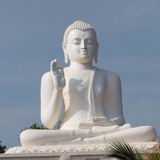
Forwarded from Buddha
Free Buddha Dharma ebook
The Truth Taught by All the Buddhas
By Bhikkhu Revata
Free download available:
https://static.sariputta.com/pdf/tipitaka/1239/the-truth-taught-by-all-the-buddhas.pdf
===
The Truth Taught by All the Buddhas
By Bhikkhu Revata
Free download available:
https://static.sariputta.com/pdf/tipitaka/1239/the-truth-taught-by-all-the-buddhas.pdf
===
🥰1💯1
Forwarded from Buddha
Free Buddha Dharma ebook
The Truth Taught by All the Buddhas
By Bhikkhu Revata
After attaining Full Enlightenment, the Buddha spent the rest of His life – forty-five years – going about teaching others the truth He had realised for Himself.
The truth the Buddha realised and taught is still available to us today. It is profound and far reaching. It consists of conventional truth and ultimate truth. There is no truth in the entire world that is not contained in these two truths.
Outside of the conventional truth and ultimate truth taught by the Buddha, there is no truth whatsoever. What the Buddha taught explains everything completely.
Having access to both the conventional truth and the ultimate truth taught by the Buddha is an extremely precious opportunity. It is very beneficial to learn and study the Dhamma, but the profound nature of the Buddha’s teaching becomes startlingly clear when it is practised. These two truths can liberate us from all suffering.
Hearing or reading the two truths taught by the Buddha is not enough for liberation. Knowledge is beneficial and necessary, but seeing for oneself is the only way to attain freedom from suffering.
The defilements that afflict our minds and cause us suffering are rooted in ignorance. Chief among the defilements is craving, the cause of suffering. One cannot simply stop craving by an act of will. One needs to know and see the truth of things as they really are, yathābhūta-ñāṇa-dassana, which essentially means knowing and seeing ultimate truth. Even though all of the Buddhas wanted to emphasise ultimate truth and would have preferred to teach only that, they never left conventional truth behind when expounding the profound Dhamma to the world in order to help us understand ultimate truth. What conventional and ultimate truth are is elucidated in this book. When one truly knows and sees ultimate truth, ignorance is eliminated, and one becomes truly wise. When one attains knowledge and vision of the way things are, craving ceases. Suffering ceases. One realises the truth that the Buddha Himself realised. One attains Nibbāna
Free download available:
https://static.sariputta.com/pdf/tipitaka/1239/the-truth-taught-by-all-the-buddhas.pdf
===
The Truth Taught by All the Buddhas
By Bhikkhu Revata
After attaining Full Enlightenment, the Buddha spent the rest of His life – forty-five years – going about teaching others the truth He had realised for Himself.
The truth the Buddha realised and taught is still available to us today. It is profound and far reaching. It consists of conventional truth and ultimate truth. There is no truth in the entire world that is not contained in these two truths.
Outside of the conventional truth and ultimate truth taught by the Buddha, there is no truth whatsoever. What the Buddha taught explains everything completely.
Having access to both the conventional truth and the ultimate truth taught by the Buddha is an extremely precious opportunity. It is very beneficial to learn and study the Dhamma, but the profound nature of the Buddha’s teaching becomes startlingly clear when it is practised. These two truths can liberate us from all suffering.
Hearing or reading the two truths taught by the Buddha is not enough for liberation. Knowledge is beneficial and necessary, but seeing for oneself is the only way to attain freedom from suffering.
The defilements that afflict our minds and cause us suffering are rooted in ignorance. Chief among the defilements is craving, the cause of suffering. One cannot simply stop craving by an act of will. One needs to know and see the truth of things as they really are, yathābhūta-ñāṇa-dassana, which essentially means knowing and seeing ultimate truth. Even though all of the Buddhas wanted to emphasise ultimate truth and would have preferred to teach only that, they never left conventional truth behind when expounding the profound Dhamma to the world in order to help us understand ultimate truth. What conventional and ultimate truth are is elucidated in this book. When one truly knows and sees ultimate truth, ignorance is eliminated, and one becomes truly wise. When one attains knowledge and vision of the way things are, craving ceases. Suffering ceases. One realises the truth that the Buddha Himself realised. One attains Nibbāna
Free download available:
https://static.sariputta.com/pdf/tipitaka/1239/the-truth-taught-by-all-the-buddhas.pdf
===
❤1👏1🏆1
Mendicants, before my awakening—when I was still unawakened but intent on awakening—I too, being liable to be reborn, sought what is also liable to be reborn. Myself liable to grow old, fall sick, die, sorrow, and become corrupted, I sought what is also liable to these things. Then it occurred to me: ‘Why do I, being liable to be reborn, grow old, fall sick, sorrow, die, and become corrupted, seek things that have the same nature? Why don’t I seek that which is free of rebirth, old age, sickness, death, sorrow, and corruption, the supreme sanctuary from the yoke, extinguishment?’
Some time later, while still with pristine black hair, blessed with youth, in the prime of life—though my mother and father wished otherwise, weeping with tearful faces—I shaved off my hair and beard, dressed in ocher robes, and went forth from the lay life to homelessness.
Partial excerpts from MN 26 : Pāsarāsisutta
Some time later, while still with pristine black hair, blessed with youth, in the prime of life—though my mother and father wished otherwise, weeping with tearful faces—I shaved off my hair and beard, dressed in ocher robes, and went forth from the lay life to homelessness.
Partial excerpts from MN 26 : Pāsarāsisutta
🙏1😇1🤗1
Identity and Selflessness in Buddhism: No Self or True Self?
Examining Buddhist notions of identity and selflessness
By Jack Kornfield
Part 1 of 2
Spiritual practice inevitably brings us face to face with the profound mystery of our own identity. We have taken birth in a human body. What is this force that gives us life, that brings us and the world into form? The world’s great spiritual teachings tell us over and over we are not who we think we are. But does that mean there is no self or a search for true self?
Persian mystics say we are sparks of the divine, and Christian mystics say we are filled with God. We are one with all things, say others. The world is all illusion, say others. Some teachings explain how consciousness creates life to express all possibilities, to be able to love, to know oneself. Others point out how consciousness gets lost in its patterns, loses its way, incarnates out of ignorance. Hindu yogas call the world a lila, or a dance of the divine, much like Dante’s phrase, “the divine comedy.”
Buddhist texts describe how consciousness itself creates the world like a dream or a mirage. Modern accounts of near-death experiences are filled with reports of wonderful ease after leaving the body, of golden light and luminous beings. Perhaps these, too, confirm how we are unaware of our true identity most of the time.
When we look into the question of self and identity in spiritual practice, we find it requires us to understand two distinct dimensions of no self and true self.
When the Buddha confronted the question of identity on the night of his enlightenment, he came to the radical discovery that we do not exist as separate beings. He saw into the human tendency to identify with a limited sense of existence. Then he discovered that this belief in an individual small self is a root illusion. It causes suffering and removes us from the freedom and mystery of life. He described this as interdependent arising, the cyclical process of consciousness creating identity by entering form, responding to contact of the senses, then attaching to certain forms, feelings, desires, images, and actions to create a sense of self.
Who created the self?
In teaching, the Buddha never spoke of humans as persons existing in some fixed or static way. Instead, he described us as a collection of five changing processes: the processes of the physical body, of feelings, of perceptions, of responses, and of the flow of consciousness that experiences them all. Our sense of self arises whenever we grasp at or identify with these patterns. The process of identification, of selecting patterns to call “I,” “me,” “myself,” is subtle and usually hidden from our awareness. We can identify with our body, feelings, or thoughts; we can identify with images, patterns, roles, and archetypes.
Thus, in our culture, we might fix and identify with the role of being a woman or a man, a parent or a child. We might take our family history, our genetics, and our heredity to be who we are. Sometimes we identify with our desires: sexual, aesthetic, or spiritual. In the same way we can focus on our intellect or take our astrological sign as an identity. We can choose the archetype of hero, lover, mother, ne’er-do-well, adventurer, clown, or thief as our identity and live a year or a whole lifetime based on that. To the extent that we grasp these false identities, we continually have to protect and defend ourselves, strive to fulfill what is limited or deficient in them, to fear their loss.
Yet, these are not our true identity. One master with whom I studied used to laugh at how easily and commonly we would grasp at new identities. As for his non-self, he would say, “I am none of that. I am not this body, so I was never born and will never die. I am nothing and I am everything. Your identities make all your problems. Discover what is beyond them, the delight of the timeless, the deathless.”
Different kinds of self
Examining Buddhist notions of identity and selflessness
By Jack Kornfield
Part 1 of 2
Spiritual practice inevitably brings us face to face with the profound mystery of our own identity. We have taken birth in a human body. What is this force that gives us life, that brings us and the world into form? The world’s great spiritual teachings tell us over and over we are not who we think we are. But does that mean there is no self or a search for true self?
Persian mystics say we are sparks of the divine, and Christian mystics say we are filled with God. We are one with all things, say others. The world is all illusion, say others. Some teachings explain how consciousness creates life to express all possibilities, to be able to love, to know oneself. Others point out how consciousness gets lost in its patterns, loses its way, incarnates out of ignorance. Hindu yogas call the world a lila, or a dance of the divine, much like Dante’s phrase, “the divine comedy.”
Buddhist texts describe how consciousness itself creates the world like a dream or a mirage. Modern accounts of near-death experiences are filled with reports of wonderful ease after leaving the body, of golden light and luminous beings. Perhaps these, too, confirm how we are unaware of our true identity most of the time.
When we look into the question of self and identity in spiritual practice, we find it requires us to understand two distinct dimensions of no self and true self.
When the Buddha confronted the question of identity on the night of his enlightenment, he came to the radical discovery that we do not exist as separate beings. He saw into the human tendency to identify with a limited sense of existence. Then he discovered that this belief in an individual small self is a root illusion. It causes suffering and removes us from the freedom and mystery of life. He described this as interdependent arising, the cyclical process of consciousness creating identity by entering form, responding to contact of the senses, then attaching to certain forms, feelings, desires, images, and actions to create a sense of self.
Who created the self?
In teaching, the Buddha never spoke of humans as persons existing in some fixed or static way. Instead, he described us as a collection of five changing processes: the processes of the physical body, of feelings, of perceptions, of responses, and of the flow of consciousness that experiences them all. Our sense of self arises whenever we grasp at or identify with these patterns. The process of identification, of selecting patterns to call “I,” “me,” “myself,” is subtle and usually hidden from our awareness. We can identify with our body, feelings, or thoughts; we can identify with images, patterns, roles, and archetypes.
Thus, in our culture, we might fix and identify with the role of being a woman or a man, a parent or a child. We might take our family history, our genetics, and our heredity to be who we are. Sometimes we identify with our desires: sexual, aesthetic, or spiritual. In the same way we can focus on our intellect or take our astrological sign as an identity. We can choose the archetype of hero, lover, mother, ne’er-do-well, adventurer, clown, or thief as our identity and live a year or a whole lifetime based on that. To the extent that we grasp these false identities, we continually have to protect and defend ourselves, strive to fulfill what is limited or deficient in them, to fear their loss.
Yet, these are not our true identity. One master with whom I studied used to laugh at how easily and commonly we would grasp at new identities. As for his non-self, he would say, “I am none of that. I am not this body, so I was never born and will never die. I am nothing and I am everything. Your identities make all your problems. Discover what is beyond them, the delight of the timeless, the deathless.”
Different kinds of self
Telegram
Dhammapada - Buddha Dharma Teachings
Daily teachings of the Dhammapada, beloved and favorite teachings of the Buddha
❤1🙏1
Because the question of identity and selflessness is subject to confusion and misunderstanding, let us go into it more carefully. When Christian texts speak of losing the self in God, when Taoists and Hindus speak of merging with a True Self beyond all identity, when Buddhists speak of emptiness and of no self, what do they mean? Emptiness does not mean that things don’t exist, nor does “no self” mean that we don’t exist. Emptiness refers to the underlying nonseparation of life and the fertile ground of energy that gives rise to all forms of life. Our world and sense of self is a play of patterns.
Any identity we can grasp is transient, tentative. This is difficult to understand from words such as selflessness or emptiness of self. In fact, my own teacher Achaan Chah said, “If you try to understand it intellectually, your head will probably explode.” However, the experience of no self in practice can bring us to great freedom.
Deep meditation can untangle the sense of identity. There are, in fact, many ways in which we can realize the emptiness of self. When we are silent and attentive, we can sense directly how we can never truly possess anything in the world. Clearly we do not possess outer things. We are in some relationship with our cars, our home, our family, our jobs, but whatever that relationship is, it is “ours” only for a short time. In the end, things, people, or tasks die or change or we lose them. Nothing is exempt.
===
Part 1 of 2:
https://news.1rj.ru/str/dhammapadas/2477
Part 2 of 2:
https://news.1rj.ru/str/lorddivinebuddha/2903
===
Dhammapada, beloved and favorite teachings of the Buddha channel:
https://news.1rj.ru/str/dhammapadas
===
Any identity we can grasp is transient, tentative. This is difficult to understand from words such as selflessness or emptiness of self. In fact, my own teacher Achaan Chah said, “If you try to understand it intellectually, your head will probably explode.” However, the experience of no self in practice can bring us to great freedom.
Deep meditation can untangle the sense of identity. There are, in fact, many ways in which we can realize the emptiness of self. When we are silent and attentive, we can sense directly how we can never truly possess anything in the world. Clearly we do not possess outer things. We are in some relationship with our cars, our home, our family, our jobs, but whatever that relationship is, it is “ours” only for a short time. In the end, things, people, or tasks die or change or we lose them. Nothing is exempt.
===
Part 1 of 2:
https://news.1rj.ru/str/dhammapadas/2477
Part 2 of 2:
https://news.1rj.ru/str/lorddivinebuddha/2903
===
Dhammapada, beloved and favorite teachings of the Buddha channel:
https://news.1rj.ru/str/dhammapadas
===
Telegram
Dhammapada - Buddha Dharma Teachings
Daily teachings of the Dhammapada, beloved and favorite teachings of the Buddha
😇1😘1
Dhammapada Verse 411
Mahamoggallanatthera Vatthu
Yassalaya na vijjanti
annaya akathamkathi
amatogadha' manuppattam
tamaham brumi brahmanam.
Verse 411: Him I called a brahmana, who has no craving, who through knowledge of the Four Noble Truths is free from doubt, and has realized Nibbana the Deathless.
The Story of Thera Maha Moggallana
While residing at the Jetavana monastery, the Buddha uttered Verse (411) of this book, with reference to Thera Maha Moggallana.
On one occasion, the bhikkhus told the Buddha about Thera Maha Moggallana the same thing they had said of Thera Sariputta that he still had attachment to worldly things. To them the Buddha said that Thera Maha Moggallana had discarded all craving.
Then the Buddha spoke in verse as follows:
Verse 411: Him I called a brahmana, who has no craving, who through knowledge of the Four Noble Truths is free from doubt, and has realized Nibbana the Deathless.
===
Buddha dharma teachings channel:
https://invite.viber.com/?g2=AQAKw1y3rv%2F6sk61PI2W4izuIiaEZj8YZujhY1tSzL%2B07s7rFnVFDAd0bAYFaMLw
===
Mahamoggallanatthera Vatthu
Yassalaya na vijjanti
annaya akathamkathi
amatogadha' manuppattam
tamaham brumi brahmanam.
Verse 411: Him I called a brahmana, who has no craving, who through knowledge of the Four Noble Truths is free from doubt, and has realized Nibbana the Deathless.
The Story of Thera Maha Moggallana
While residing at the Jetavana monastery, the Buddha uttered Verse (411) of this book, with reference to Thera Maha Moggallana.
On one occasion, the bhikkhus told the Buddha about Thera Maha Moggallana the same thing they had said of Thera Sariputta that he still had attachment to worldly things. To them the Buddha said that Thera Maha Moggallana had discarded all craving.
Then the Buddha spoke in verse as follows:
Verse 411: Him I called a brahmana, who has no craving, who through knowledge of the Four Noble Truths is free from doubt, and has realized Nibbana the Deathless.
===
Buddha dharma teachings channel:
https://invite.viber.com/?g2=AQAKw1y3rv%2F6sk61PI2W4izuIiaEZj8YZujhY1tSzL%2B07s7rFnVFDAd0bAYFaMLw
===
Viber
Buddha
Buddha dharma teachings from the suttas and commentaries from Theravada tradition
🙏1😍1
Forwarded from Buddha
Identity and Selflessness in Buddhism: No Self or True Self?
Examining Buddhist notions of identity and selflessness
By Jack Kornfield
Part 2 of 2
We Own Nothing
When we bring attention to any moment of experience, we discover that we do not possess it either. As we look, we find that we neither invite our thoughts nor own them. We might even wish them to stop, but our thoughts seem to think themselves, arising and passing according to their nature.
The same is true of our feelings. How many of us believe we control our feelings? As we pay attention, we see that they are more like the weather-moods and feelings change according to certain conditions, and are neither possessed nor directed by our consciousness or desires. Do we order happiness, sadness, irritation, excitement, or restlessness to come? Feelings arise by themselves, as the breath breathes itself, as sounds sound themselves.
Our body, too, follows its own laws. The body which we carry is a bag of bones and fluid that belong to no one. It ages, gets sick, or changes in ways we might not wish it to, all according to its own nature. The more we look, in fact, the more deeply we see that we possess nothing within or without.
Everything from Nothing
We encounter another aspect of the emptiness of self when we notice how everything arises out of nothing, comes out of the void, returns to the void, goes back to nothing. All our words of the past day have disappeared. Similarly, where has the past week or the past month or our childhood gone? They arose, did a little dance, and now they’ve vanished, along with the 1980s, the nineteenth and eighteenth centuries, the ancient Romans and Greeks, the Pharaohs, and so forth. All experience arises in the present, does its dance, and disappears. Experience comes into being only tentatively, for a little time in a certain form; then that form ends and a new form replaces it moment by moment.
In meditation, precise and deep attention shows us emptiness everywhere. Whatever sensation, thought, whatever aspect of body of mind we focus on carefully, the more space and the less solidity we experience there. Experience becomes like the particle waves described in modern physics, a pattern not quite solid, ever-changing. Even the sense of the one who is observing changes in the same way, our perspectives shifting from moment to moment as much as our sense of ourselves shifts from childhood to adolescence to old age. Wherever we focus carefully, we find a veneer of solidity that dissolves under our attention.
Discover Interconnectedness
The real world is beyond our thoughts and ideas; we see it through the net of our desires, divided into pleasure and pain, right and wrong, inner and outer. To see the universe as it is, you must step beyond the net. It is not hard to do so, for the net is full of holes — Sri Nisargadatta
As we open and empty ourselves, we come to experience an interconnectedness, the realization that all things are joined and conditioned in an interdependent arising. Each experience and event contains all others. The teacher depends on the student, the airplane depends on the sky.
When a bell rings, is it the bell we hear, the air, the sound on our cars, or is it our brain that rings? It is all of these things. As the Taoists say, “The between is ringing.” The sound of the bell is here to he heard everywhere—in the eyes of every person we meet, in every tree and insect, in every breath we take…
When we truly sense this interconnectedness and the emptiness out of which all beings arise, we find liberation and a spacious joy. Discovering emptiness brings a lightness of heart, flexibility, and an ease that rests in all things. The more solidly we grasp our identity, the more solid our problems become. Once I asked a delightful old Sri Lankan meditation master to teach me the essence of Buddhism. He just laughed and said three times, “No self, no problem.”
No self is not Apathy
Examining Buddhist notions of identity and selflessness
By Jack Kornfield
Part 2 of 2
We Own Nothing
When we bring attention to any moment of experience, we discover that we do not possess it either. As we look, we find that we neither invite our thoughts nor own them. We might even wish them to stop, but our thoughts seem to think themselves, arising and passing according to their nature.
The same is true of our feelings. How many of us believe we control our feelings? As we pay attention, we see that they are more like the weather-moods and feelings change according to certain conditions, and are neither possessed nor directed by our consciousness or desires. Do we order happiness, sadness, irritation, excitement, or restlessness to come? Feelings arise by themselves, as the breath breathes itself, as sounds sound themselves.
Our body, too, follows its own laws. The body which we carry is a bag of bones and fluid that belong to no one. It ages, gets sick, or changes in ways we might not wish it to, all according to its own nature. The more we look, in fact, the more deeply we see that we possess nothing within or without.
Everything from Nothing
We encounter another aspect of the emptiness of self when we notice how everything arises out of nothing, comes out of the void, returns to the void, goes back to nothing. All our words of the past day have disappeared. Similarly, where has the past week or the past month or our childhood gone? They arose, did a little dance, and now they’ve vanished, along with the 1980s, the nineteenth and eighteenth centuries, the ancient Romans and Greeks, the Pharaohs, and so forth. All experience arises in the present, does its dance, and disappears. Experience comes into being only tentatively, for a little time in a certain form; then that form ends and a new form replaces it moment by moment.
In meditation, precise and deep attention shows us emptiness everywhere. Whatever sensation, thought, whatever aspect of body of mind we focus on carefully, the more space and the less solidity we experience there. Experience becomes like the particle waves described in modern physics, a pattern not quite solid, ever-changing. Even the sense of the one who is observing changes in the same way, our perspectives shifting from moment to moment as much as our sense of ourselves shifts from childhood to adolescence to old age. Wherever we focus carefully, we find a veneer of solidity that dissolves under our attention.
Discover Interconnectedness
The real world is beyond our thoughts and ideas; we see it through the net of our desires, divided into pleasure and pain, right and wrong, inner and outer. To see the universe as it is, you must step beyond the net. It is not hard to do so, for the net is full of holes — Sri Nisargadatta
As we open and empty ourselves, we come to experience an interconnectedness, the realization that all things are joined and conditioned in an interdependent arising. Each experience and event contains all others. The teacher depends on the student, the airplane depends on the sky.
When a bell rings, is it the bell we hear, the air, the sound on our cars, or is it our brain that rings? It is all of these things. As the Taoists say, “The between is ringing.” The sound of the bell is here to he heard everywhere—in the eyes of every person we meet, in every tree and insect, in every breath we take…
When we truly sense this interconnectedness and the emptiness out of which all beings arise, we find liberation and a spacious joy. Discovering emptiness brings a lightness of heart, flexibility, and an ease that rests in all things. The more solidly we grasp our identity, the more solid our problems become. Once I asked a delightful old Sri Lankan meditation master to teach me the essence of Buddhism. He just laughed and said three times, “No self, no problem.”
No self is not Apathy
Telegram
Buddha
Buddha dharma teachings from the suttas and commentaries
👏1🙏1
Forwarded from Buddha
Misconceptions about “no self” and emptiness abound. And such confusions undermine genuine spiritual development. Some people believe that they can come to selflessness by struggling to get rid of their ego-centered self. Others confuse the notion of emptiness with inner feelings of apathy, unworthiness, or meaninglessness that they have carried from a painful past into spiritual practice. Some students use emptiness as an excuse for a withdrawal from life, saying it is all illusion, trying to make a “spiritual bypass” around life’s problems. But each of these diseases of emptiness misses the true meaning of emptiness and its liberating freedom.
To try to get rid of the self, to purify, root out, or transcend all desire, anger, and centeredness, to vanquish a self that is “bad,” is an old religious idea. This notion underlies the ascetic practices, such as wearing hair shirts, extreme fasting, and self-mortification, that are found in many traditions. Sometimes such practices are used skillfully, to induce altered states, but more often they only reinforce aversion
Worse, what comes with them is the notion that our body, our mind, our “ego,” is somehow sinful, dirty, and deluded. “I (the good part of me) must use these techniques to get rid of the self (the lower, bad part of me).” But this can never work. It can never work because there is no self to get rid of! We are a changing process, not a fixed being. There never was a self-only our identification makes us think so. So while purification, kindness, and attention can certainly improve our habits, no amount of self-denial or self-torture can rid us of a self, for it was never there.
From A Path With Heart: A Guide Through the Perils and Promises of Spiritual Life.
===
Jack Kornfield was trained as a Buddhist monk in Thailand, Burma, and India, and holds a PhD in clinical psychology. He is a psychotherapist and founding teacher of the Insight Meditation Society and the Spirit Rock Center. His books include Seeking the Heart of Wisdom and Still Forest Pool.
===
Part 1 of 2:
https://news.1rj.ru/str/dhammapadas/2477
Part 2 of 2:
https://news.1rj.ru/str/lorddivinebuddha/2903
===
Buddha dharma teachings channel:
https://news.1rj.ru/str/lorddivinebuddha
===
To try to get rid of the self, to purify, root out, or transcend all desire, anger, and centeredness, to vanquish a self that is “bad,” is an old religious idea. This notion underlies the ascetic practices, such as wearing hair shirts, extreme fasting, and self-mortification, that are found in many traditions. Sometimes such practices are used skillfully, to induce altered states, but more often they only reinforce aversion
Worse, what comes with them is the notion that our body, our mind, our “ego,” is somehow sinful, dirty, and deluded. “I (the good part of me) must use these techniques to get rid of the self (the lower, bad part of me).” But this can never work. It can never work because there is no self to get rid of! We are a changing process, not a fixed being. There never was a self-only our identification makes us think so. So while purification, kindness, and attention can certainly improve our habits, no amount of self-denial or self-torture can rid us of a self, for it was never there.
From A Path With Heart: A Guide Through the Perils and Promises of Spiritual Life.
===
Jack Kornfield was trained as a Buddhist monk in Thailand, Burma, and India, and holds a PhD in clinical psychology. He is a psychotherapist and founding teacher of the Insight Meditation Society and the Spirit Rock Center. His books include Seeking the Heart of Wisdom and Still Forest Pool.
===
Part 1 of 2:
https://news.1rj.ru/str/dhammapadas/2477
Part 2 of 2:
https://news.1rj.ru/str/lorddivinebuddha/2903
===
Buddha dharma teachings channel:
https://news.1rj.ru/str/lorddivinebuddha
===
Telegram
Buddha
Buddha dharma teachings from the suttas and commentaries
👍1👌1🏆1
Please, Kālāmas, don’t go by oral transmission, don’t go by lineage, don’t go by testament, don’t go by canonical authority, don’t rely on logic, don’t rely on inference, don’t go by reasoned train of thought, don’t go by the acceptance of a view after deliberation, don’t go by the appearance of competence, and don’t think ‘The ascetic is our respected teacher.’ But when you know for yourselves: ‘These things are skillful, blameless, praised by sensible people, and when you undertake them, they lead to welfare and happiness’, then you should acquire them and keep them.
Partial excepts from AN 3.65 : Kesamutti or Kalama sutta
Partial excepts from AN 3.65 : Kesamutti or Kalama sutta
🙏2❤1🏆1😇1
Free Buddha Dharma ebook
An Unentangled Knowing: The Teachings of a Thai Buddhist Lay Woman, by Upāsikā Kee Nanayon, and translated by Ṭhānissaro Bhikkhu.
A collection of Dhamma talks from the foremost woman Dhamma teacher in modern Thailand.
Free download available:
https://www.dhammatalks.org/Archive/Writings/Ebooks/AnUnentangledKnowing_181215.pdf
===
An Unentangled Knowing: The Teachings of a Thai Buddhist Lay Woman, by Upāsikā Kee Nanayon, and translated by Ṭhānissaro Bhikkhu.
A collection of Dhamma talks from the foremost woman Dhamma teacher in modern Thailand.
Free download available:
https://www.dhammatalks.org/Archive/Writings/Ebooks/AnUnentangledKnowing_181215.pdf
===
👍1🥰1
Free Buddha Dharma ebook
An Unentangled Knowing: The Teachings of a Thai Buddhist Lay Woman, by Upāsikā Kee Nanayon, and translated by Ṭhānissaro Bhikkhu.
A collection of Dhamma talks from the foremost woman Dhamma teacher in modern Thailand.
Free download available:
https://www.dhammatalks.org/Archive/Writings/Ebooks/AnUnentangledKnowing_181215.pdf
===
An Unentangled Knowing: The Teachings of a Thai Buddhist Lay Woman, by Upāsikā Kee Nanayon, and translated by Ṭhānissaro Bhikkhu.
A collection of Dhamma talks from the foremost woman Dhamma teacher in modern Thailand.
Free download available:
https://www.dhammatalks.org/Archive/Writings/Ebooks/AnUnentangledKnowing_181215.pdf
===
👏1💯1
Dhammapada Verse 412
Revatatthera Vatthu
Yo'dha punnanca pipanca
ubho sanga'mupaccaga
asokam virajam suddham
tamaham brumi brahmanam.
Verse 412: Him I call a brahmana, who, in this world, has transcended both ties good and evil; who is sorrowless and, being free from the taints of moral defilements, is pure.
The Story of Samanera Revata
While residing at the Pubbarama monastery, the Buddha uttered Verse (412) of this book, with reference to Samanera Revata.
One day, the bhikkhus said to the Buddha, "Revata is getting many offerings from people, he is gaining fame and fortune. Even though he lives alone in the forest, through supernormal power he has now built five hundred pinnacled monasteries for five hundred bhikkhus." To them the Buddha said, "Bhikkhus, my son Revata has discarded all craving; he has transcended both good and evil."
Verse 412: Him I call a brahmana, who, in this world, has transcended both ties good and evil; who is sorrowless and, being free from the taints of moral defilements, is pure.
===
Words of the Buddha channel:
https://invite.viber.com/?g2=AQAFqzqlj7FmI061PX17rxWMAtZ%2BRuso%2FH2KmHKZSgnv7v9DD8X0bDkKnZDr9JDq
===
Revatatthera Vatthu
Yo'dha punnanca pipanca
ubho sanga'mupaccaga
asokam virajam suddham
tamaham brumi brahmanam.
Verse 412: Him I call a brahmana, who, in this world, has transcended both ties good and evil; who is sorrowless and, being free from the taints of moral defilements, is pure.
The Story of Samanera Revata
While residing at the Pubbarama monastery, the Buddha uttered Verse (412) of this book, with reference to Samanera Revata.
One day, the bhikkhus said to the Buddha, "Revata is getting many offerings from people, he is gaining fame and fortune. Even though he lives alone in the forest, through supernormal power he has now built five hundred pinnacled monasteries for five hundred bhikkhus." To them the Buddha said, "Bhikkhus, my son Revata has discarded all craving; he has transcended both good and evil."
Verse 412: Him I call a brahmana, who, in this world, has transcended both ties good and evil; who is sorrowless and, being free from the taints of moral defilements, is pure.
===
Words of the Buddha channel:
https://invite.viber.com/?g2=AQAFqzqlj7FmI061PX17rxWMAtZ%2BRuso%2FH2KmHKZSgnv7v9DD8X0bDkKnZDr9JDq
===
Viber
Words Of The Buddha
Daily teachings from Buddha Dharma
❤1🔥1👏1🙏1
Forwarded from Words of the Buddha
Sanghanussati Bhavana is the recollection on the qualities of the community of Ariya sangha.
Supatipanno Bhagavato savakasangho, ²ujupatipanno Bhagavato savakasangho, ³nayapatipanno Bhagavato savakasangho, 4samicipatpanno Bhagavato savakasangho; yadidam cattari purisa yugani attha purisa puggala, esa Bhagavato savakasangho, 5ahuneyyo, 6pahuneyyo, 7dakkhineyyo, 8anjali karaniyo, 9anuttaram punnakkhettam lokassa ti.”
“ 1Well attained is the Order of the Blessed One’s disciples, 2upright is the Order of the Blessed One’s disciples, 3true is the Order of the Blessed One’s disciples,4proper is the Order of the Blessed One’s disciples. That is, the four pairs of persons, the eight individual persons, this is the Order of the Blessed One’s disciples; 5worthy of gifts, 6worthy of hospitality, 7worthy of offerings, 8worthy of salutations, 9an incomparable field of merits for the world. ”
Supatipanno Bhagavato savakasangho, ²ujupatipanno Bhagavato savakasangho, ³nayapatipanno Bhagavato savakasangho, 4samicipatpanno Bhagavato savakasangho; yadidam cattari purisa yugani attha purisa puggala, esa Bhagavato savakasangho, 5ahuneyyo, 6pahuneyyo, 7dakkhineyyo, 8anjali karaniyo, 9anuttaram punnakkhettam lokassa ti.”
“ 1Well attained is the Order of the Blessed One’s disciples, 2upright is the Order of the Blessed One’s disciples, 3true is the Order of the Blessed One’s disciples,4proper is the Order of the Blessed One’s disciples. That is, the four pairs of persons, the eight individual persons, this is the Order of the Blessed One’s disciples; 5worthy of gifts, 6worthy of hospitality, 7worthy of offerings, 8worthy of salutations, 9an incomparable field of merits for the world. ”
❤1🕊1😇1
Forwarded from Dhammapada - Buddha Dharma Teachings
The Bamboo Acrobat
At that time, the Lord said to the monks: “Once upon a time, a bamboo acrobat set up his pole, called to his pupil, and said: ‘Now, my boy, climb the pole and stand on my shoulders.’
‘Alright, master,’ said the pupil, and he did as he was told. Then the master said: ‘Now, my boy, you protect me and I will protect you, and protected and watched by each other we will do our act, get a good fee, and come down safe and sound from the bamboo pole.’ But then the pupil said: ‘No master, no! That will not do. You look after yourself, and I will look after myself and thus watched and guarded each by himself, we will do our act, get a good fee, and come down safe and sound from the bamboo pole. That is the way to do it.’
Then the Lord said: “Just as the pupil said to the master: ‘I will protect myself’ so should you practice the four foundations of mindfulness, which also means: ‘I will protect others.’ Because by protecting oneself, one protects others and by protecting others, one protects oneself. And how does one protect others by protecting oneself? It is by the repeated and frequent practice of meditation. And how does one protect oneself by protecting others? It is by practicing patience, forbearance, harmlessness, love and compassion.”
Samyutta Nikaya V 168
===
Dhammapada, beloved and favorite teachings of the Buddha channel:
https://news.1rj.ru/str/dhammapadas
===
At that time, the Lord said to the monks: “Once upon a time, a bamboo acrobat set up his pole, called to his pupil, and said: ‘Now, my boy, climb the pole and stand on my shoulders.’
‘Alright, master,’ said the pupil, and he did as he was told. Then the master said: ‘Now, my boy, you protect me and I will protect you, and protected and watched by each other we will do our act, get a good fee, and come down safe and sound from the bamboo pole.’ But then the pupil said: ‘No master, no! That will not do. You look after yourself, and I will look after myself and thus watched and guarded each by himself, we will do our act, get a good fee, and come down safe and sound from the bamboo pole. That is the way to do it.’
Then the Lord said: “Just as the pupil said to the master: ‘I will protect myself’ so should you practice the four foundations of mindfulness, which also means: ‘I will protect others.’ Because by protecting oneself, one protects others and by protecting others, one protects oneself. And how does one protect others by protecting oneself? It is by the repeated and frequent practice of meditation. And how does one protect oneself by protecting others? It is by practicing patience, forbearance, harmlessness, love and compassion.”
Samyutta Nikaya V 168
===
Dhammapada, beloved and favorite teachings of the Buddha channel:
https://news.1rj.ru/str/dhammapadas
===
Telegram
Dhammapada - Buddha Dharma Teachings
Daily teachings of the Dhammapada, beloved and favorite teachings of the Buddha
❤1👏1💯1