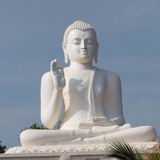
Dhammapada Verse 411
Mahamoggallanatthera Vatthu
Yassalaya na vijjanti
annaya akathamkathi
amatogadha' manuppattam
tamaham brumi brahmanam.
Verse 411: Him I called a brahmana, who has no craving, who through knowledge of the Four Noble Truths is free from doubt, and has realized Nibbana the Deathless.
The Story of Thera Maha Moggallana
While residing at the Jetavana monastery, the Buddha uttered Verse (411) of this book, with reference to Thera Maha Moggallana.
On one occasion, the bhikkhus told the Buddha about Thera Maha Moggallana the same thing they had said of Thera Sariputta that he still had attachment to worldly things. To them the Buddha said that Thera Maha Moggallana had discarded all craving.
Then the Buddha spoke in verse as follows:
Verse 411: Him I called a brahmana, who has no craving, who through knowledge of the Four Noble Truths is free from doubt, and has realized Nibbana the Deathless.
===
Buddha dharma teachings channel:
https://invite.viber.com/?g2=AQAKw1y3rv%2F6sk61PI2W4izuIiaEZj8YZujhY1tSzL%2B07s7rFnVFDAd0bAYFaMLw
===
Mahamoggallanatthera Vatthu
Yassalaya na vijjanti
annaya akathamkathi
amatogadha' manuppattam
tamaham brumi brahmanam.
Verse 411: Him I called a brahmana, who has no craving, who through knowledge of the Four Noble Truths is free from doubt, and has realized Nibbana the Deathless.
The Story of Thera Maha Moggallana
While residing at the Jetavana monastery, the Buddha uttered Verse (411) of this book, with reference to Thera Maha Moggallana.
On one occasion, the bhikkhus told the Buddha about Thera Maha Moggallana the same thing they had said of Thera Sariputta that he still had attachment to worldly things. To them the Buddha said that Thera Maha Moggallana had discarded all craving.
Then the Buddha spoke in verse as follows:
Verse 411: Him I called a brahmana, who has no craving, who through knowledge of the Four Noble Truths is free from doubt, and has realized Nibbana the Deathless.
===
Buddha dharma teachings channel:
https://invite.viber.com/?g2=AQAKw1y3rv%2F6sk61PI2W4izuIiaEZj8YZujhY1tSzL%2B07s7rFnVFDAd0bAYFaMLw
===
Viber
Buddha
Buddha dharma teachings from the suttas and commentaries from Theravada tradition
🙏1😍1
Forwarded from Buddha
Identity and Selflessness in Buddhism: No Self or True Self?
Examining Buddhist notions of identity and selflessness
By Jack Kornfield
Part 2 of 2
We Own Nothing
When we bring attention to any moment of experience, we discover that we do not possess it either. As we look, we find that we neither invite our thoughts nor own them. We might even wish them to stop, but our thoughts seem to think themselves, arising and passing according to their nature.
The same is true of our feelings. How many of us believe we control our feelings? As we pay attention, we see that they are more like the weather-moods and feelings change according to certain conditions, and are neither possessed nor directed by our consciousness or desires. Do we order happiness, sadness, irritation, excitement, or restlessness to come? Feelings arise by themselves, as the breath breathes itself, as sounds sound themselves.
Our body, too, follows its own laws. The body which we carry is a bag of bones and fluid that belong to no one. It ages, gets sick, or changes in ways we might not wish it to, all according to its own nature. The more we look, in fact, the more deeply we see that we possess nothing within or without.
Everything from Nothing
We encounter another aspect of the emptiness of self when we notice how everything arises out of nothing, comes out of the void, returns to the void, goes back to nothing. All our words of the past day have disappeared. Similarly, where has the past week or the past month or our childhood gone? They arose, did a little dance, and now they’ve vanished, along with the 1980s, the nineteenth and eighteenth centuries, the ancient Romans and Greeks, the Pharaohs, and so forth. All experience arises in the present, does its dance, and disappears. Experience comes into being only tentatively, for a little time in a certain form; then that form ends and a new form replaces it moment by moment.
In meditation, precise and deep attention shows us emptiness everywhere. Whatever sensation, thought, whatever aspect of body of mind we focus on carefully, the more space and the less solidity we experience there. Experience becomes like the particle waves described in modern physics, a pattern not quite solid, ever-changing. Even the sense of the one who is observing changes in the same way, our perspectives shifting from moment to moment as much as our sense of ourselves shifts from childhood to adolescence to old age. Wherever we focus carefully, we find a veneer of solidity that dissolves under our attention.
Discover Interconnectedness
The real world is beyond our thoughts and ideas; we see it through the net of our desires, divided into pleasure and pain, right and wrong, inner and outer. To see the universe as it is, you must step beyond the net. It is not hard to do so, for the net is full of holes — Sri Nisargadatta
As we open and empty ourselves, we come to experience an interconnectedness, the realization that all things are joined and conditioned in an interdependent arising. Each experience and event contains all others. The teacher depends on the student, the airplane depends on the sky.
When a bell rings, is it the bell we hear, the air, the sound on our cars, or is it our brain that rings? It is all of these things. As the Taoists say, “The between is ringing.” The sound of the bell is here to he heard everywhere—in the eyes of every person we meet, in every tree and insect, in every breath we take…
When we truly sense this interconnectedness and the emptiness out of which all beings arise, we find liberation and a spacious joy. Discovering emptiness brings a lightness of heart, flexibility, and an ease that rests in all things. The more solidly we grasp our identity, the more solid our problems become. Once I asked a delightful old Sri Lankan meditation master to teach me the essence of Buddhism. He just laughed and said three times, “No self, no problem.”
No self is not Apathy
Examining Buddhist notions of identity and selflessness
By Jack Kornfield
Part 2 of 2
We Own Nothing
When we bring attention to any moment of experience, we discover that we do not possess it either. As we look, we find that we neither invite our thoughts nor own them. We might even wish them to stop, but our thoughts seem to think themselves, arising and passing according to their nature.
The same is true of our feelings. How many of us believe we control our feelings? As we pay attention, we see that they are more like the weather-moods and feelings change according to certain conditions, and are neither possessed nor directed by our consciousness or desires. Do we order happiness, sadness, irritation, excitement, or restlessness to come? Feelings arise by themselves, as the breath breathes itself, as sounds sound themselves.
Our body, too, follows its own laws. The body which we carry is a bag of bones and fluid that belong to no one. It ages, gets sick, or changes in ways we might not wish it to, all according to its own nature. The more we look, in fact, the more deeply we see that we possess nothing within or without.
Everything from Nothing
We encounter another aspect of the emptiness of self when we notice how everything arises out of nothing, comes out of the void, returns to the void, goes back to nothing. All our words of the past day have disappeared. Similarly, where has the past week or the past month or our childhood gone? They arose, did a little dance, and now they’ve vanished, along with the 1980s, the nineteenth and eighteenth centuries, the ancient Romans and Greeks, the Pharaohs, and so forth. All experience arises in the present, does its dance, and disappears. Experience comes into being only tentatively, for a little time in a certain form; then that form ends and a new form replaces it moment by moment.
In meditation, precise and deep attention shows us emptiness everywhere. Whatever sensation, thought, whatever aspect of body of mind we focus on carefully, the more space and the less solidity we experience there. Experience becomes like the particle waves described in modern physics, a pattern not quite solid, ever-changing. Even the sense of the one who is observing changes in the same way, our perspectives shifting from moment to moment as much as our sense of ourselves shifts from childhood to adolescence to old age. Wherever we focus carefully, we find a veneer of solidity that dissolves under our attention.
Discover Interconnectedness
The real world is beyond our thoughts and ideas; we see it through the net of our desires, divided into pleasure and pain, right and wrong, inner and outer. To see the universe as it is, you must step beyond the net. It is not hard to do so, for the net is full of holes — Sri Nisargadatta
As we open and empty ourselves, we come to experience an interconnectedness, the realization that all things are joined and conditioned in an interdependent arising. Each experience and event contains all others. The teacher depends on the student, the airplane depends on the sky.
When a bell rings, is it the bell we hear, the air, the sound on our cars, or is it our brain that rings? It is all of these things. As the Taoists say, “The between is ringing.” The sound of the bell is here to he heard everywhere—in the eyes of every person we meet, in every tree and insect, in every breath we take…
When we truly sense this interconnectedness and the emptiness out of which all beings arise, we find liberation and a spacious joy. Discovering emptiness brings a lightness of heart, flexibility, and an ease that rests in all things. The more solidly we grasp our identity, the more solid our problems become. Once I asked a delightful old Sri Lankan meditation master to teach me the essence of Buddhism. He just laughed and said three times, “No self, no problem.”
No self is not Apathy
Telegram
Buddha
Buddha dharma teachings from the suttas and commentaries
👏1🙏1
Forwarded from Buddha
Misconceptions about “no self” and emptiness abound. And such confusions undermine genuine spiritual development. Some people believe that they can come to selflessness by struggling to get rid of their ego-centered self. Others confuse the notion of emptiness with inner feelings of apathy, unworthiness, or meaninglessness that they have carried from a painful past into spiritual practice. Some students use emptiness as an excuse for a withdrawal from life, saying it is all illusion, trying to make a “spiritual bypass” around life’s problems. But each of these diseases of emptiness misses the true meaning of emptiness and its liberating freedom.
To try to get rid of the self, to purify, root out, or transcend all desire, anger, and centeredness, to vanquish a self that is “bad,” is an old religious idea. This notion underlies the ascetic practices, such as wearing hair shirts, extreme fasting, and self-mortification, that are found in many traditions. Sometimes such practices are used skillfully, to induce altered states, but more often they only reinforce aversion
Worse, what comes with them is the notion that our body, our mind, our “ego,” is somehow sinful, dirty, and deluded. “I (the good part of me) must use these techniques to get rid of the self (the lower, bad part of me).” But this can never work. It can never work because there is no self to get rid of! We are a changing process, not a fixed being. There never was a self-only our identification makes us think so. So while purification, kindness, and attention can certainly improve our habits, no amount of self-denial or self-torture can rid us of a self, for it was never there.
From A Path With Heart: A Guide Through the Perils and Promises of Spiritual Life.
===
Jack Kornfield was trained as a Buddhist monk in Thailand, Burma, and India, and holds a PhD in clinical psychology. He is a psychotherapist and founding teacher of the Insight Meditation Society and the Spirit Rock Center. His books include Seeking the Heart of Wisdom and Still Forest Pool.
===
Part 1 of 2:
https://news.1rj.ru/str/dhammapadas/2477
Part 2 of 2:
https://news.1rj.ru/str/lorddivinebuddha/2903
===
Buddha dharma teachings channel:
https://news.1rj.ru/str/lorddivinebuddha
===
To try to get rid of the self, to purify, root out, or transcend all desire, anger, and centeredness, to vanquish a self that is “bad,” is an old religious idea. This notion underlies the ascetic practices, such as wearing hair shirts, extreme fasting, and self-mortification, that are found in many traditions. Sometimes such practices are used skillfully, to induce altered states, but more often they only reinforce aversion
Worse, what comes with them is the notion that our body, our mind, our “ego,” is somehow sinful, dirty, and deluded. “I (the good part of me) must use these techniques to get rid of the self (the lower, bad part of me).” But this can never work. It can never work because there is no self to get rid of! We are a changing process, not a fixed being. There never was a self-only our identification makes us think so. So while purification, kindness, and attention can certainly improve our habits, no amount of self-denial or self-torture can rid us of a self, for it was never there.
From A Path With Heart: A Guide Through the Perils and Promises of Spiritual Life.
===
Jack Kornfield was trained as a Buddhist monk in Thailand, Burma, and India, and holds a PhD in clinical psychology. He is a psychotherapist and founding teacher of the Insight Meditation Society and the Spirit Rock Center. His books include Seeking the Heart of Wisdom and Still Forest Pool.
===
Part 1 of 2:
https://news.1rj.ru/str/dhammapadas/2477
Part 2 of 2:
https://news.1rj.ru/str/lorddivinebuddha/2903
===
Buddha dharma teachings channel:
https://news.1rj.ru/str/lorddivinebuddha
===
Telegram
Buddha
Buddha dharma teachings from the suttas and commentaries
👍1👌1🏆1
Please, Kālāmas, don’t go by oral transmission, don’t go by lineage, don’t go by testament, don’t go by canonical authority, don’t rely on logic, don’t rely on inference, don’t go by reasoned train of thought, don’t go by the acceptance of a view after deliberation, don’t go by the appearance of competence, and don’t think ‘The ascetic is our respected teacher.’ But when you know for yourselves: ‘These things are skillful, blameless, praised by sensible people, and when you undertake them, they lead to welfare and happiness’, then you should acquire them and keep them.
Partial excepts from AN 3.65 : Kesamutti or Kalama sutta
Partial excepts from AN 3.65 : Kesamutti or Kalama sutta
🙏2❤1🏆1😇1
Free Buddha Dharma ebook
An Unentangled Knowing: The Teachings of a Thai Buddhist Lay Woman, by Upāsikā Kee Nanayon, and translated by Ṭhānissaro Bhikkhu.
A collection of Dhamma talks from the foremost woman Dhamma teacher in modern Thailand.
Free download available:
https://www.dhammatalks.org/Archive/Writings/Ebooks/AnUnentangledKnowing_181215.pdf
===
An Unentangled Knowing: The Teachings of a Thai Buddhist Lay Woman, by Upāsikā Kee Nanayon, and translated by Ṭhānissaro Bhikkhu.
A collection of Dhamma talks from the foremost woman Dhamma teacher in modern Thailand.
Free download available:
https://www.dhammatalks.org/Archive/Writings/Ebooks/AnUnentangledKnowing_181215.pdf
===
👍1🥰1
Free Buddha Dharma ebook
An Unentangled Knowing: The Teachings of a Thai Buddhist Lay Woman, by Upāsikā Kee Nanayon, and translated by Ṭhānissaro Bhikkhu.
A collection of Dhamma talks from the foremost woman Dhamma teacher in modern Thailand.
Free download available:
https://www.dhammatalks.org/Archive/Writings/Ebooks/AnUnentangledKnowing_181215.pdf
===
An Unentangled Knowing: The Teachings of a Thai Buddhist Lay Woman, by Upāsikā Kee Nanayon, and translated by Ṭhānissaro Bhikkhu.
A collection of Dhamma talks from the foremost woman Dhamma teacher in modern Thailand.
Free download available:
https://www.dhammatalks.org/Archive/Writings/Ebooks/AnUnentangledKnowing_181215.pdf
===
👏1💯1
Dhammapada Verse 412
Revatatthera Vatthu
Yo'dha punnanca pipanca
ubho sanga'mupaccaga
asokam virajam suddham
tamaham brumi brahmanam.
Verse 412: Him I call a brahmana, who, in this world, has transcended both ties good and evil; who is sorrowless and, being free from the taints of moral defilements, is pure.
The Story of Samanera Revata
While residing at the Pubbarama monastery, the Buddha uttered Verse (412) of this book, with reference to Samanera Revata.
One day, the bhikkhus said to the Buddha, "Revata is getting many offerings from people, he is gaining fame and fortune. Even though he lives alone in the forest, through supernormal power he has now built five hundred pinnacled monasteries for five hundred bhikkhus." To them the Buddha said, "Bhikkhus, my son Revata has discarded all craving; he has transcended both good and evil."
Verse 412: Him I call a brahmana, who, in this world, has transcended both ties good and evil; who is sorrowless and, being free from the taints of moral defilements, is pure.
===
Words of the Buddha channel:
https://invite.viber.com/?g2=AQAFqzqlj7FmI061PX17rxWMAtZ%2BRuso%2FH2KmHKZSgnv7v9DD8X0bDkKnZDr9JDq
===
Revatatthera Vatthu
Yo'dha punnanca pipanca
ubho sanga'mupaccaga
asokam virajam suddham
tamaham brumi brahmanam.
Verse 412: Him I call a brahmana, who, in this world, has transcended both ties good and evil; who is sorrowless and, being free from the taints of moral defilements, is pure.
The Story of Samanera Revata
While residing at the Pubbarama monastery, the Buddha uttered Verse (412) of this book, with reference to Samanera Revata.
One day, the bhikkhus said to the Buddha, "Revata is getting many offerings from people, he is gaining fame and fortune. Even though he lives alone in the forest, through supernormal power he has now built five hundred pinnacled monasteries for five hundred bhikkhus." To them the Buddha said, "Bhikkhus, my son Revata has discarded all craving; he has transcended both good and evil."
Verse 412: Him I call a brahmana, who, in this world, has transcended both ties good and evil; who is sorrowless and, being free from the taints of moral defilements, is pure.
===
Words of the Buddha channel:
https://invite.viber.com/?g2=AQAFqzqlj7FmI061PX17rxWMAtZ%2BRuso%2FH2KmHKZSgnv7v9DD8X0bDkKnZDr9JDq
===
Viber
Words Of The Buddha
Daily teachings from Buddha Dharma
❤1🔥1👏1🙏1
Forwarded from Words of the Buddha
Sanghanussati Bhavana is the recollection on the qualities of the community of Ariya sangha.
Supatipanno Bhagavato savakasangho, ²ujupatipanno Bhagavato savakasangho, ³nayapatipanno Bhagavato savakasangho, 4samicipatpanno Bhagavato savakasangho; yadidam cattari purisa yugani attha purisa puggala, esa Bhagavato savakasangho, 5ahuneyyo, 6pahuneyyo, 7dakkhineyyo, 8anjali karaniyo, 9anuttaram punnakkhettam lokassa ti.”
“ 1Well attained is the Order of the Blessed One’s disciples, 2upright is the Order of the Blessed One’s disciples, 3true is the Order of the Blessed One’s disciples,4proper is the Order of the Blessed One’s disciples. That is, the four pairs of persons, the eight individual persons, this is the Order of the Blessed One’s disciples; 5worthy of gifts, 6worthy of hospitality, 7worthy of offerings, 8worthy of salutations, 9an incomparable field of merits for the world. ”
Supatipanno Bhagavato savakasangho, ²ujupatipanno Bhagavato savakasangho, ³nayapatipanno Bhagavato savakasangho, 4samicipatpanno Bhagavato savakasangho; yadidam cattari purisa yugani attha purisa puggala, esa Bhagavato savakasangho, 5ahuneyyo, 6pahuneyyo, 7dakkhineyyo, 8anjali karaniyo, 9anuttaram punnakkhettam lokassa ti.”
“ 1Well attained is the Order of the Blessed One’s disciples, 2upright is the Order of the Blessed One’s disciples, 3true is the Order of the Blessed One’s disciples,4proper is the Order of the Blessed One’s disciples. That is, the four pairs of persons, the eight individual persons, this is the Order of the Blessed One’s disciples; 5worthy of gifts, 6worthy of hospitality, 7worthy of offerings, 8worthy of salutations, 9an incomparable field of merits for the world. ”
❤1🕊1😇1
Forwarded from Dhammapada - Buddha Dharma Teachings
The Bamboo Acrobat
At that time, the Lord said to the monks: “Once upon a time, a bamboo acrobat set up his pole, called to his pupil, and said: ‘Now, my boy, climb the pole and stand on my shoulders.’
‘Alright, master,’ said the pupil, and he did as he was told. Then the master said: ‘Now, my boy, you protect me and I will protect you, and protected and watched by each other we will do our act, get a good fee, and come down safe and sound from the bamboo pole.’ But then the pupil said: ‘No master, no! That will not do. You look after yourself, and I will look after myself and thus watched and guarded each by himself, we will do our act, get a good fee, and come down safe and sound from the bamboo pole. That is the way to do it.’
Then the Lord said: “Just as the pupil said to the master: ‘I will protect myself’ so should you practice the four foundations of mindfulness, which also means: ‘I will protect others.’ Because by protecting oneself, one protects others and by protecting others, one protects oneself. And how does one protect others by protecting oneself? It is by the repeated and frequent practice of meditation. And how does one protect oneself by protecting others? It is by practicing patience, forbearance, harmlessness, love and compassion.”
Samyutta Nikaya V 168
===
Dhammapada, beloved and favorite teachings of the Buddha channel:
https://news.1rj.ru/str/dhammapadas
===
At that time, the Lord said to the monks: “Once upon a time, a bamboo acrobat set up his pole, called to his pupil, and said: ‘Now, my boy, climb the pole and stand on my shoulders.’
‘Alright, master,’ said the pupil, and he did as he was told. Then the master said: ‘Now, my boy, you protect me and I will protect you, and protected and watched by each other we will do our act, get a good fee, and come down safe and sound from the bamboo pole.’ But then the pupil said: ‘No master, no! That will not do. You look after yourself, and I will look after myself and thus watched and guarded each by himself, we will do our act, get a good fee, and come down safe and sound from the bamboo pole. That is the way to do it.’
Then the Lord said: “Just as the pupil said to the master: ‘I will protect myself’ so should you practice the four foundations of mindfulness, which also means: ‘I will protect others.’ Because by protecting oneself, one protects others and by protecting others, one protects oneself. And how does one protect others by protecting oneself? It is by the repeated and frequent practice of meditation. And how does one protect oneself by protecting others? It is by practicing patience, forbearance, harmlessness, love and compassion.”
Samyutta Nikaya V 168
===
Dhammapada, beloved and favorite teachings of the Buddha channel:
https://news.1rj.ru/str/dhammapadas
===
Telegram
Dhammapada - Buddha Dharma Teachings
Daily teachings of the Dhammapada, beloved and favorite teachings of the Buddha
❤1👏1💯1
Dhammapada Verse 413
Candabhatthera Vatthu
Candamva vimalam suddham
vippasannamanavilam
nandibhavaparikkhinam1
tamaham brumi brahmanam.
Verse 413: Him I call a brahmana, who, like the moon (in a cloudless sky), is pure, clear and serene, and in whom craving for existence is extinct.
1. nandibhavaparikkhinam: one in whom craving far continued existence either in the current sensual existence or in a better and higher plane of existence in the rupa (fine material) or arupa (non-material) brahma realms, is extinct.
The Story of Thera Candabha
While residing at the Jetavana monastery, the Buddha uttered Verse (413) of this book, with reference to Thera Candabha.
Candabha had, in a previous existence, made offerings of sandalwood to a stupa where the relics of Kassapa Buddha were enshrined. For this good deed, he was reborn in a brahmin family in Savatthi. He was born with a distinguishing mark, viz., a circle of light radiating from around his navel. As this circle of light resembled the moon he came to be known as Candabha. Some brahmins, taking advantage of this unusual feature, put him on a cart and took him round the town for exhibition and only those who paid a hundred or a thousand were allowed to touch him. On one occasion, they stopped at a place between the town and the Jetavana monastery. To ariyas going to the Jetavana monastery, they said, 'What is the use of your going to the Buddha and listening to his discourses? There is no one who is as powerful as Candabha. One who touches him will get rich; why don't you come and see ?" The ariyas then said to them, "Only our teacher is powerful; he is unrivalled and matchless."
Then the brahmins took Candabha to the Jetavana monastery to compete with the Buddha. But when Candabha was in the presence of the Buddha, the ring of light went out by itself. When Candabha was taken out of sight of the Buddha, the ring of light returned automatically; it again disappeared when taken back to the presence of the Buddha. Candabha then asked the Buddha to give him the mantra (words of incantation) that would make the ring of light disappear from around his navel. The Buddha told him that the mantra could be given only to a member of his Order. Candabha told the brahmins that he was getting a mantra from the Buddha and that after mastering the mantra he would be the greatest person in the whole of Jambudipa. So the brahmins waited outside the monastery.
Meanwhile, Candabha became a bhikkhu. He was instructed to contemplate the body, i.e., to reflect on the repulsiveness and impurity of the thirty-two constituents of the body. Within a few days, Candabha attained arahatship. When the brahmins who were waiting outside the monastery came to enquire whether he had acquired the mantra, Candabha replied. "You people had better go back now; as for me I am no longer in a position to go along with you." Other bhikkhus, hearing him, went to the Buddha and said, "Candabha is falsely claiming that he has become an arahat." To them the Buddha replied, "Candabha speaks the truth; he has eradicated all moral intoxicants."
Then the Buddha spoke in verse as follows:
Verse 413: Him I call a brahmana, who, like the moon (in a cloudless sky), is pure, clear and serene, and in whom craving for existence is extinct.
===
Dhammapada, beloved and favorite teachings of the Buddha channel:
https://invite.viber.com/?g2=AQBLD6phsgvP%2F061YjEM3K%2BNeH1Yb372b9mtfQX2EmuBpgoLUoc99BDMfzHghrme
===
Candabhatthera Vatthu
Candamva vimalam suddham
vippasannamanavilam
nandibhavaparikkhinam1
tamaham brumi brahmanam.
Verse 413: Him I call a brahmana, who, like the moon (in a cloudless sky), is pure, clear and serene, and in whom craving for existence is extinct.
1. nandibhavaparikkhinam: one in whom craving far continued existence either in the current sensual existence or in a better and higher plane of existence in the rupa (fine material) or arupa (non-material) brahma realms, is extinct.
The Story of Thera Candabha
While residing at the Jetavana monastery, the Buddha uttered Verse (413) of this book, with reference to Thera Candabha.
Candabha had, in a previous existence, made offerings of sandalwood to a stupa where the relics of Kassapa Buddha were enshrined. For this good deed, he was reborn in a brahmin family in Savatthi. He was born with a distinguishing mark, viz., a circle of light radiating from around his navel. As this circle of light resembled the moon he came to be known as Candabha. Some brahmins, taking advantage of this unusual feature, put him on a cart and took him round the town for exhibition and only those who paid a hundred or a thousand were allowed to touch him. On one occasion, they stopped at a place between the town and the Jetavana monastery. To ariyas going to the Jetavana monastery, they said, 'What is the use of your going to the Buddha and listening to his discourses? There is no one who is as powerful as Candabha. One who touches him will get rich; why don't you come and see ?" The ariyas then said to them, "Only our teacher is powerful; he is unrivalled and matchless."
Then the brahmins took Candabha to the Jetavana monastery to compete with the Buddha. But when Candabha was in the presence of the Buddha, the ring of light went out by itself. When Candabha was taken out of sight of the Buddha, the ring of light returned automatically; it again disappeared when taken back to the presence of the Buddha. Candabha then asked the Buddha to give him the mantra (words of incantation) that would make the ring of light disappear from around his navel. The Buddha told him that the mantra could be given only to a member of his Order. Candabha told the brahmins that he was getting a mantra from the Buddha and that after mastering the mantra he would be the greatest person in the whole of Jambudipa. So the brahmins waited outside the monastery.
Meanwhile, Candabha became a bhikkhu. He was instructed to contemplate the body, i.e., to reflect on the repulsiveness and impurity of the thirty-two constituents of the body. Within a few days, Candabha attained arahatship. When the brahmins who were waiting outside the monastery came to enquire whether he had acquired the mantra, Candabha replied. "You people had better go back now; as for me I am no longer in a position to go along with you." Other bhikkhus, hearing him, went to the Buddha and said, "Candabha is falsely claiming that he has become an arahat." To them the Buddha replied, "Candabha speaks the truth; he has eradicated all moral intoxicants."
Then the Buddha spoke in verse as follows:
Verse 413: Him I call a brahmana, who, like the moon (in a cloudless sky), is pure, clear and serene, and in whom craving for existence is extinct.
===
Dhammapada, beloved and favorite teachings of the Buddha channel:
https://invite.viber.com/?g2=AQBLD6phsgvP%2F061YjEM3K%2BNeH1Yb372b9mtfQX2EmuBpgoLUoc99BDMfzHghrme
===
Viber
Dhammapada - Buddha Dharma Teachings
Daily teachings of the Dhammapada, beloved and favorite teachings of the Buddha
❤1👏1🙏1
Forwarded from Buddha Dharma books
Free Buddhism Dharma ebook
Collection of Buddhist Wisdom Verses
By Venerable Rerukane Candavimala Mahānāhimi, Anandajoti Bhikkhu
Free download here:
https://ftp.budaedu.org/ebooks/pdf/EN358.pdf
===
Collection of Buddhist Wisdom Verses
By Venerable Rerukane Candavimala Mahānāhimi, Anandajoti Bhikkhu
Free download here:
https://ftp.budaedu.org/ebooks/pdf/EN358.pdf
===
❤1🔥1🙏1😘1
Forwarded from Buddha Dharma books
Free Buddhism Dharma ebook
Collection of Buddhist Wisdom Verses
By Venerable Rerukane Candavimala Mahānāhimi, Anandajoti Bhikkhu
This collection of verses, made by one of the leading scholar monks in Sri Lanka in the 20th century, is one of the most useful compilations on the moral life of the layman that can befound.
Drawn mainly from the great verses collections in the Pali Nikayas almost all aspects of the lay life have been covered, and it brings together in a fairly comprehensive way many teachings that would otherwise be lost in obscurity.
Throughout the book it is possible to find teachings on all matters of the ethical life, that will help guide anyone to make better life-choices whether it be at business and work, or in the home life and their various relationships.
Around two-thirds of the verses are drawn from the Jataka stories, and it was this great storehouse of wisdom stories that formed the ethical thinking of most of the Buddhist societies in the Middle Ages, but which now has gone out of fashion.
The great heroes of those days, in such strong contrast to the present day, were the Bodhisatta, the penitant hermits in the woods, the great Kings who ruled justly, and the clever and mischievous animals who had a moral to illustrate, and who all came alive on the greater canvas of the moral universe.
Free download here:
https://ftp.budaedu.org/ebooks/pdf/EN358.pdf
===
Collection of Buddhist Wisdom Verses
By Venerable Rerukane Candavimala Mahānāhimi, Anandajoti Bhikkhu
This collection of verses, made by one of the leading scholar monks in Sri Lanka in the 20th century, is one of the most useful compilations on the moral life of the layman that can befound.
Drawn mainly from the great verses collections in the Pali Nikayas almost all aspects of the lay life have been covered, and it brings together in a fairly comprehensive way many teachings that would otherwise be lost in obscurity.
Throughout the book it is possible to find teachings on all matters of the ethical life, that will help guide anyone to make better life-choices whether it be at business and work, or in the home life and their various relationships.
Around two-thirds of the verses are drawn from the Jataka stories, and it was this great storehouse of wisdom stories that formed the ethical thinking of most of the Buddhist societies in the Middle Ages, but which now has gone out of fashion.
The great heroes of those days, in such strong contrast to the present day, were the Bodhisatta, the penitant hermits in the woods, the great Kings who ruled justly, and the clever and mischievous animals who had a moral to illustrate, and who all came alive on the greater canvas of the moral universe.
Free download here:
https://ftp.budaedu.org/ebooks/pdf/EN358.pdf
===
❤1🤩1🫡1
"How should we act, Lord, respecting the body of the Tathagata?"
"Do not hinder yourselves, Ananda, to honor the body of the Tathagata... At a crossroads also a stupa should be raised for the Tathagata. And whosoever shall bring to that place garlands or incense or sandalpaste, or pay reverence, and whose mind becomes calm there — it will be to his well being and happiness for a long time."
Partial excerpt from DN 16 : Maha-parinibbana Sutta
"Do not hinder yourselves, Ananda, to honor the body of the Tathagata... At a crossroads also a stupa should be raised for the Tathagata. And whosoever shall bring to that place garlands or incense or sandalpaste, or pay reverence, and whose mind becomes calm there — it will be to his well being and happiness for a long time."
Partial excerpt from DN 16 : Maha-parinibbana Sutta
👍3❤1😁1🤩1