Forwarded from Words of the Buddha
“Guttā, why did you go forth?
You have left behind child, wealth, and all that is dear.
Practice in this way,
do not be controlled by the mind.
Sentient beings are misguided by the mind,
enjoying the realm of Māra.
Fools wander along in saṁsāra,
running through countless births.
Interest in sensual pleasures, ill will,
attachment to self-identity,
clinging to rites and rituals,
and the fifth is doubt—
once you abandon these fetters,
Bhikkhunī,
you will not return
to the near shore again.
Once you forsake passion, conceit, ignorance,
and restlessness,
having cut off the fetters,
you will bring suffering to an end.
Once you have discarded birth in saṁsāra,
having fully understood how existence is renewed,
seeing the Dhamma, without cravings,
you will walk in peace.”
Thig 6.7 Guttātherīgāthā: Verses of the Elder Guttā
You have left behind child, wealth, and all that is dear.
Practice in this way,
do not be controlled by the mind.
Sentient beings are misguided by the mind,
enjoying the realm of Māra.
Fools wander along in saṁsāra,
running through countless births.
Interest in sensual pleasures, ill will,
attachment to self-identity,
clinging to rites and rituals,
and the fifth is doubt—
once you abandon these fetters,
Bhikkhunī,
you will not return
to the near shore again.
Once you forsake passion, conceit, ignorance,
and restlessness,
having cut off the fetters,
you will bring suffering to an end.
Once you have discarded birth in saṁsāra,
having fully understood how existence is renewed,
seeing the Dhamma, without cravings,
you will walk in peace.”
Thig 6.7 Guttātherīgāthā: Verses of the Elder Guttā
❤1🙏1😇1
Forwarded from Ajahn Chah - Theravada Thailand Buddhism
Free Buddha Dharma ebook
Unshakable Peace
By Ajahn Chah
Free download available:
https://static.sariputta.com/pdf/tipitaka/267/unshakeable_peace_pdf.pdf
===
Unshakable Peace
By Ajahn Chah
Free download available:
https://static.sariputta.com/pdf/tipitaka/267/unshakeable_peace_pdf.pdf
===
❤1🕊1😇1
Forwarded from Ajahn Chah - Theravada Thailand Buddhism
Free Buddha Dharma ebook
Unshakable Peace
By Ajahn Chah
HE WHOLE REASON FOR STUDYING THE DHAMMA, the teachings of the Buddha, is to search for a way to transcend suffering and attain peace and happiness. Whether we study physical or mental phenomena, the mind (citta) or its psychological factors (cetasikas), it’s only when we make liberation from suffering our ultimate goal that we’re on the right path: nothing less. Suffering has a cause and conditions for its existence.
Please clearly understand that when the mind is still, it’s in its natural, normal state. As soon as the mind moves, it becomes conditioned (sankhara). When the mind is attracted to something, it becomes conditioned. When aversion arises, it becomes conditioned. The desire to move here and there arises from conditioning. If our awareness doesn’t keep pace with these mental proliferations as they occur, the mind will chase after them and be conditioned by them. Whenever the mind moves, at that moment, it becomes a conventional reality.
Free download available:
https://static.sariputta.com/pdf/tipitaka/267/unshakeable_peace_pdf.pdf
===
Unshakable Peace
By Ajahn Chah
HE WHOLE REASON FOR STUDYING THE DHAMMA, the teachings of the Buddha, is to search for a way to transcend suffering and attain peace and happiness. Whether we study physical or mental phenomena, the mind (citta) or its psychological factors (cetasikas), it’s only when we make liberation from suffering our ultimate goal that we’re on the right path: nothing less. Suffering has a cause and conditions for its existence.
Please clearly understand that when the mind is still, it’s in its natural, normal state. As soon as the mind moves, it becomes conditioned (sankhara). When the mind is attracted to something, it becomes conditioned. When aversion arises, it becomes conditioned. The desire to move here and there arises from conditioning. If our awareness doesn’t keep pace with these mental proliferations as they occur, the mind will chase after them and be conditioned by them. Whenever the mind moves, at that moment, it becomes a conventional reality.
Free download available:
https://static.sariputta.com/pdf/tipitaka/267/unshakeable_peace_pdf.pdf
===
🥰1😍1
Forwarded from Buddha
Finding Sense in Sensation
S. N. Goenka about the crucial role of the body in vipassana practice.
By S. N. Goenka
The Buddha was the foremost scientist of mind and matter (nama and rupa). What makes him a peerless scientist is his discovery that tanha, or craving, and by extension, aversion—arises from vedana, or sensation on the body.
Before the time of the Buddha, little if any importance was given to bodily sensation. In fact, it was the centrality of bodily sensation that was the Buddha’s great discovery in his quest to determine the root cause of suffering and the means to its cessation. Before the Buddha, India’s spiritual masters emphasized teachings that encouraged people to turn away from sensory objects and ignore the sensations that contact with them engenders.
But the Buddha, a real scientist, examined sensation more closely. He discovered that when we come into contact with a sense-object through one of the six sense doors (ears, eyes, nose, tongue, body, mind), we cling to the sensation it creates, giving rise to tanha (wanting it to stay and to increase) and aversion (wanting it to cease). The mind then reacts with thoughts of either “I want” or “I do not want.” Buddha discovered that everything that arises in the mind arises with the sensations on the body and that these sensations are the material we have to work with.
The first step, then, is to train the mind to become so sharp and sensitive that it will learn to detect even the subtlest sensations. That job is done by anapana—the practice of awareness of the breath—on the small area under the nostrils, above the upper lip. If we concentrate on this area, the mind becomes sharper and sharper, subtler and subtler. This is the way we begin to become aware of every sort of sensation on the body.
Next, we feel the sensations but don’t react to them. We can learn to maintain this equanimity towards sensations by understanding their transitory nature.
Whether pleasant, unpleasant, or neutral, gross or subtle, every sensation shares the same characteristic: it arises and passes away, arises and passes away. It is this arising and passing that we have to experience through practice, not just accept as truth because Buddha said so, not just accept because intellectually it seems logical enough to us. We must experience sensation’s nature, understand its flux, and learn not to react to it.
As we reach deeper states of awareness, we will be able to detect subtler and subtler sensations, or vibrations of greater rapidity, arising and passing with greater speed. In these deep states, our mind will become so calm, so tranquil, so pure, that we will immediately recognize any impurity accompanying the agitated state and make the choice to refrain from reacting adversely. It becomes clear to us that we can’t harm anybody without first defiling ourselves with emotions like hate or anger or lust. If we do this, we will come to an experiential understanding of the deep truth of anicca, or impermanence. As we observe sensations without reacting to them, the impurities in our minds lose their strength and cannot overpower us.
The Buddha was not merely giving sermons; he was offering a technique to help people reach a state in which they could feel the harm they do to themselves. Once we see this, sila, or ethics, follows naturally. Just as we pull our hand from a flame, we step back from harming ourselves and others.
S. N. Goenka about the crucial role of the body in vipassana practice.
By S. N. Goenka
The Buddha was the foremost scientist of mind and matter (nama and rupa). What makes him a peerless scientist is his discovery that tanha, or craving, and by extension, aversion—arises from vedana, or sensation on the body.
Before the time of the Buddha, little if any importance was given to bodily sensation. In fact, it was the centrality of bodily sensation that was the Buddha’s great discovery in his quest to determine the root cause of suffering and the means to its cessation. Before the Buddha, India’s spiritual masters emphasized teachings that encouraged people to turn away from sensory objects and ignore the sensations that contact with them engenders.
But the Buddha, a real scientist, examined sensation more closely. He discovered that when we come into contact with a sense-object through one of the six sense doors (ears, eyes, nose, tongue, body, mind), we cling to the sensation it creates, giving rise to tanha (wanting it to stay and to increase) and aversion (wanting it to cease). The mind then reacts with thoughts of either “I want” or “I do not want.” Buddha discovered that everything that arises in the mind arises with the sensations on the body and that these sensations are the material we have to work with.
The first step, then, is to train the mind to become so sharp and sensitive that it will learn to detect even the subtlest sensations. That job is done by anapana—the practice of awareness of the breath—on the small area under the nostrils, above the upper lip. If we concentrate on this area, the mind becomes sharper and sharper, subtler and subtler. This is the way we begin to become aware of every sort of sensation on the body.
Next, we feel the sensations but don’t react to them. We can learn to maintain this equanimity towards sensations by understanding their transitory nature.
Whether pleasant, unpleasant, or neutral, gross or subtle, every sensation shares the same characteristic: it arises and passes away, arises and passes away. It is this arising and passing that we have to experience through practice, not just accept as truth because Buddha said so, not just accept because intellectually it seems logical enough to us. We must experience sensation’s nature, understand its flux, and learn not to react to it.
As we reach deeper states of awareness, we will be able to detect subtler and subtler sensations, or vibrations of greater rapidity, arising and passing with greater speed. In these deep states, our mind will become so calm, so tranquil, so pure, that we will immediately recognize any impurity accompanying the agitated state and make the choice to refrain from reacting adversely. It becomes clear to us that we can’t harm anybody without first defiling ourselves with emotions like hate or anger or lust. If we do this, we will come to an experiential understanding of the deep truth of anicca, or impermanence. As we observe sensations without reacting to them, the impurities in our minds lose their strength and cannot overpower us.
The Buddha was not merely giving sermons; he was offering a technique to help people reach a state in which they could feel the harm they do to themselves. Once we see this, sila, or ethics, follows naturally. Just as we pull our hand from a flame, we step back from harming ourselves and others.
👍1💯1
Forwarded from Buddha
It is a wonderful discovery that by observing physical sensations on the body, we can eradicate the roots of the defilements of mind. As we practice more, negative emotions will become far more conspicuous to us much earlier; as soon as they arise, we will become aware of sensations and have the opportunity to make ethical choices. But first we need to begin with what is present to us deeply in our minds at the level of sensation. Otherwise, we will keep ourselves and others miserable for a very long time.
===
S. N. Goenka (1924-2013) was born and raised in Myanmar. He was a leading figure of the vipassana movement, taught meditation for 44 years, and established vipassana centers worldwide.
===
Buddha dharma teachings channel:
https://news.1rj.ru/str/lorddivinebuddha
===
===
S. N. Goenka (1924-2013) was born and raised in Myanmar. He was a leading figure of the vipassana movement, taught meditation for 44 years, and established vipassana centers worldwide.
===
Buddha dharma teachings channel:
https://news.1rj.ru/str/lorddivinebuddha
===
Telegram
Buddha
Buddha dharma teachings from the suttas and commentaries
👏1🙏1
Chapter 2
Appamada Vagga
Heedfulness
9. Appamatto pamattesu
suttesu bahujagaro
Abalassam'va sighasso
hitva yati sumedhaso. 29.
THE STRENUOUS AND THE ALERT OVERTAKE THE THOUGHTLESS AND THE INDOLENT
9. Heedful amongst the heedless, wide awake amongst the slumbering, the wise man advances as does a swift horse, leaving a weak jade behind. 29.
Story
Two monks retired to a forest to meditate. One was strenuous, the other was not. The Buddha praised the former.
===
Free Buddhism books, teachings, podcasts and videos from Theravada, Mahayana and Vajrayana traditions:
https://news.1rj.ru/str/buddha_ebooks
===
Appamada Vagga
Heedfulness
9. Appamatto pamattesu
suttesu bahujagaro
Abalassam'va sighasso
hitva yati sumedhaso. 29.
THE STRENUOUS AND THE ALERT OVERTAKE THE THOUGHTLESS AND THE INDOLENT
9. Heedful amongst the heedless, wide awake amongst the slumbering, the wise man advances as does a swift horse, leaving a weak jade behind. 29.
Story
Two monks retired to a forest to meditate. One was strenuous, the other was not. The Buddha praised the former.
===
Free Buddhism books, teachings, podcasts and videos from Theravada, Mahayana and Vajrayana traditions:
https://news.1rj.ru/str/buddha_ebooks
===
Telegram
Buddha Dharma books
Free Buddhism books, teachings, podcasts and videos from Theravada, Mahayana and Vajrayana traditions
👍1🏆1
Forwarded from Words of the Buddha
Symbolic meanings of a stupa:
Structure and the Path to Enlightenment
Base: Represents the earth and the foundation of mindfulness.
Dome: Symbolizes water and the vastness of the cosmos.
Square Harmika: Represents air and the spiritual focus; it holds the relics of the Buddha or other revered figures.
Spire or Pinnacle: Represents fire and the stages of enlightenment.
Umbrella (Chattras): Represents the highest level of spiritual attainment and protection from evil.
Lotus Throne: Symbolizes purity, enlightenment, and detachment from material existence.
Structure and the Path to Enlightenment
Base: Represents the earth and the foundation of mindfulness.
Dome: Symbolizes water and the vastness of the cosmos.
Square Harmika: Represents air and the spiritual focus; it holds the relics of the Buddha or other revered figures.
Spire or Pinnacle: Represents fire and the stages of enlightenment.
Umbrella (Chattras): Represents the highest level of spiritual attainment and protection from evil.
Lotus Throne: Symbolizes purity, enlightenment, and detachment from material existence.
❤1👏1🙏1👌1💯1
Chapter 2
Appamada Vagga
Heedfulness
10. Appamadena Maghava
devanam seññhatam gato
Appamadam pasamsanti
pamado garahito sada. 30.
EARNESTNESS LEADS TO SOVEREIGNTY
10. By earnestness Maghava 11 rose to the lordship of the gods. 12 Earnestness is ever praised; negligence is ever despised. 30.
Story
By his personal efforts and selfless service an ordinary person became after death the king of the gods.
===
Buddha dharma teachings channel:
https://news.1rj.ru/str/lorddivinebuddha
===
Appamada Vagga
Heedfulness
10. Appamadena Maghava
devanam seññhatam gato
Appamadam pasamsanti
pamado garahito sada. 30.
EARNESTNESS LEADS TO SOVEREIGNTY
10. By earnestness Maghava 11 rose to the lordship of the gods. 12 Earnestness is ever praised; negligence is ever despised. 30.
Story
By his personal efforts and selfless service an ordinary person became after death the king of the gods.
===
Buddha dharma teachings channel:
https://news.1rj.ru/str/lorddivinebuddha
===
Telegram
Buddha
Buddha dharma teachings from the suttas and commentaries
🥰1🙏1💯1
Forwarded from Words of the Buddha
Free Buddha Dharma ebook
A Refuge in Awakening
By Ajaan Lee Dhammadharo, translated from the Thai by Thanissaro Bhikkhu
Free download here:
https://www.accesstoinsight.org/lib/thai/lee/refawake.pdf
===
A Refuge in Awakening
By Ajaan Lee Dhammadharo, translated from the Thai by Thanissaro Bhikkhu
Free download here:
https://www.accesstoinsight.org/lib/thai/lee/refawake.pdf
===
❤1🥰1🙏1
Forwarded from Words of the Buddha
Free Buddha Dharma ebook
A Refuge in Awakening
By Ajaan Lee Dhammadharo, translated from the Thai by Thanissaro Bhikkhu
“Those who have gone to the Buddha as refuge will not go to the realms of deprivation. On abandoning the human body, they will fill the company of the gods.”
I will now explain this verse so that you can practice in a way leading to the supreme attainment, capable of eliminating all your suffering and fears, reaching the refuge of peace.
We come into this world without a substantial refuge. Nothing—aside from the Buddha, Dhamma, and Sangha—will follow us into the next life. These three are the only things in which we can take refuge both in this life and in lives to come.
There are two levels on which people take refuge in the Triple Gem. Some take refuge only on the level of individuals, while others take refuge on the level of inner qualities, by developing the steps of the practice within themselves.
Free download here:
https://www.accesstoinsight.org/lib/thai/lee/refawake.pdf
===
A Refuge in Awakening
By Ajaan Lee Dhammadharo, translated from the Thai by Thanissaro Bhikkhu
“Those who have gone to the Buddha as refuge will not go to the realms of deprivation. On abandoning the human body, they will fill the company of the gods.”
I will now explain this verse so that you can practice in a way leading to the supreme attainment, capable of eliminating all your suffering and fears, reaching the refuge of peace.
We come into this world without a substantial refuge. Nothing—aside from the Buddha, Dhamma, and Sangha—will follow us into the next life. These three are the only things in which we can take refuge both in this life and in lives to come.
There are two levels on which people take refuge in the Triple Gem. Some take refuge only on the level of individuals, while others take refuge on the level of inner qualities, by developing the steps of the practice within themselves.
Free download here:
https://www.accesstoinsight.org/lib/thai/lee/refawake.pdf
===
👏1🙏1🏆1
Forwarded from Words of the Buddha
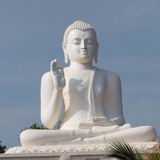
Rattanakosin Buddha, Wat Nong Hoi Buddhist temple, Lamphun, Thailand.
😍2🤩1🏆1
Chapter 2
Appamada Vagga
Heedfulness
11. Appamadarato bhikkhu
pamade bhayadassi va
Samyojanam auum thulam
daham aggi'va gacchati. 31.
THE HEEDFUL ADVANCE
11. The Bhikkhu 13 who delights in heedfulness, and looks with fear on heedlessness, advances like fire, burning all fetters 14 great and small. 31.
Story
A monk, failing in his meditation in the forest, was coming to see the Buddha. On the way he saw a forest fire advancing, burning all things great and small. This sight induced him to think that he too should advance burning all the fetters, great and small, by the fire of the Noble Eightfold Path. The Buddha read his thought and, radiating a ray of light, advised him accordingly.
===
Vajrayana Tantrayana Buddhism channel:
https://news.1rj.ru/str/tantrayanabuddhism
Tibetan Buddhism - Vajrayana, Tantrayana and esoteric Buddhism channel:
https://news.1rj.ru/str/tibetanbuddha
===
Appamada Vagga
Heedfulness
11. Appamadarato bhikkhu
pamade bhayadassi va
Samyojanam auum thulam
daham aggi'va gacchati. 31.
THE HEEDFUL ADVANCE
11. The Bhikkhu 13 who delights in heedfulness, and looks with fear on heedlessness, advances like fire, burning all fetters 14 great and small. 31.
Story
A monk, failing in his meditation in the forest, was coming to see the Buddha. On the way he saw a forest fire advancing, burning all things great and small. This sight induced him to think that he too should advance burning all the fetters, great and small, by the fire of the Noble Eightfold Path. The Buddha read his thought and, radiating a ray of light, advised him accordingly.
===
Vajrayana Tantrayana Buddhism channel:
https://news.1rj.ru/str/tantrayanabuddhism
Tibetan Buddhism - Vajrayana, Tantrayana and esoteric Buddhism channel:
https://news.1rj.ru/str/tibetanbuddha
===
Telegram
Vajrayana Tantrayana Buddhism
Buddha teachings from the Vajrayana, esoteric, secret or Tantrayana vehicle
🙏1🏆1🤗1