Chapter 2
Appamada Vagga
Heedfulness
10. Appamadena Maghava
devanam seññhatam gato
Appamadam pasamsanti
pamado garahito sada. 30.
EARNESTNESS LEADS TO SOVEREIGNTY
10. By earnestness Maghava 11 rose to the lordship of the gods. 12 Earnestness is ever praised; negligence is ever despised. 30.
Story
By his personal efforts and selfless service an ordinary person became after death the king of the gods.
===
Buddha dharma teachings channel:
https://news.1rj.ru/str/lorddivinebuddha
===
Appamada Vagga
Heedfulness
10. Appamadena Maghava
devanam seññhatam gato
Appamadam pasamsanti
pamado garahito sada. 30.
EARNESTNESS LEADS TO SOVEREIGNTY
10. By earnestness Maghava 11 rose to the lordship of the gods. 12 Earnestness is ever praised; negligence is ever despised. 30.
Story
By his personal efforts and selfless service an ordinary person became after death the king of the gods.
===
Buddha dharma teachings channel:
https://news.1rj.ru/str/lorddivinebuddha
===
Telegram
Buddha
Buddha dharma teachings from the suttas and commentaries
🥰1🙏1💯1
Forwarded from Words of the Buddha
Free Buddha Dharma ebook
A Refuge in Awakening
By Ajaan Lee Dhammadharo, translated from the Thai by Thanissaro Bhikkhu
Free download here:
https://www.accesstoinsight.org/lib/thai/lee/refawake.pdf
===
A Refuge in Awakening
By Ajaan Lee Dhammadharo, translated from the Thai by Thanissaro Bhikkhu
Free download here:
https://www.accesstoinsight.org/lib/thai/lee/refawake.pdf
===
❤1🥰1🙏1
Forwarded from Words of the Buddha
Free Buddha Dharma ebook
A Refuge in Awakening
By Ajaan Lee Dhammadharo, translated from the Thai by Thanissaro Bhikkhu
“Those who have gone to the Buddha as refuge will not go to the realms of deprivation. On abandoning the human body, they will fill the company of the gods.”
I will now explain this verse so that you can practice in a way leading to the supreme attainment, capable of eliminating all your suffering and fears, reaching the refuge of peace.
We come into this world without a substantial refuge. Nothing—aside from the Buddha, Dhamma, and Sangha—will follow us into the next life. These three are the only things in which we can take refuge both in this life and in lives to come.
There are two levels on which people take refuge in the Triple Gem. Some take refuge only on the level of individuals, while others take refuge on the level of inner qualities, by developing the steps of the practice within themselves.
Free download here:
https://www.accesstoinsight.org/lib/thai/lee/refawake.pdf
===
A Refuge in Awakening
By Ajaan Lee Dhammadharo, translated from the Thai by Thanissaro Bhikkhu
“Those who have gone to the Buddha as refuge will not go to the realms of deprivation. On abandoning the human body, they will fill the company of the gods.”
I will now explain this verse so that you can practice in a way leading to the supreme attainment, capable of eliminating all your suffering and fears, reaching the refuge of peace.
We come into this world without a substantial refuge. Nothing—aside from the Buddha, Dhamma, and Sangha—will follow us into the next life. These three are the only things in which we can take refuge both in this life and in lives to come.
There are two levels on which people take refuge in the Triple Gem. Some take refuge only on the level of individuals, while others take refuge on the level of inner qualities, by developing the steps of the practice within themselves.
Free download here:
https://www.accesstoinsight.org/lib/thai/lee/refawake.pdf
===
👏1🙏1🏆1
Forwarded from Words of the Buddha
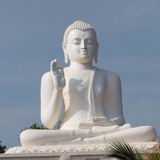
Rattanakosin Buddha, Wat Nong Hoi Buddhist temple, Lamphun, Thailand.
😍2🤩1🏆1
Chapter 2
Appamada Vagga
Heedfulness
11. Appamadarato bhikkhu
pamade bhayadassi va
Samyojanam auum thulam
daham aggi'va gacchati. 31.
THE HEEDFUL ADVANCE
11. The Bhikkhu 13 who delights in heedfulness, and looks with fear on heedlessness, advances like fire, burning all fetters 14 great and small. 31.
Story
A monk, failing in his meditation in the forest, was coming to see the Buddha. On the way he saw a forest fire advancing, burning all things great and small. This sight induced him to think that he too should advance burning all the fetters, great and small, by the fire of the Noble Eightfold Path. The Buddha read his thought and, radiating a ray of light, advised him accordingly.
===
Vajrayana Tantrayana Buddhism channel:
https://news.1rj.ru/str/tantrayanabuddhism
Tibetan Buddhism - Vajrayana, Tantrayana and esoteric Buddhism channel:
https://news.1rj.ru/str/tibetanbuddha
===
Appamada Vagga
Heedfulness
11. Appamadarato bhikkhu
pamade bhayadassi va
Samyojanam auum thulam
daham aggi'va gacchati. 31.
THE HEEDFUL ADVANCE
11. The Bhikkhu 13 who delights in heedfulness, and looks with fear on heedlessness, advances like fire, burning all fetters 14 great and small. 31.
Story
A monk, failing in his meditation in the forest, was coming to see the Buddha. On the way he saw a forest fire advancing, burning all things great and small. This sight induced him to think that he too should advance burning all the fetters, great and small, by the fire of the Noble Eightfold Path. The Buddha read his thought and, radiating a ray of light, advised him accordingly.
===
Vajrayana Tantrayana Buddhism channel:
https://news.1rj.ru/str/tantrayanabuddhism
Tibetan Buddhism - Vajrayana, Tantrayana and esoteric Buddhism channel:
https://news.1rj.ru/str/tibetanbuddha
===
Telegram
Vajrayana Tantrayana Buddhism
Buddha teachings from the Vajrayana, esoteric, secret or Tantrayana vehicle
🙏1🏆1🤗1
“Mendicants, in some past lives the Realized One was reborn as a human being. ... Due to performing those deeds he was reborn in a heavenly realm. When he came back to this place he obtained this mark: he is golden colored; his skin shines like lustrous gold.
On this it is said:
“Fixated on good will, he gave gifts. In an earlier life he poured forth cloth fine and soft to touch, like a god pouring rain on this broad earth.
So doing he passed from here to heaven, where he enjoyed the fruits of deeds well done. Here he wins a figure shining like honey-yellow gold, like Indra, the finest of gods.
If that man stays in the house, not wishing to go forth, he conquers and rules this vast, broad earth. He obtains abundant excellent cloth, so fine and soft to touch.
He receives robes, cloth, and the finest garments. if he chooses the life gone forth. For he still partakes of past deed’s fruit; what’s been done is never lost.”
Partial excerpts from DN 30 : Pathikavagga
On this it is said:
“Fixated on good will, he gave gifts. In an earlier life he poured forth cloth fine and soft to touch, like a god pouring rain on this broad earth.
So doing he passed from here to heaven, where he enjoyed the fruits of deeds well done. Here he wins a figure shining like honey-yellow gold, like Indra, the finest of gods.
If that man stays in the house, not wishing to go forth, he conquers and rules this vast, broad earth. He obtains abundant excellent cloth, so fine and soft to touch.
He receives robes, cloth, and the finest garments. if he chooses the life gone forth. For he still partakes of past deed’s fruit; what’s been done is never lost.”
Partial excerpts from DN 30 : Pathikavagga
🤩1🏆1
Free Buddhism Dharma ebook
Small Boat, Great Mountain
Theravadin Reflections On the Natural Great Perfections Dzogchen
By Amaro Bhikkhu
Free download here:
https://ftp.budaedu.org/ebooks/pdf/EN395.pdf
===
Small Boat, Great Mountain
Theravadin Reflections On the Natural Great Perfections Dzogchen
By Amaro Bhikkhu
Free download here:
https://ftp.budaedu.org/ebooks/pdf/EN395.pdf
===
👏1🏆1
Free Buddhism Dharma ebook
Small Boat, Great Mountain
Theravadin Reflections On the Natural Great Perfections Dzogchen
By Amaro Bhikkhu
One of the delights of Small Boat, Great Mountain is that Ajahn Amaro has enumerated many of references and provided clear and compelling explanations of the deathless nature of the intrinsic awareness or the mind. In orthodox circles in Burma and Sri Lanka, however, this notion is frankly contradictory, since awareness (or consciousness, vijnana) is considered impermanent.
The issue is of particular interest at the current time. Over decades, many Western vipassana teachers and students have sought teachings from Dzogchen masters. Among the Tibetan teachers who have been especially helpful to vipassana seekers have been the late Tulku Urgyen Rinpoche, his son Tsoknyi Rinpoche, and the late Nyoshul Khen Rinpoche. Having been inspired by the profound view and techniques of this lineage, many vipassana practitioners are grappling to reconcile Dzogchen understandings with their Theravadan backgrounds.
Ajahn Amaro’s talks as recorded in this book are a very important contribution to this dialogue. As such, a few words about the occasion on which they were given may be of interest.
In the lineage of Ajahn Chah, a teacher is not supposed to prepare much for a Dharma talk. Rather the teacher is encouraged to trust in his or her sense of the moment and to intuit from the setting and the audience what words are most appropriate. I believe that Ajahn Amaro followed this guideline during the retreat with Tsoknyi Rinpoche, and that we are most fortunate to have this record of the extraordinary talks that the situation evoked. In their erudition, humor, and profundity, they are a unique and accurate transmission of the atmosphere of that special retreat. May their message lead all those who read them directly to their own Buddha-nature and to the vast freedom of the Natural Great Perfection Dzogchen.
Free download here:
https://ftp.budaedu.org/ebooks/pdf/EN395.pdf
===
Small Boat, Great Mountain
Theravadin Reflections On the Natural Great Perfections Dzogchen
By Amaro Bhikkhu
One of the delights of Small Boat, Great Mountain is that Ajahn Amaro has enumerated many of references and provided clear and compelling explanations of the deathless nature of the intrinsic awareness or the mind. In orthodox circles in Burma and Sri Lanka, however, this notion is frankly contradictory, since awareness (or consciousness, vijnana) is considered impermanent.
The issue is of particular interest at the current time. Over decades, many Western vipassana teachers and students have sought teachings from Dzogchen masters. Among the Tibetan teachers who have been especially helpful to vipassana seekers have been the late Tulku Urgyen Rinpoche, his son Tsoknyi Rinpoche, and the late Nyoshul Khen Rinpoche. Having been inspired by the profound view and techniques of this lineage, many vipassana practitioners are grappling to reconcile Dzogchen understandings with their Theravadan backgrounds.
Ajahn Amaro’s talks as recorded in this book are a very important contribution to this dialogue. As such, a few words about the occasion on which they were given may be of interest.
In the lineage of Ajahn Chah, a teacher is not supposed to prepare much for a Dharma talk. Rather the teacher is encouraged to trust in his or her sense of the moment and to intuit from the setting and the audience what words are most appropriate. I believe that Ajahn Amaro followed this guideline during the retreat with Tsoknyi Rinpoche, and that we are most fortunate to have this record of the extraordinary talks that the situation evoked. In their erudition, humor, and profundity, they are a unique and accurate transmission of the atmosphere of that special retreat. May their message lead all those who read them directly to their own Buddha-nature and to the vast freedom of the Natural Great Perfection Dzogchen.
Free download here:
https://ftp.budaedu.org/ebooks/pdf/EN395.pdf
===
👍1💯1
Forwarded from Words of the Buddha
Buddham Saranam Gacchami
Dhammam Saranam Gacchami
Sangham Saranam Gacchami
I go to the Buddha for refuge.
I go to the Dhamma for refuge.
I go to the Sangha for refuge.
बुद्धं शरणं गच्छामि। धर्मं शरणं गच्छामि। संघं शरणं गच्छामि।
Dhammam Saranam Gacchami
Sangham Saranam Gacchami
I go to the Buddha for refuge.
I go to the Dhamma for refuge.
I go to the Sangha for refuge.
बुद्धं शरणं गच्छामि। धर्मं शरणं गच्छामि। संघं शरणं गच्छामि।
🙏2👍1👌1🤗1
Chapter 2
Appamada Vagga
Heedfulness
12. Appamadarato bhikkhu
pamade bhayadassi va
Abhabbo parihanaya
Nibbanass'eva santike. 32.
THE HEEDFUL ARE IN THE PRESENCE OF NIBBâNA
12. The Bhikkhu who delights in heedfulness, and looks with fear on heedlessness, is not liable to fall. 15 He is in the presence of Nibbana. 32.
Story 32: A monk was frugal and contented. The Buddha attributed those characteristics to the monk's close association with Him in the past and remarked that monks of his type were already in the presence of Nibbana.
===
Words of the Buddha channel:
https://news.1rj.ru/str/wordsofbuddha
===
Appamada Vagga
Heedfulness
12. Appamadarato bhikkhu
pamade bhayadassi va
Abhabbo parihanaya
Nibbanass'eva santike. 32.
THE HEEDFUL ARE IN THE PRESENCE OF NIBBâNA
12. The Bhikkhu who delights in heedfulness, and looks with fear on heedlessness, is not liable to fall. 15 He is in the presence of Nibbana. 32.
Story 32: A monk was frugal and contented. The Buddha attributed those characteristics to the monk's close association with Him in the past and remarked that monks of his type were already in the presence of Nibbana.
===
Words of the Buddha channel:
https://news.1rj.ru/str/wordsofbuddha
===
Telegram
Words of the Buddha
Daily teachings of Buddha Dharma
👍1🙏1
Forwarded from Words of the Buddha
The Brahma-viharas: Head & Heart Together
Thai forest monk Thanissaro Bhikkhu teaches us how to use wisdom to cultivate compassion
Part 1 of 3
The brahma-viharas, or “sublime attitudes,” are the Buddha’s primary heart teachings—the ones that connect most directly with our desire for true happiness. The term “brahma-vihara” literally means “dwelling place of brahmas.” Brahmas are gods who live in the higher heavens, dwelling in an attitude of unlimited goodwill, unlimited compassion, unlimited empathetic joy, and unlimited equanimity. These unlimited attitudes can be developed from the more limited versions of these emotions that we experience in the human heart.
The four brahma-viharas (sublime attitudes) are:
1) Goodwill (metta)
2) Compassion (karuna)
3) Empathetic joy (mudita)
4) Equanimity (upekkha)
Of these four emotions, goodwill (metta) is the most fundamental. It’s the wish for true happiness, a wish you can direct to yourself or to others. Goodwill was the underlying motivation that led the Buddha to search for awakening and to teach the path to awakening to others after he had found it.
The next two emotions in the list are essentially applications of goodwill. Compassion (karuna) is what goodwill feels when it encounters suffering: it wants the suffering to stop. Empathetic joy (mudita) is what goodwill feels when it encounters happiness: it wants the happiness to continue. Equanimity (upekkha) is a different emotion, in that it acts as an aid to and a check on the other three. When you encounter suffering that you can’t stop no matter how hard you try, you need equanimity to avoid creating additional suffering and to channel your energies to areas where you can be of help. In this way, equanimity isn’t cold hearted or indifferent. It simply makes your goodwill more focused and effective.
Making these attitudes limitless requires work. It’s easy to feel goodwill, compassion, and empathetic joy for people you like and love, but there are bound to be people you dislike—often for very good reasons. Similarly, there are many people for whom it’s easy to feel equanimity: people you don’t know or don’t really care about. But it’s hard to feel equanimity when people you love are suffering. Yet if you want to develop the brahma-viharas, you have to include all of these people within the scope of your awareness so that you can apply the proper attitude no matter where or when. This is where your heart needs the help of your head.
All too often, meditators believe that if they can simply add a little more heart juice, a little more emotional oomph, to their brahma-vihara practice, their attitudes can become limitless. But if something inside you keeps churning up reasons for liking this person or hating that one, your practice starts feeling hypocritical. You wonder who you’re trying to fool. Or, after a month devoted to the practice, you still find yourself thinking black thoughts about people who cut you off in traffic—to say nothing of people who’ve done the world serious harm.
This is where the head comes in. If we think of the heart as the side of the mind that wants happiness, the head is the side that understands how cause and effect actually work. If your head and heart can learn to cooperate—that is, if your head can give priority to finding the causes for true happiness, and your heart can learn to embrace those causes—then the training of the mind can go far.
This is why the Buddha taught the brahma-viharas in a context of head teachings: the principle of causality as it plays out in (1) karma and (2) the process of fabrication that shapes emotions within the body and mind. The more we can get our heads around these teachings, the easier it will be to put our whole heart into developing attitudes that truly are sublime. An understanding of karma helps to explain what we’re doing as we develop the brahma-viharas and why we might want to do so in the first place. An understanding of fabrication helps to explain how we can take our human heart and convert it into a place where brahmas could dwell.
Thai forest monk Thanissaro Bhikkhu teaches us how to use wisdom to cultivate compassion
Part 1 of 3
The brahma-viharas, or “sublime attitudes,” are the Buddha’s primary heart teachings—the ones that connect most directly with our desire for true happiness. The term “brahma-vihara” literally means “dwelling place of brahmas.” Brahmas are gods who live in the higher heavens, dwelling in an attitude of unlimited goodwill, unlimited compassion, unlimited empathetic joy, and unlimited equanimity. These unlimited attitudes can be developed from the more limited versions of these emotions that we experience in the human heart.
The four brahma-viharas (sublime attitudes) are:
1) Goodwill (metta)
2) Compassion (karuna)
3) Empathetic joy (mudita)
4) Equanimity (upekkha)
Of these four emotions, goodwill (metta) is the most fundamental. It’s the wish for true happiness, a wish you can direct to yourself or to others. Goodwill was the underlying motivation that led the Buddha to search for awakening and to teach the path to awakening to others after he had found it.
The next two emotions in the list are essentially applications of goodwill. Compassion (karuna) is what goodwill feels when it encounters suffering: it wants the suffering to stop. Empathetic joy (mudita) is what goodwill feels when it encounters happiness: it wants the happiness to continue. Equanimity (upekkha) is a different emotion, in that it acts as an aid to and a check on the other three. When you encounter suffering that you can’t stop no matter how hard you try, you need equanimity to avoid creating additional suffering and to channel your energies to areas where you can be of help. In this way, equanimity isn’t cold hearted or indifferent. It simply makes your goodwill more focused and effective.
Making these attitudes limitless requires work. It’s easy to feel goodwill, compassion, and empathetic joy for people you like and love, but there are bound to be people you dislike—often for very good reasons. Similarly, there are many people for whom it’s easy to feel equanimity: people you don’t know or don’t really care about. But it’s hard to feel equanimity when people you love are suffering. Yet if you want to develop the brahma-viharas, you have to include all of these people within the scope of your awareness so that you can apply the proper attitude no matter where or when. This is where your heart needs the help of your head.
All too often, meditators believe that if they can simply add a little more heart juice, a little more emotional oomph, to their brahma-vihara practice, their attitudes can become limitless. But if something inside you keeps churning up reasons for liking this person or hating that one, your practice starts feeling hypocritical. You wonder who you’re trying to fool. Or, after a month devoted to the practice, you still find yourself thinking black thoughts about people who cut you off in traffic—to say nothing of people who’ve done the world serious harm.
This is where the head comes in. If we think of the heart as the side of the mind that wants happiness, the head is the side that understands how cause and effect actually work. If your head and heart can learn to cooperate—that is, if your head can give priority to finding the causes for true happiness, and your heart can learn to embrace those causes—then the training of the mind can go far.
This is why the Buddha taught the brahma-viharas in a context of head teachings: the principle of causality as it plays out in (1) karma and (2) the process of fabrication that shapes emotions within the body and mind. The more we can get our heads around these teachings, the easier it will be to put our whole heart into developing attitudes that truly are sublime. An understanding of karma helps to explain what we’re doing as we develop the brahma-viharas and why we might want to do so in the first place. An understanding of fabrication helps to explain how we can take our human heart and convert it into a place where brahmas could dwell.
Telegram
Words of the Buddha
Daily teachings of Buddha Dharma
👍1💯1🤗1