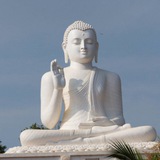
Forwarded from Buddha Dharma books
Free Buddha Dharma ebook
Sri Pada, A Guide to Buddhism’s Most Sacred Mountain
By Bhante Shravasti Dhammika
Free download available:
https://budblooms.org/sri-pada/
===
Sri Pada, A Guide to Buddhism’s Most Sacred Mountain
By Bhante Shravasti Dhammika
Free download available:
https://budblooms.org/sri-pada/
===
😍1🏆1
Forwarded from Buddha Dharma books
Free Buddha Dharma ebook
Sri Pada, A Guide to Buddhism’s Most Sacred Mountain
By Bhante Shravasti Dhammika
Mount Sinai was considered sacred at a much earlier date, Mt. Fuji surpasses it in beauty and height, and Mt. Kilash evokes a far greater sense of mystery. Nevertheless, no other mountain has been revered by so many people, from such a variety of religions, for so many centuries as Sri Pada has. In Sanskrit literature Sri Pada is called variously Mount Lanka, Ratnagiri (Mountain of Gems), Malayagiri or Mount Rohana. This last name, like its Arab and Persian equivalent, Al Rohoun, is derived from the name of the south western district of Sri Lanka where Sri Pada is situated. In several Tamil works it is known as Svargarohanam (The Ascent to Heaven) while the Portuguese called it Pico de Adam and the English Adam’s Peak. In the Mahavamsa, the great chronicle of Sri Lanka written in the 5th century CE, it is called Samantakuta (Samanta’s Abode) while in modern Sinhalese it is often called Samanelakhanda (Saman’s Mountain).
Free download available:
https://budblooms.org/sri-pada/
===
Sri Pada, A Guide to Buddhism’s Most Sacred Mountain
By Bhante Shravasti Dhammika
Mount Sinai was considered sacred at a much earlier date, Mt. Fuji surpasses it in beauty and height, and Mt. Kilash evokes a far greater sense of mystery. Nevertheless, no other mountain has been revered by so many people, from such a variety of religions, for so many centuries as Sri Pada has. In Sanskrit literature Sri Pada is called variously Mount Lanka, Ratnagiri (Mountain of Gems), Malayagiri or Mount Rohana. This last name, like its Arab and Persian equivalent, Al Rohoun, is derived from the name of the south western district of Sri Lanka where Sri Pada is situated. In several Tamil works it is known as Svargarohanam (The Ascent to Heaven) while the Portuguese called it Pico de Adam and the English Adam’s Peak. In the Mahavamsa, the great chronicle of Sri Lanka written in the 5th century CE, it is called Samantakuta (Samanta’s Abode) while in modern Sinhalese it is often called Samanelakhanda (Saman’s Mountain).
Free download available:
https://budblooms.org/sri-pada/
===
❤2🤗1🆒1
“Mendicants, in some past lives the Realized One was reborn as a human being. ... Due to performing those deeds he was reborn in a heavenly realm. When he came back to this place he obtained this mark: he is golden colored; his skin shines like lustrous gold.
On this it is said:
“Fixated on good will, he gave gifts. In an earlier life he poured forth cloth fine and soft to touch, like a god pouring rain on this broad earth.
So doing he passed from here to heaven, where he enjoyed the fruits of deeds well done. Here he wins a figure shining like honey-yellow gold, like Indra, the finest of gods.
If that man stays in the house, not wishing to go forth, he conquers and rules this vast, broad earth. He obtains abundant excellent cloth, so fine and soft to touch.
He receives robes, cloth, and the finest garments. if he chooses the life gone forth. For he still partakes of past deed’s fruit; what’s been done is never lost.”
Partial excerpts from DN 30 : Pathikavagga
On this it is said:
“Fixated on good will, he gave gifts. In an earlier life he poured forth cloth fine and soft to touch, like a god pouring rain on this broad earth.
So doing he passed from here to heaven, where he enjoyed the fruits of deeds well done. Here he wins a figure shining like honey-yellow gold, like Indra, the finest of gods.
If that man stays in the house, not wishing to go forth, he conquers and rules this vast, broad earth. He obtains abundant excellent cloth, so fine and soft to touch.
He receives robes, cloth, and the finest garments. if he chooses the life gone forth. For he still partakes of past deed’s fruit; what’s been done is never lost.”
Partial excerpts from DN 30 : Pathikavagga
❤1🤩1🏆1
5. Yavajavam'pi ce balo
pauditam payirupasati
Na so dhammam vijanati
dabbi suparasam yatha. 64.
A FOOL CANNOT APPRECIATE THE VALUE OF THE DHAMMA
5. Though a fool, through all his life, associates with a wise man, he no more understands the Dhamma than a spoon (tastes) the flavour of soup. 64.
Story
Mistaking the Venerable Udayi who used to sit in the seat of Dhamma, for a skilled exponent of the Dhamma, the monks questioned him about the teaching. Discovering his ignorance, they reported the matter to the Buddha, who then explained the attitude of a fool towards the Dhamma.
===
Words of the Buddha channel:
https://news.1rj.ru/str/wordsofbuddha
===
pauditam payirupasati
Na so dhammam vijanati
dabbi suparasam yatha. 64.
A FOOL CANNOT APPRECIATE THE VALUE OF THE DHAMMA
5. Though a fool, through all his life, associates with a wise man, he no more understands the Dhamma than a spoon (tastes) the flavour of soup. 64.
Story
Mistaking the Venerable Udayi who used to sit in the seat of Dhamma, for a skilled exponent of the Dhamma, the monks questioned him about the teaching. Discovering his ignorance, they reported the matter to the Buddha, who then explained the attitude of a fool towards the Dhamma.
===
Words of the Buddha channel:
https://news.1rj.ru/str/wordsofbuddha
===
Telegram
Words of the Buddha
Daily teachings of Buddha Dharma
❤1👍1💯1
Forwarded from Buddha Dharma books
Free Buddha Dharma ebook
Who Will Feed the Mice
By Ajahn Amaro
Ajahn Amaro's accounts about his mother in relation to his spiritual path.
Free download here:
https://drive.google.com/file/d/1x-9Ug5K9kKl-k-nhBTtvPNEBPgoLnPOS/view?usp=drive_link
===
Who Will Feed the Mice
By Ajahn Amaro
Ajahn Amaro's accounts about his mother in relation to his spiritual path.
Free download here:
https://drive.google.com/file/d/1x-9Ug5K9kKl-k-nhBTtvPNEBPgoLnPOS/view?usp=drive_link
===
❤2😍1
Forwarded from Buddha Dharma books
Free Buddha Dharma ebook
Who Will Feed the Mice
By Ajahn Amaro
Ajahn Amaro's accounts about his mother in relation to his spiritual path.
Free download here:
https://drive.google.com/file/d/1x-9Ug5K9kKl-k-nhBTtvPNEBPgoLnPOS/view?usp=drive_link
===
Who Will Feed the Mice
By Ajahn Amaro
Ajahn Amaro's accounts about his mother in relation to his spiritual path.
Free download here:
https://drive.google.com/file/d/1x-9Ug5K9kKl-k-nhBTtvPNEBPgoLnPOS/view?usp=drive_link
===
🥰1😘1
6. Muhuttam api ce viññu
pauditam payirupasati
Khippam dhammam vijanati
jivha suparasam yatha. 65.
THE WISE CAN APPRECIATE THE VALUE OF THE DHAMMA
6. Though an intelligent person, associates with a wise man for only a moment, he quickly understands the Dhamma as the tongue (tastes) the flavour of soup. 65.
Story
Thirty youths listened to the Dhamma and instantly attained Arahantship. The Buddha commented on their quick realization owing to their high intelligence.
===
Dhammapada, beloved and favorite teachings of the Buddha channel:
https://news.1rj.ru/str/dhammapadas
===
pauditam payirupasati
Khippam dhammam vijanati
jivha suparasam yatha. 65.
THE WISE CAN APPRECIATE THE VALUE OF THE DHAMMA
6. Though an intelligent person, associates with a wise man for only a moment, he quickly understands the Dhamma as the tongue (tastes) the flavour of soup. 65.
Story
Thirty youths listened to the Dhamma and instantly attained Arahantship. The Buddha commented on their quick realization owing to their high intelligence.
===
Dhammapada, beloved and favorite teachings of the Buddha channel:
https://news.1rj.ru/str/dhammapadas
===
Telegram
Dhammapada - Buddha Dharma Teachings
Daily teachings of the Dhammapada, beloved and favorite teachings of the Buddha
👍1🆒1
Forwarded from Words of the Buddha
Those with close relationships have affection, following which this pain arises. Seeing this danger born of affection, live alone like a horned rhino.
When feelings for friends and loved ones are tied up in selfish love, you miss out on the goal. Seeing this peril in intimacy, live alone like a horned rhino.
As a spreading bamboo gets entangled, so does concern for partners and children. Like a bamboo shoot unobstructed, live alone like a horned rhino.
As a wild deer loose in the forest grazes wherever it wants, a smart person looking for freedom would live alone like a horned rhino.
Partial excepts from Snp 1.3 : Khaggavisāṇasutta
===
When feelings for friends and loved ones are tied up in selfish love, you miss out on the goal. Seeing this peril in intimacy, live alone like a horned rhino.
As a spreading bamboo gets entangled, so does concern for partners and children. Like a bamboo shoot unobstructed, live alone like a horned rhino.
As a wild deer loose in the forest grazes wherever it wants, a smart person looking for freedom would live alone like a horned rhino.
Partial excepts from Snp 1.3 : Khaggavisāṇasutta
===
🕊1💯1
Trusting in Simplicity
A teaching on conviviality and moving toward awakened awareness
By Ajahn Sumedho
Part 1 of 2
An attitude of conviviality is an attempt to encourage you to open to the holy life as beautiful and enjoyable rather than just shut down. But sometimes we see meditation as a way not of opening but of shutting ourselves off from things.
In any religious tradition there is a lot of confusion because often what is said can seem at times to be contradictory: At one moment you are being told to shut down, close your eyes, and concentrate your mind on the breath; and then you are asked to open up with metta for all sentient beings. This is just to point out the limitations of words and conventions. When we grasp conventions, we bind ourselves to particular views. Teachers might even encourage this by the way we interpret the noscriptures. But remember to bring back the awareness that each of us as individuals has our own experiences, which are the center of our universe.
When you see yourself in personal terms as someone who needs to get something or get rid of something, you limit yourself to being someone who has to get something you don’t yet have or get rid of something you shouldn’t have. So we reflect on this and learn to be the witness, buddho—that which is awake and aware, which listens to and knows personality views and emotional states without taking them personally.
What I encourage is a moving toward simplicity rather than complexity. We’re already complicated personalities. Our cultural and social conditioning is usually very complicated. The monastic form is a move toward simplicity.
What is most simple is to wake up—“buddha” means “awake,” it’s as simple as that. The most profound teaching is the phrase “wake up.” Hearing this, one then asks, “What am I supposed to do next?” We complicate it again because we’re not used to being really awake and fully present. We’re used to thinking about things and analyzing them, trying to get something or get rid of something—achieving and attaining. In the noscriptures there are occasions where a person is enlightened by just a word or something very simple.
One tends to think that people in the past had more perfections (Pali: parami) and a greater ability to awaken and be fully liberated than we have. We see ourselves through complicated memories and perceptions. My personality is very complicated: It has likes and dislikes, it feels happy and sad, and it changes at the snap of a finger. If I hear somebody say something irritating, that can trigger anger in a moment. When the conditions arise, consequent states come to be—anger, happiness, elation. But with mindfulness and clear comprehension (Pali: sati sampajanna) we learn to sustain an awareness that transcends these emotions.
The way out is awakeness, attention.
If we couldn’t do this, there would be no hope, no point in even trying to be Buddhist monks or nuns, or anything else at all. We’d be helpless victims of our habits and stay trapped in repetitive patterns. The way out is awakeness, attention. Conviviality is goodwill, happiness, brightness, welcoming, opening. When I’m convivial, I’m open. When I’m in a bad mood, then I’m not, and my mind says, “Leave me alone, don’t bother me.”
It is easy to hold strong views about meditation, Theravada Buddhism, or whatever convention we are using. People have very strong views, and when they hold to any religious convention, they tend to form very strong opinions around it. But in awakened consciousness there’s no convention. Instead, consciousness perceives phenomena in terms of dhamma—the natural way. It’s not created or dependent upon conditions supporting it. If you hold to a view, then you are bound and limited by that very thing that you are grasping.
In awakened awareness there’s no grasping. It’s a simple, immanent act of being here, being patient. It takes trust, especially trust in yourself. No one can make you do it or magically do it for you. Trusting this moment is therefore very important.
A teaching on conviviality and moving toward awakened awareness
By Ajahn Sumedho
Part 1 of 2
An attitude of conviviality is an attempt to encourage you to open to the holy life as beautiful and enjoyable rather than just shut down. But sometimes we see meditation as a way not of opening but of shutting ourselves off from things.
In any religious tradition there is a lot of confusion because often what is said can seem at times to be contradictory: At one moment you are being told to shut down, close your eyes, and concentrate your mind on the breath; and then you are asked to open up with metta for all sentient beings. This is just to point out the limitations of words and conventions. When we grasp conventions, we bind ourselves to particular views. Teachers might even encourage this by the way we interpret the noscriptures. But remember to bring back the awareness that each of us as individuals has our own experiences, which are the center of our universe.
When you see yourself in personal terms as someone who needs to get something or get rid of something, you limit yourself to being someone who has to get something you don’t yet have or get rid of something you shouldn’t have. So we reflect on this and learn to be the witness, buddho—that which is awake and aware, which listens to and knows personality views and emotional states without taking them personally.
What I encourage is a moving toward simplicity rather than complexity. We’re already complicated personalities. Our cultural and social conditioning is usually very complicated. The monastic form is a move toward simplicity.
What is most simple is to wake up—“buddha” means “awake,” it’s as simple as that. The most profound teaching is the phrase “wake up.” Hearing this, one then asks, “What am I supposed to do next?” We complicate it again because we’re not used to being really awake and fully present. We’re used to thinking about things and analyzing them, trying to get something or get rid of something—achieving and attaining. In the noscriptures there are occasions where a person is enlightened by just a word or something very simple.
One tends to think that people in the past had more perfections (Pali: parami) and a greater ability to awaken and be fully liberated than we have. We see ourselves through complicated memories and perceptions. My personality is very complicated: It has likes and dislikes, it feels happy and sad, and it changes at the snap of a finger. If I hear somebody say something irritating, that can trigger anger in a moment. When the conditions arise, consequent states come to be—anger, happiness, elation. But with mindfulness and clear comprehension (Pali: sati sampajanna) we learn to sustain an awareness that transcends these emotions.
The way out is awakeness, attention.
If we couldn’t do this, there would be no hope, no point in even trying to be Buddhist monks or nuns, or anything else at all. We’d be helpless victims of our habits and stay trapped in repetitive patterns. The way out is awakeness, attention. Conviviality is goodwill, happiness, brightness, welcoming, opening. When I’m convivial, I’m open. When I’m in a bad mood, then I’m not, and my mind says, “Leave me alone, don’t bother me.”
It is easy to hold strong views about meditation, Theravada Buddhism, or whatever convention we are using. People have very strong views, and when they hold to any religious convention, they tend to form very strong opinions around it. But in awakened consciousness there’s no convention. Instead, consciousness perceives phenomena in terms of dhamma—the natural way. It’s not created or dependent upon conditions supporting it. If you hold to a view, then you are bound and limited by that very thing that you are grasping.
In awakened awareness there’s no grasping. It’s a simple, immanent act of being here, being patient. It takes trust, especially trust in yourself. No one can make you do it or magically do it for you. Trusting this moment is therefore very important.
Telegram
Dhammapada - Buddha Dharma Teachings
Daily teachings of the Dhammapada, beloved and favorite teachings of the Buddha
👍1👏1
In contrast, the skeptical approach is a real challenge. One has to use it to learn to trust, not in views or doctrines but in the simple ability that each of us has to be aware. Awareness includes concentration. When you do concentration practices or put your attention on one thing, you shut out everything else. With samatha practice you choose an object and then sustain your attention on it. But awareness is broad, like a floodlight; it’s wide open and includes everything, whatever it may be.
Learning to trust in this awareness is an act of faith, but it is also very much aligned with wisdom. It’s something that you have to experiment with and get a feeling for. No matter how well I might describe or expound on this particular subject, it is still something that you have to know for yourself. Doubt is one of our main problems, because we don’t trust ourselves. Many of us strongly believe that we are defined by the limitations of our past, our memories, our personality; we’re thoroughly convinced of that. But we can’t trust that. I can’t trust my personality; it will say anything! Nor can I trust my emotions; they flicker around and change constantly. Depending on whether the sun’s out or it’s raining, whether things are going well or falling apart, my emotions react accordingly. What I trust is my awareness.
===
Part 1 of 2:
https://news.1rj.ru/str/dhammapadas/2960
Part 2 of 2:
https://news.1rj.ru/str/lorddivinebuddha/3418
===
Dhammapada, beloved and favorite teachings of the Buddha channel:
https://news.1rj.ru/str/dhammapadas
===
Learning to trust in this awareness is an act of faith, but it is also very much aligned with wisdom. It’s something that you have to experiment with and get a feeling for. No matter how well I might describe or expound on this particular subject, it is still something that you have to know for yourself. Doubt is one of our main problems, because we don’t trust ourselves. Many of us strongly believe that we are defined by the limitations of our past, our memories, our personality; we’re thoroughly convinced of that. But we can’t trust that. I can’t trust my personality; it will say anything! Nor can I trust my emotions; they flicker around and change constantly. Depending on whether the sun’s out or it’s raining, whether things are going well or falling apart, my emotions react accordingly. What I trust is my awareness.
===
Part 1 of 2:
https://news.1rj.ru/str/dhammapadas/2960
Part 2 of 2:
https://news.1rj.ru/str/lorddivinebuddha/3418
===
Dhammapada, beloved and favorite teachings of the Buddha channel:
https://news.1rj.ru/str/dhammapadas
===
Telegram
Dhammapada - Buddha Dharma Teachings
Daily teachings of the Dhammapada, beloved and favorite teachings of the Buddha
🥰1🙏1
7. Caranti bala dummedha
amitten' eva attana
Karonta papakam kammam
yam hoti kañukapphalam. 66.
BITTER IS THE FRUIT OF EVIL
7. Fools of little wit move about with the very self as their own foe, doing evil deeds the fruit of which is bitter. 66.
Story
One day a leper heard the Dhamma and became a Sotapanna (Stream-winner). Unfortunately as he was returning a heifer attacked and killed him. The Buddha explained that he became a leper because in a past life he had spat at a Private Buddha and was killed because he had killed a courtezan.
===
Vajrayana Tantrayana Buddhism channel:
https://news.1rj.ru/str/tantrayanabuddhism
Tibetan Buddhism - Vajrayana, Tantrayana and esoteric Buddhism channel:
https://news.1rj.ru/str/tibetanbuddha
===
amitten' eva attana
Karonta papakam kammam
yam hoti kañukapphalam. 66.
BITTER IS THE FRUIT OF EVIL
7. Fools of little wit move about with the very self as their own foe, doing evil deeds the fruit of which is bitter. 66.
Story
One day a leper heard the Dhamma and became a Sotapanna (Stream-winner). Unfortunately as he was returning a heifer attacked and killed him. The Buddha explained that he became a leper because in a past life he had spat at a Private Buddha and was killed because he had killed a courtezan.
===
Vajrayana Tantrayana Buddhism channel:
https://news.1rj.ru/str/tantrayanabuddhism
Tibetan Buddhism - Vajrayana, Tantrayana and esoteric Buddhism channel:
https://news.1rj.ru/str/tibetanbuddha
===
Telegram
Vajrayana Tantrayana Buddhism
Buddha teachings from the Vajrayana, esoteric, secret or Tantrayana vehicle
👏1
Forwarded from Words of the Buddha
Ulun Danu Tamblingan water temple, Lake Tamblingan, Bali, Indonesia. Ulun Danu = lakeshore, Tamblingan = heal the soul/ awareness. A place by the lakeside to heal the soul.
❤2🤩1😍1
Forwarded from Words of the Buddha
Free Buddha Dharma ebook
Seven Factors of Enlightenment
By Piyadassi Thera
Free download here:
https://www.accesstoinsight.org/lib/authors/piyadassi/wheel001.pdf
===
Seven Factors of Enlightenment
By Piyadassi Thera
Free download here:
https://www.accesstoinsight.org/lib/authors/piyadassi/wheel001.pdf
===
👏1👌1
Forwarded from Words of the Buddha
Free Buddha Dharma ebook
Seven Factors of Enlightenment
By Piyadassi Thera
Tipitaka, the Buddhist canon, is replete with references to the factors of enlightenment expounded by the Enlightened One on different occasions under different circumstances. In the Book of the Kindred Sayings, V (Saíyutta Nikáya, Mahá Vagga) we find a special section under the noscript Bojjhaóga Saíyutta wherein the Buddha discourses on the bojjhaógas in diverse ways. In this section we read a series of three discourses or sermons recited by Buddhists since the time of the Buddha as a protection (paritta or pirit) against pain, disease, and adversity.
The term bojjhanga is composed of bodhi + anga. Bodh denotes enlightenment — to be exact, insight concerned with the realization of the four Noble Truths, namely: the Noble Truth of suffering; the Noble Truth of the origin of suffering; the Noble Truth of the cessation of suffering and the Noble Truth of the path leading to the cessation of suffering. Anga means factors or limbs. Bodhi + anga (bojjhanga), therefore, means the factors of enlightenment, or the factors for insight, wisdom.
Free download here:
https://www.accesstoinsight.org/lib/authors/piyadassi/wheel001.pdf
===
Seven Factors of Enlightenment
By Piyadassi Thera
Tipitaka, the Buddhist canon, is replete with references to the factors of enlightenment expounded by the Enlightened One on different occasions under different circumstances. In the Book of the Kindred Sayings, V (Saíyutta Nikáya, Mahá Vagga) we find a special section under the noscript Bojjhaóga Saíyutta wherein the Buddha discourses on the bojjhaógas in diverse ways. In this section we read a series of three discourses or sermons recited by Buddhists since the time of the Buddha as a protection (paritta or pirit) against pain, disease, and adversity.
The term bojjhanga is composed of bodhi + anga. Bodh denotes enlightenment — to be exact, insight concerned with the realization of the four Noble Truths, namely: the Noble Truth of suffering; the Noble Truth of the origin of suffering; the Noble Truth of the cessation of suffering and the Noble Truth of the path leading to the cessation of suffering. Anga means factors or limbs. Bodhi + anga (bojjhanga), therefore, means the factors of enlightenment, or the factors for insight, wisdom.
Free download here:
https://www.accesstoinsight.org/lib/authors/piyadassi/wheel001.pdf
===
🥰1👏1