Forwarded from Words of the Buddha
Love Is a Skill
German Buddhist nun Ayya Khema teaches how to bring the heart and mind together through lovingkindness meditation.
By Ayya Khema
Lovingkindness (Pali, metta) can never exist unless it flows from the heart. As long as it’s just embedded in a word it is nothing; it is worthless. It doesn’t mean anything on its own in the same way that the word “river” is only a denoscription that one has to experience in order to know it. If you say to a small child, river, they won’t know what you are talking about. But if you put the child’s hand in the water and let them feel the flow, then the child knows what a river is, whether they are familiar with the word or not.
The same goes for lovingkindness. The word is meaningless. Only when you feel it flowing from your own heart will you get an idea what the Buddha talked about in so many discourses. Life cannot be lived fully unless it’s lived with both heart and mind. If you live with your heart only, one is prone to emotionalism. Emotionalism means reacting to everything, and that doesn’t work. The mind has its rightful place. One has also to understand what is happening. Yet if one only understands well, one may be intellectually advanced, but the heart is not engaged. Both must go hand in hand—heart and mind together. One has to understand, and one has to use one’s emotions positively, emotions that are fulfilling and bring a feeling of peacefulness and harmony to one’s own heart.
Lovingkindness or love—whichever word has meaning for you—is not an emotion resulting from the presence of a lovable person, or because you are with your family or children, or because somebody is worthy of love. That utilitarian and instinctive reaction has nothing to do with this kind of love. Practically everybody can react in that way. It’s not very difficult to love one’s own children. Most people manage. It is also not terribly difficult to love one’s own parents. Some people can’t even do that, though most people manage. But that’s not the meaning of metta or lovingkindness.
When the Buddha talks about lovingkindness, he is talking about a quality of the heart that makes no distinction among any living being. The highest aspiration mentioned in the lovingkindness discourse is that you should love all beings just as a mother loves her only child. Those of you with children know the feeling you have for your children and can tell the difference. How do you feel about your own children and how do you feel about other people? That is the work one has to do. Unless one is willing to purify oneself until all beings are considered as though one’s own children, one hasn’t understood lovingkindness and its importance.
If you see a small child who has fallen off a bicycle and is crying, it will be natural to pick it up and console it. That’s lovingkindness, but not very difficult. The difficulty lies in generating that feeling in one’s heart toward all people, most of whom are not terribly lovable.
The heart needs training because by nature it isn’t constituted to always feel lovingkindness. By nature it contains both love and hate. It contains ill will, rejection, resentment and fear, and also love. But unless we diminish the hate and enlarge the love by doing something about it in our daily life, we have no chance of experiencing that peaceful feeling that lovingkindness generates in the heart.
It’s a skill. It’s not an inbred character fault or ability. It’s a skill to change oneself again and again until all impurities have been cleansed. It’s not because other people are so lovable. They’re not.
Lovingkindness can be cultivated in the heart with great benefit to ourselves. But the ultimate destination is egolessness, because the more lovingkindness there is in the heart, the less ego. The more the ego diminishes, the more love can come from the heart. When other people are taken into the heart, the self has to step aside to make room. Others are benefiting by that as a matter of course, but that is a secondary consideration. The only person we can lead to liberation is ourself.
German Buddhist nun Ayya Khema teaches how to bring the heart and mind together through lovingkindness meditation.
By Ayya Khema
Lovingkindness (Pali, metta) can never exist unless it flows from the heart. As long as it’s just embedded in a word it is nothing; it is worthless. It doesn’t mean anything on its own in the same way that the word “river” is only a denoscription that one has to experience in order to know it. If you say to a small child, river, they won’t know what you are talking about. But if you put the child’s hand in the water and let them feel the flow, then the child knows what a river is, whether they are familiar with the word or not.
The same goes for lovingkindness. The word is meaningless. Only when you feel it flowing from your own heart will you get an idea what the Buddha talked about in so many discourses. Life cannot be lived fully unless it’s lived with both heart and mind. If you live with your heart only, one is prone to emotionalism. Emotionalism means reacting to everything, and that doesn’t work. The mind has its rightful place. One has also to understand what is happening. Yet if one only understands well, one may be intellectually advanced, but the heart is not engaged. Both must go hand in hand—heart and mind together. One has to understand, and one has to use one’s emotions positively, emotions that are fulfilling and bring a feeling of peacefulness and harmony to one’s own heart.
Lovingkindness or love—whichever word has meaning for you—is not an emotion resulting from the presence of a lovable person, or because you are with your family or children, or because somebody is worthy of love. That utilitarian and instinctive reaction has nothing to do with this kind of love. Practically everybody can react in that way. It’s not very difficult to love one’s own children. Most people manage. It is also not terribly difficult to love one’s own parents. Some people can’t even do that, though most people manage. But that’s not the meaning of metta or lovingkindness.
When the Buddha talks about lovingkindness, he is talking about a quality of the heart that makes no distinction among any living being. The highest aspiration mentioned in the lovingkindness discourse is that you should love all beings just as a mother loves her only child. Those of you with children know the feeling you have for your children and can tell the difference. How do you feel about your own children and how do you feel about other people? That is the work one has to do. Unless one is willing to purify oneself until all beings are considered as though one’s own children, one hasn’t understood lovingkindness and its importance.
If you see a small child who has fallen off a bicycle and is crying, it will be natural to pick it up and console it. That’s lovingkindness, but not very difficult. The difficulty lies in generating that feeling in one’s heart toward all people, most of whom are not terribly lovable.
The heart needs training because by nature it isn’t constituted to always feel lovingkindness. By nature it contains both love and hate. It contains ill will, rejection, resentment and fear, and also love. But unless we diminish the hate and enlarge the love by doing something about it in our daily life, we have no chance of experiencing that peaceful feeling that lovingkindness generates in the heart.
It’s a skill. It’s not an inbred character fault or ability. It’s a skill to change oneself again and again until all impurities have been cleansed. It’s not because other people are so lovable. They’re not.
Lovingkindness can be cultivated in the heart with great benefit to ourselves. But the ultimate destination is egolessness, because the more lovingkindness there is in the heart, the less ego. The more the ego diminishes, the more love can come from the heart. When other people are taken into the heart, the self has to step aside to make room. Others are benefiting by that as a matter of course, but that is a secondary consideration. The only person we can lead to liberation is ourself.
Telegram
Words of the Buddha
Daily teachings of Buddha Dharma
🙏1😍1
Forwarded from Words of the Buddha
Everybody has to go alone. Anybody who would like to come along is welcome. The bandwagon is big, and there aren’t enough people on it yet.
Lovingkindness practice:
Please put the attention on the breath for just a moment to become centered.
Take a look into your heart and see whether there is any worry, fear, grief, dislike, resentment, rejection, uneasiness, anxiety. If you find any of those, let them float away like the black clouds that they are…
Then let warmth and friendship arise in your heart for yourself, realizing that you have to be your own best friend. Surround yourself with loving thoughts for yourself and a feeling of contentment within you…
Now surround the person nearest to you in the room with loving thoughts and fill that person with peace and wish for that person’s happiness…
Now surround everyone here with loving thoughts…
Let the feeling of peacefulness extend to everyone here, and think of yourself as everyone’s good friend…
Think of your parents, whether they are still alive or not. Surround them with love. Fill them with peace and gratitude for what they have done for you, be their good friend…
Think of those people who are nearest and dearest to you. Embrace them with love, fill them with peace as a gift from you, without expecting them to return it to you…
Think of your friends. Open up your heart to them, to show them your friendship, your concern, your love, giving it to them without expecting anything in return…
Think of your neighbors who live near you, the people you meet at work, on the street, in the shops, make them all your friends; let them enter into your heart without any reservation. Show them love…
Think of anyone for whom you have dislike or with whom you may have had an argument, who has made difficulties for you, whom you do not consider your friend. Think of that person with gratitude, as your teacher, teaching you about your own reactions. Let your heart go out to that person because he or she too has difficulties. Forgive and forget. Make him or her your friend…
Think of all those people whose lives are far more difficult than ours, who may be sick, in hospital, who may be in prison, in an orphanage or in war-torn countries, hungry, crippled, blind, without friends or shelter, never able to hear the dhamma. Open up your heart to all of them. Make them all your friends, show them love, wish them happiness…
Put your attention back on yourself. Feel contentment arising in you from making right effort, happiness that comes from loving and joy that comes from giving. Become aware of these feelings, experience the warmth they create in and around you…
May all beings be happy.
From Being Nobody, Going Nowhere: Meditations on the Buddhist Path by Ayya Khema.
===
Ayya Khema (1923–1997) was an international Buddhist teacher, and the first Western woman to become a Theravada Buddhist nun. An advocate of Buddhist women's rights, in 1987 she helped coordinate the first conference for the Sakyadhita International Association of Buddhist Women in Bodh Gaya, India.
===
Words of the Buddha channel:
https://news.1rj.ru/str/wordsofbuddha
===
Lovingkindness practice:
Please put the attention on the breath for just a moment to become centered.
Take a look into your heart and see whether there is any worry, fear, grief, dislike, resentment, rejection, uneasiness, anxiety. If you find any of those, let them float away like the black clouds that they are…
Then let warmth and friendship arise in your heart for yourself, realizing that you have to be your own best friend. Surround yourself with loving thoughts for yourself and a feeling of contentment within you…
Now surround the person nearest to you in the room with loving thoughts and fill that person with peace and wish for that person’s happiness…
Now surround everyone here with loving thoughts…
Let the feeling of peacefulness extend to everyone here, and think of yourself as everyone’s good friend…
Think of your parents, whether they are still alive or not. Surround them with love. Fill them with peace and gratitude for what they have done for you, be their good friend…
Think of those people who are nearest and dearest to you. Embrace them with love, fill them with peace as a gift from you, without expecting them to return it to you…
Think of your friends. Open up your heart to them, to show them your friendship, your concern, your love, giving it to them without expecting anything in return…
Think of your neighbors who live near you, the people you meet at work, on the street, in the shops, make them all your friends; let them enter into your heart without any reservation. Show them love…
Think of anyone for whom you have dislike or with whom you may have had an argument, who has made difficulties for you, whom you do not consider your friend. Think of that person with gratitude, as your teacher, teaching you about your own reactions. Let your heart go out to that person because he or she too has difficulties. Forgive and forget. Make him or her your friend…
Think of all those people whose lives are far more difficult than ours, who may be sick, in hospital, who may be in prison, in an orphanage or in war-torn countries, hungry, crippled, blind, without friends or shelter, never able to hear the dhamma. Open up your heart to all of them. Make them all your friends, show them love, wish them happiness…
Put your attention back on yourself. Feel contentment arising in you from making right effort, happiness that comes from loving and joy that comes from giving. Become aware of these feelings, experience the warmth they create in and around you…
May all beings be happy.
From Being Nobody, Going Nowhere: Meditations on the Buddhist Path by Ayya Khema.
===
Ayya Khema (1923–1997) was an international Buddhist teacher, and the first Western woman to become a Theravada Buddhist nun. An advocate of Buddhist women's rights, in 1987 she helped coordinate the first conference for the Sakyadhita International Association of Buddhist Women in Bodh Gaya, India.
===
Words of the Buddha channel:
https://news.1rj.ru/str/wordsofbuddha
===
Telegram
Words of the Buddha
Daily teachings of Buddha Dharma
🕊1🤗1
2. Pàpañ ce puriso kayirà
na tam kayirà punappunam
Na tamhi chandam kayiràtha
dukkho pàpassa uccayo. 117.
DO NO EVIL AGAIN AND AGAIN
2. Should a person commit evil, he should not do it again and again; he should not find pleasure therein: painful is the accumulation of evil. 117.
Story
A monk used to commit a wrong act again and again. The Buddha reproved him and uttered this stanza.
===
Dhammapada, beloved and favorite teachings of the Buddha channel:
https://news.1rj.ru/str/dhammapadas
===
na tam kayirà punappunam
Na tamhi chandam kayiràtha
dukkho pàpassa uccayo. 117.
DO NO EVIL AGAIN AND AGAIN
2. Should a person commit evil, he should not do it again and again; he should not find pleasure therein: painful is the accumulation of evil. 117.
Story
A monk used to commit a wrong act again and again. The Buddha reproved him and uttered this stanza.
===
Dhammapada, beloved and favorite teachings of the Buddha channel:
https://news.1rj.ru/str/dhammapadas
===
Telegram
Dhammapada - Buddha Dharma Teachings
Daily teachings of the Dhammapada, beloved and favorite teachings of the Buddha
👍1🙏1
Forwarded from Buddha
...“Now this, bhikkhus, is the noble truth of suffering: birth is suffering, aging is suffering, illness is suffering, death is suffering; union with what is displeasing is suffering; separation from what is pleasing is suffering; not to get what one wants is suffering; in brief, the five aggregates subject to clinging are suffering...‘Unshakable is the liberation of my mind. This is my last birth. Now there is no more renewed existence.’”
Excerpts from Samyuta Nikaya 56.11 Dhammacakkappavattana Sutta
Excerpts from Samyuta Nikaya 56.11 Dhammacakkappavattana Sutta
🙏4👌1
Forwarded from Buddha Dharma books
Free Buddha Dharma ebook
Living Meditation, Living Insight
Dr. Thynn Thynn
Free download available:
https://ftp.budaedu.org/ebooks/pdf/EN467.pdf
===
Living Meditation, Living Insight
Dr. Thynn Thynn
Free download available:
https://ftp.budaedu.org/ebooks/pdf/EN467.pdf
===
👏2👌1
Forwarded from Buddha Dharma books
Free Buddha Dharma ebook
Living Meditation, Living Insight
Dr. Thynn Thynn
Dr. Thynn's book Living Meditation, Living Insight speaks most eloquently on how the path of mindfulness may be available to householders with full responsibilities of jobs and families. The most precious commodity in our busy daily life is time, and the complexities of life are so demanding that to find a sense of balance and sanity seems to be a pressing issue. Dr. Thynn's focus is on gaining this balance through spiritual insight by keeping mindfulness alive in the midst of our busy daily lives.
Free download available:
https://ftp.budaedu.org/ebooks/pdf/EN467.pdf
===
Living Meditation, Living Insight
Dr. Thynn Thynn
Dr. Thynn's book Living Meditation, Living Insight speaks most eloquently on how the path of mindfulness may be available to householders with full responsibilities of jobs and families. The most precious commodity in our busy daily life is time, and the complexities of life are so demanding that to find a sense of balance and sanity seems to be a pressing issue. Dr. Thynn's focus is on gaining this balance through spiritual insight by keeping mindfulness alive in the midst of our busy daily lives.
Free download available:
https://ftp.budaedu.org/ebooks/pdf/EN467.pdf
===
❤1🫡1🆒1
Anyone who wants to develop the fire kasina should apprehend the sign in fire. Herein, when someone with merit, having had previous practice, is apprehending the sign, it arises in him in any sort of fire, not made up, as he looks at the fiery combustion in a lamp’s flame or in a furnace or in a place for baking bowls or in a forest conflagration, as in the Elder Cittagutta’s case. The sign arose in that elder as he was looking at a lamp’s flame while he was in the Uposatha house on the day of preaching the Dhamma.
The counterpart sign appears motionless like a piece of red cloth set in space, like a gold fan, like a gold column. With its appearance he reaches access jhana and the jhana tetrad and pentad in the way already described.
Partial excerpts from the Visuddhimagga : chapter 5: the Fire Kasina
The counterpart sign appears motionless like a piece of red cloth set in space, like a gold fan, like a gold column. With its appearance he reaches access jhana and the jhana tetrad and pentad in the way already described.
Partial excerpts from the Visuddhimagga : chapter 5: the Fire Kasina
🙏2🔥1👌1
3. Puññam ce puriso kayirà
kayiràth'etam punappunam
Tamhi chandam kayiràtha
sukho puññassa uccayo. 118.
DO GOOD AGAIN AND AGAIN
3. Should a person perform a meritorious action, he should do it again and again; he should find pleasure therein: blissful is the accumulation of merit. 118.
Story
A poor but devout woman offered some food to an Arahant. Bitten by a serpent, she died and was born in a heavenly state. As a goddess she came early in the morning to clean the premises of the Arahant to increase her good fortune. The Arahant prevented her from doing so. She was grieved. The Buddha perceived her sad state of mind and advised her.
===
Buddha dharma teachings channel:
https://invite.viber.com/?g2=AQAKw1y3rv%2F6sk61PI2W4izuIiaEZj8YZujhY1tSzL%2B07s7rFnVFDAd0bAYFaMLw
===
kayiràth'etam punappunam
Tamhi chandam kayiràtha
sukho puññassa uccayo. 118.
DO GOOD AGAIN AND AGAIN
3. Should a person perform a meritorious action, he should do it again and again; he should find pleasure therein: blissful is the accumulation of merit. 118.
Story
A poor but devout woman offered some food to an Arahant. Bitten by a serpent, she died and was born in a heavenly state. As a goddess she came early in the morning to clean the premises of the Arahant to increase her good fortune. The Arahant prevented her from doing so. She was grieved. The Buddha perceived her sad state of mind and advised her.
===
Buddha dharma teachings channel:
https://invite.viber.com/?g2=AQAKw1y3rv%2F6sk61PI2W4izuIiaEZj8YZujhY1tSzL%2B07s7rFnVFDAd0bAYFaMLw
===
Viber
Buddha
Buddha dharma teachings from the suttas and commentaries from Theravada tradition
🥰1👏1
Forwarded from Buddha
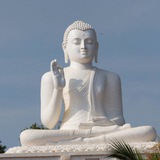
White Buddha of the Blue Temple, Wat Rong Suea Ten, Chiang Rai, Thailand.
🤩2👍1
Buddham Saranam Gacchami
Dhammam Saranam Gacchami
Sangham Saranam Gacchami
I take refuge to the Buddha.
I take refuge to the Dhamma.
I take refuge to the Sangha.
बुद्धं शरणं गच्छामि।
धर्मं शरणं गच्छामि।
संघं शरणं गच्छामि।
බුදුන් සරණං ගච්ඡාමි
ධම්මං සරණං ගච්ඡාමි
සංඝං සරණං ගච්ඡාමි
ข้าพเจ้าขอพึ่งพระพุทธเจ้า
ข้าพเจ้าขอพึ่งพระธรรม
ข้าพเจ้าขอพึ่งพระสงฆ์
မြတ်စွာဘုရားကို ဆည်းကပ်ပါ၏။
တရား၌ ခိုလှုံပါ၏။
သံဃာ၌ ခိုလှုံပါ၏။
Dhammam Saranam Gacchami
Sangham Saranam Gacchami
I take refuge to the Buddha.
I take refuge to the Dhamma.
I take refuge to the Sangha.
बुद्धं शरणं गच्छामि।
धर्मं शरणं गच्छामि।
संघं शरणं गच्छामि।
බුදුන් සරණං ගච්ඡාමි
ධම්මං සරණං ගච්ඡාමි
සංඝං සරණං ගච්ඡාමි
ข้าพเจ้าขอพึ่งพระพุทธเจ้า
ข้าพเจ้าขอพึ่งพระธรรม
ข้าพเจ้าขอพึ่งพระสงฆ์
မြတ်စွာဘုရားကို ဆည်းကပ်ပါ၏။
တရား၌ ခိုလှုံပါ၏။
သံဃာ၌ ခိုလှုံပါ၏။
👏1🙏1👌1😇1
Free Buddha Dharma ebook
Straight from the Heart
Thirteen Talks on the Practice of Meditation
By Acariya Maha Boowa Nanasampanno
Free download here:
https://drive.google.com/file/d/1stJ9ubiqPg_Z-xNPApqkz_FoDv2Eg2_m/view?usp=drive_link
===
Straight from the Heart
Thirteen Talks on the Practice of Meditation
By Acariya Maha Boowa Nanasampanno
Free download here:
https://drive.google.com/file/d/1stJ9ubiqPg_Z-xNPApqkz_FoDv2Eg2_m/view?usp=drive_link
===
🥰1👌1
Free Buddha Dharma ebook
Straight from the Heart
Thirteen Talks on the Practice of Meditation
By Acariya Maha Boowa Nanasampanno
The talks in the present collection all deal with the practice of meditation, and particularly with the development of discernment. Because their style of presentation is personal and impromptu, they will probably be best understood if read in conjunction with a more systematic introduction to the techniques of meditation, such as the Venerable Ācariya’s own book, Wisdom Develops Samādhi, which is available separately or as part of the volume, Forest Dhamma.
The noscript of the present book is taken from a request, frequently made by the Venerable Ācariya to his listeners, that his teachings be taken to heart, because they come straight from the heart.
Free download here:
https://drive.google.com/file/d/1stJ9ubiqPg_Z-xNPApqkz_FoDv2Eg2_m/view?usp=drive_link
===
Straight from the Heart
Thirteen Talks on the Practice of Meditation
By Acariya Maha Boowa Nanasampanno
The talks in the present collection all deal with the practice of meditation, and particularly with the development of discernment. Because their style of presentation is personal and impromptu, they will probably be best understood if read in conjunction with a more systematic introduction to the techniques of meditation, such as the Venerable Ācariya’s own book, Wisdom Develops Samādhi, which is available separately or as part of the volume, Forest Dhamma.
The noscript of the present book is taken from a request, frequently made by the Venerable Ācariya to his listeners, that his teachings be taken to heart, because they come straight from the heart.
Free download here:
https://drive.google.com/file/d/1stJ9ubiqPg_Z-xNPApqkz_FoDv2Eg2_m/view?usp=drive_link
===
👏1🆒1
4. Pàpo' pi passati bhadram
yàva pàpam na paccati
Yadà ca paccati pàpam
atha pàpo pàpàni passati. 119.
5. Bhadro' pi passati pàpam
yàva bhadram na paccati
Yadà ca paccati bhadram
atha bhadro bhadràni passati. 120.
BY ITS EFFECTS EVIL IS KNOWN
BY ITS EFFECTS GOOD IS KNOWN
4. Even an evil-doer sees good as long as evil ripens not; but when it bears fruit, then he sees the evil results. 4 119.
5. Even a good person sees evil so long as good ripens not; but when it bears fruit then the good one sees the good results. 5 120.
Story
Anàthapiudika very generously supported the Sangha and lost the greater part of his fortune. He was criticised for his extravagant almsgiving. But ignoring all criticism, he continued his generous acts. Appreciating his generosity, the Buddha uttered these verses to show the results of both good and bad.
===
Words of the Buddha channel:
https://invite.viber.com/?g2=AQAFqzqlj7FmI061PX17rxWMAtZ%2BRuso%2FH2KmHKZSgnv7v9DD8X0bDkKnZDr9JDq
===
yàva pàpam na paccati
Yadà ca paccati pàpam
atha pàpo pàpàni passati. 119.
5. Bhadro' pi passati pàpam
yàva bhadram na paccati
Yadà ca paccati bhadram
atha bhadro bhadràni passati. 120.
BY ITS EFFECTS EVIL IS KNOWN
BY ITS EFFECTS GOOD IS KNOWN
4. Even an evil-doer sees good as long as evil ripens not; but when it bears fruit, then he sees the evil results. 4 119.
5. Even a good person sees evil so long as good ripens not; but when it bears fruit then the good one sees the good results. 5 120.
Story
Anàthapiudika very generously supported the Sangha and lost the greater part of his fortune. He was criticised for his extravagant almsgiving. But ignoring all criticism, he continued his generous acts. Appreciating his generosity, the Buddha uttered these verses to show the results of both good and bad.
===
Words of the Buddha channel:
https://invite.viber.com/?g2=AQAFqzqlj7FmI061PX17rxWMAtZ%2BRuso%2FH2KmHKZSgnv7v9DD8X0bDkKnZDr9JDq
===
Viber
Words Of The Buddha
Daily teachings from Buddha Dharma
👌1🆒1