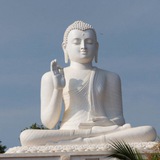
The Dhammapada: Verses and Stories
Translated by Daw Mya Tin, M.A.
Edited by Editorial Committee, Burma Tipitaka Association Rangoon, Burma, 1986
Dhammapada Verse 24
Kumbhaghosakasetthi Vatthu
Utthanavato satimato
sucikammassa nisammakarino
sannatassa dhammajivino
appamattassa yaso bhivaddhati.
Verse 24: If a person is energetic, mindful, pure in his thought, word and deed, and if he does everything with care and consideration, restrains his senses, earns his living according to the Law (Dhamma) and is not unheedful, then, the fame and fortune of that mindful person steadily increase.
The Story of Kumbhaghosaka, the Banker
While residing at the Veluvana monastery, the Buddha uttered Verse (24) of this book, with reference to Kumbhaghosaka, the banker.
At one time, a plague epidemic broke out in the city of Rajagaha. In the house of the city banker, the servants died on account of this disease; the banker and his wife were also attacked by the same. When they were both down with the disease they told their young son Kumbhaghosaka to leave them and flee from the house and to return only after a long time. They also told him that at such and such a place they had buried a treasure worth forty crores. The son left the city and stayed in a forest for twelve years and then came back to the city.
By that time, he was quite a grown up youth and nobody in the city recognized him. He went to the place where the treasure was hidden and found it was quite intact. But he reasoned and realized that there was no one who could identify him and that if he were to unearth the buried treasure and make use of it people might think a young poor man had accidentally come upon buried treasure and they might report it to the king. In that case, his property would be confiscated and he himself might be manhandled or put in captivity. So he concluded it was not yet time to unearth the treasure and that meanwhile he must find work for his living. Dressed in old clothes Kumbhaghosaka looked for work. He was given the work of waking up and rousing the people to get up early in the morning and of going round announcing that it was time to prepare food, time to fetch carts and yoke the bullocks, etc.
One morning, King Bimbisara heard him. The king, who was a keen judge of voices, commented, "This is the voice of a man of great wealth." A maid, hearing the king's remark, sent someone to investigate. He reported that the youth was only a hireling of the labourers. In spite of this report the king repeated the same remark on two subsequent days. Again, enquiries were made but with the same result. The maid thought that this was very strange, so she asked the king to give her permission to go and personally investigate.
Disguised as rustics, the maid and her daughter set out to the place of the labourers. Saying that they were travellers, they asked for shelter and was given accommodation in the house of Kumbhaghosaka just for one night. However, they managed to prolong their stay there. During that period, twice the king proclaimed that a certain ceremony must be performed in the locality of the labourers, and that every household must make contributions. Kumbhaghosaka had no ready cash for such an occasion. So he was forced to get some coins (Kahapanas) from his treasure. As these coins were handed over to the maid, she substituted them with her money and sent the coins to the king. After some time, she sent a message to the king asking him to send some men and summon Kumbhaghosaka to the court. Kumbhaghosaka, very reluctantly, went along with the men. The maid and her daughter also went to the palace, ahead of them.
At the palace, the king told Kumbhaghosaka to speak out the truth and gave him assurance that he would not be harmed on this account. Kumbhaghosaka then admitted that those Kahapanas were his and also that he was the son of the city banker of Rajagaha, who died in the plague epidemic twelve years ago. He further revealed the place where the treasure was hidden.
Translated by Daw Mya Tin, M.A.
Edited by Editorial Committee, Burma Tipitaka Association Rangoon, Burma, 1986
Dhammapada Verse 24
Kumbhaghosakasetthi Vatthu
Utthanavato satimato
sucikammassa nisammakarino
sannatassa dhammajivino
appamattassa yaso bhivaddhati.
Verse 24: If a person is energetic, mindful, pure in his thought, word and deed, and if he does everything with care and consideration, restrains his senses, earns his living according to the Law (Dhamma) and is not unheedful, then, the fame and fortune of that mindful person steadily increase.
The Story of Kumbhaghosaka, the Banker
While residing at the Veluvana monastery, the Buddha uttered Verse (24) of this book, with reference to Kumbhaghosaka, the banker.
At one time, a plague epidemic broke out in the city of Rajagaha. In the house of the city banker, the servants died on account of this disease; the banker and his wife were also attacked by the same. When they were both down with the disease they told their young son Kumbhaghosaka to leave them and flee from the house and to return only after a long time. They also told him that at such and such a place they had buried a treasure worth forty crores. The son left the city and stayed in a forest for twelve years and then came back to the city.
By that time, he was quite a grown up youth and nobody in the city recognized him. He went to the place where the treasure was hidden and found it was quite intact. But he reasoned and realized that there was no one who could identify him and that if he were to unearth the buried treasure and make use of it people might think a young poor man had accidentally come upon buried treasure and they might report it to the king. In that case, his property would be confiscated and he himself might be manhandled or put in captivity. So he concluded it was not yet time to unearth the treasure and that meanwhile he must find work for his living. Dressed in old clothes Kumbhaghosaka looked for work. He was given the work of waking up and rousing the people to get up early in the morning and of going round announcing that it was time to prepare food, time to fetch carts and yoke the bullocks, etc.
One morning, King Bimbisara heard him. The king, who was a keen judge of voices, commented, "This is the voice of a man of great wealth." A maid, hearing the king's remark, sent someone to investigate. He reported that the youth was only a hireling of the labourers. In spite of this report the king repeated the same remark on two subsequent days. Again, enquiries were made but with the same result. The maid thought that this was very strange, so she asked the king to give her permission to go and personally investigate.
Disguised as rustics, the maid and her daughter set out to the place of the labourers. Saying that they were travellers, they asked for shelter and was given accommodation in the house of Kumbhaghosaka just for one night. However, they managed to prolong their stay there. During that period, twice the king proclaimed that a certain ceremony must be performed in the locality of the labourers, and that every household must make contributions. Kumbhaghosaka had no ready cash for such an occasion. So he was forced to get some coins (Kahapanas) from his treasure. As these coins were handed over to the maid, she substituted them with her money and sent the coins to the king. After some time, she sent a message to the king asking him to send some men and summon Kumbhaghosaka to the court. Kumbhaghosaka, very reluctantly, went along with the men. The maid and her daughter also went to the palace, ahead of them.
At the palace, the king told Kumbhaghosaka to speak out the truth and gave him assurance that he would not be harmed on this account. Kumbhaghosaka then admitted that those Kahapanas were his and also that he was the son of the city banker of Rajagaha, who died in the plague epidemic twelve years ago. He further revealed the place where the treasure was hidden.
❤1👍1
Subsequently, all the buried treasure was brought to the palace; the king made him a banker and gave his daughter in marriage to him.
Afterwards, taking Kumbhaghosaka along with him, the king went to the Buddha at the Veluvana monastery and told him how the youth, though rich, was earning his living as a hireling of the labourers, and how he had appointed the youth a banker.
Then the Buddha spoke in verse as follows:
Verse 24: If a person is energetic, mindful, pure in his thought, word and deed, and if he does every thing with care and consideration, restrains his senses, earns his living according to the Law (Dhamma) and is not unheedful, then, the fame and fortune of that mindful person steadily increase.
At the end of the discourse, Kumbhaghosaka attained Sotapatti Fruition.
Buddha dharma teachings channel:
https://news.1rj.ru/str/lorddivinebuddha
====================
Afterwards, taking Kumbhaghosaka along with him, the king went to the Buddha at the Veluvana monastery and told him how the youth, though rich, was earning his living as a hireling of the labourers, and how he had appointed the youth a banker.
Then the Buddha spoke in verse as follows:
Verse 24: If a person is energetic, mindful, pure in his thought, word and deed, and if he does every thing with care and consideration, restrains his senses, earns his living according to the Law (Dhamma) and is not unheedful, then, the fame and fortune of that mindful person steadily increase.
At the end of the discourse, Kumbhaghosaka attained Sotapatti Fruition.
Buddha dharma teachings channel:
https://news.1rj.ru/str/lorddivinebuddha
====================
Telegram
Buddha
Buddha dharma teachings from the suttas and commentaries
❤1👍1
Dhammapada Verse 25
Culapanthaka Vatthu
Utthanena' ppamadena
samyamena damena ca
dipam kayiratha medhavi1
yam ogho2 nabhikirati.
Verse 25: Through diligence, mindfulness, discipline (with regard to moral precepts), and control of his senses, let the man of wisdom make (of himself) an island which no flood can overwhelm.
1. dipam kayiratha medhavi = island + make + the wise, meaning let the man of wisdom make an island. The 'island', in this context stands for arahatship. Arahatship is here linkened to an island because it enables one to escape from the stormy waters of Samsara (round of rebirths).
2. ogho: flood or torrent. It is used metaphorically of evils or passions which overwhelm humanity.
The Story of Culapanthaka
While residing at the Veluvana monastery, the Buddha uttered Verse (25) of this book, with reference to Culapanthaka, a grandson of a banker of Rajagaha.
The banker had two grandsons, named Mahapanthaka and Culapanthaka. Mahapanthaka, being the elder, used to accompany his grandfather to listen to religious discourses. Later, Mahapanthaka joined the Buddhist religious Order and in course of time became an arahat. Culapanthaka followed his brother and became a bhikkhu. But, because in a previous existence in the time of Kassapa Buddha, Culapanthaka had made fun of a bhikkhu who was very dull, he was born a dullard in the present existence. He could not even memorize one verse in four months. Mahapanthaka was very disappointed with his younger brother and even told him that he was not worthy of the Order.
About that time, Jivaka came to the monastery to invite the Buddha and the resident bhikkhus to his house for a meal. Mahapanthaka, who was then in charge of assigning the bhikkhus to meal invitations, left out Culapanthaka from the list. When Culapanthaka learnt about this he felt very much frustrated and decided that he would return to the life of a householder. Knowing his intention, the Buddha took him along and made him sit in front of the Gandhakuti hall. He then gave a clean piece of cloth to Culapanthaka and told him to sit there facing east and rub the piece of cloth. At the same time he was to repeat the word "Rajoharanam", which means "taking on impurity." The Buddha then went to the residence of Jivaka, accompanied by the bhikkhus.
Meanwhile, Culapanthaka went on rubbing the piece of cloth, all the time muttering the word "Rajoharanam". Very soon, the cloth became soiled. Seeing this change in the condition of the cloth, Culapanthaka came to realize the impermanent nature of all conditioned things. From the house of Jivaka, the Buddha through supernormal power learnt about the progress of Culapanthaka. He sent forth his radiance so that (to Culapanthaka) the Buddha appeared to be sitting in front of him, saying:
"It is not the piece of cloth alone that is made dirty by the dust; within oneself also there exist the dust of passion (raga), the dust of ill will (dosa), and the dust of ignorance (moha), i.e., the ignorance of the Four Noble Truths. Only by removing these could one achieve one's goal and attain arahatship". Culapanthaka got the message and kept on meditating and in a short while attained arahatship, together with Analytical Insight. Thus, Culapanthaka ceased to be a dullard.
At the house of Jivaka, they were about to pour libation water as a mark of donation; but the Buddha covered the bowl with his hand and asked if there were any bhikkhus left at the monastery. On being answered that there were none, the Buddha replied that there was one and directed them to fetch Culapanthaka from the monastery. When the messenger from the house of Jivaka arrived at the monastery he found not only one bhikkhu, but a thousand identical bhikkhus. They all have been created by Culapanthaka, who by now possessed supernormal powers The messenger was baffled and he turned back and reported the matter to Jivaka. The messenger was sent to the monastery for the second time and was instructed to say that the Buddha summoned the bhikkhu by the name of Culapanthaka.
Culapanthaka Vatthu
Utthanena' ppamadena
samyamena damena ca
dipam kayiratha medhavi1
yam ogho2 nabhikirati.
Verse 25: Through diligence, mindfulness, discipline (with regard to moral precepts), and control of his senses, let the man of wisdom make (of himself) an island which no flood can overwhelm.
1. dipam kayiratha medhavi = island + make + the wise, meaning let the man of wisdom make an island. The 'island', in this context stands for arahatship. Arahatship is here linkened to an island because it enables one to escape from the stormy waters of Samsara (round of rebirths).
2. ogho: flood or torrent. It is used metaphorically of evils or passions which overwhelm humanity.
The Story of Culapanthaka
While residing at the Veluvana monastery, the Buddha uttered Verse (25) of this book, with reference to Culapanthaka, a grandson of a banker of Rajagaha.
The banker had two grandsons, named Mahapanthaka and Culapanthaka. Mahapanthaka, being the elder, used to accompany his grandfather to listen to religious discourses. Later, Mahapanthaka joined the Buddhist religious Order and in course of time became an arahat. Culapanthaka followed his brother and became a bhikkhu. But, because in a previous existence in the time of Kassapa Buddha, Culapanthaka had made fun of a bhikkhu who was very dull, he was born a dullard in the present existence. He could not even memorize one verse in four months. Mahapanthaka was very disappointed with his younger brother and even told him that he was not worthy of the Order.
About that time, Jivaka came to the monastery to invite the Buddha and the resident bhikkhus to his house for a meal. Mahapanthaka, who was then in charge of assigning the bhikkhus to meal invitations, left out Culapanthaka from the list. When Culapanthaka learnt about this he felt very much frustrated and decided that he would return to the life of a householder. Knowing his intention, the Buddha took him along and made him sit in front of the Gandhakuti hall. He then gave a clean piece of cloth to Culapanthaka and told him to sit there facing east and rub the piece of cloth. At the same time he was to repeat the word "Rajoharanam", which means "taking on impurity." The Buddha then went to the residence of Jivaka, accompanied by the bhikkhus.
Meanwhile, Culapanthaka went on rubbing the piece of cloth, all the time muttering the word "Rajoharanam". Very soon, the cloth became soiled. Seeing this change in the condition of the cloth, Culapanthaka came to realize the impermanent nature of all conditioned things. From the house of Jivaka, the Buddha through supernormal power learnt about the progress of Culapanthaka. He sent forth his radiance so that (to Culapanthaka) the Buddha appeared to be sitting in front of him, saying:
"It is not the piece of cloth alone that is made dirty by the dust; within oneself also there exist the dust of passion (raga), the dust of ill will (dosa), and the dust of ignorance (moha), i.e., the ignorance of the Four Noble Truths. Only by removing these could one achieve one's goal and attain arahatship". Culapanthaka got the message and kept on meditating and in a short while attained arahatship, together with Analytical Insight. Thus, Culapanthaka ceased to be a dullard.
At the house of Jivaka, they were about to pour libation water as a mark of donation; but the Buddha covered the bowl with his hand and asked if there were any bhikkhus left at the monastery. On being answered that there were none, the Buddha replied that there was one and directed them to fetch Culapanthaka from the monastery. When the messenger from the house of Jivaka arrived at the monastery he found not only one bhikkhu, but a thousand identical bhikkhus. They all have been created by Culapanthaka, who by now possessed supernormal powers The messenger was baffled and he turned back and reported the matter to Jivaka. The messenger was sent to the monastery for the second time and was instructed to say that the Buddha summoned the bhikkhu by the name of Culapanthaka.
❤1👍1
But when he delivered the message, a thousand voices responded, "I am Culapanthaka." Again baffled, he turned back for the second time. Then he was sent to the monastery, for the third time. This time, he was instructed to get hold of the bhikkhu who first said that he was Culapanthaka. As soon as he got hold of that bhikkhu all the rest disappeared, and Culapanthaka accompanied the messenger to the house of Jivaka. After the meal, as directed by the Buddha, Culapanthaka delivered a religious discourse confidently and bravely, roaring like a young lion.
Later, when the subject of Culapanthaka cropped up among the bhikkhus, the Buddha said that one who was diligent and steadfast in his striving would certainly attain arahatship.
Then the Buddha spoke in verse as follows:
Verse 25: Through diligence, mindfulness, discipline (with regard to moral precepts), and control of his senses, let the man of wisdom make (of himself) an island which no flood can overwhelm.
Tibetan Buddhism - Vajrayana, Tantrayana and esoteric Buddhism channel:
https://news.1rj.ru/str/tibetanbuddha
Vajrayana Tantrayana Buddhism channel:
https://news.1rj.ru/str/tantrayanabuddhism
====================
Later, when the subject of Culapanthaka cropped up among the bhikkhus, the Buddha said that one who was diligent and steadfast in his striving would certainly attain arahatship.
Then the Buddha spoke in verse as follows:
Verse 25: Through diligence, mindfulness, discipline (with regard to moral precepts), and control of his senses, let the man of wisdom make (of himself) an island which no flood can overwhelm.
Tibetan Buddhism - Vajrayana, Tantrayana and esoteric Buddhism channel:
https://news.1rj.ru/str/tibetanbuddha
Vajrayana Tantrayana Buddhism channel:
https://news.1rj.ru/str/tantrayanabuddhism
====================
Telegram
Tibetan Buddhism Vajrayana Tantrayana esoteric tradition
Buddha Dharma teachings from the esoteric Vajrayana or Tantrayana Buddhism, includes all major schools Nyingma, Kagyu, Gelug, Sakya, Jonang and Bonpo.
❤1👍1
Free Buddha Dharma ebook
Sallekha Sutta
Commentaries by Mahasi Sayadaw Gyi
The Venerable Mahathera Mahasi Sayadaw expounded the Sallekha Sutta for the first time in 1959. This sutta is included in Majjima Nikaya Mulapannasa in Pali Scripture. The Dhamma Discourse while delivered for the first time, it was impossible to make it in the book form for publication.
This Sallekha sutta delivered on 14.4.1970 at Fan Yin Dhamma Hall for the second time was transformed into draft form in writing from cassette tape. The first 6 parts included in Volume I and second 6 parts in Volume II. Those were printed in Myanmar Language and published in 1971 for the first time. Now, it was published in the 6th edition in 2015.
For translation work of Dhamma treaties delivered by Venerable Mahathera Mahasi Sayadaw into English, Buddha Sasana Nuggaha Organization invited the talented translators and held a meeting in November 1978. The then president of Buddha Sasana Nuggaha Organization U Pwint Kaung told that the Dhamma translation ought to be made only after consulting with Venerable Mahasi Sayadaw.
Free download available:
http://www.mediafire.com/file/8j0gaf7bm3pa1tf/
Sallekha Sutta
Commentaries by Mahasi Sayadaw Gyi
The Venerable Mahathera Mahasi Sayadaw expounded the Sallekha Sutta for the first time in 1959. This sutta is included in Majjima Nikaya Mulapannasa in Pali Scripture. The Dhamma Discourse while delivered for the first time, it was impossible to make it in the book form for publication.
This Sallekha sutta delivered on 14.4.1970 at Fan Yin Dhamma Hall for the second time was transformed into draft form in writing from cassette tape. The first 6 parts included in Volume I and second 6 parts in Volume II. Those were printed in Myanmar Language and published in 1971 for the first time. Now, it was published in the 6th edition in 2015.
For translation work of Dhamma treaties delivered by Venerable Mahathera Mahasi Sayadaw into English, Buddha Sasana Nuggaha Organization invited the talented translators and held a meeting in November 1978. The then president of Buddha Sasana Nuggaha Organization U Pwint Kaung told that the Dhamma translation ought to be made only after consulting with Venerable Mahasi Sayadaw.
Free download available:
http://www.mediafire.com/file/8j0gaf7bm3pa1tf/
👍2❤1
Dhammapada Verses 26 and 27
Balanakkhattasanghuttha Vatthu
Pamadamanuyuñjanti
bala dummedhino jana1
appamadañca medhavi
dhanam setthamva rakkhati.
Ma pamadamanuyuñjetha
ma kamaratisanthavam
appamatto hi jhayanto
pappoti vipulam sukham.
Verse 26: The foolish and the ignorant give themselves over to negligence; whereas the wise treasure mindfulness as a precious jewel.
Verse 27: Therefore, one should not be negligent, nor be addicted to sensual pleasures; for he who is established in mindfulness, through cultivation of Tranquillity and Insight Development Practice, experiences supreme happiness (i.e., realizes Nibbana).
1. bala dummedhino jana: the foolish and the ignorant. The foolish mentioned in the story were the hooligans who were given up to wild revelry and disorder during the Balanakkhatta festival. They were not mindful of others or of the consequence for themselves in this world and the next.
The Story of Balanakkhatta Festival
White residing at the Jetavana monastery, the Buddha uttered Verses (26) and (27) of this book, in connection with the Balanakkhatta festival.
At one time, the Balanakkhatta festival was being celebrated in Savatthi. During the festival, many foolish young men smearing themselves with ashes and cow-dung roamed about the city shouting and making themselves a nuisance to the public. They would also stop at the doors of others and leave only when given some money.
At that time there were a great many lay disciples of the Buddha, living in Savatthi. On account of these foolish young hooligans, they sent word to the Buddha, requesting him to keep to the monastery and not to enter the city for seven days. They sent alms-food to the monastery and they themselves kept to their own houses. On the eighth day, when the festival was over, the Buddha and his disciples were invited into the city for alms-food and other offerings. On being told about the vulgar and shameful behaviour of the foolish young men during the festival, the Buddha commented that it was in the nature of the foolish and the ignorant to behave shamelessly.
Then the Buddha spoke in verse as follows:
Verse 26: The foolish and the ignorant give themselves over to negligence; whereas the wise treasure mindfulness as a precious jewel.
Verse 27: Therefore, one should not be negligent, nor be addicted to sensual pleasures; for he who is established in mindfulness, through cultivation of Tranquillity and Insight Development Practice, experiences supreme happiness (i.e., realizes Nibbana).
Words of the Buddha channel:
https://news.1rj.ru/str/wordsofbuddha
====================
Balanakkhattasanghuttha Vatthu
Pamadamanuyuñjanti
bala dummedhino jana1
appamadañca medhavi
dhanam setthamva rakkhati.
Ma pamadamanuyuñjetha
ma kamaratisanthavam
appamatto hi jhayanto
pappoti vipulam sukham.
Verse 26: The foolish and the ignorant give themselves over to negligence; whereas the wise treasure mindfulness as a precious jewel.
Verse 27: Therefore, one should not be negligent, nor be addicted to sensual pleasures; for he who is established in mindfulness, through cultivation of Tranquillity and Insight Development Practice, experiences supreme happiness (i.e., realizes Nibbana).
1. bala dummedhino jana: the foolish and the ignorant. The foolish mentioned in the story were the hooligans who were given up to wild revelry and disorder during the Balanakkhatta festival. They were not mindful of others or of the consequence for themselves in this world and the next.
The Story of Balanakkhatta Festival
White residing at the Jetavana monastery, the Buddha uttered Verses (26) and (27) of this book, in connection with the Balanakkhatta festival.
At one time, the Balanakkhatta festival was being celebrated in Savatthi. During the festival, many foolish young men smearing themselves with ashes and cow-dung roamed about the city shouting and making themselves a nuisance to the public. They would also stop at the doors of others and leave only when given some money.
At that time there were a great many lay disciples of the Buddha, living in Savatthi. On account of these foolish young hooligans, they sent word to the Buddha, requesting him to keep to the monastery and not to enter the city for seven days. They sent alms-food to the monastery and they themselves kept to their own houses. On the eighth day, when the festival was over, the Buddha and his disciples were invited into the city for alms-food and other offerings. On being told about the vulgar and shameful behaviour of the foolish young men during the festival, the Buddha commented that it was in the nature of the foolish and the ignorant to behave shamelessly.
Then the Buddha spoke in verse as follows:
Verse 26: The foolish and the ignorant give themselves over to negligence; whereas the wise treasure mindfulness as a precious jewel.
Verse 27: Therefore, one should not be negligent, nor be addicted to sensual pleasures; for he who is established in mindfulness, through cultivation of Tranquillity and Insight Development Practice, experiences supreme happiness (i.e., realizes Nibbana).
Words of the Buddha channel:
https://news.1rj.ru/str/wordsofbuddha
====================
Telegram
Words of the Buddha
Daily teachings of Buddha Dharma
❤1👍1
Dhammapada Verse 28
Mahakassapatthera Vatthu
Pamadam appamadena
yada nudati pandito
pannapasadamaruyha
asoko sokinim pajam
pabbatatthova bhumatthe
dhiro1 bale2 avekkhati.
Verse 28: The wise one dispels negligence by means of mindfulness; he ascends the tower of wisdom and being free from sorrow looks at the sorrowing beings. Just as one on the mountain top looks at those on the plain below, so also, the wise one (the arahat) looks at the foolish and the ignorant (worldlings).
1. dhiro: the wise one; in this context, the arahat.
2. bile: the foolish; in this context, the worldings.
The Story of Thera Mahakassapa
While residing at the Jetavana monastery, the Buddha uttered Verse (28) of this book, with reference to Thera Mahakassapa.
On one occasion, while Thera Mahakassapa was staying at Pipphali cave, he spent his time developing the mental image of light (aloka kasina) and trying to find out through Divine Vision, beings who were mindful and beings who were negligent, also those who were about to die and those who were about to be born.
From his monastery, the Buddha saw through his Divine Vision what Thera Mahakassapa was doing and wanted to warn him that he was wasting his time. So he sent forth his radiance and appeared seated before the thera and exhorted him thus: "My son Kassapa, the number of births and deaths of beings is innumerable and cannot be counted. It is not your concern to count them; it is the concern only of the Buddhas."
Then the Buddha spoke in verse as follows:
Verse 28. The wise one dispels negligence by means of mindfulness; he ascends the pinnacle of wisdom and being free from sorrow looks at the sorrowing beings. Just as one on the mountain top looks at those on the plain below, so also, the wise one (the arahat) looks at the foolish and the ignorant (worldlings).
Dhammapada, beloved and favorite teachings of the Buddha channel:
https://news.1rj.ru/str/dhammapadas
====================
Mahakassapatthera Vatthu
Pamadam appamadena
yada nudati pandito
pannapasadamaruyha
asoko sokinim pajam
pabbatatthova bhumatthe
dhiro1 bale2 avekkhati.
Verse 28: The wise one dispels negligence by means of mindfulness; he ascends the tower of wisdom and being free from sorrow looks at the sorrowing beings. Just as one on the mountain top looks at those on the plain below, so also, the wise one (the arahat) looks at the foolish and the ignorant (worldlings).
1. dhiro: the wise one; in this context, the arahat.
2. bile: the foolish; in this context, the worldings.
The Story of Thera Mahakassapa
While residing at the Jetavana monastery, the Buddha uttered Verse (28) of this book, with reference to Thera Mahakassapa.
On one occasion, while Thera Mahakassapa was staying at Pipphali cave, he spent his time developing the mental image of light (aloka kasina) and trying to find out through Divine Vision, beings who were mindful and beings who were negligent, also those who were about to die and those who were about to be born.
From his monastery, the Buddha saw through his Divine Vision what Thera Mahakassapa was doing and wanted to warn him that he was wasting his time. So he sent forth his radiance and appeared seated before the thera and exhorted him thus: "My son Kassapa, the number of births and deaths of beings is innumerable and cannot be counted. It is not your concern to count them; it is the concern only of the Buddhas."
Then the Buddha spoke in verse as follows:
Verse 28. The wise one dispels negligence by means of mindfulness; he ascends the pinnacle of wisdom and being free from sorrow looks at the sorrowing beings. Just as one on the mountain top looks at those on the plain below, so also, the wise one (the arahat) looks at the foolish and the ignorant (worldlings).
Dhammapada, beloved and favorite teachings of the Buddha channel:
https://news.1rj.ru/str/dhammapadas
====================
Telegram
Dhammapada - Buddha Dharma Teachings
Daily teachings of the Dhammapada, beloved and favorite teachings of the Buddha
❤1👍1
Dhammapada Verse 29
Dvesahayakabhikkhu Vatthu
Appamatto pamattesu
suttesu bahujagaro
abalassa mva sighasso
hitva yati sumedhaso.1
Verse 29: Mindful amongst the negligent, highly vigilant amongst the drowsy, the man of wisdom advances like a race-horse, leaving the jade behind.
1. sumedhaso: the wise one: the wise one advances steadily until he realizes Magga, Phala and Nibbana, leaving the negligent ones behind in the round of rebirths (samsara).
The Story of the Two Companion Bhikkhus
While residing at the Jetavana monastery, the Buddha tittered Verse (29) of this book, with reference to two bhikkhus, who were friends.
Two bhikkhus, after obtaining a subject of meditation from the Buddha, went to a monastery in the forest. One of them, being negligent, spent his time warming himself by the fire and talking to young novices throughout the first watch of the night, and generally idling away his time. The other faithfully performed the duties of a bhikkhu. He walked in meditation during the first watch, rested during the second watch and again meditated during the last watch of the night. Thus, being diligent and ever mindful, the second bhikkhu attained arahatship within a short time.
At the end of the rainy season (vassa) both of them went to pay obeisance to the Buddha, and the Buddha asked them how they had spent their time during the vassa. To this, the lazy and negligent bhikkhu answered that the other bhikkhu had been idling away his time, just lying down and sleeping. The Buddha then asked, "But, what about you?" His reply was that he generally sat warming himself by the fire during the first watch of the night and then sat up without sleeping. But the Buddha knew quite well how the two bhikkhus had spent their time, so he said to the idle one: "Though you are lazy and negligent you claim to be diligent and ever mindful; but you have made the other bhikkhu appear to be lazy and negligent though he is diligent and ever mindful. You are like a weak and slow horse compared to my son who is like a strong, fleet-footed horse."
Then the Buddha spoke in verse as follows:
Verse 29: Mindful amongst the negligent, highly vigilant amongst the drowsy, the man of wisdom advances like a race-horse, leaving the jade behind.
Buddha dharma teachings channel:
https://invite.viber.com/?g2=AQAKw1y3rv%2F6sk61PI2W4izuIiaEZj8YZujhY1tSzL%2B07s7rFnVFDAd0bAYFaMLw
Dvesahayakabhikkhu Vatthu
Appamatto pamattesu
suttesu bahujagaro
abalassa mva sighasso
hitva yati sumedhaso.1
Verse 29: Mindful amongst the negligent, highly vigilant amongst the drowsy, the man of wisdom advances like a race-horse, leaving the jade behind.
1. sumedhaso: the wise one: the wise one advances steadily until he realizes Magga, Phala and Nibbana, leaving the negligent ones behind in the round of rebirths (samsara).
The Story of the Two Companion Bhikkhus
While residing at the Jetavana monastery, the Buddha tittered Verse (29) of this book, with reference to two bhikkhus, who were friends.
Two bhikkhus, after obtaining a subject of meditation from the Buddha, went to a monastery in the forest. One of them, being negligent, spent his time warming himself by the fire and talking to young novices throughout the first watch of the night, and generally idling away his time. The other faithfully performed the duties of a bhikkhu. He walked in meditation during the first watch, rested during the second watch and again meditated during the last watch of the night. Thus, being diligent and ever mindful, the second bhikkhu attained arahatship within a short time.
At the end of the rainy season (vassa) both of them went to pay obeisance to the Buddha, and the Buddha asked them how they had spent their time during the vassa. To this, the lazy and negligent bhikkhu answered that the other bhikkhu had been idling away his time, just lying down and sleeping. The Buddha then asked, "But, what about you?" His reply was that he generally sat warming himself by the fire during the first watch of the night and then sat up without sleeping. But the Buddha knew quite well how the two bhikkhus had spent their time, so he said to the idle one: "Though you are lazy and negligent you claim to be diligent and ever mindful; but you have made the other bhikkhu appear to be lazy and negligent though he is diligent and ever mindful. You are like a weak and slow horse compared to my son who is like a strong, fleet-footed horse."
Then the Buddha spoke in verse as follows:
Verse 29: Mindful amongst the negligent, highly vigilant amongst the drowsy, the man of wisdom advances like a race-horse, leaving the jade behind.
Buddha dharma teachings channel:
https://invite.viber.com/?g2=AQAKw1y3rv%2F6sk61PI2W4izuIiaEZj8YZujhY1tSzL%2B07s7rFnVFDAd0bAYFaMLw
Viber
Buddha
Buddha dharma teachings from the suttas and commentaries from Theravada tradition
❤1👍1
Overcoming Ill Will
How to change the way we interact with those who anger us
By Bhante Henepola Gunaratana
As a practice that trains the mind to become gentle and considerate, metta is a powerful method to dissolve our habits of thinking about, speaking to, and treating others with ill will.
In the Discourse on Repression of Ill Will (Aghata Vinaya Sutta), Sariputta, one of the Buddha’s leading disciples, offers five practices for overcoming ill will and practicing loving-friendliness. These examples show us simple ways to think about complex, difficult situations. When we are with others, as our metta is sprouting in our hearts, we may face situations that challenge us. We know that we need to overcome whatever ill will remains in our minds toward others, but we are tempted to fall into old patterns of judging and distancing ourselves from them. These practices offer a different way of interacting with people who anger us.
The Dirty Rag
We may come across people whose words are kind, but whose bodily behavior is not. They make promises they can’t keep and act evasively, or say nice things to us but act poorly. We can consider behaving toward them like the monk who, while walking down the road, comes across a dirty rag. The rag is so filthy he can’t even pick it up with his hands, so he holds it with one foot while he kicks it with the other foot to clean it off. Then he picks it up with two fingers, shakes it off, brings it home, and washes it. He sees that this once-dirty rag is in fact completely functional and he sews it onto his patchwork robes!
When we encounter people whose deeds are not good but whose words are pleasant, we can search for ways to arouse loving-friendliness within ourselves. We can certainly find one reason or another to do so—we can grasp onto their kind words in the same way the monk saw the value of the cloth obscured by dirt. We admire and respect these people for their words and arouse our own loving-friendliness to share with them. If we are able to associate with them and show them loving-friendliness, it might encourage them to change their way of acting. But we do not pay attention to their actions. Focusing on and encouraging others’ positive words gives their kindness room to blossom naturally. Additionally, when we learn to practice compassion and equanimity toward people in this way, our own thoughts of ill will toward them are subdued.
Keep in mind that the layers of conditioning on a person have made them difficult to handle, just like the layers of dirt on the cloth. Perhaps they have faced hardship unknown to us—such as losing a friend or family member, home, or job. Maybe they were mistreated or abused as a child and this contributed to their thinking that rough behavior is a normal part of life. What matters for us is that we see that someone is suffering. We can offer them our loving-friendliness.
The Algae-Covered Pond
Next, consider how you become angry with a person whose speech is unkind but whose actions are respectful. For example, someone disparages you for doing a task incorrectly but then does the task for you so that you can learn from them. Sariputta compares this type of person to a pond covered with algae. Say that there is a pond nearby on a hot day when you are very thirsty. You are sweaty and feeling exhausted, and a cool dip would feel so refreshing. But the pond is covered with algae, so how do you dive in? First you must clear the algae away with both hands.
Similarly, you can overlook this person’s challenges and recognize that their heart opens to compassion and loving-friendliness from time to time. On this basis, you develop loving-friendliness toward that person. The ill will you may have felt toward them diminishes on its own.
The Hoofprint Puddle
The third type of person speaks both unwholesome words and does unwholesome deeds, but from time to time their heart opens to noble, friendly, and compassionate things. Sariputta suggests that such a person can be compared to a puddle on the road.
How to change the way we interact with those who anger us
By Bhante Henepola Gunaratana
As a practice that trains the mind to become gentle and considerate, metta is a powerful method to dissolve our habits of thinking about, speaking to, and treating others with ill will.
In the Discourse on Repression of Ill Will (Aghata Vinaya Sutta), Sariputta, one of the Buddha’s leading disciples, offers five practices for overcoming ill will and practicing loving-friendliness. These examples show us simple ways to think about complex, difficult situations. When we are with others, as our metta is sprouting in our hearts, we may face situations that challenge us. We know that we need to overcome whatever ill will remains in our minds toward others, but we are tempted to fall into old patterns of judging and distancing ourselves from them. These practices offer a different way of interacting with people who anger us.
The Dirty Rag
We may come across people whose words are kind, but whose bodily behavior is not. They make promises they can’t keep and act evasively, or say nice things to us but act poorly. We can consider behaving toward them like the monk who, while walking down the road, comes across a dirty rag. The rag is so filthy he can’t even pick it up with his hands, so he holds it with one foot while he kicks it with the other foot to clean it off. Then he picks it up with two fingers, shakes it off, brings it home, and washes it. He sees that this once-dirty rag is in fact completely functional and he sews it onto his patchwork robes!
When we encounter people whose deeds are not good but whose words are pleasant, we can search for ways to arouse loving-friendliness within ourselves. We can certainly find one reason or another to do so—we can grasp onto their kind words in the same way the monk saw the value of the cloth obscured by dirt. We admire and respect these people for their words and arouse our own loving-friendliness to share with them. If we are able to associate with them and show them loving-friendliness, it might encourage them to change their way of acting. But we do not pay attention to their actions. Focusing on and encouraging others’ positive words gives their kindness room to blossom naturally. Additionally, when we learn to practice compassion and equanimity toward people in this way, our own thoughts of ill will toward them are subdued.
Keep in mind that the layers of conditioning on a person have made them difficult to handle, just like the layers of dirt on the cloth. Perhaps they have faced hardship unknown to us—such as losing a friend or family member, home, or job. Maybe they were mistreated or abused as a child and this contributed to their thinking that rough behavior is a normal part of life. What matters for us is that we see that someone is suffering. We can offer them our loving-friendliness.
The Algae-Covered Pond
Next, consider how you become angry with a person whose speech is unkind but whose actions are respectful. For example, someone disparages you for doing a task incorrectly but then does the task for you so that you can learn from them. Sariputta compares this type of person to a pond covered with algae. Say that there is a pond nearby on a hot day when you are very thirsty. You are sweaty and feeling exhausted, and a cool dip would feel so refreshing. But the pond is covered with algae, so how do you dive in? First you must clear the algae away with both hands.
Similarly, you can overlook this person’s challenges and recognize that their heart opens to compassion and loving-friendliness from time to time. On this basis, you develop loving-friendliness toward that person. The ill will you may have felt toward them diminishes on its own.
The Hoofprint Puddle
The third type of person speaks both unwholesome words and does unwholesome deeds, but from time to time their heart opens to noble, friendly, and compassionate things. Sariputta suggests that such a person can be compared to a puddle on the road.
❤1👍1
Suppose you are walking along a road and there is no water or well. You are thirsty and tired, desperately looking for water. Almost dehydrated, you find a little rainwater that has collected in the hoofprint of a cow in the middle of the road. There’s very little water, and if you try to scoop it up by hand, you’ll make it muddy. What to do? You kneel down and slowly bring your mouth to that bit of water and sip it without disturbing the mud, thus quenching your thirst.
From time to time, even with their bad words and deeds, you’ll find that this person’s heart opens to loving-friendliness, compassion, appreciative joy, and equanimity. When you recognize a moment when their heart is open, take advantage of it—enter quickly. Say some loving words to keep their heart open. Speak kindly, showing metta in your tone and words. This is a wonderful opportunity to share with someone the benefit of metta. By patiently practicing loving-friendliness toward this person, despite all their weaknesses, you can produce a miracle. Others might give up and over time get tired and burn out. They might blame metta, saying it doesn’t work; while it is a normal reaction to blame something that doesn’t work, look closely. If you do something haphazardly and fail, don’t blame the system. Find out what could be done differently and make the necessary adjustments.
Similarly, you can find a way even with this kind of person to cultivate loving-friendliness. Use whatever possible opening you can get to overcome your feelings of ill will, just as you would sip the water in the cow’s hoofprint.
The Sick Traveler
The fourth type of person you may feel ill will toward has no visible redeeming qualities: their words are negative, their behavior is bad, and their heart does not open at all for anything noble.
Coming across such a person is like finding a patient, a sick man, walking alone on a road where there is no hospital, no village, and no other humans around. There is no water, no house to rest in, not a single tree to provide him shelter. This person is afflicted and suffering from severe sickness. He needs immediate medical attention—otherwise he will die. You see him and feel very sorry for him. Your heart melts. You think, “How can I help this man? He needs water, medicine, food, and clothes. He needs somebody to help him.” When your heart responds with empathy, you find a way to help this person. Listen to that voice that wants to help him, and let that spark of kindness grow. Then you will volunteer to help that person in spite of any difficulty.
Similarly, when people are completely negative in thought, word, and deed, we can practice metta. Although we might normally react to them with anger, still we need to find a reason to develop thoughts of loving-friendliness and compassion toward them. Then we become like the sick person’s medicine.
One who practices metta should think about how this person’s unwholesome behavior creates so much suffering for himself, both now and in the future. If this man gives up his bad behavior and cultivates wholesome bodily and verbal behavior, he could find peace and happiness in this life. He could enjoy things available to him without grumbling. He could have many friends and live a happy and healthy life. So instead, think: “I should help him to get rid of his hatred; if I do, I will be glad for the rest of my life thinking that I have done something wonderful.” Rather than being angry with such a person, let your heart open to him to see how much he suffers by acting in such a harmful way.
The Clear Lake
The fifth person’s words and behavior are sweet, and their heart is open for noble practices.
This person can be likened to a clear, calm lake. The water is sweet and cool, and the pool is surrounded by soft grass and shade trees. If someone comes along tired and overheated, taking a dip in this lake is most refreshing. In a similar way, this person’s thoughts are sweet and wonderful, and their words are beautiful and friendly. Their deeds are friendly, beautiful, and pure.
From time to time, even with their bad words and deeds, you’ll find that this person’s heart opens to loving-friendliness, compassion, appreciative joy, and equanimity. When you recognize a moment when their heart is open, take advantage of it—enter quickly. Say some loving words to keep their heart open. Speak kindly, showing metta in your tone and words. This is a wonderful opportunity to share with someone the benefit of metta. By patiently practicing loving-friendliness toward this person, despite all their weaknesses, you can produce a miracle. Others might give up and over time get tired and burn out. They might blame metta, saying it doesn’t work; while it is a normal reaction to blame something that doesn’t work, look closely. If you do something haphazardly and fail, don’t blame the system. Find out what could be done differently and make the necessary adjustments.
Similarly, you can find a way even with this kind of person to cultivate loving-friendliness. Use whatever possible opening you can get to overcome your feelings of ill will, just as you would sip the water in the cow’s hoofprint.
The Sick Traveler
The fourth type of person you may feel ill will toward has no visible redeeming qualities: their words are negative, their behavior is bad, and their heart does not open at all for anything noble.
Coming across such a person is like finding a patient, a sick man, walking alone on a road where there is no hospital, no village, and no other humans around. There is no water, no house to rest in, not a single tree to provide him shelter. This person is afflicted and suffering from severe sickness. He needs immediate medical attention—otherwise he will die. You see him and feel very sorry for him. Your heart melts. You think, “How can I help this man? He needs water, medicine, food, and clothes. He needs somebody to help him.” When your heart responds with empathy, you find a way to help this person. Listen to that voice that wants to help him, and let that spark of kindness grow. Then you will volunteer to help that person in spite of any difficulty.
Similarly, when people are completely negative in thought, word, and deed, we can practice metta. Although we might normally react to them with anger, still we need to find a reason to develop thoughts of loving-friendliness and compassion toward them. Then we become like the sick person’s medicine.
One who practices metta should think about how this person’s unwholesome behavior creates so much suffering for himself, both now and in the future. If this man gives up his bad behavior and cultivates wholesome bodily and verbal behavior, he could find peace and happiness in this life. He could enjoy things available to him without grumbling. He could have many friends and live a happy and healthy life. So instead, think: “I should help him to get rid of his hatred; if I do, I will be glad for the rest of my life thinking that I have done something wonderful.” Rather than being angry with such a person, let your heart open to him to see how much he suffers by acting in such a harmful way.
The Clear Lake
The fifth person’s words and behavior are sweet, and their heart is open for noble practices.
This person can be likened to a clear, calm lake. The water is sweet and cool, and the pool is surrounded by soft grass and shade trees. If someone comes along tired and overheated, taking a dip in this lake is most refreshing. In a similar way, this person’s thoughts are sweet and wonderful, and their words are beautiful and friendly. Their deeds are friendly, beautiful, and pure.
❤1👍1
Everything is ideal. It is easy for us to cultivate loving-friendliness toward that person. If you are unable to calm the anger you may feel toward such a person, reflect on their good qualities without harboring any jealousy. Know that it is possible for you as well to become like a clear lake in your thoughts, words, and deeds.
Consider the ways in which you can try to cultivate loving-friendliness equally toward all these five types of people without discrimination. Of course, you may find that it is not very easy—that there are times when you want to give in to ill will. Stretching our capacity for loving-friendliness sometimes requires that we make a great sacrifice—but what we sacrifice are our comfort, thoughts, feelings, and attitudes. In other words, we sacrifice our old way of relating to the world. Remember that the purpose of developing metta for these people is to make yourself calm and peaceful. To make others comfortable, first make yourself comfortable with them. It is not very easy, but in time we may see it as worthwhile—even natural!
Patience, Mindfulness, and Metta Go Together
Another traditional story about Sariputta from the Dhammapada shows how metta helps us overcome ill will. One day when Venerable Sariputta was on his alms round, a brahmin and a few of the brahmin’s friends saw him in the distance. They discussed how noble and patient Sariputta was. This brahmin said that he wanted to test Sariputta’s patience, so he slowly went behind him and gave a very serious blow to Sariputta’s back. Venerable Sariputta continued his alms round without even turning back to see who had struck him.
The brahmin felt so guilty that he rushed in front of Sariputta and apologized. When Sariputta asked him why he was apologizing, the brahmin said that he had given him a strong blow. Sariputta forgave him and continued his alms round. Then feeling even more guilty, the brahmin said, “Sir, if you really forgive me, I would like you to come to my house and have your meal there.” Accepting his invitation, Sariputta went to his house and after the meal gave him a dharma talk.
Meanwhile the news spread around that a brahmin had struck Venerable Sariputta. Many people in the neighborhood gathered with clubs, sticks, and rocks to attack the brahmin. As soon as Sariputta finished his talk, he saw the people armed with all these weapons. Realizing what would happen to the brahmin, Sariputta used his mindfulness and compassion to help him. He gave his alms bowl to the brahmin and asked him to follow him. The angry people asked Sariputta to take his alms bowl back, yet he retorted, “Why?”
“Because we want to beat him up.”
“Why?”
“Because he attacked you.”
“I have forgiven him. You have not been attacked. So you all go home. This brahmin is a good man now.”
After this episode the monks assembled in the discussion hall and started talking about the incident. Then the Buddha asked them what the topic of their discussion was. When they reported the incident, the Buddha said:
One should not strike a brahmin
And a brahmin should not set anger loose.
Shame on the one who hits a brahmin
And greater shame on the one who sets anger loose.
For the brahmin, nothing is better
Than restraining the mind
From what it cherishes.
Whenever one turns away from the intent to harm,
Suffering is allayed.
We can learn from Sariputta’s example and from the Buddha’s teaching. Though it may be tempting to set anger loose, we may find that patience and loving-friendliness are essential for overcoming such emotions. If you find your patience tested, think of a person with only one eye—how his or her compassionate friends and relatives would do whatever they could to protect the one eye. Similarly, imagine there is a person who has great faith in practicing mindfulness but is always forgetful. Rather than getting angry, as a person practicing metta protect this person’s faith, just as a compassionate person does everything possible to protect the sight of the one-eyed friend.
Consider the ways in which you can try to cultivate loving-friendliness equally toward all these five types of people without discrimination. Of course, you may find that it is not very easy—that there are times when you want to give in to ill will. Stretching our capacity for loving-friendliness sometimes requires that we make a great sacrifice—but what we sacrifice are our comfort, thoughts, feelings, and attitudes. In other words, we sacrifice our old way of relating to the world. Remember that the purpose of developing metta for these people is to make yourself calm and peaceful. To make others comfortable, first make yourself comfortable with them. It is not very easy, but in time we may see it as worthwhile—even natural!
Patience, Mindfulness, and Metta Go Together
Another traditional story about Sariputta from the Dhammapada shows how metta helps us overcome ill will. One day when Venerable Sariputta was on his alms round, a brahmin and a few of the brahmin’s friends saw him in the distance. They discussed how noble and patient Sariputta was. This brahmin said that he wanted to test Sariputta’s patience, so he slowly went behind him and gave a very serious blow to Sariputta’s back. Venerable Sariputta continued his alms round without even turning back to see who had struck him.
The brahmin felt so guilty that he rushed in front of Sariputta and apologized. When Sariputta asked him why he was apologizing, the brahmin said that he had given him a strong blow. Sariputta forgave him and continued his alms round. Then feeling even more guilty, the brahmin said, “Sir, if you really forgive me, I would like you to come to my house and have your meal there.” Accepting his invitation, Sariputta went to his house and after the meal gave him a dharma talk.
Meanwhile the news spread around that a brahmin had struck Venerable Sariputta. Many people in the neighborhood gathered with clubs, sticks, and rocks to attack the brahmin. As soon as Sariputta finished his talk, he saw the people armed with all these weapons. Realizing what would happen to the brahmin, Sariputta used his mindfulness and compassion to help him. He gave his alms bowl to the brahmin and asked him to follow him. The angry people asked Sariputta to take his alms bowl back, yet he retorted, “Why?”
“Because we want to beat him up.”
“Why?”
“Because he attacked you.”
“I have forgiven him. You have not been attacked. So you all go home. This brahmin is a good man now.”
After this episode the monks assembled in the discussion hall and started talking about the incident. Then the Buddha asked them what the topic of their discussion was. When they reported the incident, the Buddha said:
One should not strike a brahmin
And a brahmin should not set anger loose.
Shame on the one who hits a brahmin
And greater shame on the one who sets anger loose.
For the brahmin, nothing is better
Than restraining the mind
From what it cherishes.
Whenever one turns away from the intent to harm,
Suffering is allayed.
We can learn from Sariputta’s example and from the Buddha’s teaching. Though it may be tempting to set anger loose, we may find that patience and loving-friendliness are essential for overcoming such emotions. If you find your patience tested, think of a person with only one eye—how his or her compassionate friends and relatives would do whatever they could to protect the one eye. Similarly, imagine there is a person who has great faith in practicing mindfulness but is always forgetful. Rather than getting angry, as a person practicing metta protect this person’s faith, just as a compassionate person does everything possible to protect the sight of the one-eyed friend.
❤1👍1
From Loving-Kindness in Plain English: The Practice of Metta, by Bhante Gunaratana.
Bhante Henepola Gunaratana is a Buddhist monk from Sri Lanka and the author of Mindfulness in Plain English. He is president of the Bhavana Society in High View, West Virginia, an organization that promotes meditation and monastic life.
Bhante Henepola Gunaratana is a Buddhist monk from Sri Lanka and the author of Mindfulness in Plain English. He is president of the Bhavana Society in High View, West Virginia, an organization that promotes meditation and monastic life.
❤1👍1
Free Buddha Dharma ebook
Dhammapada: With Translation, Explanatory Texts And Notes
Translated by Ven. Narada Maha Thera
Free download available:
http://ftp.budaedu.org/ebooks/pdf/EN014.pdf
Dhammapada: With Translation, Explanatory Texts And Notes
Translated by Ven. Narada Maha Thera
Free download available:
http://ftp.budaedu.org/ebooks/pdf/EN014.pdf
❤2👍1
When you’ve laid down arms toward all creatures, not harming even a single one, don’t wish for a child, let alone a companion: live alone like a horned rhino.
When feelings for friends and loved ones are tied up in selfish love, you miss out on the goal. Seeing this peril in intimacy, live alone like a horned rhino.
As a spreading bamboo gets entangled, so does concern for partners and children. Like a bamboo shoot unobstructed, live alone like a horned rhino.
At ease in any quarter, unresisting, content with whatever comes your way; prevailing over adversities, dauntless, live alone like a horned rhino.
Having shed the marks of the home life, like the fallen leaves of the Shady Orchid Tree; having cut the bonds of the home life, a hero would live alone like a horned rhino.
Clearly we praise the blessing of a friend, it’s good to be with friends your equal or better. but failing to find them, eating blamelessly, live alone like a horned rhino.
Partial excepts from Snp 1.3 : Khaggavisāṇasutta
===
When feelings for friends and loved ones are tied up in selfish love, you miss out on the goal. Seeing this peril in intimacy, live alone like a horned rhino.
As a spreading bamboo gets entangled, so does concern for partners and children. Like a bamboo shoot unobstructed, live alone like a horned rhino.
At ease in any quarter, unresisting, content with whatever comes your way; prevailing over adversities, dauntless, live alone like a horned rhino.
Having shed the marks of the home life, like the fallen leaves of the Shady Orchid Tree; having cut the bonds of the home life, a hero would live alone like a horned rhino.
Clearly we praise the blessing of a friend, it’s good to be with friends your equal or better. but failing to find them, eating blamelessly, live alone like a horned rhino.
Partial excepts from Snp 1.3 : Khaggavisāṇasutta
===
❤2👍1🥰1