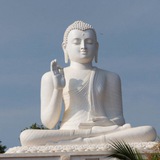
Hiri and Ottappa, Guardians of the World
“These two bright things, mendicants, protect the world. What two? Conscience and prudence. If these two bright things did not protect the world, there would be no recognition of the status of mother, aunts, or wives and partners of tutors and respected people. The world would become dissolute, like goats and sheep, chickens and pigs, and dogs and jackals. But because the two bright things protect the world, there is recognition of the status of mother, aunts, and wives and partners of tutors and respected people.”
Anguttara Nikaya 2.9 : Lokapala Sutta
“These two bright things, mendicants, protect the world. What two? Conscience and prudence. If these two bright things did not protect the world, there would be no recognition of the status of mother, aunts, or wives and partners of tutors and respected people. The world would become dissolute, like goats and sheep, chickens and pigs, and dogs and jackals. But because the two bright things protect the world, there is recognition of the status of mother, aunts, and wives and partners of tutors and respected people.”
Anguttara Nikaya 2.9 : Lokapala Sutta
❤1🥰1😍1
Dhammapada Verse 95
Sariputtatthera Vatthu
Pathavisamo no virujjhati
indakhilupamo tadi subbato
rahadova apetakaddamo1
samsara na bhavanti tadino.
Verse 95: Like the earth, the arahat is patient and is not provoked to respond in anger; like the door-post he is firm; he is unperturbed by the ups and downs of life; he is serene and pure like a lake free from mud. For such an arahat there will be no more rebirth.
1. apetakaddamo: free from mud. The lake water being free from mud is unpolluted; the arahat being free from defilements is also serene and pure.
The Story of Thera Sariputta
While residing at the Jetavana monastery, the Buddha uttered Verse (95) of this book, with reference to the Chief Disciple Sariputta and a young bhikkhu.
It was the end of the vassa; and Thera Sariputta was about to set out on a journey with some followers. A young bhikkhu, who bore some grudge against the thera, approached the Buddha and falsely reported that Thera Sariputta had abused him and beaten him. The Buddha therefore sent for the thera and questioned him, and Thera Sariputta replied as follows: "Venerable Sir! How could a bhikkhu, who steadfastly keeps his mind on the body, set out on a journey without apologizing, after doing wrong to a fellow bhikkhu? I am like the earth, which feels no pleasure when flowers are cast on it, nor resentment when rubbish and excreta are piled upon it. I am also like the door-mat, the beggar, the bull with broken horns; I also feel abhorrence for the impurity of the body and am no longer attached to it."
When Thera Sariputta spoke thus, the young bhikkhu felt very much distressed and wept bitterly, and admitted that he had lied about the Chief Disciple Sariputta. Then the Buddha advised Thera Sariputta to accept the apology of the young bhikkhu, lest a heavy punishment should fall on him and get his head crushed. The young bhikkhu then admitted that he had done wrong and respectfully asked for pardon. Thera Sariputta pardoned the young bhikkhu and also asked to be forgiven if he also had done any wrong.
All those present talked in praise of Thera Sariputta, and the Buddha said, "Bhikkhus, a bhikkhu like Sariputta has no anger or ill will in him. Like the earth and the door-post, he is patient, tolerant, and firm; like the lake free from mud, he is serene and pure."
Then the Buddha spoke in verse as follows:
Verse 95: Like the earth, the arahat is patient and is not provoked to respond in anger; like the door-post he is firm; he is unperturbed by the ups and downs of life; he is serene and pure like a lake free from mud. For such an arahat there will be no more rebirth.
Ajahn Chah, Buddhist teacher of Thai forest meditation of Theravada Buddhism channel:
https://news.1rj.ru/str/ajahnchah_buddhism
====================
Sariputtatthera Vatthu
Pathavisamo no virujjhati
indakhilupamo tadi subbato
rahadova apetakaddamo1
samsara na bhavanti tadino.
Verse 95: Like the earth, the arahat is patient and is not provoked to respond in anger; like the door-post he is firm; he is unperturbed by the ups and downs of life; he is serene and pure like a lake free from mud. For such an arahat there will be no more rebirth.
1. apetakaddamo: free from mud. The lake water being free from mud is unpolluted; the arahat being free from defilements is also serene and pure.
The Story of Thera Sariputta
While residing at the Jetavana monastery, the Buddha uttered Verse (95) of this book, with reference to the Chief Disciple Sariputta and a young bhikkhu.
It was the end of the vassa; and Thera Sariputta was about to set out on a journey with some followers. A young bhikkhu, who bore some grudge against the thera, approached the Buddha and falsely reported that Thera Sariputta had abused him and beaten him. The Buddha therefore sent for the thera and questioned him, and Thera Sariputta replied as follows: "Venerable Sir! How could a bhikkhu, who steadfastly keeps his mind on the body, set out on a journey without apologizing, after doing wrong to a fellow bhikkhu? I am like the earth, which feels no pleasure when flowers are cast on it, nor resentment when rubbish and excreta are piled upon it. I am also like the door-mat, the beggar, the bull with broken horns; I also feel abhorrence for the impurity of the body and am no longer attached to it."
When Thera Sariputta spoke thus, the young bhikkhu felt very much distressed and wept bitterly, and admitted that he had lied about the Chief Disciple Sariputta. Then the Buddha advised Thera Sariputta to accept the apology of the young bhikkhu, lest a heavy punishment should fall on him and get his head crushed. The young bhikkhu then admitted that he had done wrong and respectfully asked for pardon. Thera Sariputta pardoned the young bhikkhu and also asked to be forgiven if he also had done any wrong.
All those present talked in praise of Thera Sariputta, and the Buddha said, "Bhikkhus, a bhikkhu like Sariputta has no anger or ill will in him. Like the earth and the door-post, he is patient, tolerant, and firm; like the lake free from mud, he is serene and pure."
Then the Buddha spoke in verse as follows:
Verse 95: Like the earth, the arahat is patient and is not provoked to respond in anger; like the door-post he is firm; he is unperturbed by the ups and downs of life; he is serene and pure like a lake free from mud. For such an arahat there will be no more rebirth.
Ajahn Chah, Buddhist teacher of Thai forest meditation of Theravada Buddhism channel:
https://news.1rj.ru/str/ajahnchah_buddhism
====================
Telegram
Ajahn Chah - Theravada Thailand Buddhism
Collection of teachings of Venerable Ajahn Chah, a foremost meditation and Buddhist teacher from Thailand
❤2👍1💯1
Dhammapada Verses 87
Pancasata Agantukabhikkhu Vatthu
Kanham dhammam vippahaya
sukkam bhavetha pandito
oka anokamagamma
viveke yattha duramam.
Tatrabhiratimiccheyya
hitva kame akincano
pariyodapeyya attanam
cittaklesehi pandito.
The man of wisdom, leaving the home of craving and having Nibbana as his goal, should give up dark, evil ways and cultivate pure, good ones. He should seek great delight in solitude, detachment and Nibbana, which an ordinary man finds so difficult to enjoy. He should also give up sensual pleasures, and clinging to nothing, should cleanse himself of all impurities of the mind.
https://news.1rj.ru/str/dhammapadas/866
Pancasata Agantukabhikkhu Vatthu
Kanham dhammam vippahaya
sukkam bhavetha pandito
oka anokamagamma
viveke yattha duramam.
Tatrabhiratimiccheyya
hitva kame akincano
pariyodapeyya attanam
cittaklesehi pandito.
The man of wisdom, leaving the home of craving and having Nibbana as his goal, should give up dark, evil ways and cultivate pure, good ones. He should seek great delight in solitude, detachment and Nibbana, which an ordinary man finds so difficult to enjoy. He should also give up sensual pleasures, and clinging to nothing, should cleanse himself of all impurities of the mind.
https://news.1rj.ru/str/dhammapadas/866
❤1💯1
Dhammapada Verse 96
Kosambivasitissattherasamanera Vatthu
Santam tassa manam hoti
santa vaca ca kamma ca
sammadanna vimuttassa
upasantassa tadino.
Verse 96: An arahat is calm in his mind, calm in his speech, and also in his deed; truly knowing the Dhamma, such an arahat is free from moral defilements and is unpurturbed by the ups and downs of life.
The Story of a Samanera from Kosambi
While residing at the Jetavana monastery, the Buddha uttered Verse (96) of this book, with reference to a samanera, a pupil of Thera Tissa from Kosambi.
Once, a seven year old boy was made a samanera at the request of his father. Before his head was shaved the boy was given a subject of meditation. While he was being shaved, the boy had his mind fixed steadfastly on the object of meditation; as a result, he attained arahatship as soon as they finished shaving his head.
After some time, Thera Tissa, accompanied by the samanera, set out for Savatthi to pay homage to the Buddha. On the way, they spent one night in a village monastery. The thera fell asleep, but the young samanera sat up the whole night beside the bed of the old thera. Early in the morning, the old thera thought it was time to wake up the young samanera. So he roused up the samanera with a palm-leaf fan, and accidentally hit the eye of the samanera with the handle of the fan and damaged the eye. The samanera covered that eye with one hand and went about doing his duties of getting water for the thera to wash his face and clean his mouth, sweeping the floor of the monastery, etc. When the young samanera offered water with one hand to the thera, the thera chided him, and said that he should offer things with both hands. Only then, did the thera learn how the samanera lost his eye. At that instant, he realized that he had wronged a truly noble person. Feeling very sorry and humiliated, he made an apology to the samanera. But the samanera said that it was not the fault of the thera, nor his own fault, but that it was only the result of kamma, and so the thera was not to feel sad about it. But the thera could not get over the unfortunate incident.
Then they continued their journey to Savatthi and arrived at the Jetavana monastery where the Buddha was in residence. The thera then told the Buddha that the young samanera who came along with him was the most noble person he had ever met, and related all that had happened on their way. The Buddha listened to him, and replied, "My son, an arahat does not get angry with anyone he is restrained in his senses and is perfectly calm and serene."
Then the Buddha spoke in verse as follows:
Verse 96: An arahat is calm in his mind, calm in his speech, and also in his deed; truly knowing the Dhamma, such an arahat is free from moral defilements and is unpurturbed by the ups and downs of life.
Free Buddhism books, teachings, podcasts and videos from Theravada, Mahayana and Vajrayana traditions:
https://news.1rj.ru/str/buddha_ebooks
====================
Kosambivasitissattherasamanera Vatthu
Santam tassa manam hoti
santa vaca ca kamma ca
sammadanna vimuttassa
upasantassa tadino.
Verse 96: An arahat is calm in his mind, calm in his speech, and also in his deed; truly knowing the Dhamma, such an arahat is free from moral defilements and is unpurturbed by the ups and downs of life.
The Story of a Samanera from Kosambi
While residing at the Jetavana monastery, the Buddha uttered Verse (96) of this book, with reference to a samanera, a pupil of Thera Tissa from Kosambi.
Once, a seven year old boy was made a samanera at the request of his father. Before his head was shaved the boy was given a subject of meditation. While he was being shaved, the boy had his mind fixed steadfastly on the object of meditation; as a result, he attained arahatship as soon as they finished shaving his head.
After some time, Thera Tissa, accompanied by the samanera, set out for Savatthi to pay homage to the Buddha. On the way, they spent one night in a village monastery. The thera fell asleep, but the young samanera sat up the whole night beside the bed of the old thera. Early in the morning, the old thera thought it was time to wake up the young samanera. So he roused up the samanera with a palm-leaf fan, and accidentally hit the eye of the samanera with the handle of the fan and damaged the eye. The samanera covered that eye with one hand and went about doing his duties of getting water for the thera to wash his face and clean his mouth, sweeping the floor of the monastery, etc. When the young samanera offered water with one hand to the thera, the thera chided him, and said that he should offer things with both hands. Only then, did the thera learn how the samanera lost his eye. At that instant, he realized that he had wronged a truly noble person. Feeling very sorry and humiliated, he made an apology to the samanera. But the samanera said that it was not the fault of the thera, nor his own fault, but that it was only the result of kamma, and so the thera was not to feel sad about it. But the thera could not get over the unfortunate incident.
Then they continued their journey to Savatthi and arrived at the Jetavana monastery where the Buddha was in residence. The thera then told the Buddha that the young samanera who came along with him was the most noble person he had ever met, and related all that had happened on their way. The Buddha listened to him, and replied, "My son, an arahat does not get angry with anyone he is restrained in his senses and is perfectly calm and serene."
Then the Buddha spoke in verse as follows:
Verse 96: An arahat is calm in his mind, calm in his speech, and also in his deed; truly knowing the Dhamma, such an arahat is free from moral defilements and is unpurturbed by the ups and downs of life.
Free Buddhism books, teachings, podcasts and videos from Theravada, Mahayana and Vajrayana traditions:
https://news.1rj.ru/str/buddha_ebooks
====================
Telegram
Buddha Dharma books
Free Buddhism books, teachings, podcasts and videos from Theravada, Mahayana and Vajrayana traditions
❤1💯1
Forwarded from Buddha Dharma books
Free Buddha Dharma ebook
Human Life and Problems
By Venerable K. Sri Dhammananda
This book endeavours to portray these human problems analytically and present them with the Buddhist point of view through Buddhist approach and understanding.
As could be expected, Venerable Sri Dhammananda was somewhat apprehensive at the beginning about undertaking a venture of this nature which can easily be quite controversial particularly when it comes to answering questions pertaining to certain areas of human problems like marital discords, divorce, LGBTQ non binary and the like which might be raised by certain quarters when seeking clarification. Hence, in writing a book of this nature the author inevitably had to traverse a veritable minefield with utmost care.
Free download available:
http://ftp.budaedu.org/ebooks/pdf/EN083.pdf
=============
Human Life and Problems
By Venerable K. Sri Dhammananda
This book endeavours to portray these human problems analytically and present them with the Buddhist point of view through Buddhist approach and understanding.
As could be expected, Venerable Sri Dhammananda was somewhat apprehensive at the beginning about undertaking a venture of this nature which can easily be quite controversial particularly when it comes to answering questions pertaining to certain areas of human problems like marital discords, divorce, LGBTQ non binary and the like which might be raised by certain quarters when seeking clarification. Hence, in writing a book of this nature the author inevitably had to traverse a veritable minefield with utmost care.
Free download available:
http://ftp.budaedu.org/ebooks/pdf/EN083.pdf
=============
👍3💯1
He who has nothing
–in front, behind, in between–
the one with nothing
who clings to no thing:
he’s what I call
a brahman.
421*
Dhammapada XXVI : Brahmans
https://news.1rj.ru/str/dhammapadas/576
–in front, behind, in between–
the one with nothing
who clings to no thing:
he’s what I call
a brahman.
421*
Dhammapada XXVI : Brahmans
https://news.1rj.ru/str/dhammapadas/576
❤2🥰1😍1
Dhammapada Verse 97
Sariputtatthera Vatthu
Assaddho akatannu ca
sandhicchedo ca yo naro
hatavakaso vantaso1
sa ve uttamaporiso.
Verse 97. He who is not credulous, who has realized the Unconditioned (Nibbana), who has cut off the links of the round of rebirths, who has destroyed all consequences of good and bad deeds, who has discarded all craving, is indeed the noblest of all men (i.e., an arahat).
1. Vantaso: one who has discarded all craving (lit., one who has vomited out all craving).
The Story of Thera Sariputta
While residing at the Jetavana monastery, the Buddha uttered Verse (97) of this book, with reference to Thera Sariputtta.
Thirty bhikkhus from a village had arrived at the Jetavana monastery to pay homage to the Buddha. The Buddha knew that the time was ripe for those bhikkhus to attain arahatship. So, he sent for Sariputta, and in the presence of those bhikkhus, he asked, "My son Sariputta, do you accept the fact that by meditating on the senses one could realize Nibbana ?" Sariputta answered, "Venerable Sir, in the matter of the realization of Nibbana by meditating on the senses, it is not that I accept it because I have faith in you; it is only those who have not personally realized it, that accept the fact from others." Sariputta's answer was not properly understood by the bhikkhus; they thought, "Sariputta has not given up wrong views yet; even now, he has no faith in the Buddha."
Then the Buddha explained to them the true meaning of Sariputta's answer. "Bhikkhus, Sariputta's answer is simply this; he accepts the fact that Nibbana is realized by means of meditation on the senses, but his acceptance is due to his own personal realization and not merely because I have said it or somebody else has said it. Sariputta has faith in me; he also has faith in the consequences of good and bad deeds."
Then the Buddha spoke in verse as follows:
Verse 97: He who is not credulous, who has realized the Unconditioned (Nibbana), who has cut off the links of the round of rebirths, who has destroyed all consequences of good and bad deeds, who has discarded all craving, is indeed the noblest of all men (i.e., an arahat).
At the end of the discourse, all those bhikkhus attained arahatship.
Buddha dharma teachings channel:
https://news.1rj.ru/str/lorddivinebuddha
====================
Sariputtatthera Vatthu
Assaddho akatannu ca
sandhicchedo ca yo naro
hatavakaso vantaso1
sa ve uttamaporiso.
Verse 97. He who is not credulous, who has realized the Unconditioned (Nibbana), who has cut off the links of the round of rebirths, who has destroyed all consequences of good and bad deeds, who has discarded all craving, is indeed the noblest of all men (i.e., an arahat).
1. Vantaso: one who has discarded all craving (lit., one who has vomited out all craving).
The Story of Thera Sariputta
While residing at the Jetavana monastery, the Buddha uttered Verse (97) of this book, with reference to Thera Sariputtta.
Thirty bhikkhus from a village had arrived at the Jetavana monastery to pay homage to the Buddha. The Buddha knew that the time was ripe for those bhikkhus to attain arahatship. So, he sent for Sariputta, and in the presence of those bhikkhus, he asked, "My son Sariputta, do you accept the fact that by meditating on the senses one could realize Nibbana ?" Sariputta answered, "Venerable Sir, in the matter of the realization of Nibbana by meditating on the senses, it is not that I accept it because I have faith in you; it is only those who have not personally realized it, that accept the fact from others." Sariputta's answer was not properly understood by the bhikkhus; they thought, "Sariputta has not given up wrong views yet; even now, he has no faith in the Buddha."
Then the Buddha explained to them the true meaning of Sariputta's answer. "Bhikkhus, Sariputta's answer is simply this; he accepts the fact that Nibbana is realized by means of meditation on the senses, but his acceptance is due to his own personal realization and not merely because I have said it or somebody else has said it. Sariputta has faith in me; he also has faith in the consequences of good and bad deeds."
Then the Buddha spoke in verse as follows:
Verse 97: He who is not credulous, who has realized the Unconditioned (Nibbana), who has cut off the links of the round of rebirths, who has destroyed all consequences of good and bad deeds, who has discarded all craving, is indeed the noblest of all men (i.e., an arahat).
At the end of the discourse, all those bhikkhus attained arahatship.
Buddha dharma teachings channel:
https://news.1rj.ru/str/lorddivinebuddha
====================
Telegram
Buddha
Buddha dharma teachings from the suttas and commentaries
👍2💯1
Forwarded from Dhammapada - Buddha Dharma Teachings
Free Buddha Dharma ebook
The Buddha`s Ways to Peace and Happiness
by Chanmyay Sayadaw
For those who have not studied the Buddha's teaching completely and thoroughly, there can be a misunderstanding that the Buddha Dhamma is only about the attainment of Nibbana or well-being in future lives, and not about peace and happiness in this very life.
As a matter of fact, the Buddha's teaching also show the ways to live in peace and happiness in the present life. The various kinds of advice range from how to act, speak, and think to how to eat and dress, as well as how to develop a pure mental attitude that allows one to live with integrity.
Free download here:
https://drive.google.com/file/d/1nyLLmmFtMxrutsGkEB5BcHn8cyK5BVZB/view?usp=sharing
The Buddha`s Ways to Peace and Happiness
by Chanmyay Sayadaw
For those who have not studied the Buddha's teaching completely and thoroughly, there can be a misunderstanding that the Buddha Dhamma is only about the attainment of Nibbana or well-being in future lives, and not about peace and happiness in this very life.
As a matter of fact, the Buddha's teaching also show the ways to live in peace and happiness in the present life. The various kinds of advice range from how to act, speak, and think to how to eat and dress, as well as how to develop a pure mental attitude that allows one to live with integrity.
Free download here:
https://drive.google.com/file/d/1nyLLmmFtMxrutsGkEB5BcHn8cyK5BVZB/view?usp=sharing
❤2👍2
Forwarded from Dhammapada - Buddha Dharma Teachings
Free Buddha Dharma ebook
In This Very Life
by Sayadaw U. Pandita
Burmese meditation master Sayadaw U Pandita shows us that freedom is as immediate as breathing, as fundamental as a footstep. In this book he describes the path of the Buddha and calls all of us to that heroic journey of liberation. Enlivened by numerous case histories and anecdotes, In This Very Life is a matchless guide to the inner territory of meditation as described by the Buddha.
Free Download available:
https://theravada.vn/wp-content/uploads/2021/05/In-This-Very-Life.pdf
In This Very Life
by Sayadaw U. Pandita
Burmese meditation master Sayadaw U Pandita shows us that freedom is as immediate as breathing, as fundamental as a footstep. In this book he describes the path of the Buddha and calls all of us to that heroic journey of liberation. Enlivened by numerous case histories and anecdotes, In This Very Life is a matchless guide to the inner territory of meditation as described by the Buddha.
Free Download available:
https://theravada.vn/wp-content/uploads/2021/05/In-This-Very-Life.pdf
👍1💯1
Touching the Earth
By Thich Nhat Hanh
I see my mother and father, whose blood, flesh, and vitality are circulating in my own veins and nourishing every cell in me. Through them, I see my four grandparents. Their expectations, experiences, and wisdom have been transmitted from so many generations of ancestors. I carry in me the life, blood, experience, wisdom, happiness, and sorrow of all generations. The suffering and all the elements that need to be transformed, I am practicing to transform. I open my heart, flesh, and bones to receive the energy of insight, love, and experience transmitted to me by all my ancestors. I see my roots in my father, mother, grandfathers, grandmothers, and all my ancestors. I know I am only the continuation of this ancestral lineage. Please support, protect, and transmit to me your energy. I know wherever children and grandchildren are, ancestors are there, also. I know that parents always love and support their children and grandchildren, although they are not always able to express it skillfully because of difficulties they themselves encountered. I see that my ancestors tried to build a way of life based on gratitude, joy, confidence, respect, and loving kindness. As a continuation of my ancestors, I bow deeply and allow their energy to flow through me. I ask my ancestors for their support, protection, and strength.
=====
Dhammapada, beloved and favorite teachings of the Buddha channel:
https://news.1rj.ru/str/dhammapadas
By Thich Nhat Hanh
I see my mother and father, whose blood, flesh, and vitality are circulating in my own veins and nourishing every cell in me. Through them, I see my four grandparents. Their expectations, experiences, and wisdom have been transmitted from so many generations of ancestors. I carry in me the life, blood, experience, wisdom, happiness, and sorrow of all generations. The suffering and all the elements that need to be transformed, I am practicing to transform. I open my heart, flesh, and bones to receive the energy of insight, love, and experience transmitted to me by all my ancestors. I see my roots in my father, mother, grandfathers, grandmothers, and all my ancestors. I know I am only the continuation of this ancestral lineage. Please support, protect, and transmit to me your energy. I know wherever children and grandchildren are, ancestors are there, also. I know that parents always love and support their children and grandchildren, although they are not always able to express it skillfully because of difficulties they themselves encountered. I see that my ancestors tried to build a way of life based on gratitude, joy, confidence, respect, and loving kindness. As a continuation of my ancestors, I bow deeply and allow their energy to flow through me. I ask my ancestors for their support, protection, and strength.
=====
Dhammapada, beloved and favorite teachings of the Buddha channel:
https://news.1rj.ru/str/dhammapadas
Telegram
Dhammapada - Buddha Dharma Teachings
Daily teachings of the Dhammapada, beloved and favorite teachings of the Buddha
👍1💯1
Then Anāthapiṇḍika the householder, surrounded by about 500 lay followers, went to the Blessed One and, on arrival, having bowed down to him, sat to one side. As he was sitting there the Blessed One said to him, “Householder, you have provided the Saṅgha of monks with robes, alms food, lodgings, and medicinal requisites for the sick, but you shouldn’t rest content with the thought, ‘We have provided the Saṅgha of monks with robes, alms food, lodgings, and medicinal requisites for the sick.’ So you should train yourself, ‘Let’s periodically enter and remain in seclusion and rapture.’ That’s how you should train yourself.”
Partial excerpts from AN 5.176 Pīti Sutta: Rapture
Partial excerpts from AN 5.176 Pīti Sutta: Rapture
❤1🥰1🤗1
Dhammapada Verse 98
Khadiravaniyarevatatthera Vatthu
Game va yadi varanne
ninne va yadi va thale
yattha arahanto viharanti
tam bhumiramaneyyakam.
Verse 98: In a village or in a forest, in a valley or on a hill, wherever arahats dwell, that place is delightful.
The Story of Thera Revata
While residing at the Jetavana monastery, the Buddha uttered Verse (98) of this book, with reference to Thera Revata of the Acacia (khadira) Forest.
Revata was the youngest brother of the Chief Disciple, Sariputta. He was the only one of the brothers and sisters of Sariputta who had not left home for the homeless life. His parents were very anxious to get him married. Revata was only seven years old when his parents arranged a marriage for him to a young girl. At the wedding reception, he met an old lady who was one hundred and twenty years old, and he realized that all beings are subject to ageing and decay. So, he ran away from the house and went straight to a monastery, where there were thirty bhikkhus. Those bhikkhus had been requested earlier by Thera Sariputta to make his brother a samanera if he should come to them. Accordingly, he was made a samanera and Thera Sariputta was informed about it.
Samanera Revata took a subject of meditation from those bhikkhus and left for an acacia forest, thirty yojanas away from the monastery. At the end of the vassa, the samanera attained arahatship. Thera Sariputta then asked permission from the Buddha to visit his brother, but the Buddha replied that he himself would go there. So the Buddha accompanied by Thera Sariputta, Thera Sivali and five hundred other bhikkhus set out to visit Samanera Revata.
The journey was long, the road was rough and the area was uninhabited by people; but the devas looked to all the needs of the Buddha and the bhikkhus on the way. At an interval of every yojana, a monastery and food were provided, and they travelled at the rate of a yojana a day. Revata, learning about the visit of the Buddha, also made arrangements to welcome him. By supernormal power he created a special monastery for the Buddha and five hundred monasteries for the other bhikkhus, and made them comfortable throughout their stay there.
On their return journey, they travelled at the same rate as before, and came to the Pubbarama monastery on the eastern end of Savatthi at the end of the month. From there, they went to the house of Visakha, who offered them alms-food. After the meal, Visakha asked the Buddha if the place of Revata in the acacia forest was pleasant.
And the Buddha answered in verse as follows:
Verse 98: In a village or in a forest, in a valley or on a hill, wherever arahats dwell, that place is delightful.
Tibetan Buddhism - Vajrayana, Tantrayana and esoteric Buddhism channel:
https://news.1rj.ru/str/tibetanbuddha
Vajrayana Tantrayana Buddhism channel:
https://news.1rj.ru/str/tantrayanabuddhism
====================
Khadiravaniyarevatatthera Vatthu
Game va yadi varanne
ninne va yadi va thale
yattha arahanto viharanti
tam bhumiramaneyyakam.
Verse 98: In a village or in a forest, in a valley or on a hill, wherever arahats dwell, that place is delightful.
The Story of Thera Revata
While residing at the Jetavana monastery, the Buddha uttered Verse (98) of this book, with reference to Thera Revata of the Acacia (khadira) Forest.
Revata was the youngest brother of the Chief Disciple, Sariputta. He was the only one of the brothers and sisters of Sariputta who had not left home for the homeless life. His parents were very anxious to get him married. Revata was only seven years old when his parents arranged a marriage for him to a young girl. At the wedding reception, he met an old lady who was one hundred and twenty years old, and he realized that all beings are subject to ageing and decay. So, he ran away from the house and went straight to a monastery, where there were thirty bhikkhus. Those bhikkhus had been requested earlier by Thera Sariputta to make his brother a samanera if he should come to them. Accordingly, he was made a samanera and Thera Sariputta was informed about it.
Samanera Revata took a subject of meditation from those bhikkhus and left for an acacia forest, thirty yojanas away from the monastery. At the end of the vassa, the samanera attained arahatship. Thera Sariputta then asked permission from the Buddha to visit his brother, but the Buddha replied that he himself would go there. So the Buddha accompanied by Thera Sariputta, Thera Sivali and five hundred other bhikkhus set out to visit Samanera Revata.
The journey was long, the road was rough and the area was uninhabited by people; but the devas looked to all the needs of the Buddha and the bhikkhus on the way. At an interval of every yojana, a monastery and food were provided, and they travelled at the rate of a yojana a day. Revata, learning about the visit of the Buddha, also made arrangements to welcome him. By supernormal power he created a special monastery for the Buddha and five hundred monasteries for the other bhikkhus, and made them comfortable throughout their stay there.
On their return journey, they travelled at the same rate as before, and came to the Pubbarama monastery on the eastern end of Savatthi at the end of the month. From there, they went to the house of Visakha, who offered them alms-food. After the meal, Visakha asked the Buddha if the place of Revata in the acacia forest was pleasant.
And the Buddha answered in verse as follows:
Verse 98: In a village or in a forest, in a valley or on a hill, wherever arahats dwell, that place is delightful.
Tibetan Buddhism - Vajrayana, Tantrayana and esoteric Buddhism channel:
https://news.1rj.ru/str/tibetanbuddha
Vajrayana Tantrayana Buddhism channel:
https://news.1rj.ru/str/tantrayanabuddhism
====================
Telegram
Tibetan Buddhism Vajrayana Tantrayana esoteric tradition
Buddha Dharma teachings from the esoteric Vajrayana or Tantrayana Buddhism, includes all major schools Nyingma, Kagyu, Gelug, Sakya, Jonang and Bonpo.
❤1💯1
Forwarded from Buddha Dharma books
Free Buddha Dharma ebook
Exhortation
By Mahasi Sayadaw Gyi
Mahasi Sayadawgyi delivered relevant and useful Exhortations at the Annual Exhortations and Puja Ceremonies, every year held around full moon of Nattaw months (December/ January), and also at the Annual meeting of the Buddha Sasana Nuggaha Organization.
These Exhortations were usually published in the Annual Report of the Buddha Sasana Nuggaha Organization. The first Exhortation in this edition was delivered at the 23rd Annual ceremony held on 24th December 1972 and the second one at the 27th Annual meeting of the Buddha Sasana Nuggaha Organization held in 1975/ 1976.
The first dealt with the instructions given to the meditation instructors and senior administrators of the meditation centres, and the second dealt with the instructions for the members and leaders of the Buddha Sasana Nuggaha Organization to follow six virtues of a leader and four factors of the Sangaha Dhamma. These two Exhortations are important guidelines for Buddha Sasana Nuggaha Organization and meditation centres. The first Exhortation was first published in Myanmar in 1973.
Free download here:
http://www.mediafire.com/file/24c0xamronyahqw/
=============
Exhortation
By Mahasi Sayadaw Gyi
Mahasi Sayadawgyi delivered relevant and useful Exhortations at the Annual Exhortations and Puja Ceremonies, every year held around full moon of Nattaw months (December/ January), and also at the Annual meeting of the Buddha Sasana Nuggaha Organization.
These Exhortations were usually published in the Annual Report of the Buddha Sasana Nuggaha Organization. The first Exhortation in this edition was delivered at the 23rd Annual ceremony held on 24th December 1972 and the second one at the 27th Annual meeting of the Buddha Sasana Nuggaha Organization held in 1975/ 1976.
The first dealt with the instructions given to the meditation instructors and senior administrators of the meditation centres, and the second dealt with the instructions for the members and leaders of the Buddha Sasana Nuggaha Organization to follow six virtues of a leader and four factors of the Sangaha Dhamma. These two Exhortations are important guidelines for Buddha Sasana Nuggaha Organization and meditation centres. The first Exhortation was first published in Myanmar in 1973.
Free download here:
http://www.mediafire.com/file/24c0xamronyahqw/
=============
👍1💯1
Forwarded from Dhammapada - Buddha Dharma Teachings
Free Buddha Dharma ebook
Mindfulness of Breathing (Ānāpāna·Ssati) (Second Revised Edition)
By Pa Auk Tawya Sayadaw
In accordance with The Buddha's series of instructions, the Sayadaw first describes how the yogi develops samatha with mindfulness of breathing, until there appears the light of wisdom and the sign of concentration, the nimitta. Then the Sayadaw explains how the yogi develops the gained concentration, until the attainment of the fourth jhāna. Afterwards, the Sayadaw explains how the yogi uses the light of wisdom to discern ultimate materiality, ultimate mentality, and their dependent origination, in order then to develop vipassanā. Finally, the Sayadaw explains how the yogi progresses through the series of insight knowledges until there is realization of Nibbāna. In each case, the Sayadaw explains how the yogi's gradual development fulfils the thirty-seven requisites of enlightenment: in samatha, in vipassanā, and in the realization of Nibbāna.
Free download available:
https://drive.google.com/open?id=0B7p0UB1QfBmvcl8ycFE1N0xXNGc
Mindfulness of Breathing (Ānāpāna·Ssati) (Second Revised Edition)
By Pa Auk Tawya Sayadaw
In accordance with The Buddha's series of instructions, the Sayadaw first describes how the yogi develops samatha with mindfulness of breathing, until there appears the light of wisdom and the sign of concentration, the nimitta. Then the Sayadaw explains how the yogi develops the gained concentration, until the attainment of the fourth jhāna. Afterwards, the Sayadaw explains how the yogi uses the light of wisdom to discern ultimate materiality, ultimate mentality, and their dependent origination, in order then to develop vipassanā. Finally, the Sayadaw explains how the yogi progresses through the series of insight knowledges until there is realization of Nibbāna. In each case, the Sayadaw explains how the yogi's gradual development fulfils the thirty-seven requisites of enlightenment: in samatha, in vipassanā, and in the realization of Nibbāna.
Free download available:
https://drive.google.com/open?id=0B7p0UB1QfBmvcl8ycFE1N0xXNGc
❤1👍1💯1