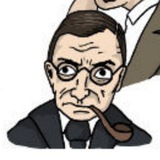
Also, existentialism is when, like...you are too cool to care that smoking kills you, because we are all gonna die anyway and stuff.
Postmodernism, in philosophy, is a term originally coined by Jean-François Lyotard in The Postmodern Condition. He defined it as the condition of society where people were generally skeptical of "metanarratives". A metanarrative, for Lyotard, is a grand narrative of all humanity which we are collectively working towards in some way. For example, that science will break down all truths to reductionist physics, or that a dialectical method will resolve the contradictions in society to a point where humanity can live in an ideal way. Lyotard was using the term denoscriptively, and in a negative sense. In other words, he did not advocate for postmodernism, but was merely describing a collapse in the belief in modernity. The term is often also closely associated with "post structuralism", and Jacques Derrida, and a sort of "irrationality". Like Lyotard, Derrida may have believed that what Enlightenment thinkers thought of as "Reason" wasn't as simple and straightforward as was previously believed, and that the term itself had subjective, historical, and cultural meaning imposed upon it by context in which it was used, so a narrative that we can easily move forward to being "governed by reason" was rooted in the dominate culture imposing their version of "reason". He certainly didn't believe this sort of analysis was "irrationality", and even less so advocated for abandoning reason itself, but advocated for a more careful analysis of what "reason" is. He did this, of course, through what he considered rational discourse.
Unlike these historical and philosophical definitions, the term "postmodernism" is used by many far right pundits as a sort of boogeyman. What they mostly mean by it is some sort of Marxism (who was a very modernism thinker, in that he thought the material dialectic was the Grand Narrative of history), or more vaguely, anyone who is at all to the left of them is an irrational "postmodernist". These people generally advocate for a return to "reason" or "rationality", which somehow always equates to more concentrated power in the hands of people exactly like themselves. They ignore, of course, that no one in history has advocated for being against reason, only for understanding what reason is, and how it operates in our culture today. Of course, they don't care about any of these philosophical debates, they just want to reverse the tide of feminism or whatever. Well, tough luck for them, because it isn't going to happen.
Unlike these historical and philosophical definitions, the term "postmodernism" is used by many far right pundits as a sort of boogeyman. What they mostly mean by it is some sort of Marxism (who was a very modernism thinker, in that he thought the material dialectic was the Grand Narrative of history), or more vaguely, anyone who is at all to the left of them is an irrational "postmodernist". These people generally advocate for a return to "reason" or "rationality", which somehow always equates to more concentrated power in the hands of people exactly like themselves. They ignore, of course, that no one in history has advocated for being against reason, only for understanding what reason is, and how it operates in our culture today. Of course, they don't care about any of these philosophical debates, they just want to reverse the tide of feminism or whatever. Well, tough luck for them, because it isn't going to happen.
By the way, if you are being bullied in school, the advice you will often get from your parents and teachers is to ignore them and they will stop. This is bad advice. Trust me, if you bite them, that will be the end of it.
Diogenes and Plato had several run-ins, which have sort of been passed down through the ages (so who knows how much of it is real). Diogenes usually go the better of him. Examples include:
Plato was discoursing on his theory of ideas and, pointing to the cups on the table before him, said while there are many cups in the world, there is only one 'idea' of a cup, and this cupness precedes the existence of all particular cups. "I can see the cups on the table," said Diogenes, "but I can't see the 'cupness'".
"That's because you have the eyes to see the cup," said Plato, "but", tapping his head with his forefinger, "you don't have the intellect with which to comprehend 'cupness'."
Diogenes walked up to the table, examined a cup and, looking inside, asked, "Is it empty?" Plato nodded. "Where is the 'emptiness' which precedes this empty cup?" asked Diogenes. Plato allowed himself a few moments to collect his thoughts, but Diogenes reached over and, tapping Plato's head with his finger, said "I think you will find here is the 'emptiness'".
and
When Plato gave Socrates's definition of man as "featherless bipeds" and was much praised for the definition, Diogenes plucked a chicken and brought it into Plato's Academy, saying, "Behold! I've brought you a man." After this incident, "with broad flat nails" was added to Plato's definition.
and
Diogenes was knee deep in a stream washing vegetables. Coming up to him, Plato said, "My good Diogenes, if you knew how to pay court to Dionysius, you wouldn't have to wash vegetables." "And," replied Diogenes, "If you knew how to wash vegetables, you wouldn't have to pay court to Dionysius."
But not always:
When invited to the house of Plato, he trampled upon his carpet, saying that he thereby trampled on the vanity of Plato, to which Plato retorted "How much pride you expose to view, Diogenes, by seeming not to be proud."
Diogenes claimed to have gotten his morality from a dog, and would supposed really bite at people's ankles. He said:
The dog is honest; he is not impressed by grand words, fancy clothes, or noscripts. He is loyal to those who are good to him; he bites those who ill-treat him or his friends, and he's not embarrassed to do what he does to live.
Plato was discoursing on his theory of ideas and, pointing to the cups on the table before him, said while there are many cups in the world, there is only one 'idea' of a cup, and this cupness precedes the existence of all particular cups. "I can see the cups on the table," said Diogenes, "but I can't see the 'cupness'".
"That's because you have the eyes to see the cup," said Plato, "but", tapping his head with his forefinger, "you don't have the intellect with which to comprehend 'cupness'."
Diogenes walked up to the table, examined a cup and, looking inside, asked, "Is it empty?" Plato nodded. "Where is the 'emptiness' which precedes this empty cup?" asked Diogenes. Plato allowed himself a few moments to collect his thoughts, but Diogenes reached over and, tapping Plato's head with his finger, said "I think you will find here is the 'emptiness'".
and
When Plato gave Socrates's definition of man as "featherless bipeds" and was much praised for the definition, Diogenes plucked a chicken and brought it into Plato's Academy, saying, "Behold! I've brought you a man." After this incident, "with broad flat nails" was added to Plato's definition.
and
Diogenes was knee deep in a stream washing vegetables. Coming up to him, Plato said, "My good Diogenes, if you knew how to pay court to Dionysius, you wouldn't have to wash vegetables." "And," replied Diogenes, "If you knew how to wash vegetables, you wouldn't have to pay court to Dionysius."
But not always:
When invited to the house of Plato, he trampled upon his carpet, saying that he thereby trampled on the vanity of Plato, to which Plato retorted "How much pride you expose to view, Diogenes, by seeming not to be proud."
Diogenes claimed to have gotten his morality from a dog, and would supposed really bite at people's ankles. He said:
The dog is honest; he is not impressed by grand words, fancy clothes, or noscripts. He is loyal to those who are good to him; he bites those who ill-treat him or his friends, and he's not embarrassed to do what he does to live.
By the way, if you are being bullied in school, the advice you will often get from your parents and teachers is to ignore them and they will stop. This is bad advice. Trust me, if you bite them, that will be the end of it.
Diogenes and Plato had several run-ins, which have sort of been passed down through the ages (so who knows how much of it is real). Diogenes usually got the better of him. Examples include:
Plato was discoursing on his theory of ideas and, pointing to the cups on the table before him, said while there are many cups in the world, there is only one 'idea' of a cup, and this cupness precedes the existence of all particular cups. "I can see the cups on the table," said Diogenes, "but I can't see the 'cupness'".
"That's because you have the eyes to see the cup," said Plato, "but", tapping his head with his forefinger, "you don't have the intellect with which to comprehend 'cupness'."
Diogenes walked up to the table, examined a cup and, looking inside, asked, "Is it empty?" Plato nodded. "Where is the 'emptiness' which precedes this empty cup?" asked Diogenes. Plato allowed himself a few moments to collect his thoughts, but Diogenes reached over and, tapping Plato's head with his finger, said "I think you will find here is the 'emptiness'".
and
When Plato gave Socrates's definition of man as "featherless bipeds" and was much praised for the definition, Diogenes plucked a chicken and brought it into Plato's Academy, saying, "Behold! I've brought you a man." After this incident, "with broad flat nails" was added to Plato's definition.
and
Diogenes was knee deep in a stream washing vegetables. Coming up to him, Plato said, "My good Diogenes, if you knew how to pay court to Dionysius, you wouldn't have to wash vegetables." "And," replied Diogenes, "If you knew how to wash vegetables, you wouldn't have to pay court to Dionysius."
But not always:
When invited to the house of Plato, he trampled upon his carpet, saying that he thereby trampled on the vanity of Plato, to which Plato retorted "How much pride you expose to view, Diogenes, by seeming not to be proud."
Diogenes claimed to have gotten his morality from a dog, and would supposedly really bite at people's ankles. He said:
The dog is honest; he is not impressed by grand words, fancy clothes, or noscripts. He is loyal to those who are good to him; he bites those who ill-treat him or his friends, and he's not embarrassed to do what he does to live.
Plato was discoursing on his theory of ideas and, pointing to the cups on the table before him, said while there are many cups in the world, there is only one 'idea' of a cup, and this cupness precedes the existence of all particular cups. "I can see the cups on the table," said Diogenes, "but I can't see the 'cupness'".
"That's because you have the eyes to see the cup," said Plato, "but", tapping his head with his forefinger, "you don't have the intellect with which to comprehend 'cupness'."
Diogenes walked up to the table, examined a cup and, looking inside, asked, "Is it empty?" Plato nodded. "Where is the 'emptiness' which precedes this empty cup?" asked Diogenes. Plato allowed himself a few moments to collect his thoughts, but Diogenes reached over and, tapping Plato's head with his finger, said "I think you will find here is the 'emptiness'".
and
When Plato gave Socrates's definition of man as "featherless bipeds" and was much praised for the definition, Diogenes plucked a chicken and brought it into Plato's Academy, saying, "Behold! I've brought you a man." After this incident, "with broad flat nails" was added to Plato's definition.
and
Diogenes was knee deep in a stream washing vegetables. Coming up to him, Plato said, "My good Diogenes, if you knew how to pay court to Dionysius, you wouldn't have to wash vegetables." "And," replied Diogenes, "If you knew how to wash vegetables, you wouldn't have to pay court to Dionysius."
But not always:
When invited to the house of Plato, he trampled upon his carpet, saying that he thereby trampled on the vanity of Plato, to which Plato retorted "How much pride you expose to view, Diogenes, by seeming not to be proud."
Diogenes claimed to have gotten his morality from a dog, and would supposedly really bite at people's ankles. He said:
The dog is honest; he is not impressed by grand words, fancy clothes, or noscripts. He is loyal to those who are good to him; he bites those who ill-treat him or his friends, and he's not embarrassed to do what he does to live.
Also...I thought the sign was strictly prohibiting NOT doing those things.
Also, make sure to exercise your own radical freedom, and buy the t-shirt of panel 2.
Legends say there was a man once who read all the way through Phenomenology of Spirit, cover to cover, but the moment he read the final page he died of exhaustion.
I don't know what kind of explanation you are really expecting. A dialectical one, I guess? Good luck.