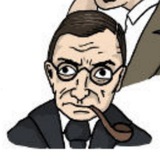
How about this: no one can say anything that isn't grounded in empirical observation, except for Wittgeinstein.
In the Tractatus Logico-Philosophicus, Wittgenstein more or less lays out a position that any statement which does not directly link to an empirical observation is "nonsense". Of course, it wasn't hard to realize that most, or perhaps all, of the very book he had written would then have to be counted as nonsense. He got around this probably thus:
My propositions serve as elucidations in the following way: anyone who understands me eventually recognizes them as nonsensical, when he has used themas stepsto climb beyond them. (He must, so to speak, throw away the ladder after he has climbed up it.)
He must transcend these propositions, and then he will see the world aright.
So in other words, no one is allowed to give nonsensical statements, starting the exact moment after they read Wittgenstein. A rather strange solution, to be sure, but what can you do I guess?
My propositions serve as elucidations in the following way: anyone who understands me eventually recognizes them as nonsensical, when he has used themas stepsto climb beyond them. (He must, so to speak, throw away the ladder after he has climbed up it.)
He must transcend these propositions, and then he will see the world aright.
So in other words, no one is allowed to give nonsensical statements, starting the exact moment after they read Wittgenstein. A rather strange solution, to be sure, but what can you do I guess?
👍1
According to Kant's moral philosophy, actions such as lying were not permissible because they could not be coherently "universalized". So if everyone lied all the time, it would undermine the very concept of lying, because no one would believe anything anyone said, making lying pointless. In addition, Kant believe that for an action to be moral, it had to be done out of a sense of duty. If you save someone from a burning building because you want a reward, or because you will be punished if you don't do it, you aren't doing anything moral - you must do it out of your moral duty to save them.
Also there is no point to anything and then you die. But you are super free in the meantime, so...
Nozick: "so as you can see, the minimum wage is oppressive because it prevents people from making free decisions, like freely choosing between working for starvation wages or literally starving."
Heraclitus thought everything was in an endless state of change, so we could never 'step into the same river twice'.
Descartes tried to methodically doubt everything, much like children do when they ask an endless stream of 'whys'.
Hume doubted that inductive reasoning was strictly rational, so even if someone had past behavior such as cheating, there was no 'rational' reason to use that to predict future events.
Nietzsche was a loser.
Hegel was long winded.
Nozick's entire philosophical project was justifying extremely wealth disparity as having arose from 'free' decisions.
Descartes tried to methodically doubt everything, much like children do when they ask an endless stream of 'whys'.
Hume doubted that inductive reasoning was strictly rational, so even if someone had past behavior such as cheating, there was no 'rational' reason to use that to predict future events.
Nietzsche was a loser.
Hegel was long winded.
Nozick's entire philosophical project was justifying extremely wealth disparity as having arose from 'free' decisions.
True virtue is to only bother Aristotle with asinine objections to his theories about half the time.