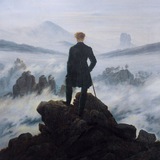
“My conception of freedom. — The value of a thing sometimes does not lie in that which one attains by it, but in what one pays for it — what it costs us. I shall give an example. Liberal institutions cease to be liberal as soon as they are attained: later on, there are no worse and no more thorough injurers of freedom than liberal institutions. Their effects are known well enough: they undermine the will to power; they level mountain and valley, and call that morality; they make [one] small, cowardly, and hedonistic [genüsslich] — every time it is the herd animal that triumphs with them. Liberalism: in other words, herd-animalization.
These same institutions produce quite different effects while they are still being fought for; then they really promote freedom in a powerful way. On closer inspection it is war that produces these effects, the war for liberal institutions, which, as a war, permits illiberal instincts to continue. And war educates for freedom. For what is freedom? That one has the will to assume responsibility for oneself. That one maintains the distance which separates us. That one becomes more indifferent to difficulties, hardships, privation, even to life itself. That one is prepared to sacrifice human beings for one's cause, not excluding oneself. Freedom means that the manly instincts which delight in war and victory dominate over other instincts, for example, over those of ‘pleasure.’ The human being who has become free — and how much more the spirit who has become free — spits on the contemptible type of well-being dreamed of by shopkeepers, Christians, cows, Englishmen, and other democrats. The free man is a warrior.”
— Friedrich Nietzsche,
Twilight of the Idols (§9. 38)
These same institutions produce quite different effects while they are still being fought for; then they really promote freedom in a powerful way. On closer inspection it is war that produces these effects, the war for liberal institutions, which, as a war, permits illiberal instincts to continue. And war educates for freedom. For what is freedom? That one has the will to assume responsibility for oneself. That one maintains the distance which separates us. That one becomes more indifferent to difficulties, hardships, privation, even to life itself. That one is prepared to sacrifice human beings for one's cause, not excluding oneself. Freedom means that the manly instincts which delight in war and victory dominate over other instincts, for example, over those of ‘pleasure.’ The human being who has become free — and how much more the spirit who has become free — spits on the contemptible type of well-being dreamed of by shopkeepers, Christians, cows, Englishmen, and other democrats. The free man is a warrior.”
— Friedrich Nietzsche,
Twilight of the Idols (§9. 38)
“How is freedom measured in individuals and peoples? According to the resistance which must be overcome, according to the exertion required, to remain on top. The highest type of free men should be sought where the highest resistance is constantly overcome: five steps from tyranny, close to the threshold of the danger of servitude. This is true psychologically if by ‘tyrants’ are meant inexorable and fearful instincts that provoke the maximum of authority and discipline against themselves… This is true politically too; one need only go through history. The peoples who had some value, attained some value, never attained it under liberal institutions: it was great danger that made something of them that merits respect. Danger alone acquaints us with our own resources, our virtues, our armor and weapons, our spirit, and forces us to be strong. First principle: one must need to be strong — otherwise one will never become strong.
Those large hothouses for the strong — for the strongest kind of human being that has so far been known — the aristocratic commonwealths of the type of Rome or Venice, understood freedom exactly in the sense in which I understand it: as something one has or does not have, something one wants, something one conquers.”
— Friedrich Nietzsche,
Twilight of the Idols (§9. 38)
Those large hothouses for the strong — for the strongest kind of human being that has so far been known — the aristocratic commonwealths of the type of Rome or Venice, understood freedom exactly in the sense in which I understand it: as something one has or does not have, something one wants, something one conquers.”
— Friedrich Nietzsche,
Twilight of the Idols (§9. 38)
It is with morality [Sittlichkeit] like it is with the family. Many people break with morals [Sitte], but with the conception of ‘morality’ it is more difficult. Morality is the ‘idea’ of morals, their spiritual power, their power over the conscience; morals, on the other hand, are too material to rule over the spirit, and do not hold captive a ‘spiritual’ man, a so-called independent, a ‘freethinker.’*
* Freigeist : literally ‘free spirit’; can refer both to freethinkers and to libertines.
Because faith in Protestantism became a more inward faith, the enslavement has also become a more inward enslavement; the person has taken these sanctities into himself, intertwined them with all his hopes and endeavors, made them into a ‘matter of conscience,’ prepared from them a ‘sacred duty’ for himself. Therefore, what the Protestant's conscience cannot get away from is sacred to him, and conscientiousness most clearly defines his character.
Protestantism has actually made the human being into a ‘secret police state.’ The spy and lookout, ‘conscience,’ monitors every movement of the mind, and every thought and action is a ‘matter of conscience,’ i.e., a police matter. The Protestant consists in this fragmentation of the human being into ‘natural desire’ [Naturtrieb] and ‘conscience’ (inner populace [Pöbel] and inner police). Biblical reason (in the place of the Catholic ‘Church reason’) is considered sacred, and this feeling and consciousness that the biblical word is sacred is called—conscience. With this, then, sacredness gets ‘shoved into one's conscience.’ If one doesn't free himself from conscience, the consciousness of the sacred, he can indeed act unconscientiously, but never without conscience.
The Catholic finds himself satisfied when he fulfills the command; the Protestant acts to ‘the best of his knowledge [Wissen] and conscience [Gewissen].’ The Catholic is in fact only a layman; the Protestant is himself a clergyman [Geistlicher]. This is precisely the progress of the Reformation period over the Middle Ages, and also its curse: that the spiritual [Geistliche] became complete.
— Max Stirner, The Unique and Its Property
“The whole of the West no longer possesses the instincts out of which institutions grow, out of which a future grows: perhaps nothing antagonizes its ‘modern spirit’ so much. One lives for the day, one lives very fast, one lives very irresponsibly: precisely this is called ‘freedom.’ …
With the growing indulgence of love matches, the very foundation of marriage has been eliminated, that which alone makes an institution of it. Never, absolutely never, can an institution be founded on an idiosyncrasy; one cannot, as I have said, found marriage on ‘love’ — it can be founded on the sex drive, on the property drive (wife and child as property), on the drive to dominate, which continually organizes for itself the smallest structure of domination, the family, and which needs children and heirs to hold fast — physiologically too — to an attained measure of power, influence, and wealth, in order to prepare for long-range tasks, for a solidarity of instinct between the centuries. Marriage as an institution involves the affirmation of the largest and most enduring form of organization: when society cannot affirm itself as a whole, down to the most distant generations, then marriage has altogether no meaning. Modern marriage has lost its meaning — consequently one abolishes it.”
— Friedrich Nietzsche,
Twilight of the Idols (§9. 39)
With the growing indulgence of love matches, the very foundation of marriage has been eliminated, that which alone makes an institution of it. Never, absolutely never, can an institution be founded on an idiosyncrasy; one cannot, as I have said, found marriage on ‘love’ — it can be founded on the sex drive, on the property drive (wife and child as property), on the drive to dominate, which continually organizes for itself the smallest structure of domination, the family, and which needs children and heirs to hold fast — physiologically too — to an attained measure of power, influence, and wealth, in order to prepare for long-range tasks, for a solidarity of instinct between the centuries. Marriage as an institution involves the affirmation of the largest and most enduring form of organization: when society cannot affirm itself as a whole, down to the most distant generations, then marriage has altogether no meaning. Modern marriage has lost its meaning — consequently one abolishes it.”
— Friedrich Nietzsche,
Twilight of the Idols (§9. 39)
Dionysian Anarchism
“The whole of the West no longer possesses the instincts out of which institutions grow, out of which a future grows: perhaps nothing antagonizes its ‘modern spirit’ so much. One lives for the day, one lives very fast, one lives very irresponsibly: precisely…
A few of the quotes shared here, especially from Nietzsche, although rarely, might be a little reactionary, but in that case... they're only shared if they seem interesting in some sense, but not out of (complete) agreement with the quote...
as it's well known that Nietzsche sometimes said quite radical, anarchistic things and at other times reactionary things.
for example, here, in the quote tagged above...
whether (more likely) favorably or critically, Nietzsche at any rate accurately described the nature of the marriage institution as being founded on domination, that it can't be founded on love (that resonates with, e.g., Emma Goldman's critique of marriage)... etc
as it's well known that Nietzsche sometimes said quite radical, anarchistic things and at other times reactionary things.
for example, here, in the quote tagged above...
whether (more likely) favorably or critically, Nietzsche at any rate accurately described the nature of the marriage institution as being founded on domination, that it can't be founded on love (that resonates with, e.g., Emma Goldman's critique of marriage)... etc
Der Einzige
Nicely put!!
To expand upon it...
Nietzsche HATED the antisemites of his time, including his own sister and brother-in-law, and cut off relations with many people simply because they were antisemites. He took it so seriously that it even seems a little amazing given that he was not even jewish. He, in fact, considered himself an anti-antisemite.
Nietzsche literally wrote: “I will have all antisemites shot.” (Nietzsche's letter to F. Overbeck, 4 Jan 1889)
He was also generally critical of the racism of his time, although he still certainly had some racist prejudices of his own. He was in favor of mixing of races.
Like J.W. von Goethe—whom he praised—and Arthur Schopenhauer, F.W.J. von Schelling and other great minds of that time from Germany, Nietzsche was an anti-nationalist, a staunch critic of nationalism, foremost of all German nationalism. He in fact hated German culture, criticizing it in the strongest terms. He hated Germans so much that he assigned himself a (although dubious) Polish ancestry, claiming that he had not a single drop of "bad German blood".
Nietzsche was also for the most part very critical of statism. He wrote some great, although brief, critiques of the State, calling it the “coldest of all cold monsters” (TSZ). He considered the State to be an antagonist of culture (see this)
All in all, he was against nationalism, antisemitism, liberalism/capitalism, statism... often displaying very anarchist tendencies, in a fundamental sense even.
Most of the quotes of Nietzsche that I post on this channel are just of this sort: anarchistic ones. (I have posted many already, over a hundred... and will post more in the future)
Decades before Foucault and others, and even before Nazis appropriated it, Nietzsche's philosophy was popular among a section of anarchists, especially individualist anarchists, who considered Nietzsche a great influence alongside Stirner. There were already beautiful and powerful anarchist interpretations by many anarchist thinkers, such as by Emma Goldman, Renzo Novatore, Rudolf Rocker, Gustav Landauer, etc.
In addition to the aforementioned aspects, Nietzsche was also a critic of work, and, like Stirner, a critic of morality. And, although one shouldn't overemphasize the similarities of Stirner and Nietzsche, there are some undeniable similarities in their ideas and are both definitely very individualist and anarchistic (although Stirner would come out as the more preferable thinker given Nietzsche's frequent reactionary ramblings).
Considering all this, it's very hard to synthesize Nietzsche's philosophy with fascism, even in spite of some of his reactionary views or remarks.
There's no doubt that fascism is like ressentiment par excellence...
It is like the antithesis of much of Nietzsche's philosophy...
Unfortunate that such a hideous reactionary appropriation of Nietzsche is still popular while the anarchist interpretations are still on the fringe (but well, that's just what we'd expect)
Nietzsche HATED the antisemites of his time, including his own sister and brother-in-law, and cut off relations with many people simply because they were antisemites. He took it so seriously that it even seems a little amazing given that he was not even jewish. He, in fact, considered himself an anti-antisemite.
Nietzsche literally wrote: “I will have all antisemites shot.” (Nietzsche's letter to F. Overbeck, 4 Jan 1889)
He was also generally critical of the racism of his time, although he still certainly had some racist prejudices of his own. He was in favor of mixing of races.
Like J.W. von Goethe—whom he praised—and Arthur Schopenhauer, F.W.J. von Schelling and other great minds of that time from Germany, Nietzsche was an anti-nationalist, a staunch critic of nationalism, foremost of all German nationalism. He in fact hated German culture, criticizing it in the strongest terms. He hated Germans so much that he assigned himself a (although dubious) Polish ancestry, claiming that he had not a single drop of "bad German blood".
Nietzsche was also for the most part very critical of statism. He wrote some great, although brief, critiques of the State, calling it the “coldest of all cold monsters” (TSZ). He considered the State to be an antagonist of culture (see this)
All in all, he was against nationalism, antisemitism, liberalism/capitalism, statism... often displaying very anarchist tendencies, in a fundamental sense even.
Most of the quotes of Nietzsche that I post on this channel are just of this sort: anarchistic ones. (I have posted many already, over a hundred... and will post more in the future)
Decades before Foucault and others, and even before Nazis appropriated it, Nietzsche's philosophy was popular among a section of anarchists, especially individualist anarchists, who considered Nietzsche a great influence alongside Stirner. There were already beautiful and powerful anarchist interpretations by many anarchist thinkers, such as by Emma Goldman, Renzo Novatore, Rudolf Rocker, Gustav Landauer, etc.
In addition to the aforementioned aspects, Nietzsche was also a critic of work, and, like Stirner, a critic of morality. And, although one shouldn't overemphasize the similarities of Stirner and Nietzsche, there are some undeniable similarities in their ideas and are both definitely very individualist and anarchistic (although Stirner would come out as the more preferable thinker given Nietzsche's frequent reactionary ramblings).
Considering all this, it's very hard to synthesize Nietzsche's philosophy with fascism, even in spite of some of his reactionary views or remarks.
There's no doubt that fascism is like ressentiment par excellence...
It is like the antithesis of much of Nietzsche's philosophy...
Unfortunate that such a hideous reactionary appropriation of Nietzsche is still popular while the anarchist interpretations are still on the fringe (but well, that's just what we'd expect)
👍1
We lose ourselves in each other's arms…
find ourselves anew in each other's souls.
The fire of our passions can only be put down by the calm of our love,
but nay, they will only add to each other and burn down the world.
You and I, our union, a beautiful madness
like a double pendulum, a deep chaos.
Each of us, an uncontrollable frenzy...
and together are we a violent great sea.
find ourselves anew in each other's souls.
The fire of our passions can only be put down by the calm of our love,
but nay, they will only add to each other and burn down the world.
You and I, our union, a beautiful madness
like a double pendulum, a deep chaos.
Each of us, an uncontrollable frenzy...
and together are we a violent great sea.
“‘Freedom which I do not mean.’ — In times like these, abandonment to one's instincts is one calamity more. Our instincts contradict, disturb, destroy each other; I have already defined what is modern as physiological self-contradiction. Rationality in education would require that under iron pressure at least one of these instinct systems be paralyzed to permit another to gain in power, to become strong, to become master. Today the individual still has to be made possible by being pruned: possible here means whole. The reverse is what happens: the claim for independence, for free development, for laisser aller is pressed most hotly by the very people for whom no reins would be too strict. This is true in politics, this is true in art. But that is a symptom of decadence: our modern conception of ‘freedom’ is one more proof of the degeneration of the instincts.”
— Friedrich Nietzsche,
Twilight of the Idols (§9. 41)
— Friedrich Nietzsche,
Twilight of the Idols (§9. 41)
🤔1
👍2🤡1
Forwarded from mehkum-e-hikmah
The White gender binary has been imposed onto non-Western people via continuing processes of either direct or indirect colonisation. While many pre-colonial societies surely did not approve of gender variance, in many pre-colonial societies however, gender was not binary, and there are numerous documented examples of gender variance and gender nonconformity. In many pre-colonial societies, individuals who lived outside of the binary as a “third sex” or “third gender” were often considered sacred and revered by the community, such as the Hijras of India, the Mahu of Hawaii and Tahiti, or the Two Spirit people of the “Americas”. Hijras and Two Spirit people now face demonisation. Gender for the Dagaaba tribe of Ghana, Burkina Faso and the Ivory Coast was assigned based on “energy”, not anatomy. Some communities also continue to recognise the existence of five genders, such as the Bugis people of Indonesia.
🤡1
Forwarded from Disobey
It is my nature to fight as soon as I see wrongs to be made right. So after I read H.G. Wells and Marx and learned what I did, I joined a Socialist branch. I made up my mind to do something. And the best thing seemed to join a fighting party and help their propaganda. That was four years ago. I have been an [IWW Syndicalist] since.
I became an IWW because I found out that the Socialist party was too slow. It is sinking in the political bog. It is almost, if not quite, impossible for the party to keep its revolutionary character so long as it occupies a place under the government and seeks office under it. The government does not stand for interests the Socialist party is supposed to represent.
The true task is to unite and organize all workers on an economic basis, and it is the workers themselves who must secure freedom for themselves, who must grow strong. Nothing can be gained by political action. That is why I became an IWW.
— Helen Keller, Why I Became an IWW
❤1
Dionysian Anarchism
War is another thing. I am by nature warlike. To attack is among my instincts. So said Friedrich Nietzsche, the strong and sublime bard of the will and of heroic beauty. And the second anarchist reason that serves to defend the terroristic, expropriating…
“The criminal and what is related to him. — The criminal type is the type of the strong human being under unfavorable circumstances: a strong human being made sick. He lacks the wilderness, a somehow freer and more dangerous environment and form of existence, where everything that is weapons and armor in the instinct of the strong human being has its rightful place. His virtues are ostracized by society; the most vivid drives with which he is endowed soon grow together with the depressing affects — with suspicion, fear, and dishonor. Yet this is almost the recipe for physiological degeneration. Whoever must do secretly, with long suspense, caution, and cunning, what he can do best and would like most to do, becomes anemic; and because he always harvests only danger, persecution, and calamity from his instincts, his attitude to these instincts is reversed too, and he comes to experience them fatalistically. It is society, our tame, mediocre, emasculated society, in which a natural human being, who comes from the mountains or from the adventures of the sea, necessarily degenerates into a criminal. Or almost necessarily; for there are cases in which such a man proves stronger than society…
The testimony of Dostoevsky is relevant to this problem — Dostoevsky, the only psychologist, incidentally, from whom I had something to learn; he ranks among the most beautiful strokes of fortune in my life, even more than my discovery of Stendhal. This profound human being, who was ten times right in his low estimate of the superficial Germans, lived for a long time among the convicts in Siberia — hardened criminals for whom there was no way back to society — and found them very different from what he himself had expected: they were carved out of just about the best, hardest, and most valuable wood that grows anywhere on Russian soil.”
— Friedrich Nietzsche,
Twilight of the Idols (§9. 45)
The testimony of Dostoevsky is relevant to this problem — Dostoevsky, the only psychologist, incidentally, from whom I had something to learn; he ranks among the most beautiful strokes of fortune in my life, even more than my discovery of Stendhal. This profound human being, who was ten times right in his low estimate of the superficial Germans, lived for a long time among the convicts in Siberia — hardened criminals for whom there was no way back to society — and found them very different from what he himself had expected: they were carved out of just about the best, hardest, and most valuable wood that grows anywhere on Russian soil.”
— Friedrich Nietzsche,
Twilight of the Idols (§9. 45)