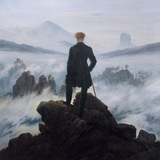
“Let us generalize the case of the criminal: let us think of men so constituted that for one reason or another, they lack public approval and know that they are not felt to be beneficent or useful — that chandala feeling that one is not considered equal, but an outcast, unworthy, contaminating. All men so constituted have a subterranean hue to their thoughts and actions; everything about them becomes paler than in those whose existence is touched by daylight. Yet almost all forms of existence which we consider distinguished today once lived in this half tomblike atmosphere: the scientific character, the artist, the genius, the free spirit, the actor, the merchant, the great discoverer. As long as the priest was considered the supreme type, every valuable kind of human being was devaluated. The time will come, I promise, when the priest will be considered the lowest type, our chandala, the most mendacious, the most indecent kind of human being.
I call attention to the fact that even now — under the mildest regimen of morals which has ever ruled on earth, or at least in Europe — every deviation, every long, all-too-long underneath, every unusual or opaque form of existence, brings one closer to that type which is perfected in the criminal. All innovators of the spirit must for a time bear the pallid and fatal mark of the chandala on their foreheads — not because they are considered that way by others, but because they themselves feel the terrible cleavage which separates them from everything that is customary or reputable. Almost every genius knows, as one stage of his development, the ‘Catilinarian existence’ — a feeling of hatred, revenge, and rebellion against everything which already is, which no longer becomes.”
— Friedrich Nietzsche,
Twilight of the Idols (§9. 45)
I call attention to the fact that even now — under the mildest regimen of morals which has ever ruled on earth, or at least in Europe — every deviation, every long, all-too-long underneath, every unusual or opaque form of existence, brings one closer to that type which is perfected in the criminal. All innovators of the spirit must for a time bear the pallid and fatal mark of the chandala on their foreheads — not because they are considered that way by others, but because they themselves feel the terrible cleavage which separates them from everything that is customary or reputable. Almost every genius knows, as one stage of his development, the ‘Catilinarian existence’ — a feeling of hatred, revenge, and rebellion against everything which already is, which no longer becomes.”
— Friedrich Nietzsche,
Twilight of the Idols (§9. 45)
Forwarded from Disobey
“If a man who thinks he is a king is mad, a king who thinks he is a king is no less so.”
Dionysian Anarchism
“When someone hides something behind a bush and looks for it again in the same place and finds it there as well, there is not much to praise in such seeking and finding. Yet this is how matters stand regarding seeking and finding ‘truth’ within the realm of…
science, "objective" truth
“Here the view is free. — It may be nobility of the soul when a philosopher is silent, it may be love when he contradicts himself; and he who has knowledge maybe polite enough to lie. It has been said, not without delicacy: II est indigne des grand coeurs de repandre le trouble qu'ils ressentent [it is unworthy of great hearts to pour out the disturbance they feel]. But one must add that not to be afraid of the most unworthy may also be greatness of the soul.”
— Friedrich Nietzsche,
Twilight of the Idols (§9. 46)
— Friedrich Nietzsche,
Twilight of the Idols (§9. 46)
Dionysian Anarchism
Christian denial of life: designating desires of the flesh as evil etc
“Strict perseverance in significant and exquisite gestures together with the obligation to live only with people who do not ‘let themselves go’ — that is quite enough for one to become significant and exquisite, and in two or three generations all this becomes inward. It is decisive for the lot of a people and of humanity that culture should begin in the right place — not in the ‘soul’ (as was the fateful superstition of the priests and half-priests): the right place is the body, the gesture, the diet, physiology; the rest follows from that. Therefore the Greeks remain the first cultural event in history: they knew, they did, what was needed; and Christianity, which despised the body, has been the greatest misfortune of humanity so far.”
— Friedrich Nietzsche,
Twilight of the Idols (§9. 47)
— Friedrich Nietzsche,
Twilight of the Idols (§9. 47)
Liberalism as a whole has a deadly enemy, an invincible opposite, as God has the devil: by the side of man stands always the un-man [Unmensch], the individual, the egoist. State, society, humanity, do not master this devil.
what concept is the highest to the state? Doubtless that of being a really human society, a society in which every one who is really a man, that is, not an un-man, can obtain admission as a member. Let a state's tolerance go ever so far, toward an un-man and toward what is inhuman it ceases. And yet this ‘un-man’ is a man, yet the ‘inhuman’ itself is something human, yes, possible only to a man, not to any beast; it is, in fact, something ‘possible to man’. But, although every un-man is a man, yet the state excludes him; it locks him up, or transforms him from an inhabitant of the state into an inhabitant of the prison (inhabitant of the lunatic asylum or hospital, according to communism).
To say in blunt words what an un-man is is not particularly hard: it is a man who does not correspond to the concept man, as the inhuman is something human which is not conformed to the concept of the human. Logic calls this a ‘self-contradictory judgement’. Would it be permissible for one to pronounce this judgement, that one can be a man without being a man, if he did not admit the hypothesis that the concept of man can be separated from the existence, the essence from the appearance?
— Max Stirner
Dionysian Anarchism
The same applies to Max Stirner's concept of der Einzige (the Unique One)… It's a masculine noun, in terms of grammatical gender, but actually the word is gender-neutral. So while the original 1907 English translation of Stirner's Der Einzige und sein Eigentum…
Similar to what's pointed out here, most of the references to "man" in Stirner's work are actually gender-neutral references to "human" [Mensch]
So Stirner was critiquing the absolutist concept of human; a critique of "humanism" in the broad sense.
Actually a significant portion of the book* deals with this critique of humanism.
What's really cool is that this critique can also be advanced against gender, against the concepts of man and woman; and against any sacred concepts and oppressive categories in general.
* The Ego and Its Own (1907 Eng. transl.) / The Unique and Its Property (2017 Eng. transl.) / Der Einzige und sein Eigentum (1844 original, German)
So Stirner was critiquing the absolutist concept of human; a critique of "humanism" in the broad sense.
Actually a significant portion of the book* deals with this critique of humanism.
What's really cool is that this critique can also be advanced against gender, against the concepts of man and woman; and against any sacred concepts and oppressive categories in general.
* The Ego and Its Own (1907 Eng. transl.) / The Unique and Its Property (2017 Eng. transl.) / Der Einzige und sein Eigentum (1844 original, German)
Dionysian Anarchism
not against socialists, but against sacred socialists
On a different note, it should be noted that Stirner's critique of socialism/communism was, in fact, only directed against sacred socialism/communism...
It's significant that here Stirner explicitly mentions that she's not against socialism but only against sacred socialism; she however doesn't say anything similar for capitalism etc.
Indeed, much of her book was an attack on liberalism, which is the fundamental ideological framework behind capitalism.
In fact, she noscriptd the section where she critiques socialism/socialists, as "social liberalism", indicating that her critique was against those tendencies of socialism which she saw as an extension or legacy of liberalism and the alienation rooted in it, which in turn was inherited from (the feudal) Christianity or religion in general.
It's significant that here Stirner explicitly mentions that she's not against socialism but only against sacred socialism; she however doesn't say anything similar for capitalism etc.
Indeed, much of her book was an attack on liberalism, which is the fundamental ideological framework behind capitalism.
In fact, she noscriptd the section where she critiques socialism/socialists, as "social liberalism", indicating that her critique was against those tendencies of socialism which she saw as an extension or legacy of liberalism and the alienation rooted in it, which in turn was inherited from (the feudal) Christianity or religion in general.
source
when a fascist says something shitty about minorities/marginalized people, it isn't the best response to merely argue whether it's more or less shitty as they say... but to challenge their very discourse fundamentally
counter-information can only take you so far... the fascists already know that
when a fascist says something shitty about minorities/marginalized people, it isn't the best response to merely argue whether it's more or less shitty as they say... but to challenge their very discourse fundamentally
counter-information can only take you so far... the fascists already know that
THE NEW IDOL.
Somewhere there are still peoples and herds, but not with us, my brethren: here there are states.
A state? What is that? Well! open now your ears unto me, for now will I say unto you my word concerning the death of peoples.
A state, is called the coldest of all cold monsters. Coldly lieth it also; and this lie creepeth from its mouth: “I, the state, am the people.”
It is a lie! Creators were they who created peoples, and hung a faith and a love over them: thus they served life.
Destroyers, are they who lay snares for many, and call it the state: they hang a sword and a hundred cravings over them.
Where there is still a people, there the state is not understood, but hated as the evil eye, and as sin against customs and rights.
This sign I give unto you: every people speaketh its language of good and evil: this its neighbour understandeth not. Its language hath it devised for itself in customs and rights.
But the state lieth in all languages of good and evil; and whatever it saith it lieth; and whatever it hath it hath stolen.
False is everything in it; with stolen teeth it biteth, the biting one. False are even its bowels.
Confusion of language of good and evil; this sign I give unto you as the sign of the state. Verily, the will to death, indicateth this sign! Verily, it beckoneth unto the preachers of death!
Many too many are born: for the superfluous ones was the state devised!
See just how it enticeth them to it, the many-too-many! How it swalloweth and cheweth and recheweth them!
“On earth there is nothing greater than I: it is I who am the regulating finger of God”—thus roareth the monster. And not only the long-eared and short-sighted fall upon their knees!
Ah! even in your ears, ye great souls, it whispereth its gloomy lies! Ah! it findeth out the rich hearts which willingly lavish themselves!
Yea, it findeth you out too, ye conquerors of the old God! Weary ye became of the conflict, and now your weariness serveth the new idol!
Heroes and honourable ones, it would fain set up around it, the new idol! Gladly it basketh in the sunshine of good consciences,—the cold monster!
Everything will it give you, if ye worship it, the new idol: thus it purchaseth the lustre of your virtue, and the glance of your proud eyes.
It seeketh to allure by means of you, the many-too-many! Yea, a hellish artifice hath here been devised, a death-horse jingling with the trappings of divine honours!
Yea, a dying for many hath here been devised, which glorifieth itself as life: verily, a hearty service unto all preachers of death!
The state, I call it, where all are poison-drinkers, the good and the bad: the state, where all lose themselves, the good and the bad: the state, where the slow suicide of all—is called “life.”
Just see these superfluous ones! They steal the works of the inventors and the treasures of the wise. Culture, they call their theft—and everything becometh sickness and trouble unto them!
Just see these superfluous ones! Sick are they always; they vomit their bile and call it a newspaper. They devour one another, and cannot even digest themselves.
Just see these superfluous ones! Wealth they acquire and become poorer thereby. Power they seek for, and above all, the lever of power, much money—these impotent ones!
See them clamber, these nimble apes! They clamber over one another, and thus scuffle into the mud and the abyss.
Towards the throne they all strive: it is their madness—as if happiness sat on the throne! Ofttimes sitteth filth on the throne.—and ofttimes also the throne on filth.
Madmen they all seem to me, and clambering apes, and too eager. Badly smelleth their idol to me, the cold monster: badly they all smell to me, these idolaters.
❤1