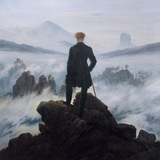
To repeat shortly what has been said: the interests of the tutelary Government and the interests of religion go hand-in-hand, so that when the latter begins to decay the foundations of the State are also shaken. The belief in a divine regulation of political affairs, in a mystery in the existence of the State, is of religious origin: if religion disappears, the State will inevitably lose its old veil of Isis, and will no longer arouse veneration. The sovereignty of the people, looked at closely, serves also to dispel the final fascination and superstition in the realm of these sentiments; modern democracy is the historical form of the decay of the State. The outlook which results from this certain decay is not, however, unfortunate in every respect; the wisdom and the selfishness of men are the best developed of all their qualities; when the State no longer meets the demands of these impulses, chaos will least of all result, but a still more appropriate expedient than the State will get the mastery over the State. How man organising forces have already been seen to die out! For example, that of the gens or clan which for millennia was far mightier than the power of the family, and indeed already ruled and regulated long before the latter existed. We ourselves see the important notions of the right and might of the family, which once possessed the supremacy as far as the Roman system extended, always becoming paler and feebler. In the same way a later generation will also see the State become meaningless in certain parts of the world, – an idea which many contemporaries can hardly contemplate without alarm and horror.
— Friedrich Nietzsche,
Human, All Too Human (Part I) (472)
Socialism, with regard to its means. — [State] Socialism is the fantastic younger brother of almost decrepit despotism, which it wants to succeed; its efforts are, therefore, in the deepest sense reactionary. For it desires such an amount of State power as only despotism has possessed, – indeed, it outdoes all the past, in that it aims at the complete annihilation of the individual, whom it deems an unauthorised luxury of nature, which is to be improved by it into an appropriate organ of the general community. Owing to its relationship, it always appears in proximity to excessive developments of power, like the old typical socialist, Plato, at the court of the Sicilian tyrant; it desires (and under certain circumstances furthers) the Cæsarian despotism of this century, because, as has been said, it would like to become its heir. But even this inheritance would not suffice for its objects, it requires the most submissive prostration of all citizens before the absolute State, such as has never yet been realised; and as it can no longer even count upon the old religious piety towards the State, but must rather strive involuntarily and continuously for the abolition thereof, – because it strives for the abolition of all existing States, – it can only hope for existence occasionally, here and there for short periods, by means of the extremest terrorism. It is therefore silently preparing itself for reigns of terror, and drives the word “justice” like a nail into the heads of the half-cultured masses in order to deprive them completely of their understanding (after they had already suffered seriously from the half-culture), and to provide them with a good conscience for the bad game they are to play. Socialism may serve to teach, very brutally and impressively, the danger of all accumulations of State power, and may serve so far to inspire distrust of the State itself. When its rough voice strikes up the way-cry “as much State as possible,” the shout at first becomes louder than ever, – but soon the opposition cry also breaks forth, with so much greater force: “as little State as possible.”
— Friedrich Nietzsche,
Human, All Too Human (Part I) (473)
The development of the mind feared by the State. — The Greek polis was, like every organising political power, exclusive and distrustful of the growth of culture; its powerful fundamental impulse seemed almost solely to have a paralysing and obstructive effect thereon. It did not want to let any history or any becoming have a place in culture; the education laid down in the State laws was meant to be obligatory on all generations to keep them at one stage of development. Plato also, later on, did not desire it to be otherwise in his ideal State. In spite of the polis culture developed itself in this manner; indirectly to be sure, and against its will, the polis furnished assistance because the ambition of individuals therein was stimulated to the utmost, so that, having once found the path of intellectual development, they followed it to its farthest extremity. On the other hand, appeal should not be made to the panegyric of Pericles, for it is only a great optimistic dream about the alleged necessary connection between the Polis and Athenian culture; immediately before the night fell over Athens the plague and the breakdown of tradition, Thucydides makes this culture flash up once more like of the evil day that had preceded.
— Friedrich Nietzsche,
Human, All Too Human (Part I) (474)
European man and the destruction of nationalities. — Commerce and industry, interchange of books and letters, the universality of all higher culture, the rapid changing of locality and landscape, and the present nomadic life of all who are not landowners, – these circumstances necessarily bring with them a weakening, and finally a destruction of nationalities, at least of European nationalities; so that, in consequence of perpetual crossings, there must arise out of them all a mixed race, that of the European man. At present the isolation of nations, through the rise of national enmities, consciously or unconsciously counteracts this tendency; but nevertheless the process of fusing advances slowly, in spite of those occasional counter-currents. This artificial nationalism is, however, as dangerous as was artificial Catholicism, for it is essentially an unnatural condition of extremity and martial law, which has been proclaimed by the few over the many, and requires artifice, lying, and force to maintain its reputation. It is not the interests of the many (of the peoples), as they probably say, but it is first of all the interests of certain princely dynasties, and then of certain commercial and social classes, which impel to this nationalism; once we have recognised this fact, we should just fearlessly style ourselves good Europeans and labour actively for the amalgamation of nations; in which efforts Germans may assist by virtue of their hereditary position as interpreters and intermediaries between nations. By the way, the great problem of the Jews only exists within the national States, inasmuch as their energy and higher intelligence, their intellectual and volitional capital, accumulated from generation to generation in tedious schools of suffering, must necessarily attain to universal supremacy here to an extent provocative of envy and hatred; so that the literary misconduct is becoming prevalent in almost all modern nations – and all the more so as they again set up to be national – of sacrificing the Jews as the scapegoats of all possible public and private abuses. So soon as it is no longer a question of the preservation or establishment of nations, but of the production and training of a European mixed-race of the greatest possible strength, the Jew is just as useful and desirable an ingredient as any other national remnant. Every nation, every individual, has unpleasant and even dangerous qualities, – it is cruel to require that the Jew should be an exception. Those qualities may even be dangerous and frightful in a special degree in his case; and perhaps the young Stock-Exchange Jew is in general the most repulsive invention of the human species. Nevertheless, in a general summing up, I should like to know how much must be excused in a nation which, not without blame on the part of all of us, has had the most mournful history of all nations, and to which we owe the most loving of men (Christ), the most upright of sages (Spinoza), the mightiest book, and the most effective moral law in the world?
— Friedrich Nietzsche,
Human, All Too Human (Part I) (475)
High politics and their detriments. — Just as a nation does not suffer the greatest losses that war and readiness for war involve through the expenses of the war, or the stoppage of trade and traffic, or through the maintenance of a standing army, – however great these losses may now be, when eight European States expend yearly the sum of five milliards [billions] of marks thereon, – but owing to the fact that year after year its ablest, strongest, and most industrious men are withdrawn in extraordinary numbers from their proper occupations and callings to be turned into soldiers: in the same way, a nation that sets about practising high politics and securing a decisive voice among the great Powers does not suffer its greatest losses where they are usually supposed to be. In fact, from this time onward it constantly sacrifices a number of its most conspicuous talents upon the “Altar of the Fatherland” or of national ambition, whilst formerly other spheres of activity were open to those talents which are now swallowed up by politics. But apart from these public hecatombs, and in reality much more horrible, there is a drama which is constantly being performed simultaneously in a hundred thousand acts; every able, industrious, intellectually striving man of a nation that thus covets political laurels, is swayed by this covetousness, and no longer belongs entirely to himself alone as he did formerly; the new daily questions and cares of the public welfare devour a daily tribute of the intellectual and emotional capital of every citizen; the sum of all these sacrifices and losses of individual energy and labour is so enormous, that the political growth of a nation almost necessarily entails an intellectual impoverishment and lassitude, a diminished capacity for the performance of works that require great concentration and specialisation. The question may finally be asked: “Is it worth all this bloom and magnificence of the whole thing (which indeed only manifests itself as the fear of the new Colossus in other nations, and as the compulsory favouring by them of national trade and commerce) when all the nobler, finer, and more intellectual plants and products, in which its soil was hitherto so rich, must be sacrificed to this coarse and opalescent flower of the nation?”
— Friedrich Nietzsche,
Human, All Too Human (Part I) (481)
„Der Wert des Lebens“: aber Leben ist ein Einzelfall, man muss alles Dasein rechtfertigen und nicht nur das Leben, — das rechtfertigende Prinzip ist ein solches, aus dem sich das Leben erklärt…
das Leben selbst ist kein Mittel zu etwas; es ist der Ausdruck von Wachstumsformen der Macht.
“The value of life”: but life is an individual case, one must justify all existence and not only life, — the justifying principle is one from which life is explained...
Life itself is not a means to something; it is the expression of growth-forms of power.”
— Friedrich Nietzsche,
Nachgelassene Fragmente (1887) (9[13])
Leben selbst ist Wille zur Macht
Life itself is will to power
— Friedrich Nietzsche, JGB (BGE; 13)
Forwarded from Disobey
'you go to prison not for stealing, but for stealing too little'
this might helpfully distinguish theft as an emergent market corrective that spontaneously reallocates hoarded and clogged wealth, and theft as primitive accumulating, cartel extorting, market disciplining dispossession
ie the poor steal to satisfy their deprived needs, which is criminalized and punished, while the rich steal to accrue capital and exact tolls on restricted access, which is permitted and protected
— @bcham
this might helpfully distinguish theft as an emergent market corrective that spontaneously reallocates hoarded and clogged wealth, and theft as primitive accumulating, cartel extorting, market disciplining dispossession
ie the poor steal to satisfy their deprived needs, which is criminalized and punished, while the rich steal to accrue capital and exact tolls on restricted access, which is permitted and protected
— @bcham
Forwarded from Disobey
According to our theories of penal law, with whose “timely improvement” people are struggling in vain, they want to punish people for this or that “inhumanity” and make the foolishness of these theories especially clear by their consequences, in that they hang the little thieves and let the big ones go. For violation of property, you have the penitentiary, while for “forced thought,” suppression of “natural human rights,” only—presentations and petitions.
devotion to the sacred also brings it about that without any lively interest of one's own, one only delivers malefactors into the hands of the police and the courts: an apathetic giving over to the authorities, “who will, of course, best administer sacred things.” The people goes utterly nuts, sending the police against everything that seems immoral, or even only unseemly, to it; and this popular rage for the moral protects the police institution more than the mere government could possibly protect it.
— Max Stirner
On the history of Christianity.
Continuous change of the milieu: Christian doctrine thus continually changes its center of gravity...
the favoring of the low and small people...
the development of charity...
the “Christian” type gradually reassumes everything that it originally negated (in the negation of which it consisted —)
the Christian becomes a citizen, soldier, judge, laborer, merchant, scholar, theologian, priest, philosopher, farmer, artist, patriot, politician, “prince”... he resumes all the activities he has renounced (— self-defense, judgment, punishment, swearing, distinguishing between people and people, disdain, anger...)
Finally, the whole life of the Christian is precisely the life from which Christ preached detachment...
The Church is as much a part of the triumph of the Antichrist as the modern state, modern nationalism...
The Church is the barbarization of Christianity.
Judaism (Paul), Platonism (Augustine), the mystery cults (doctrine of salvation, symbol of the “cross”), asceticism (— enmity against “nature”, “reason”, “senses”, — Orient...) have become masters of Christianity.
— Friedrich Nietzsche, Nachgelassene Fragmente (1887) (11[364])
👍2
What will follow are Nietzsche's critical references to Brahmanism/Manu etc...
In many respects the ascetic seeks to make life easy for himself, usually by complete subordination to a strange will or a comprehensive law and ritual; something like the way a Brahmin leaves nothing whatever to his own decision but refers every moment to sacred precepts. This submission is a powerful means of attaining self-mastery: one is occupied and is therefore not bored, and yet has no incitement to self-will or passion; after a completed deed there is no feeling of responsibility and with it no agony of remorse. One has renounced one's own will once and for ever, and this is easier than only renouncing it occasionally; as it is also easier to give up a desire entirely than to keep it within bounds. When we remember the present relation of man to the State, we find that, even here, unconditional obedience is more convenient than conditional. The saint, therefore, makes his life easier by absolute renunciation of his personality, and we are mistaken if in that phenomenon we admire the loftiest heroism of morality. In any case it is more difficult to carry one's personality through without vacillation and unclearness than to liberate one's self from it in the above-mentioned manner; moreover, it requires far more spirit and consideration.
— Friedrich Nietzsche,
Human All Too Human (Part I) (139)
After having found in many of the less easily explicable actions manifestations of that pleasure in emotion per se, I should like to recognise also in self-contempt, which is one of the signs of holiness, and likewise in the deeds of self-torture (through hunger and scourging, mutilation of limbs, feigning of madness) a means by which those natures fight against the general weariness of their life-will (their nerves); they employ the most painful irritants and cruelties in order to emerge for a time, at all events, from that dulness and boredom into which they so frequently sink through their great mental indolence and that submission to a strange will already described.
— Friedrich Nietzsche,
Human All Too Human (Part I) (140)
The commonest means which the ascetic and saint employs to render life still endurable and amusing consists in occasional warfare with alternate victory and defeat. For this he requires an opponent, and finds it in the so-called “inward enemy.” He principally makes use of his inclination to vanity, love of honour and rule, and of his sensual desires, that he may be permitted to regard his life as a perpetual battle and himself as a battlefield upon which good and evil spirits strive with alternating success. It is well known that sensual imagination is moderated, indeed almost dispelled, by regular sexual intercourse, whereas, on the contrary, it is rendered unfettered and wild by abstinence or irregularity. The imagination of many Christian saints was filthy to an extraordinary degree; by virtue of those theories that these desires were actual demons raging within them they did not feel themselves to be too responsible; to this feeling we owe the very instructive frankness of their self-confessions. It was to their interest that this strife should always be maintained in one degree or another, because, as we have already said, their empty life was thereby entertained. But in order that the strife might seem sufficiently important and arouse the enduring sympathy and admiration of non-saints, it was necessary that sensuality should be ever more reviled and branded, the danger of eternal damnation was so tightly bound up with these things that it is highly probable that for whole centuries Christians generated children with a bad conscience, wherewith humanity has certainly suffered a great injury. And yet here truth is all topsy-turvy, which is particularly unsuitable for truth. Certainly Christianity had said that every man is conceived and born in sin, and in the insupportable superlative-Christianity of Calderon this thought again appears, tied up and twisted, as the most distorted paradox there is, in the well-known lines—
“The greatest sin of man
Is that he was ever born.”
In all pessimistic religions the act of generation was looked upon as evil in itself. This is by no means the verdict of all mankind, not even of all pessimists. For instance, Empedocles saw in all erotic things nothing shameful, diabolical, or, sinful; but rather, in the great plain of disaster he saw only one hopeful and redeeming figure, that of Aphrodite; she appeared to him as a guarantee that the strife should not endure eternally, but that the sceptre should one day be given over to a gentler dæmon. The actual Christian pessimists had, as has been said, an interest in the dominance of a diverse opinion; for the solitude and spiritual wilderness of their lives they required an ever living enemy, and a generally recognised enemy, through whose fighting and overcoming they could constantly represent themselves to the non-saints as incomprehensible, half—supernatural beings. But when at last this enemy took to flight for ever in consequence of their mode of life and their impaired health, they immediately understood how to populate their interior with new dæmons. The rising and falling of the scales of pride and humility sustained their brooding minds as well as the alternations of desire and peace of soul. At that time psychology served not only to cast suspicion upon everything human, but to oppress, to scourge, to crucify; people wished to find themselves as bad and wicked as possible, they sought anxiety for the salvation of their souls, despair of their own strength. Everything natural with which man has connected the idea of evil and sin (as, for instance, he is still accustomed to do with regard to the erotic) troubles and clouds the imagination, causes a frightened glance, makes man quarrel with himself and uncertain and distrustful of himself. Even his dreams have the flavour of a restless conscience. And yet in the reality of things this suffering from what is natural is entirely without foundation, it is only the consequence of opinions about things.
It is easily seen how men grow worse by considering the inevitably-natural as bad, and afterwards always feeling themselves made thus. It is the trump-card of religion and metaphysics, which wish to have man evil and sinful by nature, to cast suspicion on nature and thus really to make him bad, for he learns to feel himself evil since he cannot divest himself of the clothing of nature. After living for long a natural life, he gradually comes to feel himself weighed down by such a burden of sin that supernatural powers are necessary to lift this burden, and therewith arises the so-called need of redemption, which corresponds to no real but only to an imaginary sinfulness. If we survey the separate moral demands of the earliest times of Christianity it will everywhere be found that requirements are exaggerated in order that man cannot satisfy them; the intention is not that he should become more moral, but that he should feel himself as sinful as possible. If man had not found this feeling agreeable—why would he have thought out such an idea and stuck to it so long? As in the antique world an immeasurable power of intellect and inventiveness was expended in multiplying the pleasure of life by festive cults, so also in the age of Christianity an immeasurable amount of intellect has been sacrificed to another endeavour,—man must by all means be made to feel himself sinful and thereby be excited, enlivened, en-souled. To excite, enliven, en-soul at all costs—is not that the watchword of a relaxed, over-ripe, over-cultured age? The range of all natural sensations had been gone over a hundred times, the soul had grown weary, whereupon the saint and the ascetic invented a new species of stimulants for life. They presented themselves before the public eye, not exactly as an example for the many, but as a terrible and yet ravishing spectacle, which took place on that border-land between world and over-world, wherein at that time all people believed they saw now rays of heavenly light and now unholy tongues of flame glowing in the depths. The saint's eye, fixed upon the terrible meaning of this short earthly life, upon the nearness of the last decision concerning endless new spans of existence, this burning eye in a half-wasted body made men of the old world tremble to their very depths; to gaze, to turn shudderingly away, to feel anew the attraction of the spectacle and to give way to it, to drink deep of it till the soul quivered with fire and ague,—that was the last pleasure that antiquity invented after it had grown blunted even at the sight of beast-baitings and human combats.
— Friedrich Nietzsche,
Human All Too Human (Part I) (141)
Now to sum up. That condition of soul in which the saint or embryo saint rejoiced, was composed of elements which we all know well, only that under the influence of other than religious conceptions they exhibit themselves in other colours and are then accustomed to encounter man's blame as fully as, with that decoration of religion and the ultimate meaning of existence, they may reckon on receiving admiration and even worship,—might reckon, at least, in former ages. Sometimes the saint practises that defiance of himself which is a near relative of domination at any cost and gives a feeling of power even to the most lonely; sometimes his swollen sensibility leaps from the desire to let his passions have full play into the desire to overthrow them like wild horses under the mighty pressure of a proud spirit; sometimes he desires a complete cessation of all disturbing, tormenting, irritating sensations, a waking sleep, a lasting rest in the lap of a dull, animal, and plant-like indolence; sometimes he seeks strife and arouses it within himself, because boredom has shown him its yawning countenance. He scourges his self-adoration with self-contempt and cruelty, he rejoices in the wild tumult of his desires and the sharp pain of sin, even in the idea of being lost; he understands how to lay a trap for his emotions, for instance even for his keen love of ruling, so that he sinks into the most utter abasement and his tormented soul is thrown out of joint by this contrast; and finally, if he longs for visions, conversations with the dead or with divine beings, it is at bottom a rare kind of delight that he covets, perhaps that delight in which all others are united. Novalis, an authority on questions of holiness through experience and instinct, tells the whole secret with naïve joy: “It is strange enough that the association of lust, religion, and cruelty did not long ago draw men's attention to their close relationship and common tendency.”
— Friedrich Nietzsche,
Human All Too Human (Part I) (142)
That which gives the saint his historical value is not the thing he is, but the thing he represents in the eyes of the unsaintly. It was through the fact that errors were made about him, that the state of his soul was falsely interpreted, that men separated themselves from him as much as possible, as from something incomparable and strangely superhuman, that he acquired the extraordinary power which he exercised over the imagination of whole nations and whole ages. He did not know himself; he himself interpreted the writing of his moods, inclinations, and actions according to an art of interpretation which was as exaggerated and artificial as the spiritual interpretation of the Bible. The distorted and diseased in his nature, with its combination of intellectual poverty, evil knowledge, ruined health, and over-excited nerves, remained hidden from his own sight as well as from that of his spectators. He was not a particularly good man, and still less was he a particularly wise one; but he represented something that exceeded the human standard in goodness and wisdom. The belief in him supported the belief in the divine and miraculous, in a religious meaning of all existence, in an impending day of judgment. In the evening glory of the world's sunset, which glowed over the Christian nations, the shadowy form of the saint grew to vast dimensions, it grew to such a height that even in our own age, which no longer believes in God, there are still thinkers who believe in the saint.
— Friedrich Nietzsche,
Human All Too Human (Part I) (143)