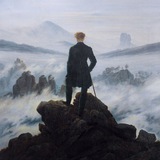
Leben selbst ist Wille zur Macht
Life itself is will to power
— Friedrich Nietzsche, JGB (BGE; 13)
Forwarded from Disobey
'you go to prison not for stealing, but for stealing too little'
this might helpfully distinguish theft as an emergent market corrective that spontaneously reallocates hoarded and clogged wealth, and theft as primitive accumulating, cartel extorting, market disciplining dispossession
ie the poor steal to satisfy their deprived needs, which is criminalized and punished, while the rich steal to accrue capital and exact tolls on restricted access, which is permitted and protected
— @bcham
this might helpfully distinguish theft as an emergent market corrective that spontaneously reallocates hoarded and clogged wealth, and theft as primitive accumulating, cartel extorting, market disciplining dispossession
ie the poor steal to satisfy their deprived needs, which is criminalized and punished, while the rich steal to accrue capital and exact tolls on restricted access, which is permitted and protected
— @bcham
Forwarded from Disobey
According to our theories of penal law, with whose “timely improvement” people are struggling in vain, they want to punish people for this or that “inhumanity” and make the foolishness of these theories especially clear by their consequences, in that they hang the little thieves and let the big ones go. For violation of property, you have the penitentiary, while for “forced thought,” suppression of “natural human rights,” only—presentations and petitions.
devotion to the sacred also brings it about that without any lively interest of one's own, one only delivers malefactors into the hands of the police and the courts: an apathetic giving over to the authorities, “who will, of course, best administer sacred things.” The people goes utterly nuts, sending the police against everything that seems immoral, or even only unseemly, to it; and this popular rage for the moral protects the police institution more than the mere government could possibly protect it.
— Max Stirner
On the history of Christianity.
Continuous change of the milieu: Christian doctrine thus continually changes its center of gravity...
the favoring of the low and small people...
the development of charity...
the “Christian” type gradually reassumes everything that it originally negated (in the negation of which it consisted —)
the Christian becomes a citizen, soldier, judge, laborer, merchant, scholar, theologian, priest, philosopher, farmer, artist, patriot, politician, “prince”... he resumes all the activities he has renounced (— self-defense, judgment, punishment, swearing, distinguishing between people and people, disdain, anger...)
Finally, the whole life of the Christian is precisely the life from which Christ preached detachment...
The Church is as much a part of the triumph of the Antichrist as the modern state, modern nationalism...
The Church is the barbarization of Christianity.
Judaism (Paul), Platonism (Augustine), the mystery cults (doctrine of salvation, symbol of the “cross”), asceticism (— enmity against “nature”, “reason”, “senses”, — Orient...) have become masters of Christianity.
— Friedrich Nietzsche, Nachgelassene Fragmente (1887) (11[364])
👍2
What will follow are Nietzsche's critical references to Brahmanism/Manu etc...
In many respects the ascetic seeks to make life easy for himself, usually by complete subordination to a strange will or a comprehensive law and ritual; something like the way a Brahmin leaves nothing whatever to his own decision but refers every moment to sacred precepts. This submission is a powerful means of attaining self-mastery: one is occupied and is therefore not bored, and yet has no incitement to self-will or passion; after a completed deed there is no feeling of responsibility and with it no agony of remorse. One has renounced one's own will once and for ever, and this is easier than only renouncing it occasionally; as it is also easier to give up a desire entirely than to keep it within bounds. When we remember the present relation of man to the State, we find that, even here, unconditional obedience is more convenient than conditional. The saint, therefore, makes his life easier by absolute renunciation of his personality, and we are mistaken if in that phenomenon we admire the loftiest heroism of morality. In any case it is more difficult to carry one's personality through without vacillation and unclearness than to liberate one's self from it in the above-mentioned manner; moreover, it requires far more spirit and consideration.
— Friedrich Nietzsche,
Human All Too Human (Part I) (139)
After having found in many of the less easily explicable actions manifestations of that pleasure in emotion per se, I should like to recognise also in self-contempt, which is one of the signs of holiness, and likewise in the deeds of self-torture (through hunger and scourging, mutilation of limbs, feigning of madness) a means by which those natures fight against the general weariness of their life-will (their nerves); they employ the most painful irritants and cruelties in order to emerge for a time, at all events, from that dulness and boredom into which they so frequently sink through their great mental indolence and that submission to a strange will already described.
— Friedrich Nietzsche,
Human All Too Human (Part I) (140)
The commonest means which the ascetic and saint employs to render life still endurable and amusing consists in occasional warfare with alternate victory and defeat. For this he requires an opponent, and finds it in the so-called “inward enemy.” He principally makes use of his inclination to vanity, love of honour and rule, and of his sensual desires, that he may be permitted to regard his life as a perpetual battle and himself as a battlefield upon which good and evil spirits strive with alternating success. It is well known that sensual imagination is moderated, indeed almost dispelled, by regular sexual intercourse, whereas, on the contrary, it is rendered unfettered and wild by abstinence or irregularity. The imagination of many Christian saints was filthy to an extraordinary degree; by virtue of those theories that these desires were actual demons raging within them they did not feel themselves to be too responsible; to this feeling we owe the very instructive frankness of their self-confessions. It was to their interest that this strife should always be maintained in one degree or another, because, as we have already said, their empty life was thereby entertained. But in order that the strife might seem sufficiently important and arouse the enduring sympathy and admiration of non-saints, it was necessary that sensuality should be ever more reviled and branded, the danger of eternal damnation was so tightly bound up with these things that it is highly probable that for whole centuries Christians generated children with a bad conscience, wherewith humanity has certainly suffered a great injury. And yet here truth is all topsy-turvy, which is particularly unsuitable for truth. Certainly Christianity had said that every man is conceived and born in sin, and in the insupportable superlative-Christianity of Calderon this thought again appears, tied up and twisted, as the most distorted paradox there is, in the well-known lines—
“The greatest sin of man
Is that he was ever born.”
In all pessimistic religions the act of generation was looked upon as evil in itself. This is by no means the verdict of all mankind, not even of all pessimists. For instance, Empedocles saw in all erotic things nothing shameful, diabolical, or, sinful; but rather, in the great plain of disaster he saw only one hopeful and redeeming figure, that of Aphrodite; she appeared to him as a guarantee that the strife should not endure eternally, but that the sceptre should one day be given over to a gentler dæmon. The actual Christian pessimists had, as has been said, an interest in the dominance of a diverse opinion; for the solitude and spiritual wilderness of their lives they required an ever living enemy, and a generally recognised enemy, through whose fighting and overcoming they could constantly represent themselves to the non-saints as incomprehensible, half—supernatural beings. But when at last this enemy took to flight for ever in consequence of their mode of life and their impaired health, they immediately understood how to populate their interior with new dæmons. The rising and falling of the scales of pride and humility sustained their brooding minds as well as the alternations of desire and peace of soul. At that time psychology served not only to cast suspicion upon everything human, but to oppress, to scourge, to crucify; people wished to find themselves as bad and wicked as possible, they sought anxiety for the salvation of their souls, despair of their own strength. Everything natural with which man has connected the idea of evil and sin (as, for instance, he is still accustomed to do with regard to the erotic) troubles and clouds the imagination, causes a frightened glance, makes man quarrel with himself and uncertain and distrustful of himself. Even his dreams have the flavour of a restless conscience. And yet in the reality of things this suffering from what is natural is entirely without foundation, it is only the consequence of opinions about things.
It is easily seen how men grow worse by considering the inevitably-natural as bad, and afterwards always feeling themselves made thus. It is the trump-card of religion and metaphysics, which wish to have man evil and sinful by nature, to cast suspicion on nature and thus really to make him bad, for he learns to feel himself evil since he cannot divest himself of the clothing of nature. After living for long a natural life, he gradually comes to feel himself weighed down by such a burden of sin that supernatural powers are necessary to lift this burden, and therewith arises the so-called need of redemption, which corresponds to no real but only to an imaginary sinfulness. If we survey the separate moral demands of the earliest times of Christianity it will everywhere be found that requirements are exaggerated in order that man cannot satisfy them; the intention is not that he should become more moral, but that he should feel himself as sinful as possible. If man had not found this feeling agreeable—why would he have thought out such an idea and stuck to it so long? As in the antique world an immeasurable power of intellect and inventiveness was expended in multiplying the pleasure of life by festive cults, so also in the age of Christianity an immeasurable amount of intellect has been sacrificed to another endeavour,—man must by all means be made to feel himself sinful and thereby be excited, enlivened, en-souled. To excite, enliven, en-soul at all costs—is not that the watchword of a relaxed, over-ripe, over-cultured age? The range of all natural sensations had been gone over a hundred times, the soul had grown weary, whereupon the saint and the ascetic invented a new species of stimulants for life. They presented themselves before the public eye, not exactly as an example for the many, but as a terrible and yet ravishing spectacle, which took place on that border-land between world and over-world, wherein at that time all people believed they saw now rays of heavenly light and now unholy tongues of flame glowing in the depths. The saint's eye, fixed upon the terrible meaning of this short earthly life, upon the nearness of the last decision concerning endless new spans of existence, this burning eye in a half-wasted body made men of the old world tremble to their very depths; to gaze, to turn shudderingly away, to feel anew the attraction of the spectacle and to give way to it, to drink deep of it till the soul quivered with fire and ague,—that was the last pleasure that antiquity invented after it had grown blunted even at the sight of beast-baitings and human combats.
— Friedrich Nietzsche,
Human All Too Human (Part I) (141)
Now to sum up. That condition of soul in which the saint or embryo saint rejoiced, was composed of elements which we all know well, only that under the influence of other than religious conceptions they exhibit themselves in other colours and are then accustomed to encounter man's blame as fully as, with that decoration of religion and the ultimate meaning of existence, they may reckon on receiving admiration and even worship,—might reckon, at least, in former ages. Sometimes the saint practises that defiance of himself which is a near relative of domination at any cost and gives a feeling of power even to the most lonely; sometimes his swollen sensibility leaps from the desire to let his passions have full play into the desire to overthrow them like wild horses under the mighty pressure of a proud spirit; sometimes he desires a complete cessation of all disturbing, tormenting, irritating sensations, a waking sleep, a lasting rest in the lap of a dull, animal, and plant-like indolence; sometimes he seeks strife and arouses it within himself, because boredom has shown him its yawning countenance. He scourges his self-adoration with self-contempt and cruelty, he rejoices in the wild tumult of his desires and the sharp pain of sin, even in the idea of being lost; he understands how to lay a trap for his emotions, for instance even for his keen love of ruling, so that he sinks into the most utter abasement and his tormented soul is thrown out of joint by this contrast; and finally, if he longs for visions, conversations with the dead or with divine beings, it is at bottom a rare kind of delight that he covets, perhaps that delight in which all others are united. Novalis, an authority on questions of holiness through experience and instinct, tells the whole secret with naïve joy: “It is strange enough that the association of lust, religion, and cruelty did not long ago draw men's attention to their close relationship and common tendency.”
— Friedrich Nietzsche,
Human All Too Human (Part I) (142)
That which gives the saint his historical value is not the thing he is, but the thing he represents in the eyes of the unsaintly. It was through the fact that errors were made about him, that the state of his soul was falsely interpreted, that men separated themselves from him as much as possible, as from something incomparable and strangely superhuman, that he acquired the extraordinary power which he exercised over the imagination of whole nations and whole ages. He did not know himself; he himself interpreted the writing of his moods, inclinations, and actions according to an art of interpretation which was as exaggerated and artificial as the spiritual interpretation of the Bible. The distorted and diseased in his nature, with its combination of intellectual poverty, evil knowledge, ruined health, and over-excited nerves, remained hidden from his own sight as well as from that of his spectators. He was not a particularly good man, and still less was he a particularly wise one; but he represented something that exceeded the human standard in goodness and wisdom. The belief in him supported the belief in the divine and miraculous, in a religious meaning of all existence, in an impending day of judgment. In the evening glory of the world's sunset, which glowed over the Christian nations, the shadowy form of the saint grew to vast dimensions, it grew to such a height that even in our own age, which no longer believes in God, there are still thinkers who believe in the saint.
— Friedrich Nietzsche,
Human All Too Human (Part I) (143)
174.
What creates the feeling of unbridled elevation of power in people? Brahmins: imagining powerful gods and devising means to take control of them and treat them as tools.
(Or: to magnify great people to gigantic proportions and present them as precursors for oneself.)
175.
The feeling of power? Asceticism as a means to this end (union with God, intercourse with the dead, etc.)
176.
The feeling of power, insofar as one belongs to a strong chief family community state – fundamental for the foundation of moral obligation; we subordinate ourselves so that we have the feeling of power. – Those who are averse to the fatherland immediately regain their spirit of sacrifice in moments of danger to it: they do not want the feeling of powerlessness.
177.
The transition from the feeling of powerlessness to that of power is very pleasurable: therefore the deepest humiliation is often sought. David, afterward –. Perhaps Jewish?
The secret arrogance [Hochmut] of the slave: religious
E.g. the demarcation against the animals; the earth against the stars.
179.
The first effect of happiness is the feeling of power: this wants to express itself 1) against ourselves 2) against people 3) against ideas of things 4) against imaginary beings. Destroy, mock, bestow.
180.
The dominion over nature, the fixed idea of the 20th century, is Brahmanism, Indo-European.
182.
The assertion that morality is superstition should not be refuted by saying that morality is unspeakably useful and was a very useful, perhaps indispensable superstition.
183.
The feeling of power today is a side of science: not the individual for himself (“philosopher”) but as a member. The princes and peoples serve it. – Brahmanism is perhaps to be surpassed. What are the means to increase the independence of the individual?
— Friedrich Nietzsche,
Nachgelassene Fragmente (1880) (4)
Concept of morality of custom. — In comparison with the mode of life of whole millennia of mankind we present-day men live in a very immoral age: the power of custom is astonishingly enfeebled and the moral sense so rarefied and lofty it may be described as having more or less evaporated. That is why the fundamental insights into the origin of morality are so difficult for us latecomers, and even when we have acquired them we find it impossible to enunciate them, because they sound so uncouth or because they seem to slander morality! This is, for example, already the case with the chief proposition: morality is nothing other (therefore no more!) than obedience to customs, of whatever kind they may be; customs, however, are the traditional way of behaving and evaluating. In things in which no tradition commands there is no morality; and the less life is determined by tradition, the smaller the circle of morality. The free human being is immoral because in all things he is determined to depend upon himself and not upon a tradition: in all the original conditions of mankind, ‘evil’ signifies the same as ‘individual’, ‘free’, ‘capricious’, ‘unusual’, ‘unforeseen’, ‘incalculable’. Judged by the standard of these conditions, if an action is performed not because tradition commands it but for other motives (because of its usefulness to the individual, for example), even indeed for precisely the motives which once founded the tradition, it is called immoral and is felt to be so by him who performed it: for it was not performed in obedience to tradition. What is tradition? A higher authority which one obeys, not because it commands what is useful to us, but because it commands. – What distinguishes this feeling in the presence of tradition from the feeling of fear in general? It is fear in the presence of a higher intellect which here commands, of an incomprehensible, indefinite power, of something more than personal – there is superstition in this fear. – Originally all education and care of health, marriage, cure of sickness, agriculture, war, speech and silence, traffic with one another and with the gods belonged within the domain of morality: they demanded one observe prenoscriptions without thinking of oneself as an individual. Originally, therefore, everything was custom, and whoever wanted to elevate himself above it had to become lawgiver and medicine man and a kind of demi-god: that is to say, he had to make customs – a dreadful, mortally dangerous thing! Who is the most moral man? First, he who obeys the law most frequently: who, like the Brahmin, bears a consciousness of the law with him everywhere and into every minute division of time, so that he is continually inventive in creating opportunities for obeying the law. Then, he who obeys it even in the most difficult cases. The most moral man is he who sacrifices the most to custom: what, however, are the greatest sacrifices? The way in which this question is answered determines the development of several divers kinds of morality; but the most important distinction remains that which divides the morality of most frequent obedience from that of the most difficult obedience. Let us not deceive ourselves as to the motivation of that morality which demands difficulty of obedience to custom as the mark of morality! Self-overcoming is demanded, not on account of the useful consequences it may have for the individual, but so that the hegemony of custom, tradition, shall be made evident in despite of the private desires and advantages of the individual: the individual is to sacrifice himself – that is the commandment of morality of custom.
– Those moralists, on the other hand, who, following in the footsteps of Socrates, offer the individual a morality of self-control and temperance as a means to his own advantage, as his personal key to happiness, are the exceptions – and if it seems otherwise to us that is because we have been brought up in their after-effect: they all take a new path under the highest disapprobation of all advocates of morality of custom – they cut themselves off from the community, as immoral men, and are in the profoundest sense evil. Thus to a virtuous Roman of the old stamp every Christian who ‘considered first of all his own salvation’ appeared – evil. – Everywhere that a community, and consequently a morality of custom exists, the idea also predominates that punishment for breaches of custom will fall before all on the community: that supernatural punishment whose forms of expression and limitations are so hard to comprehend and are explored with so much superstitious fear. The community can compel the individual to compensate another individual or the community for the immediate injury his action has brought in its train; it can also take a kind of revenge on the individual for having, as a supposed after-effect of his action, caused the clouds and storms of divine anger to have gathered over the community – but it feels the individual’s guilt above all as its own guilt and bears the punishment as its own punishment – : ‘customs have grown lax’, each wails in his soul, ‘if such actions as this are possible’. Every individual action, every individual mode of thought arouses dread; it is impossible to compute what precisely the rarer, choicer, more original spirits in the whole course of history have had to suffer through being felt as evil and dangerous, indeed through feeling themselves to be so. Under the dominion of the morality of custom, originality of every kind has acquired a bad conscience; the sky above the best men is for this reason to this very moment gloomier than it need be.
— Friedrich Nietzsche,
The Dawn of Day (9)
Sense for morality and sense for causality in counteraction. — In the same measure as the sense for causality increases, the extent of the domain of morality decreases: for each time one has understood the necessary effects and has learned how to segregate them from all the accidental effects and incidental consequences (post hoc), one has destroyed a countless number of imaginary causalities hitherto believed in as the foundations of customs – the real world is much smaller than the imaginary – and each time a piece of anxiety and constraint has vanished from the world, each time too a piece of respect for the authority of custom: morality as a whole has suffered a diminution. He who wants, on the contrary, to augment it must know how to prevent the results from being subject to control.
— Friedrich Nietzsche,
The Dawn of Day (10)
Popular morality and popular medicine. — The morality which prevails in a community is constantly being worked at by everybody: most people produce example after example of the alleged relationship between cause and effect, between guilt and punishment, confirm it as well founded and strengthen their faith: some observe actions and their consequences afresh and draw conclusions and laws from their observations: a very few take exception here and there and thus diminish faith on these points. – All, however, are at one in the wholly crude, unscientific character of their activity; whether it is a matter of producing examples, making observations or taking exception, whether it is a matter of proving, confirming, expressing or refuting a law – both material and form are worthless, as are the material and form of all popular medicine. Popular medicine and popular morality belong together and ought not to be evaluated so differently as they still are: both are the most dangerous pseudo-sciences.
— Friedrich Nietzsche,
The Dawn of Day (11)
Dionysian Anarchism
Popular medicine and popular morality belong together and ought not to be evaluated so differently as they still are: both are the most dangerous pseudo-sciences.
This is most decisively the case with brahminical medicine and brahminical morality: for at bottom, the few major (ancient) works of medicine authored by the brahmins were largely Vedick nonsense decorated with some medicinal knowledge here and there (and even that genuine medicinal knowledge was likely stolen from non-brahmins)