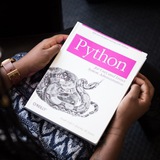
🐍 𝐏𝐲𝐭𝐡𝐨𝐧 𝐟𝐞𝐥𝐭 𝐢𝐦𝐩𝐨𝐬𝐬𝐢𝐛𝐥𝐞 𝐚𝐭 𝐟𝐢𝐫𝐬𝐭, 𝐛𝐮𝐭 𝐭𝐡𝐞𝐬𝐞 𝟗 𝐬𝐭𝐞𝐩𝐬 𝐜𝐡𝐚𝐧𝐠𝐞𝐝 𝐞𝐯𝐞𝐫𝐲𝐭𝐡𝐢𝐧𝐠!
.
.
1️⃣ 𝐌𝐚𝐬𝐭𝐞𝐫𝐞𝐝 𝐭𝐡𝐞 𝐁𝐚𝐬𝐢𝐜𝐬: Started with foundational Python concepts like variables, loops, functions, and conditional statements.
2️⃣ 𝐏𝐫𝐚𝐜𝐭𝐢𝐜𝐞𝐝 𝐄𝐚𝐬𝐲 𝐏𝐫𝐨𝐛𝐥𝐞𝐦𝐬: Focused on beginner-friendly problems on platforms like LeetCode and HackerRank to build confidence.
3️⃣ 𝐅𝐨𝐥𝐥𝐨𝐰𝐞𝐝 𝐏𝐲𝐭𝐡𝐨𝐧-𝐒𝐩𝐞𝐜𝐢𝐟𝐢𝐜 𝐏𝐚𝐭𝐭𝐞𝐫𝐧𝐬: Studied essential problem-solving techniques for Python, like list comprehensions, dictionary manipulations, and lambda functions.
4️⃣ 𝐋𝐞𝐚𝐫𝐧𝐞𝐝 𝐊𝐞𝐲 𝐋𝐢𝐛𝐫𝐚𝐫𝐢𝐞𝐬: Explored popular libraries like Pandas, NumPy, and Matplotlib for data manipulation, analysis, and visualization.
5️⃣ 𝐅𝐨𝐜𝐮𝐬𝐞𝐝 𝐨𝐧 𝐏𝐫𝐨𝐣𝐞𝐜𝐭𝐬: Built small projects like a to-do app, calculator, or data visualization dashboard to apply concepts.
6️⃣ 𝐖𝐚𝐭𝐜𝐡𝐞𝐝 𝐓𝐮𝐭𝐨𝐫𝐢𝐚𝐥𝐬: Followed creators like CodeWithHarry and Shradha Khapra for in-depth Python tutorials.
7️⃣ 𝐃𝐞𝐛𝐮𝐠𝐠𝐞𝐝 𝐑𝐞𝐠𝐮𝐥𝐚𝐫𝐥𝐲: Made it a habit to debug and analyze code to understand errors and optimize solutions.
8️⃣ 𝐉𝐨𝐢𝐧𝐞𝐝 𝐌𝐨𝐜𝐤 𝐂𝐨𝐝𝐢𝐧𝐠 𝐂𝐡𝐚𝐥𝐥𝐞𝐧𝐠𝐞𝐬: Participated in coding challenges to simulate real-world problem-solving scenarios.
9️⃣ 𝐒𝐭𝐚𝐲𝐞𝐝 𝐂𝐨𝐧𝐬𝐢𝐬𝐭𝐞𝐧𝐭: Practiced daily, worked on diverse problems, and never skipped Python for more than a day.
I have curated the best interview resources to crack Python Interviews 👇👇
https://whatsapp.com/channel/0029VaiM08SDuMRaGKd9Wv0L
Hope you'll like it
Like this post if you need more resources like this 👍❤️
#Python
.
.
1️⃣ 𝐌𝐚𝐬𝐭𝐞𝐫𝐞𝐝 𝐭𝐡𝐞 𝐁𝐚𝐬𝐢𝐜𝐬: Started with foundational Python concepts like variables, loops, functions, and conditional statements.
2️⃣ 𝐏𝐫𝐚𝐜𝐭𝐢𝐜𝐞𝐝 𝐄𝐚𝐬𝐲 𝐏𝐫𝐨𝐛𝐥𝐞𝐦𝐬: Focused on beginner-friendly problems on platforms like LeetCode and HackerRank to build confidence.
3️⃣ 𝐅𝐨𝐥𝐥𝐨𝐰𝐞𝐝 𝐏𝐲𝐭𝐡𝐨𝐧-𝐒𝐩𝐞𝐜𝐢𝐟𝐢𝐜 𝐏𝐚𝐭𝐭𝐞𝐫𝐧𝐬: Studied essential problem-solving techniques for Python, like list comprehensions, dictionary manipulations, and lambda functions.
4️⃣ 𝐋𝐞𝐚𝐫𝐧𝐞𝐝 𝐊𝐞𝐲 𝐋𝐢𝐛𝐫𝐚𝐫𝐢𝐞𝐬: Explored popular libraries like Pandas, NumPy, and Matplotlib for data manipulation, analysis, and visualization.
5️⃣ 𝐅𝐨𝐜𝐮𝐬𝐞𝐝 𝐨𝐧 𝐏𝐫𝐨𝐣𝐞𝐜𝐭𝐬: Built small projects like a to-do app, calculator, or data visualization dashboard to apply concepts.
6️⃣ 𝐖𝐚𝐭𝐜𝐡𝐞𝐝 𝐓𝐮𝐭𝐨𝐫𝐢𝐚𝐥𝐬: Followed creators like CodeWithHarry and Shradha Khapra for in-depth Python tutorials.
7️⃣ 𝐃𝐞𝐛𝐮𝐠𝐠𝐞𝐝 𝐑𝐞𝐠𝐮𝐥𝐚𝐫𝐥𝐲: Made it a habit to debug and analyze code to understand errors and optimize solutions.
8️⃣ 𝐉𝐨𝐢𝐧𝐞𝐝 𝐌𝐨𝐜𝐤 𝐂𝐨𝐝𝐢𝐧𝐠 𝐂𝐡𝐚𝐥𝐥𝐞𝐧𝐠𝐞𝐬: Participated in coding challenges to simulate real-world problem-solving scenarios.
9️⃣ 𝐒𝐭𝐚𝐲𝐞𝐝 𝐂𝐨𝐧𝐬𝐢𝐬𝐭𝐞𝐧𝐭: Practiced daily, worked on diverse problems, and never skipped Python for more than a day.
I have curated the best interview resources to crack Python Interviews 👇👇
https://whatsapp.com/channel/0029VaiM08SDuMRaGKd9Wv0L
Hope you'll like it
Like this post if you need more resources like this 👍❤️
#Python
👍5
Python for Everything:
Python + Django = Web Development
Python + Matplotlib = Data Visualization
Python + Flask = Web Applications
Python + Pygame = Game Development
Python + PyQt = Desktop Applications
Python + TensorFlow = Machine Learning
Python + FastAPI = API Development
Python + Kivy = Mobile App Development
Python + Pandas = Data Analysis
Python + NumPy = Scientific Computing
Python + Django = Web Development
Python + Matplotlib = Data Visualization
Python + Flask = Web Applications
Python + Pygame = Game Development
Python + PyQt = Desktop Applications
Python + TensorFlow = Machine Learning
Python + FastAPI = API Development
Python + Kivy = Mobile App Development
Python + Pandas = Data Analysis
Python + NumPy = Scientific Computing
👍8❤4
How to master Python from scratch🚀
1. Setup and Basics 🏁
- Install Python 🖥️: Download Python and set it up.
- Hello, World! 🌍: Write your first Hello World program.
2. Basic Syntax 📜
- Variables and Data Types 📊: Learn about strings, integers, floats, and booleans.
- Control Structures 🔄: Understand if-else statements, for loops, and while loops.
- Functions 🛠️: Write reusable blocks of code.
3. Data Structures 📂
- Lists 📋: Manage collections of items.
- Dictionaries 📖: Store key-value pairs.
- Tuples 📦: Work with immutable sequences.
- Sets 🔢: Handle collections of unique items.
4. Modules and Packages 📦
- Standard Library 📚: Explore built-in modules.
- Third-Party Packages 🌐: Install and use packages with pip.
5. File Handling 📁
- Read and Write Files 📝
- CSV and JSON 📑
6. Object-Oriented Programming 🧩
- Classes and Objects 🏛️
- Inheritance and Polymorphism 👨👩👧
7. Web Development 🌐
- Flask 🍼: Start with a micro web framework.
- Django 🦄: Dive into a full-fledged web framework.
8. Data Science and Machine Learning 🧠
- NumPy 📊: Numerical operations.
- Pandas 🐼: Data manipulation and analysis.
- Matplotlib 📈 and Seaborn 📊: Data visualization.
- Scikit-learn 🤖: Machine learning.
9. Automation and Scripting 🤖
- Automate Tasks 🛠️: Use Python to automate repetitive tasks.
- APIs 🌐: Interact with web services.
10. Testing and Debugging 🐞
- Unit Testing 🧪: Write tests for your code.
- Debugging 🔍: Learn to debug efficiently.
11. Advanced Topics 🚀
- Concurrency and Parallelism 🕒
- Decorators 🌀 and Generators ⚙️
- Web Scraping 🕸️: Extract data from websites using BeautifulSoup and Scrapy.
12. Practice Projects 💡
- Calculator 🧮
- To-Do List App 📋
- Weather App ☀️
- Personal Blog 📝
13. Community and Collaboration 🤝
- Contribute to Open Source 🌍
- Join Coding Communities 💬
- Participate in Hackathons 🏆
14. Keep Learning and Improving 📈
- Read Books 📖: Like "Automate the Boring Stuff with Python".
- Watch Tutorials 🎥: Follow video courses and tutorials.
- Solve Challenges 🧩: On platforms like LeetCode, HackerRank, and CodeWars.
15. Teach and Share Knowledge 📢
- Write Blogs ✍️
- Create Video Tutorials 📹
- Mentor Others 👨🏫
I have curated the best interview resources to crack Python Interviews 👇👇
https://topmate.io/coding/898340
Hope you'll like it
Like this post if you need more resources like this 👍❤️
1. Setup and Basics 🏁
- Install Python 🖥️: Download Python and set it up.
- Hello, World! 🌍: Write your first Hello World program.
2. Basic Syntax 📜
- Variables and Data Types 📊: Learn about strings, integers, floats, and booleans.
- Control Structures 🔄: Understand if-else statements, for loops, and while loops.
- Functions 🛠️: Write reusable blocks of code.
3. Data Structures 📂
- Lists 📋: Manage collections of items.
- Dictionaries 📖: Store key-value pairs.
- Tuples 📦: Work with immutable sequences.
- Sets 🔢: Handle collections of unique items.
4. Modules and Packages 📦
- Standard Library 📚: Explore built-in modules.
- Third-Party Packages 🌐: Install and use packages with pip.
5. File Handling 📁
- Read and Write Files 📝
- CSV and JSON 📑
6. Object-Oriented Programming 🧩
- Classes and Objects 🏛️
- Inheritance and Polymorphism 👨👩👧
7. Web Development 🌐
- Flask 🍼: Start with a micro web framework.
- Django 🦄: Dive into a full-fledged web framework.
8. Data Science and Machine Learning 🧠
- NumPy 📊: Numerical operations.
- Pandas 🐼: Data manipulation and analysis.
- Matplotlib 📈 and Seaborn 📊: Data visualization.
- Scikit-learn 🤖: Machine learning.
9. Automation and Scripting 🤖
- Automate Tasks 🛠️: Use Python to automate repetitive tasks.
- APIs 🌐: Interact with web services.
10. Testing and Debugging 🐞
- Unit Testing 🧪: Write tests for your code.
- Debugging 🔍: Learn to debug efficiently.
11. Advanced Topics 🚀
- Concurrency and Parallelism 🕒
- Decorators 🌀 and Generators ⚙️
- Web Scraping 🕸️: Extract data from websites using BeautifulSoup and Scrapy.
12. Practice Projects 💡
- Calculator 🧮
- To-Do List App 📋
- Weather App ☀️
- Personal Blog 📝
13. Community and Collaboration 🤝
- Contribute to Open Source 🌍
- Join Coding Communities 💬
- Participate in Hackathons 🏆
14. Keep Learning and Improving 📈
- Read Books 📖: Like "Automate the Boring Stuff with Python".
- Watch Tutorials 🎥: Follow video courses and tutorials.
- Solve Challenges 🧩: On platforms like LeetCode, HackerRank, and CodeWars.
15. Teach and Share Knowledge 📢
- Write Blogs ✍️
- Create Video Tutorials 📹
- Mentor Others 👨🏫
I have curated the best interview resources to crack Python Interviews 👇👇
https://topmate.io/coding/898340
Hope you'll like it
Like this post if you need more resources like this 👍❤️
👍9❤4
How to convert image to pdf in Python
# Python3 program to convert image to pfd
# using img2pdf library

# importing necessary libraries
import img2pdf
from PIL import Image
import os

# storing image path
img_path = "Input.png"

# storing pdf path
pdf_path = "file_pdf.pdf"

# opening image
image = Image.open(img_path)

# converting into chunks using img2pdf
pdf_bytes = img2pdf.convert(image.filename)

# opening or creating pdf file
file = open(pdf_path, "wb")

# writing pdf files with chunks
file.write(pdf_bytes)

# closing image file
image.close()

# closing pdf file
file.close()

# output
print("Successfully made pdf file")
pip3 install pillow && pip3 install img2pdf👍11❤2
Don't overwhelm to learn Git,🙌
Git is only this much👇😇
1.Core:
• git init
• git clone
• git add
• git commit
• git status
• git diff
• git checkout
• git reset
• git log
• git show
• git tag
• git push
• git pull
2.Branching:
• git branch
• git checkout -b
• git merge
• git rebase
• git branch --set-upstream-to
• git branch --unset-upstream
• git cherry-pick
3.Merging:
• git merge
• git rebase
4.Stashing:
• git stash
• git stash pop
• git stash list
• git stash apply
• git stash drop
5.Remotes:
• git remote
• git remote add
• git remote remove
• git fetch
• git pull
• git push
• git clone --mirror
6.Configuration:
• git config
• git global config
• git reset config
7. Plumbing:
• git cat-file
• git checkout-index
• git commit-tree
• git diff-tree
• git for-each-ref
• git hash-object
• git ls-files
• git ls-remote
• git merge-tree
• git read-tree
• git rev-parse
• git show-branch
• git show-ref
• git symbolic-ref
• git tag --list
• git update-ref
8.Porcelain:
• git blame
• git bisect
• git checkout
• git commit
• git diff
• git fetch
• git grep
• git log
• git merge
• git push
• git rebase
• git reset
• git show
• git tag
9.Alias:
• git config --global alias.<alias> <command>
10.Hook:
• git config --local core.hooksPath <path>
✅ Best Telegram channels to get free coding & data science resources
https://news.1rj.ru/str/addlist/4q2PYC0pH_VjZDk5
✅ Free Courses with Certificate:
https://news.1rj.ru/str/free4unow_backup
Git is only this much👇😇
1.Core:
• git init
• git clone
• git add
• git commit
• git status
• git diff
• git checkout
• git reset
• git log
• git show
• git tag
• git push
• git pull
2.Branching:
• git branch
• git checkout -b
• git merge
• git rebase
• git branch --set-upstream-to
• git branch --unset-upstream
• git cherry-pick
3.Merging:
• git merge
• git rebase
4.Stashing:
• git stash
• git stash pop
• git stash list
• git stash apply
• git stash drop
5.Remotes:
• git remote
• git remote add
• git remote remove
• git fetch
• git pull
• git push
• git clone --mirror
6.Configuration:
• git config
• git global config
• git reset config
7. Plumbing:
• git cat-file
• git checkout-index
• git commit-tree
• git diff-tree
• git for-each-ref
• git hash-object
• git ls-files
• git ls-remote
• git merge-tree
• git read-tree
• git rev-parse
• git show-branch
• git show-ref
• git symbolic-ref
• git tag --list
• git update-ref
8.Porcelain:
• git blame
• git bisect
• git checkout
• git commit
• git diff
• git fetch
• git grep
• git log
• git merge
• git push
• git rebase
• git reset
• git show
• git tag
9.Alias:
• git config --global alias.<alias> <command>
10.Hook:
• git config --local core.hooksPath <path>
✅ Best Telegram channels to get free coding & data science resources
https://news.1rj.ru/str/addlist/4q2PYC0pH_VjZDk5
✅ Free Courses with Certificate:
https://news.1rj.ru/str/free4unow_backup
👍8❤7