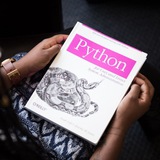
✅ Python Project Ideas 📽️
1️⃣ Web Development 🌐
⦁ Blog CMS using Django
⦁ Portfolio website with Flask
⦁ URL Shortener
⦁ E-commerce backend API
⦁ Chat application (WebSocket + Flask-SocketIO)
⦁ Real-time chat app with user auth
2️⃣ Data Science & ML 📊🧠
⦁ Movie recommendation system
⦁ Stock price predictor
⦁ Resume parser + job matcher
⦁ Customer churn prediction
⦁ Fake news detector
⦁ Sentiment analysis on tweets
3️⃣ Automation & Scripting ⚙️
⦁ Auto rename/sort files by type/date
⦁ Email automation (with attachments)
⦁ Instagram bot (follow/unfollow/post)
⦁ PDF merger/watermark tool
⦁ Screenshot & clipboard monitor
⦁ Web scraper for news articles
4️⃣ Game Development 🎮
⦁ Tic Tac Toe (with AI)
⦁ Snake Game (Pygame)
⦁ Flappy Bird clone
⦁ Memory Puzzle
⦁ Platformer game
⦁ Number guessing game
5️⃣ Computer Vision & OpenCV 📷
⦁ Face detection & blurring
⦁ Virtual mouse using hand gestures
⦁ Document scanner
⦁ Mask detection (ML-based)
⦁ Real-time object tracking
⦁ Image classifier
6️⃣ NLP & Chatbots 🗣️
⦁ Chatbot using Rasa or NLTK
⦁ Email classifier
⦁ Sentiment analyzer
⦁ Text summarizer
⦁ Voice-controlled assistant
⦁ Basic chatbot with AI
7️⃣ Cybersecurity 🔐
⦁ Password strength checker
⦁ Keylogger (for ethical use)
⦁ File encryption/decryption tool
⦁ Port scanner
⦁ Secure login system with 2FA
⦁ Log analyzer for security
8️⃣ IoT & Hardware 💡
⦁ Home automation with Raspberry Pi
⦁ Weather station using sensors
⦁ Smart doorbell (camera + notifier)
⦁ IoT dashboard in Flask
⦁ Real-time motion detector
⦁ Simple weather app
Credits: https://whatsapp.com/channel/0029VaiM08SDuMRaGKd9Wv0L
💬 Double Tap ♥️ For More!
1️⃣ Web Development 🌐
⦁ Blog CMS using Django
⦁ Portfolio website with Flask
⦁ URL Shortener
⦁ E-commerce backend API
⦁ Chat application (WebSocket + Flask-SocketIO)
⦁ Real-time chat app with user auth
2️⃣ Data Science & ML 📊🧠
⦁ Movie recommendation system
⦁ Stock price predictor
⦁ Resume parser + job matcher
⦁ Customer churn prediction
⦁ Fake news detector
⦁ Sentiment analysis on tweets
3️⃣ Automation & Scripting ⚙️
⦁ Auto rename/sort files by type/date
⦁ Email automation (with attachments)
⦁ Instagram bot (follow/unfollow/post)
⦁ PDF merger/watermark tool
⦁ Screenshot & clipboard monitor
⦁ Web scraper for news articles
4️⃣ Game Development 🎮
⦁ Tic Tac Toe (with AI)
⦁ Snake Game (Pygame)
⦁ Flappy Bird clone
⦁ Memory Puzzle
⦁ Platformer game
⦁ Number guessing game
5️⃣ Computer Vision & OpenCV 📷
⦁ Face detection & blurring
⦁ Virtual mouse using hand gestures
⦁ Document scanner
⦁ Mask detection (ML-based)
⦁ Real-time object tracking
⦁ Image classifier
6️⃣ NLP & Chatbots 🗣️
⦁ Chatbot using Rasa or NLTK
⦁ Email classifier
⦁ Sentiment analyzer
⦁ Text summarizer
⦁ Voice-controlled assistant
⦁ Basic chatbot with AI
7️⃣ Cybersecurity 🔐
⦁ Password strength checker
⦁ Keylogger (for ethical use)
⦁ File encryption/decryption tool
⦁ Port scanner
⦁ Secure login system with 2FA
⦁ Log analyzer for security
8️⃣ IoT & Hardware 💡
⦁ Home automation with Raspberry Pi
⦁ Weather station using sensors
⦁ Smart doorbell (camera + notifier)
⦁ IoT dashboard in Flask
⦁ Real-time motion detector
⦁ Simple weather app
Credits: https://whatsapp.com/channel/0029VaiM08SDuMRaGKd9Wv0L
💬 Double Tap ♥️ For More!
❤19
🎯 Skills Required for a Career in AI, ML & Data Science 🧠💡
📊 Data Science:
Python, Pandas, NumPy, SQL, Matplotlib, Seaborn, Jupyter, Scikit-learn—plus big data tools like Spark for handling massive datasets in 2025 pipelines. Focus on exploratory data analysis (EDA) to uncover insights from raw data.
🤖 Machine Learning:
Python, Scikit-learn, TensorFlow, Keras, XGBoost, Statistics, Linear Algebra—add model evaluation metrics (accuracy, F1-score) and basics of supervised/unsupervised learning. Ethical AI like bias detection is a must now for fair models.
🧠 Deep Learning:
TensorFlow, PyTorch, CNNs, RNNs, GANs, Neural Networks—dive into interpretability techniques so you can explain why models make decisions, a hot skill for trustworthy AI.
🗣️ Natural Language Processing (NLP):
spaCy, NLTK, Transformers, BERT, GPT, Text Classification, Sentiment Analysis—pair with prompt engineering for generative tasks, booming in chatbots and content analysis.
👁️ Computer Vision:
OpenCV, YOLO, CNNs, Image Segmentation, Object Detection—essential for apps like autonomous driving or medical imaging, with edge AI for on-device processing.
📈 AI Tools & Platforms:
Google Colab, AWS SageMaker, MLflow, Hugging Face, DVC—include cloud literacy (AWS, GCP) and AutoML for faster prototyping, plus version control like Git for team workflows.
⚙️ Math for AI:
Probability, Statistics, Calculus, Linear Algebra—build on these for advanced topics like optimization in neural nets, and don't skip domain knowledge to tie math to real problems.
✅ Pick your interest → Learn step-by-step → Apply it to real-world projects like fraud detection or personalized recs to build a portfolio that stands out in interviews!
💬 Tap ❤️ for more!
📊 Data Science:
Python, Pandas, NumPy, SQL, Matplotlib, Seaborn, Jupyter, Scikit-learn—plus big data tools like Spark for handling massive datasets in 2025 pipelines. Focus on exploratory data analysis (EDA) to uncover insights from raw data.
🤖 Machine Learning:
Python, Scikit-learn, TensorFlow, Keras, XGBoost, Statistics, Linear Algebra—add model evaluation metrics (accuracy, F1-score) and basics of supervised/unsupervised learning. Ethical AI like bias detection is a must now for fair models.
🧠 Deep Learning:
TensorFlow, PyTorch, CNNs, RNNs, GANs, Neural Networks—dive into interpretability techniques so you can explain why models make decisions, a hot skill for trustworthy AI.
🗣️ Natural Language Processing (NLP):
spaCy, NLTK, Transformers, BERT, GPT, Text Classification, Sentiment Analysis—pair with prompt engineering for generative tasks, booming in chatbots and content analysis.
👁️ Computer Vision:
OpenCV, YOLO, CNNs, Image Segmentation, Object Detection—essential for apps like autonomous driving or medical imaging, with edge AI for on-device processing.
📈 AI Tools & Platforms:
Google Colab, AWS SageMaker, MLflow, Hugging Face, DVC—include cloud literacy (AWS, GCP) and AutoML for faster prototyping, plus version control like Git for team workflows.
⚙️ Math for AI:
Probability, Statistics, Calculus, Linear Algebra—build on these for advanced topics like optimization in neural nets, and don't skip domain knowledge to tie math to real problems.
✅ Pick your interest → Learn step-by-step → Apply it to real-world projects like fraud detection or personalized recs to build a portfolio that stands out in interviews!
💬 Tap ❤️ for more!
❤14
✅ Python Scenario-Based Interview Question – List Comprehension 🐍💻
Scenario:
You are given a list of numbers:
Question:
Write Python code to create a new list that contains:
1. Only the even numbers from the original list.
2. Each even number multiplied by 2.
Expected Output:
Answer:
Explanation:
⦁ The list comprehension iterates over each
⦁ The
⦁ For those,
💬 Tap ❤️ if this helped you!
.
Scenario:
You are given a list of numbers:
numbers = [1, 2, 3, 4, 5, 6]
Question:
Write Python code to create a new list that contains:
1. Only the even numbers from the original list.
2. Each even number multiplied by 2.
Expected Output:
Answer:
even_doubled = [num * 2 for num in numbers if num % 2 == 0]
print(even_doubled)
Explanation:
⦁ The list comprehension iterates over each
num in numbers.⦁ The
if num % 2 == 0 condition filters to only even numbers (remainder 0 when divided by 2).⦁ For those,
num * 2 doubles them, building the new list concisely—way cleaner than a for loop with append!💬 Tap ❤️ if this helped you!
.
❤18👍5
Free Data Science & AI Courses
👇👇
https://www.linkedin.com/posts/sql-analysts_dataanalyst-datascience-365datascience-activity-7392423056004075520-fvvj
Double Tap ♥️ For More Free Resources
👇👇
https://www.linkedin.com/posts/sql-analysts_dataanalyst-datascience-365datascience-activity-7392423056004075520-fvvj
Double Tap ♥️ For More Free Resources
❤14
Essential Python Libraries to build your career in Data Science 📊👇
1. NumPy:
- Efficient numerical operations and array manipulation.
2. Pandas:
- Data manipulation and analysis with powerful data structures (DataFrame, Series).
3. Matplotlib:
- 2D plotting library for creating visualizations.
4. Seaborn:
- Statistical data visualization built on top of Matplotlib.
5. Scikit-learn:
- Machine learning toolkit for classification, regression, clustering, etc.
6. TensorFlow:
- Open-source machine learning framework for building and deploying ML models.
7. PyTorch:
- Deep learning library, particularly popular for neural network research.
8. SciPy:
- Library for scientific and technical computing.
9. Statsmodels:
- Statistical modeling and econometrics in Python.
10. NLTK (Natural Language Toolkit):
- Tools for working with human language data (text).
11. Gensim:
- Topic modeling and document similarity analysis.
12. Keras:
- High-level neural networks API, running on top of TensorFlow.
13. Plotly:
- Interactive graphing library for making interactive plots.
14. Beautiful Soup:
- Web scraping library for pulling data out of HTML and XML files.
15. OpenCV:
- Library for computer vision tasks.
As a beginner, you can start with Pandas and NumPy for data manipulation and analysis. For data visualization, Matplotlib and Seaborn are great starting points. As you progress, you can explore machine learning with Scikit-learn, TensorFlow, and PyTorch.
Free Notes & Books to learn Data Science: https://news.1rj.ru/str/datasciencefree
Python Project Ideas: https://news.1rj.ru/str/dsabooks/85
Best Resources to learn Python & Data Science 👇👇
Python Tutorial
Data Science Course by Kaggle
Machine Learning Course by Google
Best Data Science & Machine Learning Resources
Interview Process for Data Science Role at Amazon
Python Interview Resources
Join @free4unow_backup for more free courses
Like for more ❤️
ENJOY LEARNING👍👍
1. NumPy:
- Efficient numerical operations and array manipulation.
2. Pandas:
- Data manipulation and analysis with powerful data structures (DataFrame, Series).
3. Matplotlib:
- 2D plotting library for creating visualizations.
4. Seaborn:
- Statistical data visualization built on top of Matplotlib.
5. Scikit-learn:
- Machine learning toolkit for classification, regression, clustering, etc.
6. TensorFlow:
- Open-source machine learning framework for building and deploying ML models.
7. PyTorch:
- Deep learning library, particularly popular for neural network research.
8. SciPy:
- Library for scientific and technical computing.
9. Statsmodels:
- Statistical modeling and econometrics in Python.
10. NLTK (Natural Language Toolkit):
- Tools for working with human language data (text).
11. Gensim:
- Topic modeling and document similarity analysis.
12. Keras:
- High-level neural networks API, running on top of TensorFlow.
13. Plotly:
- Interactive graphing library for making interactive plots.
14. Beautiful Soup:
- Web scraping library for pulling data out of HTML and XML files.
15. OpenCV:
- Library for computer vision tasks.
As a beginner, you can start with Pandas and NumPy for data manipulation and analysis. For data visualization, Matplotlib and Seaborn are great starting points. As you progress, you can explore machine learning with Scikit-learn, TensorFlow, and PyTorch.
Free Notes & Books to learn Data Science: https://news.1rj.ru/str/datasciencefree
Python Project Ideas: https://news.1rj.ru/str/dsabooks/85
Best Resources to learn Python & Data Science 👇👇
Python Tutorial
Data Science Course by Kaggle
Machine Learning Course by Google
Best Data Science & Machine Learning Resources
Interview Process for Data Science Role at Amazon
Python Interview Resources
Join @free4unow_backup for more free courses
Like for more ❤️
ENJOY LEARNING👍👍
❤19
The program for the 10th AI Journey 2025 international conference has been unveiled: scientists, visionaries, and global AI practitioners will come together on one stage. Here, you will hear the voices of those who don't just believe in the future—they are creating it!
Speakers include visionaries Kai-Fu Lee and Chen Qufan, as well as dozens of global AI gurus from around the world!
On the first day of the conference, November 19, we will talk about how AI is already being used in various areas of life, helping to unlock human potential for the future and changing creative industries, and what impact it has on humans and on a sustainable future.
On November 20, we will focus on the role of AI in business and economic development and present technologies that will help businesses and developers be more effective by unlocking human potential.
On November 21, we will talk about how engineers and scientists are making scientific and technological breakthroughs and creating the future today!
Ride the wave with AI into the future!
Tune in to the AI Journey webcast on November 19-21.
Speakers include visionaries Kai-Fu Lee and Chen Qufan, as well as dozens of global AI gurus from around the world!
On the first day of the conference, November 19, we will talk about how AI is already being used in various areas of life, helping to unlock human potential for the future and changing creative industries, and what impact it has on humans and on a sustainable future.
On November 20, we will focus on the role of AI in business and economic development and present technologies that will help businesses and developers be more effective by unlocking human potential.
On November 21, we will talk about how engineers and scientists are making scientific and technological breakthroughs and creating the future today!
Ride the wave with AI into the future!
Tune in to the AI Journey webcast on November 19-21.
❤8👍1🥰1👏1😁1👌1
✅ Python Scenario-Based Interview Question 🧠
You have a sentence:
text = "Python is simple but powerful"
Question:
Count the number of words in the sentence.
Expected Output:
5
Python Code:
Explanation:
– split() breaks the sentence into words
– len() counts the number of words in the list
💬 Tap ❤️ for more!
You have a sentence:
text = "Python is simple but powerful"
Question:
Count the number of words in the sentence.
Expected Output:
5
Python Code:
words = text.split()
print(len(words))
Explanation:
– split() breaks the sentence into words
– len() counts the number of words in the list
💬 Tap ❤️ for more!
❤21
Tune in to the 10th AI Journey 2025 international conference: scientists, visionaries, and global AI practitioners will come together on one stage. Here, you will hear the voices of those who don't just believe in the future—they are creating it!
Speakers include visionaries Kai-Fu Lee and Chen Qufan, as well as dozens of global AI gurus! Do you agree with their predictions about AI?
On the first day of the conference, November 19, we will talk about how AI is already being used in various areas of life, helping to unlock human potential for the future and changing creative industries, and what impact it has on humans and on a sustainable future.
On November 20, we will focus on the role of AI in business and economic development and present technologies that will help businesses and developers be more effective by unlocking human potential.
On November 21, we will talk about how engineers and scientists are making scientific and technological breakthroughs and creating the future today! The day's program includes presentations by scientists from around the world:
- Ajit Abraham (Sai University, India) will present on “Generative AI in Healthcare”
- Nebojša Bačanin Džakula (Singidunum University, Serbia) will talk about the latest advances in bio-inspired metaheuristics
- AIexandre Ferreira Ramos (University of São Paulo, Brazil) will present his work on using thermodynamic models to study the regulatory logic of trannoscriptional control at the DNA level
- Anderson Rocha (University of Campinas, Brazil) will give a presentation ennoscriptd “AI in the New Era: From Basics to Trends, Opportunities, and Global Cooperation”.
And in the special AIJ Junior track, we will talk about how AI helps us learn, create and ride the wave with AI.
The day will conclude with an award ceremony for the winners of the AI Challenge for aspiring data scientists and the AIJ Contest for experienced AI specialists. The results of an open selection of AIJ Science research papers will be announced.
Ride the wave with AI into the future!
Tune in to the AI Journey webcast on November 19-21.
Speakers include visionaries Kai-Fu Lee and Chen Qufan, as well as dozens of global AI gurus! Do you agree with their predictions about AI?
On the first day of the conference, November 19, we will talk about how AI is already being used in various areas of life, helping to unlock human potential for the future and changing creative industries, and what impact it has on humans and on a sustainable future.
On November 20, we will focus on the role of AI in business and economic development and present technologies that will help businesses and developers be more effective by unlocking human potential.
On November 21, we will talk about how engineers and scientists are making scientific and technological breakthroughs and creating the future today! The day's program includes presentations by scientists from around the world:
- Ajit Abraham (Sai University, India) will present on “Generative AI in Healthcare”
- Nebojša Bačanin Džakula (Singidunum University, Serbia) will talk about the latest advances in bio-inspired metaheuristics
- AIexandre Ferreira Ramos (University of São Paulo, Brazil) will present his work on using thermodynamic models to study the regulatory logic of trannoscriptional control at the DNA level
- Anderson Rocha (University of Campinas, Brazil) will give a presentation ennoscriptd “AI in the New Era: From Basics to Trends, Opportunities, and Global Cooperation”.
And in the special AIJ Junior track, we will talk about how AI helps us learn, create and ride the wave with AI.
The day will conclude with an award ceremony for the winners of the AI Challenge for aspiring data scientists and the AIJ Contest for experienced AI specialists. The results of an open selection of AIJ Science research papers will be announced.
Ride the wave with AI into the future!
Tune in to the AI Journey webcast on November 19-21.
❤7👍2👏1
✅ Python Practice Questions with Answers 🐍💡
🔍 Q1. How do you check if a number is even or odd?
✅ Answer:
🔍 Q2. How do you reverse a string?
✅ Answer:
🔍 Q3. Write a function to find the factorial of a number.
✅ Answer:
🔍 Q4. How do you remove duplicates from a list?
✅ Answer:
🔍 Q5. Print numbers from 1 to 10 using a loop.
✅ Answer:
🔍 Q6. Check if a word is a palindrome.
✅ Answer:
💬 Tap ❤️ for more!
🔍 Q1. How do you check if a number is even or odd?
✅ Answer:
num = 10
if num % 2 == 0:
    print("Even")
else:
    print("Odd")
🔍 Q2. How do you reverse a string?
✅ Answer:
text = "hello"
reversed_text = text[::-1]
print(reversed_text)  # Output: olleh
🔍 Q3. Write a function to find the factorial of a number.
✅ Answer:
def factorial(n):
    result = 1
    for i in range(1, n+1):
        result *= i
    return result

print(factorial(5))  # Output: 120
🔍 Q4. How do you remove duplicates from a list?
✅ Answer:
items = [1, 2, 2, 3, 4, 4]
unique_items = list(set(items))
print(unique_items)
🔍 Q5. Print numbers from 1 to 10 using a loop.
✅ Answer:
for i in range(1, 11):
    print(i)
🔍 Q6. Check if a word is a palindrome.
✅ Answer:
word = "madam"
if word == word[::-1]:
    print("Palindrome")
else:
    print("Not a palindrome")
💬 Tap ❤️ for more!
❤13👍2
✅ Python Practice Questions with Answers – Part 2 🐍💡
🔍 Q1. Swap two variables in Python
✅ Answer:
🔍 Q2. Find the largest number in a list
✅ Answer:
🔍 Q3. Count vowels in a string
✅ Answer:
🔍 Q4. Create a simple calculator (add, subtract)
✅ Answer:
🔍 Q5. Check if a number is prime
✅ Answer:
🔍 Q6. Find the sum of all numbers in a list
✅ Answer:
💬 Tap ❤️ for Part 3!
🔍 Q1. Swap two variables in Python
✅ Answer:
a = 5
b = 10
a, b = b, a
print(a, b)  # Output: 10 5
🔍 Q2. Find the largest number in a list
✅ Answer:
nums = [3, 7, 2, 8, 4]
print(max(nums))  # Output: 8
🔍 Q3. Count vowels in a string
✅ Answer:
text = "hello world"
vowels = "aeiou"
count = sum(1 for char in text if char in vowels)
print(count)  # Output: 3
🔍 Q4. Create a simple calculator (add, subtract)
✅ Answer:
def calc(a, b, op):
    if op == '+':
        return a + b
    elif op == '-':
        return a - b

print(calc(5, 3, '+'))  # Output: 8
🔍 Q5. Check if a number is prime
✅ Answer:
num = 7
if num > 1:
    for i in range(2, num):
        if num % i == 0:
            print("Not Prime")
            break
    else:
        print("Prime")
else:
    print("Not Prime")
🔍 Q6. Find the sum of all numbers in a list
✅ Answer:
nums = [1, 2, 3, 4]
print(sum(nums))  # Output: 10
💬 Tap ❤️ for Part 3!
❤14👍4
✅ Python Practice Questions with Answers – Part 3 🐍💡
These dive into lists, strings, and sequences—2025 exercises from GeeksforGeeks and PYnative spotlight sorting for second max and dict counters for freq as staples in 60% of coding interviews, where efficient loops like the Fibonacci generator cut runtime by half!
🔍 Q1. Find the second largest number in a list
✅ Answer:
Explanation:
⦁ set() removes duplicates
⦁ list() converts back to list
⦁ sort() arranges numbers in order
⦁ nums[-2] picks the second largest
🔍 Q2. Count words in a sentence
✅ Answer:
Explanation:
⦁ split() breaks text into words
⦁ len() counts the words
🔍 Q3. Find the frequency of each character
✅ Answer:
Explanation:
⦁ get() retrieves previous count or 0
⦁ Loop updates count for each character
🔍 Q4. Print Fibonacci numbers up to n terms
✅ Answer:
Explanation:
⦁ range() controls how many numbers print
⦁ Tuple assignment updates both values
🔍 Q5. Remove all spaces from a string
✅ Answer:
Explanation:
⦁ replace() swaps spaces with empty text
🔍 Q6. Find the index of an element in a list
✅ Answer:
Explanation:
⦁ index() returns the position of the element
💬 Tap ❤️ for more!
The get() in Q3 is a dict pro tip—handles defaults smoothly! What's one you've coded lately? 😊
These dive into lists, strings, and sequences—2025 exercises from GeeksforGeeks and PYnative spotlight sorting for second max and dict counters for freq as staples in 60% of coding interviews, where efficient loops like the Fibonacci generator cut runtime by half!
🔍 Q1. Find the second largest number in a list
✅ Answer:
nums = [10, 4, 7, 20, 15]
nums = list(set(nums))
nums.sort()
print(nums[-2])
Explanation:
⦁ set() removes duplicates
⦁ list() converts back to list
⦁ sort() arranges numbers in order
⦁ nums[-2] picks the second largest
🔍 Q2. Count words in a sentence
✅ Answer:
text = "Python makes you faster"
words = text.split()
print(len(words))
Explanation:
⦁ split() breaks text into words
⦁ len() counts the words
🔍 Q3. Find the frequency of each character
✅ Answer:
text = "banana"
freq = {}
for ch in text:
    freq[ch] = freq.get(ch, 0) + 1
print(freq)
Explanation:
⦁ get() retrieves previous count or 0
⦁ Loop updates count for each character
🔍 Q4. Print Fibonacci numbers up to n terms
✅ Answer:
n = 7
a, b = 0, 1
for _ in range(n):
    print(a)
    a, b = b, a + b
Explanation:
⦁ range() controls how many numbers print
⦁ Tuple assignment updates both values
🔍 Q5. Remove all spaces from a string
✅ Answer:
text = "a b c d"
clean = text.replace(" ", "")
print(clean)
Explanation:
⦁ replace() swaps spaces with empty text
🔍 Q6. Find the index of an element in a list
✅ Answer:
items = ["a", "b", "c"]
print(items.index("b"))
Explanation:
⦁ index() returns the position of the element
💬 Tap ❤️ for more!
The get() in Q3 is a dict pro tip—handles defaults smoothly! What's one you've coded lately? 😊
❤11
✅ Python Practice Questions – Part 4 🐍💻
🔹 Q1. Merge two lists
📌 Explanation: + joins two lists
🔹 Q2. Find the minimum number in a list
📌 Explanation: min() returns the smallest value
🔹 Q3. Convert a string to uppercase
📌 Explanation: upper() converts to uppercase
🔹 Q4. Check if a list contains an element
📌 Explanation: in checks if value exists in list
🔹 Q5. Square all numbers in a list
📌 Explanation: List comprehension squares each item
🔹 Q6. Remove an element from a list
📌 Explanation: remove() deletes the value 2
💬 Double Tap ❤️ For More
🔹 Q1. Merge two lists
list1 = [1, 2]
list2 = [3, 4]
merged = list1 + list2
print(merged)
📌 Explanation: + joins two lists
🔹 Q2. Find the minimum number in a list
nums = [5, 2, 9, 1]
print(min(nums))
📌 Explanation: min() returns the smallest value
🔹 Q3. Convert a string to uppercase
text = "hello"
print(text.upper())
📌 Explanation: upper() converts to uppercase
🔹 Q4. Check if a list contains an element
items = [1, 2, 3]
print(2 in items)
📌 Explanation: in checks if value exists in list
🔹 Q5. Square all numbers in a list
nums = [1, 2, 3, 4]
squared = [x**2 for x in nums]
print(squared)
📌 Explanation: List comprehension squares each item
🔹 Q6. Remove an element from a list
items = [1, 2, 3]
items.remove(2)
print(items)
📌 Explanation: remove() deletes the value 2
💬 Double Tap ❤️ For More
❤17👍1
What is the output of this code?
x = 5 y = "5" print(x + int(y))
x = 5 y = "5" print(x + int(y))
Anonymous Quiz
17%
A) 55
61%
B) 10
20%
C) TypeError
3%
D) 5
❤5🤔2
❤3
How do you get user input in Python?
Anonymous Quiz
13%
A) input.get()
12%
B) get.input()
73%
C) input()
2%
D) read()
❤6
What is the output of this code?
print(10 // 3)
print(10 // 3)
Anonymous Quiz
35%
A) 3.33
54%
B) 3
2%
C) 4
9%
D) Error
Which keyword is used to define a function in Python?
Anonymous Quiz
8%
A) func
7%
B) define
8%
C) function
77%
D) def
What is the result of this code?
a = [1, 2, 3]
a.append(4) print(a)
a = [1, 2, 3]
a.append(4) print(a)
Anonymous Quiz
9%
A) [1, 2, 3]
9%
B) [4, 1, 2, 3]
82%
C) [1, 2, 3, 4]
❤7