PALEOLITHIC EUROPEANS (1/4)
Proto-Gravettians:
The Proto-Gravettians are represented by two sites in modern day Western Russia, Sunghir and Kostenki, and one in Crimea, Buran Kaya. The samples are dated between 30-36,000 ybp and represent the ancestors to the Gravettian culture. They would eventually migrate westward and displace the Aurignacians in most of Europe. Later Gravettian samples such as Vestonice (Czechia), Krems (Austria) , and Ostuni (Italy) were found to have derived most, or all, of their ancestry from the Proto-Gravettians. This is in contrast to the earlier inhabitants of Europe who showed ancestry related to GoyetQ116-1 (Aurignacian). Like most other Paleolithic Europeans, they mostly belonged to Y-haplogroup C1a and different types of mtDNA U.
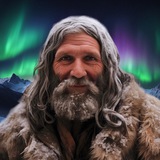
The reconstruction shown here is of Sunghir1 and dated to ~33,000 bp. He was found to have a height of 178 cm (5'10) and is likely to have been very muscular based upon wear patterns on his clavicles. Credit to Ancestral Whispers for the recon
Proto-Gravettians:
The Proto-Gravettians are represented by two sites in modern day Western Russia, Sunghir and Kostenki, and one in Crimea, Buran Kaya. The samples are dated between 30-36,000 ybp and represent the ancestors to the Gravettian culture. They would eventually migrate westward and displace the Aurignacians in most of Europe. Later Gravettian samples such as Vestonice (Czechia), Krems (Austria) , and Ostuni (Italy) were found to have derived most, or all, of their ancestry from the Proto-Gravettians. This is in contrast to the earlier inhabitants of Europe who showed ancestry related to GoyetQ116-1 (Aurignacian). Like most other Paleolithic Europeans, they mostly belonged to Y-haplogroup C1a and different types of mtDNA U.
The reconstruction shown here is of Sunghir1 and dated to ~33,000 bp. He was found to have a height of 178 cm (5'10) and is likely to have been very muscular based upon wear patterns on his clavicles. Credit to Ancestral Whispers for the recon
🔥4👍2❤1👏1💩1
Genetic distance to Cimmerians 🐴
The Cimmerians were an Eastern Iranian group that inhabited the Caspian steppe during the early Iron Age. They, like the related Scythians, were an Andronovo descended group that migrated westwards into Eastern Europe. They did so at the expense of the late Catacomb culture, who they appear to have mixed with and replaced over time. This is why they show even higher levels of Steppe ancestry than their Andronovo ancestors. Eventually they would be pushed from the steppes by westward migrating Scythians around the 720’s BC. They would migrate southwards into the Caucasus, from where they would launch several invasions of Western Asia including Urartu, Assyria, and parts of Anatolia. Despite this, they don’t appear to have mixed with the locals and remained a seperate nomadic group until they faded from history around 600 BC.
Haplogroups found among them include R1a and Q1a.
The Cimmerians were an Eastern Iranian group that inhabited the Caspian steppe during the early Iron Age. They, like the related Scythians, were an Andronovo descended group that migrated westwards into Eastern Europe. They did so at the expense of the late Catacomb culture, who they appear to have mixed with and replaced over time. This is why they show even higher levels of Steppe ancestry than their Andronovo ancestors. Eventually they would be pushed from the steppes by westward migrating Scythians around the 720’s BC. They would migrate southwards into the Caucasus, from where they would launch several invasions of Western Asia including Urartu, Assyria, and parts of Anatolia. Despite this, they don’t appear to have mixed with the locals and remained a seperate nomadic group until they faded from history around 600 BC.
Haplogroups found among them include R1a and Q1a.
❤9🔥3😁2👎1
Colorized Fatyanovo reconstructions from @sovelios on Twitter
You can find my previous post on the Fatyanovo culture here:
https://www.instagram.com/p/Ck97LB9NIIR/?igshid=YmMyMTA2M2Y=
You can find my previous post on the Fatyanovo culture here:
https://www.instagram.com/p/Ck97LB9NIIR/?igshid=YmMyMTA2M2Y=
❤10👍1🔥1
Art depicting a warrior of the Tagar culture
Previous post on the Tagar:
https://www.instagram.com/p/CqrvFbuOYyG/?igshid=YmMyMTA2M2Y=
Previous post on the Tagar:
https://www.instagram.com/p/CqrvFbuOYyG/?igshid=YmMyMTA2M2Y=
🔥5👍2❤1
Made some updates to the Paleolithic calculator. Now it should more accurately pick up Dzudzuana from all sources, rather than just from CHG. It’s still a work in progress, but I think this model is pretty good:
https://justpaste.it/a73x4
Share your results!
https://justpaste.it/a73x4
Share your results!
❤3🔥2
”Others” includes C, I, J, K, N, and X. Only one sample for each of them
👍6
Apologies, the Corded Ware frequencies were incorrect. I will remake it soon
❤6