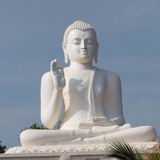
Forwarded from Words of the Buddha
Once it arrives, panna transforms into sampajanna (wisdom-in-action), the specific application of wisdom required by the situation. Then, samadhi's power and strength are added to sampajanna. With them we are able to conquer every kind of object that comes in through the eyes, ears, nose, tongue, body, and mind. The four comrade dhammas are unsurpassed guardians. They watch over and protect us just like God. If we practice Anapanasati we will acquire the four comrade dhammas.
===
Part 1 of 2:
https://news.1rj.ru/str/dhammapadas/2276
Part 2 of 2:
https://news.1rj.ru/str/wordsofbuddha/3298
===
Dhammapada, beloved and favorite teachings of the Buddha channel:
https://news.1rj.ru/str/dhammapadas
===
===
Part 1 of 2:
https://news.1rj.ru/str/dhammapadas/2276
Part 2 of 2:
https://news.1rj.ru/str/wordsofbuddha/3298
===
Dhammapada, beloved and favorite teachings of the Buddha channel:
https://news.1rj.ru/str/dhammapadas
===
Telegram
Dhammapada - Buddha Dharma Teachings
Daily teachings of the Dhammapada, beloved and favorite teachings of the Buddha
👍1🥰1
Dhammapada Verse 387
Anandatthera Vatthu
Diva tapati adicco
ratti mabhati candima
sannaddho khattiyo tapati
jhayi tapati brahmano
atha sabbamahorattim
buddho tapati tejasa.
Verse 387: By day shines the sun; by night shines the moon; in regalia shines the king; in meditation shines the arahat; but the Buddha in his glory shines at all times, by day and by night.
The Story of Thera Ananda
While residing at the Pubbarama monastery, the Buddha uttered Verse (387) of this book, with reference to the Venerable Ananda.
It was the full moon day of the seventh month (Assayuja) when King Pasenadi of Kosala came to visit the Buddha. The king was then resplendent in his full royal regalia. At that time, Thera Kaludayi was also present in the same room sitting at the edge of the congregation. He was in deep mental absorption (jhana), his body bright and golden. In the sky, the Venerable Ananda noticed that the sun was setting and the moon was just coming out, both the sun and the moon radiating rays of light.
The Venerable Ananda looked at the shining splendour of the king, of the thera, and of the sun and the moon. Finally, the Venerable Ananda looked at the Buddha and he suddenly perceived that the light that was then radiating from the Buddha far surpassed the light shining from the others. Seeing the Buddha in his glory and splendour, the Venerable Ananda immediately approached the Buddha and burst forth, "O Venerable Sir! The light that shines forth from your noble body far surpasses the light from the king, the light from the thera, the light from the sun and the light from the moon."
To him the Buddha spoke in verse as follows:
Verse 387: By day shines the sun; by night shines the moon; in regalia shines the king; in meditation shines the arahat; but the Buddha in his glory shines at all times, by day and by night.
===
Free Buddhism books, teachings, podcasts and videos from Theravada, Mahayana and Vajrayana traditions:
https://news.1rj.ru/str/buddha_ebooks
===
Anandatthera Vatthu
Diva tapati adicco
ratti mabhati candima
sannaddho khattiyo tapati
jhayi tapati brahmano
atha sabbamahorattim
buddho tapati tejasa.
Verse 387: By day shines the sun; by night shines the moon; in regalia shines the king; in meditation shines the arahat; but the Buddha in his glory shines at all times, by day and by night.
The Story of Thera Ananda
While residing at the Pubbarama monastery, the Buddha uttered Verse (387) of this book, with reference to the Venerable Ananda.
It was the full moon day of the seventh month (Assayuja) when King Pasenadi of Kosala came to visit the Buddha. The king was then resplendent in his full royal regalia. At that time, Thera Kaludayi was also present in the same room sitting at the edge of the congregation. He was in deep mental absorption (jhana), his body bright and golden. In the sky, the Venerable Ananda noticed that the sun was setting and the moon was just coming out, both the sun and the moon radiating rays of light.
The Venerable Ananda looked at the shining splendour of the king, of the thera, and of the sun and the moon. Finally, the Venerable Ananda looked at the Buddha and he suddenly perceived that the light that was then radiating from the Buddha far surpassed the light shining from the others. Seeing the Buddha in his glory and splendour, the Venerable Ananda immediately approached the Buddha and burst forth, "O Venerable Sir! The light that shines forth from your noble body far surpasses the light from the king, the light from the thera, the light from the sun and the light from the moon."
To him the Buddha spoke in verse as follows:
Verse 387: By day shines the sun; by night shines the moon; in regalia shines the king; in meditation shines the arahat; but the Buddha in his glory shines at all times, by day and by night.
===
Free Buddhism books, teachings, podcasts and videos from Theravada, Mahayana and Vajrayana traditions:
https://news.1rj.ru/str/buddha_ebooks
===
Telegram
Buddha Dharma books
Free Buddhism books, teachings, podcasts and videos from Theravada, Mahayana and Vajrayana traditions
👍2❤1🔥1🆒1
Forwarded from Words of the Buddha
Shwedagon Zedi Daw, The Shwedagon Golden Dagon Pagoda, Yangon, Myanmar.
👍3🤩1😍1
Forwarded from Ajahn Chah - Theravada Thailand Buddhism
Free Buddha Dharma ebook
Not for Sure: Two Dhamma Talks
By Ajahn Chah, translated from the Thai by Thanissaro Bhikkhu
Two Dhamma talks by Ajahn Chah "Supposition and Release" and "Still Flowing Water".
Free download available:
https://www.accesstoinsight.org/lib/thai/chah/not_for_sure.pdf
===
Not for Sure: Two Dhamma Talks
By Ajahn Chah, translated from the Thai by Thanissaro Bhikkhu
Two Dhamma talks by Ajahn Chah "Supposition and Release" and "Still Flowing Water".
Free download available:
https://www.accesstoinsight.org/lib/thai/chah/not_for_sure.pdf
===
👍1🏆1
Dhammapada Verse 388
Annatarabrahmana Pabbajita Vatthu
Bahitapapoti brahmano
samacariya1 "samano" ti vuccati
pabbajayamattano malam
tasma "pabbajito2" ti vuccati.
Verse 388: Because he has discarded evil he is called a 'brahmana'; because he lives calmly he is called a 'samana'; and because he gets rid of his impurities he is called a 'pabbajita'.
1. samacariya: lit., living calmly, i.e., practising for eradication of moral defilements.
2. pabbajita: one who leaves the household life for the homeless life of a recluse; in Buddhism it means one who has given up the impurities of the household life to become a bhikkhu.
The Story of a Brahmin Recluse
While residing at the Jetavana monastery, the Buddha uttered Verse (388) of this book, with reference to a brahmin ascetic.
Once there was a brahmin ascetic in Savatthi. One day, it occurred to him that the Buddha called his disciples pabbajita bhikkhus and since he also was a recluse, he should also be called a pabbajita. So he went to the Buddha and posed the question why he should not be called a pabbajita. The Buddha's answer to him was this: "Just because one is a recluse one does not automatically become a pabbajita; a pabbajita must have other qualifications also."
Then the Buddha spoke in verse as follows:
Verse 388: Because he has discarded evil he is called a 'brahmana'; because he lives calmly he is called a 'samana'; and because he gets rid of his impurities he is called a 'pabbajita'.
At the end of the discourse the brahmin attained Sotapatti Fruition.
===
Buddha dharma teachings channel:
https://news.1rj.ru/str/lorddivinebuddha
===
Annatarabrahmana Pabbajita Vatthu
Bahitapapoti brahmano
samacariya1 "samano" ti vuccati
pabbajayamattano malam
tasma "pabbajito2" ti vuccati.
Verse 388: Because he has discarded evil he is called a 'brahmana'; because he lives calmly he is called a 'samana'; and because he gets rid of his impurities he is called a 'pabbajita'.
1. samacariya: lit., living calmly, i.e., practising for eradication of moral defilements.
2. pabbajita: one who leaves the household life for the homeless life of a recluse; in Buddhism it means one who has given up the impurities of the household life to become a bhikkhu.
The Story of a Brahmin Recluse
While residing at the Jetavana monastery, the Buddha uttered Verse (388) of this book, with reference to a brahmin ascetic.
Once there was a brahmin ascetic in Savatthi. One day, it occurred to him that the Buddha called his disciples pabbajita bhikkhus and since he also was a recluse, he should also be called a pabbajita. So he went to the Buddha and posed the question why he should not be called a pabbajita. The Buddha's answer to him was this: "Just because one is a recluse one does not automatically become a pabbajita; a pabbajita must have other qualifications also."
Then the Buddha spoke in verse as follows:
Verse 388: Because he has discarded evil he is called a 'brahmana'; because he lives calmly he is called a 'samana'; and because he gets rid of his impurities he is called a 'pabbajita'.
At the end of the discourse the brahmin attained Sotapatti Fruition.
===
Buddha dharma teachings channel:
https://news.1rj.ru/str/lorddivinebuddha
===
Telegram
Buddha
Buddha dharma teachings from the suttas and commentaries
❤1👍1
Dhammapada Verses 389 and 390
Sariputtatthera Vatthu
Na brahmanassa pahareyya
nassa muncetha brahmano
dhi brahmanassa hantaram
tato dhi yassa muncati.
Na brahmanasse' tadakinci seyyo
yada nisedho manaso piyehi
yato yato himsamano nivattati
tato tato sammatimeva dukkham.
Verse 389: One should not strike a brahmana; a brahmana should not get angry with his assailant; it is shameful to strike a brahmana; it is more shameful to get angry with one's assailant.
Verse 390: For a brahmana there is no benefit at all if he does not restrain from anger to which his mind is prone. Inasmuch as one desists from the intention to harm, to that extent dukkha ceases.
The Story of Thera Sariputta
While residing at the Jetavana monastery, the Buddha uttered Verses (389) and (390) of this book, with reference to the Venerable Sariputta.
The Venerable Sariputta was often praised by many people for his patience and forbearance. His pupils usually said of him thus: "Our teacher is a man of great patience and extreme endurance. If he is abused or even beaten by others, he does not lose his temper but remains calm and composed." As this was often said of the Venerable Sariputta, a brahmin holding wrong views declared to the admirers of Sariputta that he would provoke the Venerable Sariputta into anger. At that moment, the Venerable Sariputta, who was on his alms-round, appeared on the scene; the brahmin went after him and hit him hard on his back with his hand. The thera did not even look round to see who was the person that attacked him, but proceeded on his way as if nothing had happened. Seeing the magnanimity and great fortitude of the noble thera, the brahmin was very much shaken. He got down on his knees at the feet of the Venerable Sariputta, admitted that he had wrongfully hit the thera, and asked for pardon. The brahmin then continued, "Venerable Sir, should you forgive me, kindly come to my house for alms-food."
In the evening, other bhikkhus reported to the Buddha that the Venerable Sariputta had gone for alms-food to the house of a brahmin who had beaten him. Further, they observed that the brahmin was sure to get bolder and he would soon be assaulting other bhikkhus also. To those bhikkhus, the Buddha replied, "Bhikkhus, a true brahmana does not beat another true brahmana; only an ordinary man or an ordinary brahmin would beat an arahat in anger and ill will. This ill will should be eradicated by Anagami Magga."
Then the Buddha spoke in verse as follows:
Verse 389: One should not strike a brahmana; a brahmana should not get angry with his assailant; it is shameful to strike a brahmana; it is more shameful to get angry with one's assailant.
Verse 390: For a brahmana there is no benefit at all if he does not restrain from anger to which his mind is prone. Inasmuch as one desists from the intention to harm, to that extent dukkha ceases.
===
Vajrayana Tantrayana Buddhism channel:
https://news.1rj.ru/str/tantrayanabuddhism
Tibetan Buddhism - Vajrayana, Tantrayana and esoteric Buddhism channel:
https://news.1rj.ru/str/tibetanbuddha
===
Sariputtatthera Vatthu
Na brahmanassa pahareyya
nassa muncetha brahmano
dhi brahmanassa hantaram
tato dhi yassa muncati.
Na brahmanasse' tadakinci seyyo
yada nisedho manaso piyehi
yato yato himsamano nivattati
tato tato sammatimeva dukkham.
Verse 389: One should not strike a brahmana; a brahmana should not get angry with his assailant; it is shameful to strike a brahmana; it is more shameful to get angry with one's assailant.
Verse 390: For a brahmana there is no benefit at all if he does not restrain from anger to which his mind is prone. Inasmuch as one desists from the intention to harm, to that extent dukkha ceases.
The Story of Thera Sariputta
While residing at the Jetavana monastery, the Buddha uttered Verses (389) and (390) of this book, with reference to the Venerable Sariputta.
The Venerable Sariputta was often praised by many people for his patience and forbearance. His pupils usually said of him thus: "Our teacher is a man of great patience and extreme endurance. If he is abused or even beaten by others, he does not lose his temper but remains calm and composed." As this was often said of the Venerable Sariputta, a brahmin holding wrong views declared to the admirers of Sariputta that he would provoke the Venerable Sariputta into anger. At that moment, the Venerable Sariputta, who was on his alms-round, appeared on the scene; the brahmin went after him and hit him hard on his back with his hand. The thera did not even look round to see who was the person that attacked him, but proceeded on his way as if nothing had happened. Seeing the magnanimity and great fortitude of the noble thera, the brahmin was very much shaken. He got down on his knees at the feet of the Venerable Sariputta, admitted that he had wrongfully hit the thera, and asked for pardon. The brahmin then continued, "Venerable Sir, should you forgive me, kindly come to my house for alms-food."
In the evening, other bhikkhus reported to the Buddha that the Venerable Sariputta had gone for alms-food to the house of a brahmin who had beaten him. Further, they observed that the brahmin was sure to get bolder and he would soon be assaulting other bhikkhus also. To those bhikkhus, the Buddha replied, "Bhikkhus, a true brahmana does not beat another true brahmana; only an ordinary man or an ordinary brahmin would beat an arahat in anger and ill will. This ill will should be eradicated by Anagami Magga."
Then the Buddha spoke in verse as follows:
Verse 389: One should not strike a brahmana; a brahmana should not get angry with his assailant; it is shameful to strike a brahmana; it is more shameful to get angry with one's assailant.
Verse 390: For a brahmana there is no benefit at all if he does not restrain from anger to which his mind is prone. Inasmuch as one desists from the intention to harm, to that extent dukkha ceases.
===
Vajrayana Tantrayana Buddhism channel:
https://news.1rj.ru/str/tantrayanabuddhism
Tibetan Buddhism - Vajrayana, Tantrayana and esoteric Buddhism channel:
https://news.1rj.ru/str/tibetanbuddha
===
Telegram
Vajrayana Tantrayana Buddhism
Buddha teachings from the Vajrayana, esoteric, secret or Tantrayana vehicle
💯1🏆1
Free Buddhism Dharma ebook
The Gentle Way of Buddhist Meditation
by Godwin Samararatne
Trannoscripts of teachings during meditation retreats by Godwin Samararatne in Hong Kong.
Free download available:
https://ftp.budaedu.org/ebooks/pdf/EN357.pdf
===
The Gentle Way of Buddhist Meditation
by Godwin Samararatne
Trannoscripts of teachings during meditation retreats by Godwin Samararatne in Hong Kong.
Free download available:
https://ftp.budaedu.org/ebooks/pdf/EN357.pdf
===
❤1🤗1😘1
Free Buddhism Dharma ebook
The Gentle Way of Buddhist Meditation
by Godwin Samararatne
Trannoscripts of teachings during meditation retreats by Godwin Samararatne in Hong Kong.
Free download available:
https://ftp.budaedu.org/ebooks/pdf/EN357.pdf
===
The Gentle Way of Buddhist Meditation
by Godwin Samararatne
Trannoscripts of teachings during meditation retreats by Godwin Samararatne in Hong Kong.
Free download available:
https://ftp.budaedu.org/ebooks/pdf/EN357.pdf
===
❤1👍1🥰1
Anapanasati Mindfulness With Breathing
By Buddhadasa Bhikkhu
Part 1 of 2
PRACTICING FUNDAMENTAL TRUTHS
The next benefit is that we are able to practice in line with the principle of paticca-samuppada (dependent origination, conditioned arising). The theory of paticca-samuppada is complex and lengthy. For those of you who are not familiar with it, conditioned arising explains the causal origination of dukkha. A series of causes, each dependent on a previous cause, leads to suffering. The Lord Buddha taught many variations on this theme, but because of its great subtlety and profundity it is difficult to understand. Do study it. But once we come to its practical application, dependent origination is exquisitely simple. In practice, it all boils down to having sati in the moment of phassa (sense contact) and that is all. Phassa is the meeting of an internal sense organ, a corresponding external sense object, and the appropriate type of sense consciousness (vinnana). Merely having sati in the moment of phassa solves all the possible problems of paticca-samuppada completely. That is, before conditioned arising can develop have sati right there at contact. Do not let it be ignorant phassa. Then that contact will not lead to ignorant feeling and ignorant feeling will not lead to foolish craving (tanha). It all stops there. This is another advantage of training in Anapanasati. It makes sati sufficiently abundant and fast, qualified enough, to perform its duty in the moment of phassa and stop the stream of paticca-samuppada just then and there. This is an enormous benefit of practicing Anapanasati.
Another benefit is that we are able to practice according to the principle of the four ariya-sacca with ease and completeness. You all have heard and know about the four noble truths. The essence of this law is that dukkha is born out of ignorant desire (tanha). If there is tanha, there must be dukkha. When we are able to use sati to stop tanha and break it off, there is no dukkha. Through preventing ignorant sense experience (phassa), there is no ignorant feeling (vedana) and tanha is not stirred up. This is the best, most beneficial way to practice the four noble truths. Stop tanha through the speed and power of the sati developed by practicing Anapanasati in all four tetrads (body, feelings, mind and dhamma).
THE HEART OF THE TRIPLE GEM
A further benefit is that Anapanasati easily, completely, and perfectly brings us the Triple Gem (ti-ratana), the Three Refuges of Buddhism. This is because the essence or nucleus of the Buddha, The Dhamma, and the Sangha is in cleanliness-clarity-calm (purity- radiance-tranquility). The state of citta that is clean-clear-calm is the essence of Buddha-Dhamma-Sangha. Please be careful about these three words. The Lord Buddha is not some physical body. Rather, the state in the mind that is clean-clear-calm is the true Lord Buddha. In seeing the Dhamma, the Buddha is seen. The heart of the Dhamma is this cleanliness-clarity-calm itself. Then, the Sangha are those who through successful practice have clean-clear-calm minds. All three words are most important. The first person to realize perfect cleanliness-clarity-calm is called "the Buddha," that Truth realized is called "the Dhamma," and the people who can follow and practice accordingly are called "the Sangha." When we practice Anapanasati we make our citta clean-clear-calm, as we have explained in detail throughout these lectures. These qualities are the fruit of viraga, nirodha, and patinissagga (steps fourteen through sixteen). Through them there is cleanliness-clarity-calm, thereby there is easily the genuine Buddha-Dhamma-Sangha in our mind- hearts. This is another of Anapanasati's unsurpassed benefits.
BUDDHISM IN ITS ENTIRETY
Now, the next benefit is that in practicing Anapanasati we practice the most fundamental principle of Buddhism, namely, sila- samadhi-panna. These three factors are wholly present in the practitioner of Anapanasati. The unshakeable determination to practice is sila (virtue).
By Buddhadasa Bhikkhu
Part 1 of 2
PRACTICING FUNDAMENTAL TRUTHS
The next benefit is that we are able to practice in line with the principle of paticca-samuppada (dependent origination, conditioned arising). The theory of paticca-samuppada is complex and lengthy. For those of you who are not familiar with it, conditioned arising explains the causal origination of dukkha. A series of causes, each dependent on a previous cause, leads to suffering. The Lord Buddha taught many variations on this theme, but because of its great subtlety and profundity it is difficult to understand. Do study it. But once we come to its practical application, dependent origination is exquisitely simple. In practice, it all boils down to having sati in the moment of phassa (sense contact) and that is all. Phassa is the meeting of an internal sense organ, a corresponding external sense object, and the appropriate type of sense consciousness (vinnana). Merely having sati in the moment of phassa solves all the possible problems of paticca-samuppada completely. That is, before conditioned arising can develop have sati right there at contact. Do not let it be ignorant phassa. Then that contact will not lead to ignorant feeling and ignorant feeling will not lead to foolish craving (tanha). It all stops there. This is another advantage of training in Anapanasati. It makes sati sufficiently abundant and fast, qualified enough, to perform its duty in the moment of phassa and stop the stream of paticca-samuppada just then and there. This is an enormous benefit of practicing Anapanasati.
Another benefit is that we are able to practice according to the principle of the four ariya-sacca with ease and completeness. You all have heard and know about the four noble truths. The essence of this law is that dukkha is born out of ignorant desire (tanha). If there is tanha, there must be dukkha. When we are able to use sati to stop tanha and break it off, there is no dukkha. Through preventing ignorant sense experience (phassa), there is no ignorant feeling (vedana) and tanha is not stirred up. This is the best, most beneficial way to practice the four noble truths. Stop tanha through the speed and power of the sati developed by practicing Anapanasati in all four tetrads (body, feelings, mind and dhamma).
THE HEART OF THE TRIPLE GEM
A further benefit is that Anapanasati easily, completely, and perfectly brings us the Triple Gem (ti-ratana), the Three Refuges of Buddhism. This is because the essence or nucleus of the Buddha, The Dhamma, and the Sangha is in cleanliness-clarity-calm (purity- radiance-tranquility). The state of citta that is clean-clear-calm is the essence of Buddha-Dhamma-Sangha. Please be careful about these three words. The Lord Buddha is not some physical body. Rather, the state in the mind that is clean-clear-calm is the true Lord Buddha. In seeing the Dhamma, the Buddha is seen. The heart of the Dhamma is this cleanliness-clarity-calm itself. Then, the Sangha are those who through successful practice have clean-clear-calm minds. All three words are most important. The first person to realize perfect cleanliness-clarity-calm is called "the Buddha," that Truth realized is called "the Dhamma," and the people who can follow and practice accordingly are called "the Sangha." When we practice Anapanasati we make our citta clean-clear-calm, as we have explained in detail throughout these lectures. These qualities are the fruit of viraga, nirodha, and patinissagga (steps fourteen through sixteen). Through them there is cleanliness-clarity-calm, thereby there is easily the genuine Buddha-Dhamma-Sangha in our mind- hearts. This is another of Anapanasati's unsurpassed benefits.
BUDDHISM IN ITS ENTIRETY
Now, the next benefit is that in practicing Anapanasati we practice the most fundamental principle of Buddhism, namely, sila- samadhi-panna. These three factors are wholly present in the practitioner of Anapanasati. The unshakeable determination to practice is sila (virtue).
Telegram
Words of the Buddha
Daily teachings of Buddha Dharma
👍1🏆1
When the mind is set on correct action, that is sila altogether. In the intention necessary to practice every step of Anapanasati there is automatically a natural sila without us having to practice it in particular. Then, there will be samadhi (concentration) as well. Because of this intention, we practice until samadhi arises. Then panna (wisdom) develops, especially in the fourth tetrad which is the most perfect wisdom. In practicing Anapanasati correctly the most fundamental principle of Buddhism is fulfilled, it leads to sila-samadhi-panna in full measure. This is an enormous benefit: practicing Buddhism in its entirety.
When we speak concisely, we talk about sila-samadhi-panna. If we want to go into more complete detail, we talk about the seven bojjhanga (factors of awakening). There is a statement of the Buddha which asserts that fully practicing the sixteen steps of Anapanasati perfects the four satipatthana (foundations of mindfulness). Through the perfection of the four satipatthana (body, feeling, mind, and Dhamma, i.e., the objects of the four tetrads), the seven bojjhanga are perfected. Then full awakening is assured. The seven bojjhanga are the very factors which lead to the enlightenment of the arahant (a human being who is liberated from all dukkha). It would take hours to go into all the details. Now, we only have time to give the names of these factors for you to hear: sati, dhammavicaya (investigation of Dhamma), viriya (effort, energy), piti (contentment, satisfaction), passaddhi (tranquility), samadhi (concentration, collectedness), and upekkha (equanimity, even-mindedness). These seven factors are complete when Anapanasati is complete. When these seven factors are complete, perfect awakening is assured.
Although we do not have enough time now to explain further, please understand that the seven bojjhanga are a sure thing when Anapanasati is practiced completely. The recorded words of the Buddha state this clearly. You can verify its truth by yourself.
===
Part 1 of 2:
https://news.1rj.ru/str/dhammapadas/2301
Part 2 of 2:
https://news.1rj.ru/str/wordsofbuddha/3332
===
Words of the Buddha channel:
https://news.1rj.ru/str/wordsofbuddha
===
When we speak concisely, we talk about sila-samadhi-panna. If we want to go into more complete detail, we talk about the seven bojjhanga (factors of awakening). There is a statement of the Buddha which asserts that fully practicing the sixteen steps of Anapanasati perfects the four satipatthana (foundations of mindfulness). Through the perfection of the four satipatthana (body, feeling, mind, and Dhamma, i.e., the objects of the four tetrads), the seven bojjhanga are perfected. Then full awakening is assured. The seven bojjhanga are the very factors which lead to the enlightenment of the arahant (a human being who is liberated from all dukkha). It would take hours to go into all the details. Now, we only have time to give the names of these factors for you to hear: sati, dhammavicaya (investigation of Dhamma), viriya (effort, energy), piti (contentment, satisfaction), passaddhi (tranquility), samadhi (concentration, collectedness), and upekkha (equanimity, even-mindedness). These seven factors are complete when Anapanasati is complete. When these seven factors are complete, perfect awakening is assured.
Although we do not have enough time now to explain further, please understand that the seven bojjhanga are a sure thing when Anapanasati is practiced completely. The recorded words of the Buddha state this clearly. You can verify its truth by yourself.
===
Part 1 of 2:
https://news.1rj.ru/str/dhammapadas/2301
Part 2 of 2:
https://news.1rj.ru/str/wordsofbuddha/3332
===
Words of the Buddha channel:
https://news.1rj.ru/str/wordsofbuddha
===
Telegram
Words of the Buddha
Daily teachings of Buddha Dharma
👏1💯1