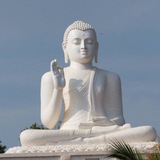
Forwarded from Words of the Buddha
Free Buddha Dharma ebook
Frames of Reference
By Ajaan Lee Dhammadharo
A practical explanation for meditators of the four frames of reference from the Satipaṭṭhāna Sutta.
Free download available:
https://www.dhammatalks.org/Archive/Writings/Ebooks/FramesOfReference200826.pdf
===
Frames of Reference
By Ajaan Lee Dhammadharo
A practical explanation for meditators of the four frames of reference from the Satipaṭṭhāna Sutta.
Free download available:
https://www.dhammatalks.org/Archive/Writings/Ebooks/FramesOfReference200826.pdf
===
👍3🆒1
Dhammapada Verse 392
Sariputtatthera Vatthu
Yamha dhammam vijaneyya
sammasambuddhadesitam
sakkaccam tam namasseyya
aggihuttamva brahmano.
Verse 392: If from somebody one should learn the Teaching of the Buddha, he should respectfully pay homage to that teacher, as a brahmin worships the sacrificial fire.
The Story of Thera Sariputta
While residing at the Jetavana monastery, the Buddha uttered Verse (392) of this book, with reference to the Venerable Sariputta.
The Venerable Sariputta was born of brahmin parents of Upatissa village; that was why he was named Upatissa. His mother was Sari. His very close friend was Kolita, another brahmin youth, son of Moggali. Both the youths were searching for the right doctrine, which would lead them to liberation from the round of rebirths, and both of them had a great desire to enter a religious Order. First, they went to Sancaya, but they were not satisfied with his teaching. Then they wandered all over Jambudipa looking for a teacher who would show them the way to the Deathless, but their search was fruitless. After some time, they parted company but with the understanding that the one who found the true dhamma first should inform the other.
About that time, the Buddha arrived at Rajagaha with a company of bhikkhus, including Thera Assaji, one of the group of the first Five Bhikkhus (Pancavaggis). While Thera Assaji was on an alms-round, Upatissa saw the thera and was very much impressed by his noble countenance. So Upatissa respectfully approached the thera and asked who his teacher was, what doctrine his teacher taught, and also briefly to explain the doctrine to him. Thera Assaji then told Upatissa about the arising of the Buddha and about his sojourn at the Veluvana monastery in Rajagaha. The thera also quoted a short stanza connected with the Four Noble Truths.
The verse runs thus:
Ye dhamma hetuppa bhava
tesam hetum tathagato aha
tesanca yo nirodho
evam vadi maha samano.
It means:
The Tathagata has declared the cause and also the cessation of all phenomena which arise from a cause. This is the doctrine held by the Great Samana.
When the verse was only half-way through, Upatissa attained Sotapatti Fruition.
As promised, Upatissa went to his friend Kolita to inform him that he had found the true dhamma. Then the two friends, accompanied by two hundred and fifty followers, went to the Buddha who was then at Rajagaha. When they arrived at the Veluvana monastery, they asked permission to enter the Buddhist Order, and both Upatissa and Kolita, together with their two hundred and fifty followers, were admitted as bhikkhus. Upatissa, son of Sari, and Kolita, son of Moggali, then came to be known as Sariputta and Moggallana. Soon after their admission to the Order, the Buddha expounded to them a dhamma and the two hundred and fifty bhikkhus attained arahatship; but Moggallana and Sariputta attained arahatship only at the end of seven days and fifteen days respectively. The reason for the delay in their attainment of arahatship was that they had made a wish for Chief Discipleship, which required much more striving to achieve perfection.
The Venerable Sariputta always remembered that he had been able to meet the Buddha and attain the Deathless through the Venerable Assaji. So, he always paid obeisance in the direction where his teacher was and he always went to bed with his head lying in the same direction. Other bhikkhus who were staying with him at the Jetavana monastery misinterpreted his actions and said to the Buddha, "Venerable Sir! The Venerable Sariputta still worships the various directions, viz., the East, the South, the West, the North, the Nadir and the Zenith, as he has done before as a brahmin youth; it seems as if he has not yet given up his old beliefs." The Buddha sent for the Venerable Sariputta and Sariputta explained to the Buddha that he was only paying obeisance to his teacher, the Venerable Assaji, and that he was not worshipping the various directions.
Sariputtatthera Vatthu
Yamha dhammam vijaneyya
sammasambuddhadesitam
sakkaccam tam namasseyya
aggihuttamva brahmano.
Verse 392: If from somebody one should learn the Teaching of the Buddha, he should respectfully pay homage to that teacher, as a brahmin worships the sacrificial fire.
The Story of Thera Sariputta
While residing at the Jetavana monastery, the Buddha uttered Verse (392) of this book, with reference to the Venerable Sariputta.
The Venerable Sariputta was born of brahmin parents of Upatissa village; that was why he was named Upatissa. His mother was Sari. His very close friend was Kolita, another brahmin youth, son of Moggali. Both the youths were searching for the right doctrine, which would lead them to liberation from the round of rebirths, and both of them had a great desire to enter a religious Order. First, they went to Sancaya, but they were not satisfied with his teaching. Then they wandered all over Jambudipa looking for a teacher who would show them the way to the Deathless, but their search was fruitless. After some time, they parted company but with the understanding that the one who found the true dhamma first should inform the other.
About that time, the Buddha arrived at Rajagaha with a company of bhikkhus, including Thera Assaji, one of the group of the first Five Bhikkhus (Pancavaggis). While Thera Assaji was on an alms-round, Upatissa saw the thera and was very much impressed by his noble countenance. So Upatissa respectfully approached the thera and asked who his teacher was, what doctrine his teacher taught, and also briefly to explain the doctrine to him. Thera Assaji then told Upatissa about the arising of the Buddha and about his sojourn at the Veluvana monastery in Rajagaha. The thera also quoted a short stanza connected with the Four Noble Truths.
The verse runs thus:
Ye dhamma hetuppa bhava
tesam hetum tathagato aha
tesanca yo nirodho
evam vadi maha samano.
It means:
The Tathagata has declared the cause and also the cessation of all phenomena which arise from a cause. This is the doctrine held by the Great Samana.
When the verse was only half-way through, Upatissa attained Sotapatti Fruition.
As promised, Upatissa went to his friend Kolita to inform him that he had found the true dhamma. Then the two friends, accompanied by two hundred and fifty followers, went to the Buddha who was then at Rajagaha. When they arrived at the Veluvana monastery, they asked permission to enter the Buddhist Order, and both Upatissa and Kolita, together with their two hundred and fifty followers, were admitted as bhikkhus. Upatissa, son of Sari, and Kolita, son of Moggali, then came to be known as Sariputta and Moggallana. Soon after their admission to the Order, the Buddha expounded to them a dhamma and the two hundred and fifty bhikkhus attained arahatship; but Moggallana and Sariputta attained arahatship only at the end of seven days and fifteen days respectively. The reason for the delay in their attainment of arahatship was that they had made a wish for Chief Discipleship, which required much more striving to achieve perfection.
The Venerable Sariputta always remembered that he had been able to meet the Buddha and attain the Deathless through the Venerable Assaji. So, he always paid obeisance in the direction where his teacher was and he always went to bed with his head lying in the same direction. Other bhikkhus who were staying with him at the Jetavana monastery misinterpreted his actions and said to the Buddha, "Venerable Sir! The Venerable Sariputta still worships the various directions, viz., the East, the South, the West, the North, the Nadir and the Zenith, as he has done before as a brahmin youth; it seems as if he has not yet given up his old beliefs." The Buddha sent for the Venerable Sariputta and Sariputta explained to the Buddha that he was only paying obeisance to his teacher, the Venerable Assaji, and that he was not worshipping the various directions.
Telegram
Dhammapada - Buddha Dharma Teachings
Daily teachings of the Dhammapada, beloved and favorite teachings of the Buddha
❤1👍1🏆1
The Buddha was satisfied with the explanation given by the Venerable Sariputta and said to the other bhikkhus, "Bhikkhus! The Venerable Sariputta was not worshipping the various directions; he was only paying obeisance to his teacher and benefactor, through whom he had attained the Deathless. It is quite right and proper for him to pay homage to such a teacher."
Then the Buddha spoke in verse as follows:
Verse 392: If from somebody one should learn the Teaching of the Buddha, he should respectfully pay homage to that teacher, as a brahmin worships the sacrificial fire.
===
Dhammapada, beloved and favorite teachings of the Buddha channel:
https://news.1rj.ru/str/dhammapadas
===
Then the Buddha spoke in verse as follows:
Verse 392: If from somebody one should learn the Teaching of the Buddha, he should respectfully pay homage to that teacher, as a brahmin worships the sacrificial fire.
===
Dhammapada, beloved and favorite teachings of the Buddha channel:
https://news.1rj.ru/str/dhammapadas
===
Telegram
Dhammapada - Buddha Dharma Teachings
Daily teachings of the Dhammapada, beloved and favorite teachings of the Buddha
👏1💯1
Forwarded from Buddha Dharma books
Free Buddha Dharma ebook
Basic Themes: Four Treatises on Buddhist Practice, by Phra Ajaan Lee Dhammadharo
Uniquely among the ajaans in the Thai Wilderness tradition Ajaan Lee composed systematic treatises on the practice. These are valuable documents, giving a wilderness perspective on basic Dhamma topics.
Free download here:
https://www.dhammatalks.org/Archive/Writings/Ebooks/BasicThemes_181215.pdf
===
Basic Themes: Four Treatises on Buddhist Practice, by Phra Ajaan Lee Dhammadharo
Uniquely among the ajaans in the Thai Wilderness tradition Ajaan Lee composed systematic treatises on the practice. These are valuable documents, giving a wilderness perspective on basic Dhamma topics.
Free download here:
https://www.dhammatalks.org/Archive/Writings/Ebooks/BasicThemes_181215.pdf
===
💯2👍1🥰1
Dhammapada Verse 393
Jatilabrahmana Vatthu
Na jatahi na gottena
na jacca hoti brahmano
yamhi saccanca1 dhammo2 ca
so suci so ca brahmano.
Verse 393: Not by wearing matted hair, nor by lineage, nor by caste, does one become a brahmana; only he who realizes the Truth and the Dhamma is pure; he is a brahmana.
1. sacca: the Four Noble Truths.
2. dhamma : the nine Transcendentals, viz., the four Maggas, the four Phalas and Nibbana.
The Story of Jatila, the Brahmin
While residing at the Jetavana monastery, the Buddha uttered Verse (393) of this book, with reference to Jatila, a brahmin ascetic who wore matted hair.
Once, a brahmin ascetic thought to himself that the Buddha called his disciples 'brahmanas' and that he being a brahmin by birth should also be called a 'brahmana'. Thinking thus, he went to see the Buddha and put forward his view. But the Buddha rejected his view and said, "O brahmin, I do not call one a brahmana because he keeps his hair matted or simply because of his birth; I call one a brahmana only if he fully comprehends the Four Noble Truths."
Then the Buddha spoke in verse as follows:
Verse 393: Not by wearing matted hair, nor by lineage, nor by caste, does one become a brahmana; only he who realizes the Truth and the Dhamma is pure; he is a brahmana.
===
Buddha dharma teachings channel:
https://invite.viber.com/?g2=AQAKw1y3rv%2F6sk61PI2W4izuIiaEZj8YZujhY1tSzL%2B07s7rFnVFDAd0bAYFaMLw
===
Jatilabrahmana Vatthu
Na jatahi na gottena
na jacca hoti brahmano
yamhi saccanca1 dhammo2 ca
so suci so ca brahmano.
Verse 393: Not by wearing matted hair, nor by lineage, nor by caste, does one become a brahmana; only he who realizes the Truth and the Dhamma is pure; he is a brahmana.
1. sacca: the Four Noble Truths.
2. dhamma : the nine Transcendentals, viz., the four Maggas, the four Phalas and Nibbana.
The Story of Jatila, the Brahmin
While residing at the Jetavana monastery, the Buddha uttered Verse (393) of this book, with reference to Jatila, a brahmin ascetic who wore matted hair.
Once, a brahmin ascetic thought to himself that the Buddha called his disciples 'brahmanas' and that he being a brahmin by birth should also be called a 'brahmana'. Thinking thus, he went to see the Buddha and put forward his view. But the Buddha rejected his view and said, "O brahmin, I do not call one a brahmana because he keeps his hair matted or simply because of his birth; I call one a brahmana only if he fully comprehends the Four Noble Truths."
Then the Buddha spoke in verse as follows:
Verse 393: Not by wearing matted hair, nor by lineage, nor by caste, does one become a brahmana; only he who realizes the Truth and the Dhamma is pure; he is a brahmana.
===
Buddha dharma teachings channel:
https://invite.viber.com/?g2=AQAKw1y3rv%2F6sk61PI2W4izuIiaEZj8YZujhY1tSzL%2B07s7rFnVFDAd0bAYFaMLw
===
Viber
Buddha
Buddha dharma teachings from the suttas and commentaries from Theravada tradition
❤1👏1
Free Buddha Dharma ebook
The Not-self Strategy
By Thanissaro Bhikkhu
Free download here:
https://www.accesstoinsight.org/lib/authors/thanissaro/notselfstrategy.pdf
===
The Not-self Strategy
By Thanissaro Bhikkhu
Free download here:
https://www.accesstoinsight.org/lib/authors/thanissaro/notselfstrategy.pdf
===
🥰1🙏1
Free Buddha Dharma ebook
The Not-self Strategy
By Thanissaro Bhikkhu
As the Buddha once said, the teaching he most frequently gave to his students was this: All fabrications are inconstant; all phenomena are not-self (anatta) (MN 35). Many people have interpreted this second statement as meaning that there is no self. Others, however, have noticed statements in the Pali Canon—our earliest extant record of the Buddha’s teachings—that refer to the idea of self in a positive manner, as when the Buddha stated that the self is its own mainstay (Dhp 160) or when he encouraged a group of young men—who were searching for a woman who had stolen their belongings—to search for the self instead (Mv.I.14.4). From these statements, these readers conclude that the statement, “All phenomena are not-self,” is meant to clear away attachment to a false view of self so that an experience of the true self can be attained.
Free download here:
https://www.accesstoinsight.org/lib/authors/thanissaro/notselfstrategy.pdf
===
The Not-self Strategy
By Thanissaro Bhikkhu
As the Buddha once said, the teaching he most frequently gave to his students was this: All fabrications are inconstant; all phenomena are not-self (anatta) (MN 35). Many people have interpreted this second statement as meaning that there is no self. Others, however, have noticed statements in the Pali Canon—our earliest extant record of the Buddha’s teachings—that refer to the idea of self in a positive manner, as when the Buddha stated that the self is its own mainstay (Dhp 160) or when he encouraged a group of young men—who were searching for a woman who had stolen their belongings—to search for the self instead (Mv.I.14.4). From these statements, these readers conclude that the statement, “All phenomena are not-self,” is meant to clear away attachment to a false view of self so that an experience of the true self can be attained.
Free download here:
https://www.accesstoinsight.org/lib/authors/thanissaro/notselfstrategy.pdf
===
❤1👍1🏆1
Forwarded from Words of the Buddha
Wat Ek Phnom, Angkorian temple at Sangkae River, Battambang City, Cambodia.
👍1🤩1🆒1
Cultivate Tranquility, Harvest Insight
The classical Theravada model of meditation employs the practices of shamatha and vipassana, both. Ajahn Brahmavamso explains the path of tranquility and insight.
By Ajahn Brahmavamso
Part 1 of 3
In America, Theravada Buddhist meditation is often flatly identified with the practice of vipassana, even to the extent that those who practice within this tradition speak of themselves as vipassana meditators. However, the Pali suttas, the ancient records of the Buddha’s discourses, do not treat vipassana as an autonomous system of meditation but as a member of two paired meditative skills called shamatha and vipassana, tranquility and insight. Far from being opposed, in the suttas tranquility and insight are held to be complementary aspects of mental cultivation which, to yield the proper fruits of the Buddhist path, must eventually be yoked and harmonized.
According to their aptitude and disposition, meditators will develop these two qualities in different temporal sequences. One important source (Anguttara Nikaya, The Fours, sutta 170) states that some develop tranquility first and insight afterwards; others develop insight first and tranquility afterwards; and still others develop tranquility and insight in close conjunction. While most teachers of Theravada meditation in the West have leaned towards the second of these models, in the Buddha’s own discourses it is the first that predominates, and this model also forms the scaffolding for the classical Pali meditation manuals such as the Visuddhimagga (“The Path of Purification”).
Ajahn Brahmavamso, abbot of Bodhinyana Monastery in Western Australia, teaches meditation in accordance with this ancient paradigm. Like many other meditation teachers, he takes mindfulness of breathing as his primary subject of meditation, but he emphasizes the development of breath meditation in a particular way designed to induce states of deep concentration culminating in the jhanas, the exalted stages of mental unification. In this model, the meditator first pursues the development of a powerful, peaceful, focused mind by means of tranquility meditation. Once this is achieved, one then applies this mind to investigate the true characteristics of phenomena. This is the cultivation of vipassana, also called the higher wisdom of insight into phenomena, which brings direct personal insight into the impermanence, unsatisfactoriness, and selfless nature of all conditioned things. —Bhikkhu Bodhi
It is a law of nature that without effort one does not make progress. Whether one is a layperson or a monk, without effort one gets nowhere, in meditation or anything else.
Effort alone, though, is not sufficient. The effort needs to be skillful. This means directing your energy just at the right places and sustaining it there until its task is completed. Skillful effort neither hinders nor disturbs you; instead it produces the peace of deep meditation.
In order to know where your effort should be directed, you must have a clear understanding of the goal of meditation. The goal is the silence, stillness and clarity of mind. If you can understand that goal, then the place to apply your effort and the means to achieve the goal become very clear.
Skillful effort is directed at letting go, at developing a mind that inclines to abandoning. One of the many simple but profound statements of the Lord Buddha is that “a meditator whose mind inclines to abandoning easily achieves samadhi.” Such a meditator gains these states of inner bliss almost automatically. What the Lord Buddha was saying was that the major cause for attaining deep meditation, for reaching these powerful states, is the willingness to abandon, to let go, and to renounce.
1. Abiding in the Present Moment
In the way that I teach meditation, I like to begin with the very simple stage of giving up the baggage of past and future and abiding in the present moment. You may think that this is too basic, that it is an easy thing to do.
The classical Theravada model of meditation employs the practices of shamatha and vipassana, both. Ajahn Brahmavamso explains the path of tranquility and insight.
By Ajahn Brahmavamso
Part 1 of 3
In America, Theravada Buddhist meditation is often flatly identified with the practice of vipassana, even to the extent that those who practice within this tradition speak of themselves as vipassana meditators. However, the Pali suttas, the ancient records of the Buddha’s discourses, do not treat vipassana as an autonomous system of meditation but as a member of two paired meditative skills called shamatha and vipassana, tranquility and insight. Far from being opposed, in the suttas tranquility and insight are held to be complementary aspects of mental cultivation which, to yield the proper fruits of the Buddhist path, must eventually be yoked and harmonized.
According to their aptitude and disposition, meditators will develop these two qualities in different temporal sequences. One important source (Anguttara Nikaya, The Fours, sutta 170) states that some develop tranquility first and insight afterwards; others develop insight first and tranquility afterwards; and still others develop tranquility and insight in close conjunction. While most teachers of Theravada meditation in the West have leaned towards the second of these models, in the Buddha’s own discourses it is the first that predominates, and this model also forms the scaffolding for the classical Pali meditation manuals such as the Visuddhimagga (“The Path of Purification”).
Ajahn Brahmavamso, abbot of Bodhinyana Monastery in Western Australia, teaches meditation in accordance with this ancient paradigm. Like many other meditation teachers, he takes mindfulness of breathing as his primary subject of meditation, but he emphasizes the development of breath meditation in a particular way designed to induce states of deep concentration culminating in the jhanas, the exalted stages of mental unification. In this model, the meditator first pursues the development of a powerful, peaceful, focused mind by means of tranquility meditation. Once this is achieved, one then applies this mind to investigate the true characteristics of phenomena. This is the cultivation of vipassana, also called the higher wisdom of insight into phenomena, which brings direct personal insight into the impermanence, unsatisfactoriness, and selfless nature of all conditioned things. —Bhikkhu Bodhi
It is a law of nature that without effort one does not make progress. Whether one is a layperson or a monk, without effort one gets nowhere, in meditation or anything else.
Effort alone, though, is not sufficient. The effort needs to be skillful. This means directing your energy just at the right places and sustaining it there until its task is completed. Skillful effort neither hinders nor disturbs you; instead it produces the peace of deep meditation.
In order to know where your effort should be directed, you must have a clear understanding of the goal of meditation. The goal is the silence, stillness and clarity of mind. If you can understand that goal, then the place to apply your effort and the means to achieve the goal become very clear.
Skillful effort is directed at letting go, at developing a mind that inclines to abandoning. One of the many simple but profound statements of the Lord Buddha is that “a meditator whose mind inclines to abandoning easily achieves samadhi.” Such a meditator gains these states of inner bliss almost automatically. What the Lord Buddha was saying was that the major cause for attaining deep meditation, for reaching these powerful states, is the willingness to abandon, to let go, and to renounce.
1. Abiding in the Present Moment
In the way that I teach meditation, I like to begin with the very simple stage of giving up the baggage of past and future and abiding in the present moment. You may think that this is too basic, that it is an easy thing to do.
Telegram
Buddha
Buddha dharma teachings from the suttas and commentaries
👍1🤩1🙏1