“Nas tradições iniciáticas, há deuses e deusas que representam e inspiram a Loucura divina. Eles desafiam nossas visões de bom senso da realidade e normas de conduta. Em suas tentativas de ensinar verdades espirituais, chocam os limites cognitivos, desorganizam e sacodem as sensibilidades morais com radical excentricidade, artimanha e excesso. Essa desordem e a subsequente dissolução das fronteiras mentalmente definidas podem converter-se numa porta de entrada a uma ordem divina de maior relevância para a real transformação.”
- Georg Feuerstein
- Georg Feuerstein
Forwarded from The Classical Wisdom Tradition
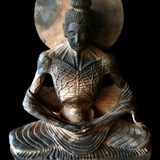
Asceticism often brings to mind very extreme images, but we can get an accurate sense of the real meaning of asceticism by looking at the etymology of the word.
The word “ascetic” ultimately derives from the ancient Greek word “askein,” which means “to train for athletic competition.”
Therefore, genuine asceticism is spiritual exercise, with the aim of gaining mastery over your impulses and appetites. Just as you lift weights to become stronger and healthier, you should practice asceticism to strengthen your soul.
Asceticism does not need to be (and shouldn’t be) extreme. It can be as simple as abstaining from pornography, eating only enough food to be healthy and no more, and the like. Of course, you know your own vices best and should find ascetic practices that aid you in your most problematic areas.
The word “ascetic” ultimately derives from the ancient Greek word “askein,” which means “to train for athletic competition.”
Therefore, genuine asceticism is spiritual exercise, with the aim of gaining mastery over your impulses and appetites. Just as you lift weights to become stronger and healthier, you should practice asceticism to strengthen your soul.
Asceticism does not need to be (and shouldn’t be) extreme. It can be as simple as abstaining from pornography, eating only enough food to be healthy and no more, and the like. Of course, you know your own vices best and should find ascetic practices that aid you in your most problematic areas.
Forwarded from The Classical Wisdom Tradition
How to overcome bad habits and characteristics
1. Sincerely wish that you will be happy, fulfill your highest purpose, and live in tranquility. Sincerely wish to be beautiful before God. Commit to obtain the purity that lies within you and that comes from divinity.
2. Imitate great men, such as Socrates, or any others you know. Remember how they behaved in difficult situations.
3. When anything happens - a temptation or a problematic situation or anything else - call on the aid and support of God. (By the way, it is perfectly correct to use singular God within the context of polytheism. Of course you can call upon a specific God too.)
4. Tell your thoughts and feelings to wait a moment, so that you can see what they’re all about. Tell them you don’t want to be swept away by their speed and momentum. When they ask you to start imagining all sorts of things that might happen, say no and instead think of something beautiful and noble.
5. Offer a sacrifice and prayer. To whatever extent you committed a wrong, gave into temptation, etc., acknowledge that in your sacrifice and prayer.
6. Consciously note every day that goes by since you were last defeated by your problem. “The last time I lost my temper was yesterday.” “The last time I was overcome by lust was three days ago.” Enjoy your victory each time.
7. If you defeat your problem for thirty days in a row, offer a sacrifice to God.
Source: Epictetus, Discourses 2.18
1. Sincerely wish that you will be happy, fulfill your highest purpose, and live in tranquility. Sincerely wish to be beautiful before God. Commit to obtain the purity that lies within you and that comes from divinity.
2. Imitate great men, such as Socrates, or any others you know. Remember how they behaved in difficult situations.
3. When anything happens - a temptation or a problematic situation or anything else - call on the aid and support of God. (By the way, it is perfectly correct to use singular God within the context of polytheism. Of course you can call upon a specific God too.)
4. Tell your thoughts and feelings to wait a moment, so that you can see what they’re all about. Tell them you don’t want to be swept away by their speed and momentum. When they ask you to start imagining all sorts of things that might happen, say no and instead think of something beautiful and noble.
5. Offer a sacrifice and prayer. To whatever extent you committed a wrong, gave into temptation, etc., acknowledge that in your sacrifice and prayer.
6. Consciously note every day that goes by since you were last defeated by your problem. “The last time I lost my temper was yesterday.” “The last time I was overcome by lust was three days ago.” Enjoy your victory each time.
7. If you defeat your problem for thirty days in a row, offer a sacrifice to God.
Source: Epictetus, Discourses 2.18
Forwarded from The Classical Wisdom Tradition
If you choose to take on an ascetic practice, you can use this guide as a tool along the way.
"Todo panteão, como o dos gregos, supõe deuses múltiplos; cada um tem suas funções próprias, seus domínios reservados, seus modos particulares de ação, seus tipos específicos de poder. Esses deuses que, em suas relações mútuas, compõem uma sociedade do além hierarquizada, na qual as competências e os privilégios são alvo de uma repartição bastante estrita, limitam-se necessariamente uns aos outros, ao mesmo tempo que se completam. Tal como a unicidade, o divino, no politeísmo, não implica, como para nós, a onipotência, a onisciência, a infinidade, o absoluto.
Esses deuses múltiplos estão no mundo e dele fazem parte. Não o criaram por um ato que, no caso do deus único, marca a completa transcendência deste em relação a uma obra cuja existência deriva e depende inteiramente dele. Os deuses nasceram do mundo. A geração daqueles aos quais os gregos prestam um culto, os olimpianos, veio à luz ao mesmo tempo que o universo, diferenciando-se e ordenando-se, assumia sua forma definitiva de cosmos organizado. Esse processo de gênese operou-se a partir de Potências primordiais, como Vazio (Cháos) e Terra (Gala), das quais saíram, ao mesmo tempo e pelo mesmo movimento, o mundo, tal como os humanos que habitam uma parte dele podem contemplá-lo, e os deuses, que a ele presidem invisíveis em sua morada celeste.
Há, portanto, algo de divino no mundo e algo de mundano nas divindades. Assim, o culto não pode visar a um ser radicalmente extramundano, cuja forma de existência não tenha relação com nada que seja de ordem natural, no universo físico, na vida humana, na existência social.
Em sua presença num cosmos repleto de deuses, o homem grego não separa, como se fossem dois domínios opostos, o natural e o sobrenatural. Estes permanecem intrinsecamente ligados um ao outro."
Jean Pierre Vernant
Esses deuses múltiplos estão no mundo e dele fazem parte. Não o criaram por um ato que, no caso do deus único, marca a completa transcendência deste em relação a uma obra cuja existência deriva e depende inteiramente dele. Os deuses nasceram do mundo. A geração daqueles aos quais os gregos prestam um culto, os olimpianos, veio à luz ao mesmo tempo que o universo, diferenciando-se e ordenando-se, assumia sua forma definitiva de cosmos organizado. Esse processo de gênese operou-se a partir de Potências primordiais, como Vazio (Cháos) e Terra (Gala), das quais saíram, ao mesmo tempo e pelo mesmo movimento, o mundo, tal como os humanos que habitam uma parte dele podem contemplá-lo, e os deuses, que a ele presidem invisíveis em sua morada celeste.
Há, portanto, algo de divino no mundo e algo de mundano nas divindades. Assim, o culto não pode visar a um ser radicalmente extramundano, cuja forma de existência não tenha relação com nada que seja de ordem natural, no universo físico, na vida humana, na existência social.
Em sua presença num cosmos repleto de deuses, o homem grego não separa, como se fossem dois domínios opostos, o natural e o sobrenatural. Estes permanecem intrinsecamente ligados um ao outro."
Jean Pierre Vernant
"O politeísmo grego não repousa sobre uma revelação; não há nada que fundamente, a partir do divino e por ele, sua inescapável verdade; a adesão baseiase no uso: os costumes humanos ancestrais, os nómoi. Tanto quanto a língua, o modo de vida, as maneiras à mesa, a vestimenta, o sustento, o estilo de comportamento nos âmbitos privado e público, o culto não precisa de outra justificação além de sua própria existência: desde que passou a ser praticado, provou ser necessário. Ele exprime o modo pelo qual os gregos regulamentaram, desde sempre, suas relações com o além. Afastar-se disso significaria já não ser completamente si mesmo, como ocorreria a alguém que esquecesse de seu idioma."
Jean Pierre Vernant
Jean Pierre Vernant
"Os deuses gregos não são pessoas mas Potências. O culto os honra em razão da extrema superioridade do estatuto deles. Embora pertençam ao mesmo mundo que os humanos e, de certa forma, tenham a mesma origem, eles constituem uma raça que, ignorando todas as deficiências que marcam as criaturas mortais com o selo da negatividade - fraqueza, fadiga, sofrimento, doença, morte -, encarna não o absoluto ou o infinito mas a plenitude dos valores que importam na existência nesta terra: beleza, força, juventude constante, permanente irrupção da vida."
Jean Pierre Vernant
Jean Pierre Vernant
"Não que se trate de uma religião da natureza e que os deuses gregos sejam personificações de forças ou de fenômenos naturais. Eles não são nada disso. O raio, a tempestade, os altos cumes não são Zeus, mas de Zeus. Um Zeus muito além deles, visto que os engloba no seio de uma Potência que se estende a realidades, não mais físicas mas psicológicas, éticas ou institucionais. O que faz de uma Potência uma divindade é o fato de que, sob sua autoridade, ela reúne uma pluralidade de "efeitos", para nós completamente díspares, mas que o grego relaciona entre si porque vê neles a expressão de um mesmo poder exercendo-se nos mais diversos domínios. Se o raio ou as alturas são de Zeus, é que o deus se manifesta no conjunto do universo por tudo o que traz a marca de uma eminente superioridade, de uma supremacia. Zeus não é força natural; ele é rei, detentor e senhor da soberania em todos os aspectos que ela pode revestir."
Jean Pierre Vernant
Jean Pierre Vernant
“O son, how many bodies have we to pass through, how many bands of demons, through how many series of repetitions and cycles of the stars, before we hasten to the One alone?”
Hermes Trismegistus
Hermes Trismegistus
“Extended practice of prayer nurtures our intellect, enlarges very greatly our soul’s receptivity to the gods, reveals to men the life of the gods, accustoms their eyes to the brightness of divine light, and gradually brings to perfection the capacity of our facilities for contact with the gods, until it leads us up to the highest level of consciousness … and, in a word, it renders those who employ prayers, if we may express it, the familiar consorts of the gods.”
Iamblichus
Iamblichus
“But when a man prays to a heavenly body, some influence comes from it upon him or upon another person. But the sun, or another heavenly body, does not hear his prayers. And that which he prays for comes about because one part is in sympathetic connection with another, just as in one tense string; for if the string is plucked at the lower end, it has a vibration at the upper.”
Plotinus
Plotinus
“First that they exist, secondly that they concern themselves with the things of this world, and further that they do no injury at all either to mankind or to one another, out of jealousy or envy or enmity.”
Flavius Claudius Iulianus Augustus
Flavius Claudius Iulianus Augustus
"The soul, being eternal, after death is like a caged bird that has been released. If it has been a long time in the body, and has become tame by many affairs and long habit, the soul will immediately take another body and once again become involved in the troubles of the world. The worst thing about old age is that the soul's memory of the other world grows dim, while at the same time its attachment to things of this world becomes so strong that the soul tends to retain the form that it had in the body. But that soul which remains only a short time within a body, until liberated by the higher powers, quickly recovers its fire and goes on to higher things."
Plutarch
Plutarch
"Como soberano, Zeus encarna, diante da totalidade dos outros deuses, a maior força, o poder supremo: Zeus de um lado, todos os olimpianos reunidos do outro, é ainda Zeus que prevalece. Diante de Cronos e dos deuses Titãs em liga contra ele para disputar o trono, Zeus representa a justiça, a exata repartição das honrarias e das funções, o respeito aos privilégios de que cada um pode se prevalecer, a preocupação com aquilo que é devido mesmo aos mais fracos. Nele e por ele, em sua realeza, a potência e a ordem, a violência e o direito, reconciliados, conjugam-se."
Jean Pierre Vernant
Jean Pierre Vernant
Forwarded from Self-Immolation
Hail, many-named Mother of the Gods, whose children are fair
Hail, mighty Hekate of the Threshold
And hail to you also Forefather Janus, Imperishable Zeus
Hail to you Zeus most high.
Shape the course of my life with luminous Light
And make it laden with good things,
Drive sickness and evil from my limbs.
And when my soul rages about worldly things,
Deliver me purified by your soul-stirring rituals.
Yes, lend me your hand I pray
And reveal to me the pathways of divine guidance that I long for,
Then shall I gaze upon that precious Light
Whence I can flee the evil of our dark origin.
Yes, lend me your hand I pray,
And when I am weary bring me to the haven of piety with your winds.
Hail, many-named mother of the Gods, whose children are fair
Hail, mighty Hekate of the Threshold
And hail to you also Forefather Janus, Imperishable Zeus,
Hail to you Zeus most high.
Hail, mighty Hekate of the Threshold
And hail to you also Forefather Janus, Imperishable Zeus
Hail to you Zeus most high.
Shape the course of my life with luminous Light
And make it laden with good things,
Drive sickness and evil from my limbs.
And when my soul rages about worldly things,
Deliver me purified by your soul-stirring rituals.
Yes, lend me your hand I pray
And reveal to me the pathways of divine guidance that I long for,
Then shall I gaze upon that precious Light
Whence I can flee the evil of our dark origin.
Yes, lend me your hand I pray,
And when I am weary bring me to the haven of piety with your winds.
Hail, many-named mother of the Gods, whose children are fair
Hail, mighty Hekate of the Threshold
And hail to you also Forefather Janus, Imperishable Zeus,
Hail to you Zeus most high.
"(Zeus é) pai dos deuses e dos homens, como já o designa a Ilíada - não porque tenha gerado ou criado todos os seres, mas porque exerce sobre cada um deles uma autoridade tão absoluta quanto a do chefe de família sobre sua gente."
Jean Pierre Vernant
Jean Pierre Vernant
"Idiotas fazem coisas ruins e vão para o inferno.
Idiotas fazem coisas boas e vão para o céu.
Só o sábio irá além de fazer o bem e o mal
e ser liberado."
Chandrakirti
Idiotas fazem coisas boas e vão para o céu.
Só o sábio irá além de fazer o bem e o mal
e ser liberado."
Chandrakirti
"Then, Bāhiya, you should train yourself thus: In reference to the seen, there will be only the seen. In reference to the heard, only the heard. In reference to the sensed, only the sensed. In reference to the cognized, only the cognized. That is how you should train yourself. When for you there will be only the seen in reference to the seen, only the heard in reference to the heard, only the sensed in reference to the sensed, only the cognized in reference to the cognized, then, Bāhiya, there is no you in connection with that. When there is no you in connection with that, there is no you there. When there is no you there, you are neither here nor yonder nor between the two. This, just this, is the end of stress."
Bhaiya Sutta
Bhaiya Sutta
"Everyone will see that the Celestial Demiurge must have looked to the eternal, for the world is the fairest of creations and He is the best of causes”
Plato, Timaeus 29a
Plato, Timaeus 29a