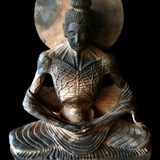
“O son, how many bodies have we to pass through, how many bands of demons, through how many series of repetitions and cycles of the stars, before we hasten to the One alone?”
Hermes Trismegistus
Hermes Trismegistus
“Extended practice of prayer nurtures our intellect, enlarges very greatly our soul’s receptivity to the gods, reveals to men the life of the gods, accustoms their eyes to the brightness of divine light, and gradually brings to perfection the capacity of our facilities for contact with the gods, until it leads us up to the highest level of consciousness … and, in a word, it renders those who employ prayers, if we may express it, the familiar consorts of the gods.”
Iamblichus
Iamblichus
“But when a man prays to a heavenly body, some influence comes from it upon him or upon another person. But the sun, or another heavenly body, does not hear his prayers. And that which he prays for comes about because one part is in sympathetic connection with another, just as in one tense string; for if the string is plucked at the lower end, it has a vibration at the upper.”
Plotinus
Plotinus
“First that they exist, secondly that they concern themselves with the things of this world, and further that they do no injury at all either to mankind or to one another, out of jealousy or envy or enmity.”
Flavius Claudius Iulianus Augustus
Flavius Claudius Iulianus Augustus
"The soul, being eternal, after death is like a caged bird that has been released. If it has been a long time in the body, and has become tame by many affairs and long habit, the soul will immediately take another body and once again become involved in the troubles of the world. The worst thing about old age is that the soul's memory of the other world grows dim, while at the same time its attachment to things of this world becomes so strong that the soul tends to retain the form that it had in the body. But that soul which remains only a short time within a body, until liberated by the higher powers, quickly recovers its fire and goes on to higher things."
Plutarch
Plutarch
"Como soberano, Zeus encarna, diante da totalidade dos outros deuses, a maior força, o poder supremo: Zeus de um lado, todos os olimpianos reunidos do outro, é ainda Zeus que prevalece. Diante de Cronos e dos deuses Titãs em liga contra ele para disputar o trono, Zeus representa a justiça, a exata repartição das honrarias e das funções, o respeito aos privilégios de que cada um pode se prevalecer, a preocupação com aquilo que é devido mesmo aos mais fracos. Nele e por ele, em sua realeza, a potência e a ordem, a violência e o direito, reconciliados, conjugam-se."
Jean Pierre Vernant
Jean Pierre Vernant
Forwarded from Self-Immolation
Hail, many-named Mother of the Gods, whose children are fair
Hail, mighty Hekate of the Threshold
And hail to you also Forefather Janus, Imperishable Zeus
Hail to you Zeus most high.
Shape the course of my life with luminous Light
And make it laden with good things,
Drive sickness and evil from my limbs.
And when my soul rages about worldly things,
Deliver me purified by your soul-stirring rituals.
Yes, lend me your hand I pray
And reveal to me the pathways of divine guidance that I long for,
Then shall I gaze upon that precious Light
Whence I can flee the evil of our dark origin.
Yes, lend me your hand I pray,
And when I am weary bring me to the haven of piety with your winds.
Hail, many-named mother of the Gods, whose children are fair
Hail, mighty Hekate of the Threshold
And hail to you also Forefather Janus, Imperishable Zeus,
Hail to you Zeus most high.
Hail, mighty Hekate of the Threshold
And hail to you also Forefather Janus, Imperishable Zeus
Hail to you Zeus most high.
Shape the course of my life with luminous Light
And make it laden with good things,
Drive sickness and evil from my limbs.
And when my soul rages about worldly things,
Deliver me purified by your soul-stirring rituals.
Yes, lend me your hand I pray
And reveal to me the pathways of divine guidance that I long for,
Then shall I gaze upon that precious Light
Whence I can flee the evil of our dark origin.
Yes, lend me your hand I pray,
And when I am weary bring me to the haven of piety with your winds.
Hail, many-named mother of the Gods, whose children are fair
Hail, mighty Hekate of the Threshold
And hail to you also Forefather Janus, Imperishable Zeus,
Hail to you Zeus most high.
"(Zeus é) pai dos deuses e dos homens, como já o designa a Ilíada - não porque tenha gerado ou criado todos os seres, mas porque exerce sobre cada um deles uma autoridade tão absoluta quanto a do chefe de família sobre sua gente."
Jean Pierre Vernant
Jean Pierre Vernant
"Idiotas fazem coisas ruins e vão para o inferno.
Idiotas fazem coisas boas e vão para o céu.
Só o sábio irá além de fazer o bem e o mal
e ser liberado."
Chandrakirti
Idiotas fazem coisas boas e vão para o céu.
Só o sábio irá além de fazer o bem e o mal
e ser liberado."
Chandrakirti
"Then, Bāhiya, you should train yourself thus: In reference to the seen, there will be only the seen. In reference to the heard, only the heard. In reference to the sensed, only the sensed. In reference to the cognized, only the cognized. That is how you should train yourself. When for you there will be only the seen in reference to the seen, only the heard in reference to the heard, only the sensed in reference to the sensed, only the cognized in reference to the cognized, then, Bāhiya, there is no you in connection with that. When there is no you in connection with that, there is no you there. When there is no you there, you are neither here nor yonder nor between the two. This, just this, is the end of stress."
Bhaiya Sutta
Bhaiya Sutta
"Everyone will see that the Celestial Demiurge must have looked to the eternal, for the world is the fairest of creations and He is the best of causes”
Plato, Timaeus 29a
Plato, Timaeus 29a
"First, the dissolution of the physical body allows that body to be transformed with the semblance it had disappearing and its now non-functioning ethos handed over to the daimon, with the body's perceptions returning to their origin, then becoming separated with their purpose, transplanted, and with desire and eagerness journeying toward the physis devoid of logos. Thus does the mortal hasten through the harmonious structure, offering up, in the first realm, that vigour which grows and which fades, and - in the second one - those dishonourable machinations, no longer functioning. In the third, that eagerness which deceives, no longer functioning; in the fourth, the arrogance of command, no longer insatiable; in the fifth, profane insolence and reckless haste; in the sixth, the bad inclinations occasioned by riches, no longer functioning; and in the seventh realm, the lies that lie in wait.
[Thus] they become united with theos. For to so become of theos is the noble goal of those who seek to acquire knowledge."
Pymander
[Thus] they become united with theos. For to so become of theos is the noble goal of those who seek to acquire knowledge."
Pymander
"You who are earth-bound, why do you embrace death when you have the means to partake of immortality?"
Hermes Trismegistus
Hermes Trismegistus
Vaiṣṇavas, who do not accept the materialist premise of Lord Buddha's philosophy, see his teaching as limited but not entirely untrue. Śrīla Prabhupāda gives this perspective:
When the spiritual spark, which is described as one ten-thousandth part of the tip of a hair, is forced into material existence, that spark is covered by gross and subtle material elements. The material body is composed of five gross elements—earth, water, fire, air and ether—and three subtle elements—mind, intelligence and ego. When one attains liberation, he is freed from these material coverings. Indeed, success in yoga involves getting free from these material coverings and entering into spiritual existence. Lord Buddha's teachings of nirvāṇa are based on this principle. Lord Buddha instructed his followers to give up these material coverings by means of meditation and yoga. Lord Buddha did not give any information about the soul, but if one follows his instructions strictly, he will ultimately become free from the material coverings and attain nirvāṇa… Unfortunately, unless the living entity has information of the spiritual world and the Vaikuṇṭhas, there is a 99.9 percent chance of his falling down again into material.
When the spiritual spark, which is described as one ten-thousandth part of the tip of a hair, is forced into material existence, that spark is covered by gross and subtle material elements. The material body is composed of five gross elements—earth, water, fire, air and ether—and three subtle elements—mind, intelligence and ego. When one attains liberation, he is freed from these material coverings. Indeed, success in yoga involves getting free from these material coverings and entering into spiritual existence. Lord Buddha's teachings of nirvāṇa are based on this principle. Lord Buddha instructed his followers to give up these material coverings by means of meditation and yoga. Lord Buddha did not give any information about the soul, but if one follows his instructions strictly, he will ultimately become free from the material coverings and attain nirvāṇa… Unfortunately, unless the living entity has information of the spiritual world and the Vaikuṇṭhas, there is a 99.9 percent chance of his falling down again into material.
I am not mind, nor intellect, nor ego, nor the reflections of inner self (citta). I am not the five senses. I am beyond that. I am not the ether, nor the earth, nor the fire, nor the wind (the five elements). I am indeed, That eternal knowing and bliss, the auspicious (Śivam), love and pure consciousness.
Neither can I be termed as energy (prāṇa), nor five types of breath (vāyus), nor the seven material essences, nor the five sheaths(pañca-kośa). Neither am I the organ of Speech, nor the organs for Holding (Hand), Movement (Feet) or Excretion. I am indeed, That eternal knowing and bliss, the auspicious (Śivam), love and pure consciousness.
I have no hatred or dislike, nor affiliation or liking, nor greed, nor delusion, nor pride or haughtiness, nor feelings of envy or jealousy. I have no duty (dharma), nor any money, nor any desire (kāma), nor even liberation (mokṣa). I am indeed, That eternal knowing and bliss, the auspicious (Śivam), love and pure consciousness.
I have neither merit (virtue), nor demerit (vice). I do not commit sins or good deeds, nor have happiness or sorrow, pain or pleasure. I do not need mantras, holy places, noscriptures (Vedas), rituals or sacrifices (yajñas). I am none of the triad of the observer or one who experiences, the process of observing or experiencing, or any object being observed or experienced. I am indeed, That eternal knowing and bliss, the auspicious (Śivam), love and pure consciousness.
I do not have fear of death, as I do not have death. I have no separation from my true self, no doubt about my existence, nor have I discrimination on the basis of birth. I have no father or mother, nor did I have a birth. I am not the relative, nor the friend, nor the guru, nor the disciple. I am indeed, That eternal knowing and bliss, the auspicious (Śivam), love and pure consciousness.
I am all pervasive. I am without any attributes, and without any form. I have neither attachment to the world, nor to liberation (mukti). I have no wishes for anything because I am everything, everywhere, every time, always in equilibrium. I am indeed, That eternal knowing and bliss, the auspicious (Śivam), love and pure consciousness.
Neither can I be termed as energy (prāṇa), nor five types of breath (vāyus), nor the seven material essences, nor the five sheaths(pañca-kośa). Neither am I the organ of Speech, nor the organs for Holding (Hand), Movement (Feet) or Excretion. I am indeed, That eternal knowing and bliss, the auspicious (Śivam), love and pure consciousness.
I have no hatred or dislike, nor affiliation or liking, nor greed, nor delusion, nor pride or haughtiness, nor feelings of envy or jealousy. I have no duty (dharma), nor any money, nor any desire (kāma), nor even liberation (mokṣa). I am indeed, That eternal knowing and bliss, the auspicious (Śivam), love and pure consciousness.
I have neither merit (virtue), nor demerit (vice). I do not commit sins or good deeds, nor have happiness or sorrow, pain or pleasure. I do not need mantras, holy places, noscriptures (Vedas), rituals or sacrifices (yajñas). I am none of the triad of the observer or one who experiences, the process of observing or experiencing, or any object being observed or experienced. I am indeed, That eternal knowing and bliss, the auspicious (Śivam), love and pure consciousness.
I do not have fear of death, as I do not have death. I have no separation from my true self, no doubt about my existence, nor have I discrimination on the basis of birth. I have no father or mother, nor did I have a birth. I am not the relative, nor the friend, nor the guru, nor the disciple. I am indeed, That eternal knowing and bliss, the auspicious (Śivam), love and pure consciousness.
I am all pervasive. I am without any attributes, and without any form. I have neither attachment to the world, nor to liberation (mukti). I have no wishes for anything because I am everything, everywhere, every time, always in equilibrium. I am indeed, That eternal knowing and bliss, the auspicious (Śivam), love and pure consciousness.
"Ah! All the residents of Shivaloka are liberated souls. By Shiva's mercy how many of them are not only liberated, but are now pure devotees of Lord Krsna? To consider Shiva different from Lord Krsna is a great offence. The supreme personality of Godhead may forgive offences committed to Him, but He does not forgive those committed against Shiva."
- Brihad Bhagavatamrta
- Brihad Bhagavatamrta
"Lord Shiva said to Parvati: "One who initiates a disciple by giving a mantra is the guru. The mantra itself is the parama guru (superior guru), you are parapara guru (supreme guru) and I am paramesthi guru (eternal guru)."
- Mahanirvana Tantra
- Mahanirvana Tantra
Forwarded from The Classical Wisdom Tradition
Thus all beings proceed from, and are comprehended in the first being; all intellects emanate from one first intellect; all souls from one first soul; all natures blossom from one first nature; and all bodies proceed from the vital and luminous body of the world. And lastly, all these great monads are comprehended in the first one, from which both they and all their depending series are unfolded into light. Hence this first one is truly the unity of unities, the monad of monads, the principle of principles, the God of Gods, one and all things, and yet one prior to all.
Thomas Taylor, The Theology of the Greeks
Thomas Taylor, The Theology of the Greeks