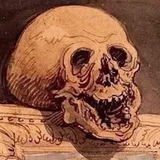
И бродят карлики туда-обратно без помех.
В руках его блестит фиал, похож на лунный свет,
Он трогает, трясет, дрожит, ему покоя нет,
Филиппов лик заплесневел, осунулся, поблек,
Словно без солнечных лучей увянувший цветок,
Таится в том фиале смерть, конец великих дел…
Но дон Хуан Австрийский на турка налетел.
Идет на ловлю дон Хуан, раздался гончих лай –
Слух об охоте обогнул весь итальянский край.
Огонь, огонь, ха-ха!
Огонь, огонь, ура!
Разрывами гремя,
Дал залпы дон Хуан.
Был в часовне папа римский в миг, в который грянул бой
(Дон Хуан Австрийский скрыт завесой дымовой),
Есть в ней тайная обитель – целый год живет в ней Бог,
Тайное окно, откуда малым кажется мирок,
Он, как в зеркале, там видит мрак чудовищных морей
И жестокий полумесяц безымянных кораблей –
Тень огромную бросает он на флот людей Креста,
Львов крылатых на галерах затмевает темнота,
На судах у флотоводцев чернобрадых есть дворцы,
Под судами есть темницы, где несчастные гребцы,
Где больные христиане, что от солнца далеки,
Словно в городе подводном, словно там, где рудники,
Как в краю небесных храмов, в дальней древности, когда
Были царственными боги, тирания – молода;
Бессловесны, безнадежны, словно те, что пали ниц
На гранитах Вавилона в пыль от царских колесниц.
Много тех, кого в том пекле покидает здравый ум
Каждый раз, когда тюремщик желтолицый смотрит в трюм,
Знака свыше те не чают и не ждут небесных сил…
(Но вот дон Хуан Австрийский строй турецкий проломил!)
Дон Хуан с кормы стреляет, где на трупе свален труп,
Океан он залил кровью, как лихой пиратский шлюп,
Цвет кровавый затмевает серебристый, золотой,
Открывая настежь люки, заполняя трюм собой,
Тысячи освобождая тех, кто были пленены,
Тех, кто ныне счастьем, солнцем, волею ослеплены.
Vivat Hispania!
Domino Gloria!
Свободу от ярма
Вернул им дон Хуан!
А Сервантес на галере в ножны вкладывает меч.
(С победой мчится дон Хуан Испании навстречь.)
Встает виденье перед ним: испанский путь степной,
Где тощий рыцарь странствует за призрачной мечтой.
Смеясь не по-султански, он клинок свой уберет…
(А вот австриец дон Хуан закончил свой поход.)
Оригинал: https://www.bartleby.com/103/91.html
В руках его блестит фиал, похож на лунный свет,
Он трогает, трясет, дрожит, ему покоя нет,
Филиппов лик заплесневел, осунулся, поблек,
Словно без солнечных лучей увянувший цветок,
Таится в том фиале смерть, конец великих дел…
Но дон Хуан Австрийский на турка налетел.
Идет на ловлю дон Хуан, раздался гончих лай –
Слух об охоте обогнул весь итальянский край.
Огонь, огонь, ха-ха!
Огонь, огонь, ура!
Разрывами гремя,
Дал залпы дон Хуан.
Был в часовне папа римский в миг, в который грянул бой
(Дон Хуан Австрийский скрыт завесой дымовой),
Есть в ней тайная обитель – целый год живет в ней Бог,
Тайное окно, откуда малым кажется мирок,
Он, как в зеркале, там видит мрак чудовищных морей
И жестокий полумесяц безымянных кораблей –
Тень огромную бросает он на флот людей Креста,
Львов крылатых на галерах затмевает темнота,
На судах у флотоводцев чернобрадых есть дворцы,
Под судами есть темницы, где несчастные гребцы,
Где больные христиане, что от солнца далеки,
Словно в городе подводном, словно там, где рудники,
Как в краю небесных храмов, в дальней древности, когда
Были царственными боги, тирания – молода;
Бессловесны, безнадежны, словно те, что пали ниц
На гранитах Вавилона в пыль от царских колесниц.
Много тех, кого в том пекле покидает здравый ум
Каждый раз, когда тюремщик желтолицый смотрит в трюм,
Знака свыше те не чают и не ждут небесных сил…
(Но вот дон Хуан Австрийский строй турецкий проломил!)
Дон Хуан с кормы стреляет, где на трупе свален труп,
Океан он залил кровью, как лихой пиратский шлюп,
Цвет кровавый затмевает серебристый, золотой,
Открывая настежь люки, заполняя трюм собой,
Тысячи освобождая тех, кто были пленены,
Тех, кто ныне счастьем, солнцем, волею ослеплены.
Vivat Hispania!
Domino Gloria!
Свободу от ярма
Вернул им дон Хуан!
А Сервантес на галере в ножны вкладывает меч.
(С победой мчится дон Хуан Испании навстречь.)
Встает виденье перед ним: испанский путь степной,
Где тощий рыцарь странствует за призрачной мечтой.
Смеясь не по-султански, он клинок свой уберет…
(А вот австриец дон Хуан закончил свой поход.)
Оригинал: https://www.bartleby.com/103/91.html
Джордж Фаркер / George Farquhar (1677 – 1707)
Песня из комедии «Хитроумный план щеголей»
Спою вам куплеты-пустышки,
Предмет этой песни – пустяк.
Внимайте, пустые людишки,
Желайте мне всяческих благ!
У нас пустяковая эра;
Коль ходу не дать пустякам,
Что делали бы кавалеры,
О чем бы шептались у дам?
Мужчины по моде пустяшной
Наденут дурацкий фасон –
Ведь женщинам нравится страшно
Напыщенный франт-пустозвон.
За девой повеса влачится,
Чтоб взять пустяковый трофей,
Похитит пустяк у девицы –
И тут же расстанется с ней.
За кофе иль чаем бездумно
Не высидеть нам искони,
Не будь за столом остроумной,
Но все же пустой болтовни.
Зато для пустячностей мерзких
Наш двор – ненадежный приют;
Ключей и жезлов камергерских
Там абы кому не дают,
Хотя, коль нужна вам обитель,
Где все пустозвонства цветы,
К сиятельству вы не зайдите ль?
Его обещанья пусты.
Карета с шестеркой лакеев –
Совсем не пустяк, я скажу!
Но часто пустых ротозеев
Внутри у нее нахожу.
С французским шампанским бутылка –
Все думают, это пустяк.
Но я уверяю вас пылко –
Не пейте его натощак!
Пустое – вдовица в печали,
Иль пастор в просторе морском…
Впустую мы мир подписали –
Кто знает, что будет потом?
Есть в церкви у нас пустосвяты,
Пустышки средь наших вояк;
Воротятся скоро солдаты
В казармы – вот будет пустяк!
Я слышал: «В театре рутина,
Все пьесы пусты!» Неужель?
Вдруг этому делу причина,
Что публика – из пустомель?
А впрочем, пустое все это,
Мораль здесь предельно проста:
Пустяк в голове у поэта,
И песенка эта пуста.
Song from The Beaux' Stratagem
A trifling song you shall hear,
Begun with a trifle and ended:
All trifling people draw near,
And I shall be nobly attended.
Were it not for trifles, a few,
That lately have come into play;
The men would want something to do,
And the women want something to say.
What makes men trifle in dressing?
Because the ladies (they know)
Admire, by often possessing,
That eminent trifle, a beau.
When the lover his moments has trifled,
The trifle of trifles to gain:
No sooner the virgin is rifled,
But a trifle shall part ’em again.
What mortal man would be able
At White’s half an hour to sit?
Or who could bear a tea-table,
Without talking of trifles for wit?
The court is from trifles secure,
Gold keys are no trifles, we see:
White rods are no trifles, I’m sure,
Whatever their bearers may be.
But if you will go to the place,
Where trifles abundantly breed,
The levee will show you His Grace
Makes promises trifles indeed.
A coach with six footmen behind,
I count neither trifle nor sin:
But, ye gods! how oft do we find
A scandalous trifle within.
A flask of champagne, people think it
A trifle, or something as bad:
But if You’ll contrive how to drink it;
You’ll find it no trifle, egad!
A parson’s a trifle at sea,
A widow’s a trifle in sorrow:
A peace is a trifle to-day,
Who knows what may happen to-morrow!
A black coat a trifle may cloak,
Or to hide it, the red may endeavour:
But if once the army is broke,
We shall have more trifles than ever.
The stage is a trifle, they say,
The reason, pray carry along,
Because at every new play,
The house they with trifles so throng.
But with people’s malice to trifle,
And to set us all on a foot:
The author of this is a trifle,
And his song is a trifle to boot.
Песня из комедии «Хитроумный план щеголей»
Спою вам куплеты-пустышки,
Предмет этой песни – пустяк.
Внимайте, пустые людишки,
Желайте мне всяческих благ!
У нас пустяковая эра;
Коль ходу не дать пустякам,
Что делали бы кавалеры,
О чем бы шептались у дам?
Мужчины по моде пустяшной
Наденут дурацкий фасон –
Ведь женщинам нравится страшно
Напыщенный франт-пустозвон.
За девой повеса влачится,
Чтоб взять пустяковый трофей,
Похитит пустяк у девицы –
И тут же расстанется с ней.
За кофе иль чаем бездумно
Не высидеть нам искони,
Не будь за столом остроумной,
Но все же пустой болтовни.
Зато для пустячностей мерзких
Наш двор – ненадежный приют;
Ключей и жезлов камергерских
Там абы кому не дают,
Хотя, коль нужна вам обитель,
Где все пустозвонства цветы,
К сиятельству вы не зайдите ль?
Его обещанья пусты.
Карета с шестеркой лакеев –
Совсем не пустяк, я скажу!
Но часто пустых ротозеев
Внутри у нее нахожу.
С французским шампанским бутылка –
Все думают, это пустяк.
Но я уверяю вас пылко –
Не пейте его натощак!
Пустое – вдовица в печали,
Иль пастор в просторе морском…
Впустую мы мир подписали –
Кто знает, что будет потом?
Есть в церкви у нас пустосвяты,
Пустышки средь наших вояк;
Воротятся скоро солдаты
В казармы – вот будет пустяк!
Я слышал: «В театре рутина,
Все пьесы пусты!» Неужель?
Вдруг этому делу причина,
Что публика – из пустомель?
А впрочем, пустое все это,
Мораль здесь предельно проста:
Пустяк в голове у поэта,
И песенка эта пуста.
Song from The Beaux' Stratagem
A trifling song you shall hear,
Begun with a trifle and ended:
All trifling people draw near,
And I shall be nobly attended.
Were it not for trifles, a few,
That lately have come into play;
The men would want something to do,
And the women want something to say.
What makes men trifle in dressing?
Because the ladies (they know)
Admire, by often possessing,
That eminent trifle, a beau.
When the lover his moments has trifled,
The trifle of trifles to gain:
No sooner the virgin is rifled,
But a trifle shall part ’em again.
What mortal man would be able
At White’s half an hour to sit?
Or who could bear a tea-table,
Without talking of trifles for wit?
The court is from trifles secure,
Gold keys are no trifles, we see:
White rods are no trifles, I’m sure,
Whatever their bearers may be.
But if you will go to the place,
Where trifles abundantly breed,
The levee will show you His Grace
Makes promises trifles indeed.
A coach with six footmen behind,
I count neither trifle nor sin:
But, ye gods! how oft do we find
A scandalous trifle within.
A flask of champagne, people think it
A trifle, or something as bad:
But if You’ll contrive how to drink it;
You’ll find it no trifle, egad!
A parson’s a trifle at sea,
A widow’s a trifle in sorrow:
A peace is a trifle to-day,
Who knows what may happen to-morrow!
A black coat a trifle may cloak,
Or to hide it, the red may endeavour:
But if once the army is broke,
We shall have more trifles than ever.
The stage is a trifle, they say,
The reason, pray carry along,
Because at every new play,
The house they with trifles so throng.
But with people’s malice to trifle,
And to set us all on a foot:
The author of this is a trifle,
And his song is a trifle to boot.
Мэри Уортли-Монтэгю / Mary Wortley Montagu (1689 – 1762)
Гимн луне, написанный в беседке из зелени
Полночных тайн сребристая богиня,
Пусть яркость путь лесной мне осветит;
Ты – зрительница скрытой благостыни,
Ты помощь музам и влюбленным щит!
В твоих лучах брожу я среди нощи,
Открыв печали сердца своего;
Ты тихим светом озаряешь рощи,
Защитница, подруга, божество!
Но ты была с высот своих, царица,
Эндимионом вниз совлечена;
В покровах ночи ты смогла укрыться,
Столь всемогуща, столь же холодна.
A Hymn to the Moon (Written in an Arbour)
Thou silver deity of secret night,
Direct my footsteps through the woodland shade;
Thou conscious witness of unknown delight,
The Lover's guardian, and the Muse's aid!
By thy pale beams I solitary rove,
To thee my tender grief confide;
Serenely sweet you gild the silent grove,
My friend, my goddess, and my guide.
E'en thee, fair queen, from thy amazing height,
The charms of young Endymion drew;
Veil'd with the mantle of concealing night;
With all thy greatness and thy coldness too.
Гимн луне, написанный в беседке из зелени
Полночных тайн сребристая богиня,
Пусть яркость путь лесной мне осветит;
Ты – зрительница скрытой благостыни,
Ты помощь музам и влюбленным щит!
В твоих лучах брожу я среди нощи,
Открыв печали сердца своего;
Ты тихим светом озаряешь рощи,
Защитница, подруга, божество!
Но ты была с высот своих, царица,
Эндимионом вниз совлечена;
В покровах ночи ты смогла укрыться,
Столь всемогуща, столь же холодна.
A Hymn to the Moon (Written in an Arbour)
Thou silver deity of secret night,
Direct my footsteps through the woodland shade;
Thou conscious witness of unknown delight,
The Lover's guardian, and the Muse's aid!
By thy pale beams I solitary rove,
To thee my tender grief confide;
Serenely sweet you gild the silent grove,
My friend, my goddess, and my guide.
E'en thee, fair queen, from thy amazing height,
The charms of young Endymion drew;
Veil'd with the mantle of concealing night;
With all thy greatness and thy coldness too.
Эрнандо де Акунья (1518 – 1580)
Hernando de Acuña
Королю, властителю нашему
Уж близится иль здесь уже година;
Властитель, вот небесная награда, –
Единый пастырь и едино стадо,
И мир, в вас признающий господина!
Уже идут священные дружины
К заветной цели и крушат преграды;
Вселенной будут высшею отрадой
Монарх, Империя и Меч единый!
Уж мирозданье приняло частями
И жаждет полностью приять державу,
Что рождена в сраженьях справедливых.
И тот, чья длань несет Христово знамя,
Твердь покоряя, вновь стяжает славу,
Которую стяжал в морях бурливых.
Al Rey, Nuestro Señor
Ya se acerca, Señor, o ya es llegada
la edad gloriosa en que promete el cielo
un grey y un pastor solo en el suelo
por suerte a vuestros tiempos reservada;
ya tan alto principio, en tal jornada,
os muestra el fin de vuestro santo celo
y anuncia al mundo, para más consuelo,
un Monarca, un Imperio y una Espada;
ya el orbe de la tierra siente en parte
y espera con toda vuestra monarquía,
conquistada por vos en justa guerra,
que, a quien ha dado Cristo su estandarte,
dará el segundo más dichoso día
en que, vencido el mar, venza la tierra.
Hernando de Acuña
Королю, властителю нашему
Уж близится иль здесь уже година;
Властитель, вот небесная награда, –
Единый пастырь и едино стадо,
И мир, в вас признающий господина!
Уже идут священные дружины
К заветной цели и крушат преграды;
Вселенной будут высшею отрадой
Монарх, Империя и Меч единый!
Уж мирозданье приняло частями
И жаждет полностью приять державу,
Что рождена в сраженьях справедливых.
И тот, чья длань несет Христово знамя,
Твердь покоряя, вновь стяжает славу,
Которую стяжал в морях бурливых.
Al Rey, Nuestro Señor
Ya se acerca, Señor, o ya es llegada
la edad gloriosa en que promete el cielo
un grey y un pastor solo en el suelo
por suerte a vuestros tiempos reservada;
ya tan alto principio, en tal jornada,
os muestra el fin de vuestro santo celo
y anuncia al mundo, para más consuelo,
un Monarca, un Imperio y una Espada;
ya el orbe de la tierra siente en parte
y espera con toda vuestra monarquía,
conquistada por vos en justa guerra,
que, a quien ha dado Cristo su estandarte,
dará el segundo más dichoso día
en que, vencido el mar, venza la tierra.
Томас Моррис / Thomas Morris (1732 – между 1806 и 1818)
Сапфические строфы, писанные в Мохокском Замке в Канаде и посвященные лейтенанту Монтгомери
О покое молит, кто на вельботе
В озере Шамплейн был застигнут бурей, –
Парусов не спустишь, и островка нет,
Где бы укрыться.
Лишь покой желанен канадцам хитрым,
Лишь покоем грезит злой канавага,
Лишь покоя, Ричард, не купит вампум
Или банкнота.
Ни полковник, нижé сержант удалый,
С алебардой вставший на карауле,
Ни за что не смогут согнать незгоды
С пышных мундиров.
Истинно лишь унтер блажен, одетый
В дедовский кушак из времен Бленгейма, –
Страшный иноземцам, храбрясь, храпит на
Шкуре медвежьей.
Что же мы всегда замышленья строим?
Смертные, зачем мы чужие страны
Ищем? Не сбежишь ведь, сбежав из дома,
Сам от себя ты!
Горе топит плот с корабельной пушкой,
Мучает пехоту, индейцев наших,
Мчит быстрее лóся восточным ветром,
Тучи сгоняет.
Весельчак легко испытанья сносит,
Не глядит он в завтра, с улыбкой терпит
Злобу дня, поскольку счастливым вечно
Быть невозможно.
Смерть единым мигом нашла Ахилла,
Старость вечная боль несла Тифону,
Мне ль, тебе ль, Монтгомери, дольше выжить,
Дику иль Тому?
Двадцать сотрапезников полны смеха,
Веселят тебя остротами; дамы
Вкруг тебя щебечут, ты же разряжен
В экипировку!
Я же средь индейцев сижу в Форт-Хендрик,
В скучный Канаджори судьбою загнан,
Ты представь, как Моррис, в каморке сидя,
Строфы слагает.
Вельбот – быстроходная шлюпка со съемной мачтой и парусом.
Вампум – бусы из раковин, у ряда индейских племен использовались вместо денег.
Канаваги – индейское племя, родственное мохокам.
Канаджори – укрепленное поселение мохоков, ныне город в штате Нью-Йорк.
Sapphics: At the Mohawk-Castle, Canada. To Lieutenant Montgomery
Ease is the pray’r of him who, in a whaleboat
Crossing Lake Champlain, by a storm’s o’ertaken:
Not struck his blanket, not a friendly island
Near to receive him.
Ease is the wish too of the sly Canadian;
Ease the delight of bloody Caghnawagas;
Ease, Richard, ease, not to be bought with wampum,
Nor paper money.
Nor colonel’s pay, nor yet a dapper sergeant,
Orderly waiting with recovered halberd,
Can chase the crowd of troubles still surrounding
Laced regimentals.
That sub lives best who, with a sash in tatters
Worn by his grandsire at the fight of Blenheim,
To fear a stranger, and to wild ambition,
Snores on a bearskin.
Why like fine-fellows are we ever scheming,
We short-lived mortals? Why so fond of climates
Warmed by new suns? O who, that runs from home, can
Run from himself too?
Care climbs radeaux with four-and-twenty pounders,
Not quits our light troops, or our Indian warriors,
Swifter than moose-deer, or the fleeter east wind,
Pushing the clouds on.
He, whose good humor can enjoy the present,
Scorns to look forward; with a smile of patience
Temp’ring the bitter. Bliss uninterrupted
None can inherit.
Death instantaneous hurried off Achilles;
Age far-extended wore away Tithonus.
Who will live longer, thou or I, Montgom’ry?
Dicky or Tommy?
Thee twenty messmates, full of noise and laughter,
Cheer with their sallies; thee the merry damsels
Please with their titt’ring; whilst thou sitt’st adorned with
Boots, sash and gorget.
Me to Fort Hendrick, midst a savage nation,
Dull Connajohry, cruel fate has driven.
O think on Morris, in a lonely chamber,
Dabbling in Sapphic.
Сапфические строфы, писанные в Мохокском Замке в Канаде и посвященные лейтенанту Монтгомери
О покое молит, кто на вельботе
В озере Шамплейн был застигнут бурей, –
Парусов не спустишь, и островка нет,
Где бы укрыться.
Лишь покой желанен канадцам хитрым,
Лишь покоем грезит злой канавага,
Лишь покоя, Ричард, не купит вампум
Или банкнота.
Ни полковник, нижé сержант удалый,
С алебардой вставший на карауле,
Ни за что не смогут согнать незгоды
С пышных мундиров.
Истинно лишь унтер блажен, одетый
В дедовский кушак из времен Бленгейма, –
Страшный иноземцам, храбрясь, храпит на
Шкуре медвежьей.
Что же мы всегда замышленья строим?
Смертные, зачем мы чужие страны
Ищем? Не сбежишь ведь, сбежав из дома,
Сам от себя ты!
Горе топит плот с корабельной пушкой,
Мучает пехоту, индейцев наших,
Мчит быстрее лóся восточным ветром,
Тучи сгоняет.
Весельчак легко испытанья сносит,
Не глядит он в завтра, с улыбкой терпит
Злобу дня, поскольку счастливым вечно
Быть невозможно.
Смерть единым мигом нашла Ахилла,
Старость вечная боль несла Тифону,
Мне ль, тебе ль, Монтгомери, дольше выжить,
Дику иль Тому?
Двадцать сотрапезников полны смеха,
Веселят тебя остротами; дамы
Вкруг тебя щебечут, ты же разряжен
В экипировку!
Я же средь индейцев сижу в Форт-Хендрик,
В скучный Канаджори судьбою загнан,
Ты представь, как Моррис, в каморке сидя,
Строфы слагает.
Вельбот – быстроходная шлюпка со съемной мачтой и парусом.
Вампум – бусы из раковин, у ряда индейских племен использовались вместо денег.
Канаваги – индейское племя, родственное мохокам.
Канаджори – укрепленное поселение мохоков, ныне город в штате Нью-Йорк.
Sapphics: At the Mohawk-Castle, Canada. To Lieutenant Montgomery
Ease is the pray’r of him who, in a whaleboat
Crossing Lake Champlain, by a storm’s o’ertaken:
Not struck his blanket, not a friendly island
Near to receive him.
Ease is the wish too of the sly Canadian;
Ease the delight of bloody Caghnawagas;
Ease, Richard, ease, not to be bought with wampum,
Nor paper money.
Nor colonel’s pay, nor yet a dapper sergeant,
Orderly waiting with recovered halberd,
Can chase the crowd of troubles still surrounding
Laced regimentals.
That sub lives best who, with a sash in tatters
Worn by his grandsire at the fight of Blenheim,
To fear a stranger, and to wild ambition,
Snores on a bearskin.
Why like fine-fellows are we ever scheming,
We short-lived mortals? Why so fond of climates
Warmed by new suns? O who, that runs from home, can
Run from himself too?
Care climbs radeaux with four-and-twenty pounders,
Not quits our light troops, or our Indian warriors,
Swifter than moose-deer, or the fleeter east wind,
Pushing the clouds on.
He, whose good humor can enjoy the present,
Scorns to look forward; with a smile of patience
Temp’ring the bitter. Bliss uninterrupted
None can inherit.
Death instantaneous hurried off Achilles;
Age far-extended wore away Tithonus.
Who will live longer, thou or I, Montgom’ry?
Dicky or Tommy?
Thee twenty messmates, full of noise and laughter,
Cheer with their sallies; thee the merry damsels
Please with their titt’ring; whilst thou sitt’st adorned with
Boots, sash and gorget.
Me to Fort Hendrick, midst a savage nation,
Dull Connajohry, cruel fate has driven.
O think on Morris, in a lonely chamber,
Dabbling in Sapphic.
Хорес (Горацио) Смит (1779 - 1849)
Озимандия
В Египте, что песками занесен,
Стоит ноги огромной изваянье,
Гигантскую бросая тень в молчаньи:
«Я Озимандией был наречен,
Я Царь Царей, и града созерцанье
Вам явит мощь мою»… Но истреблен
Сей град – лишь на колоссе начертанье
Напомнит: здесь был некий Вавилон.
Нам это дивно – так же в день грядущий,
Ловец, за волком гнавшийся средь пущи,
Где Лондон был, вдруг памятник найдет
И удивится: что за всемогущий
Там обитал неведомый народ,
Где ныне лишь безлюдье предстает?
Перси Биши Шелли (1792 – 1822)
Озимандия
Из стародавнего явившись края,
Сказал мне странник: «Изваянья ног
Видны в песках… И рядом, утопая,
Лежит разбитый лик; ваятель смог,
Усмешкою надменной искривляя
Черты его, в творение вложить
Влияние властительных страстей,
Рукой движенья сердца обнажить.
Такая надпись есть на пьедестале:
«Я Озимандия, я Царь Царей,
Взгляните на труды мои в печали!»
И больше ничего. Кругом лишь прах –
Колосс лежит в чудовищном развале
В безбрежных, ровных и пустых песках».
Horace (Horatio) Smith
Ozymandias
In Egypt's sandy silence, all alone,
Stands a gigantic Leg, which far off throws
The only shadow that the Desert knows:—
"I am great Ozymandias," saith the stone,
"The King of Kings; this mighty City shows
The wonders of my hand."— The City's gone,—
Naught but the Leg remaining to disclose
The site of this forgotten Babylon.
We wonder,—and some Hunter may express
Wonder like ours, when thro' the wilderness
Where London stood, holding the Wolf in chace,
He meets some fragment huge, and stops to guess
What powerful but unrecorded race
Once dwelt in that annihilated place.
Percy Bysshe Shelley
Ozymandias
I met a traveller from an antique land,
Who said—“Two vast and trunkless legs of stone
Stand in the desert. . . . Near them, on the sand,
Half sunk a shattered visage lies, whose frown,
And wrinkled lip, and sneer of cold command,
Tell that its sculptor well those passions read
Which yet survive, stamped on these lifeless things,
The hand that mocked them, and the heart that fed;
And on the pedestal, these words appear:
My name is Ozymandias, King of Kings;
Look on my Works, ye Mighty, and despair!
Nothing beside remains. Round the decay
Of that colossal Wreck, boundless and bare
The lone and level sands stretch far away.”
Озимандия
В Египте, что песками занесен,
Стоит ноги огромной изваянье,
Гигантскую бросая тень в молчаньи:
«Я Озимандией был наречен,
Я Царь Царей, и града созерцанье
Вам явит мощь мою»… Но истреблен
Сей град – лишь на колоссе начертанье
Напомнит: здесь был некий Вавилон.
Нам это дивно – так же в день грядущий,
Ловец, за волком гнавшийся средь пущи,
Где Лондон был, вдруг памятник найдет
И удивится: что за всемогущий
Там обитал неведомый народ,
Где ныне лишь безлюдье предстает?
Перси Биши Шелли (1792 – 1822)
Озимандия
Из стародавнего явившись края,
Сказал мне странник: «Изваянья ног
Видны в песках… И рядом, утопая,
Лежит разбитый лик; ваятель смог,
Усмешкою надменной искривляя
Черты его, в творение вложить
Влияние властительных страстей,
Рукой движенья сердца обнажить.
Такая надпись есть на пьедестале:
«Я Озимандия, я Царь Царей,
Взгляните на труды мои в печали!»
И больше ничего. Кругом лишь прах –
Колосс лежит в чудовищном развале
В безбрежных, ровных и пустых песках».
Horace (Horatio) Smith
Ozymandias
In Egypt's sandy silence, all alone,
Stands a gigantic Leg, which far off throws
The only shadow that the Desert knows:—
"I am great Ozymandias," saith the stone,
"The King of Kings; this mighty City shows
The wonders of my hand."— The City's gone,—
Naught but the Leg remaining to disclose
The site of this forgotten Babylon.
We wonder,—and some Hunter may express
Wonder like ours, when thro' the wilderness
Where London stood, holding the Wolf in chace,
He meets some fragment huge, and stops to guess
What powerful but unrecorded race
Once dwelt in that annihilated place.
Percy Bysshe Shelley
Ozymandias
I met a traveller from an antique land,
Who said—“Two vast and trunkless legs of stone
Stand in the desert. . . . Near them, on the sand,
Half sunk a shattered visage lies, whose frown,
And wrinkled lip, and sneer of cold command,
Tell that its sculptor well those passions read
Which yet survive, stamped on these lifeless things,
The hand that mocked them, and the heart that fed;
And on the pedestal, these words appear:
My name is Ozymandias, King of Kings;
Look on my Works, ye Mighty, and despair!
Nothing beside remains. Round the decay
Of that colossal Wreck, boundless and bare
The lone and level sands stretch far away.”
Габриэль-Шарль де Латтеньян (1697-1779)
Gabriel-Charles de Lattaignant
КАБИНЕТ ФИЛОСОФА
Люблю свой тихий кабинет;
Ища спасенья от сует,
Я в нем полжизни обитаю,
Но только думать не моги,
Что я пишу в нем иль читаю;
Нет, не отшибло мне мозги.
Там не Декарт и не Ньютон,
Вергилий или Цицерон,
Там нет Сократа иль Сенеки,
Платона не заведено;
Состав моей библиотеки –
Ликер и доброе вино.
Темира! Твой закон блюду,
С тобой штудировать пойду.
Натуры строги повеленья,
Мы их бессильны превозмочь:
Природы книга – наше чтенье
И день и ночь, и день и ночь.
Полемика, ученый спор,
Дискуссии – все хлам и сор,
Нас не влекут философемы,
Нам в суемудрие не впасть.
У нас простейшая система:
«Всему была началом страсть».
Мы в этой храмине наук
Творим, не покладая рук.
Движенья принцип нашей школой
К телесной сводится борьбе –
Законы физики веселой
Мы испытали на себе.
Le Cabinet du philosophe
J'aime beaucoup mon cabinet;
Je passe en ce réduit secret
Plus de la moitié de ma vie;
Mais ne crois pas, pauvre idiot.
Que là je lise et j'étudie;
Non, non, je ne suis pas si sot.
Ce n'est Descartes, ni Newton,
Ni Virgile, ni Cicéron;
Ce n'est Socrate, ni Sénèque,-.
Ni Platon surnommé divin.
Qui forment ma bibliothèque.
Mais force liqueur et bon vin.
Thémire, dont je suis la loi,
Vient philosopher avec moi;
Le spectacle de la nature,
Que tour à tour nous nous prêtons,
Y fait notre unique lecture;
Nuit et jour nous le feuilletons.
Entre nous deux jamais d’Ergo.
Ni de sophisme in baroco:
Nous laissons ces vaines sciences.
Et nous tirons tout simplement
Nos preuves et nos conséquences
Du fond même du sentiment.
C’est dans cet aimable réduit
Que nous travaillons jour et nuit;
Des Loix de la saine physique
Nous faisons notre amusement,
Et nous réduisons en pratique
Les principes du mouvement.
Gabriel-Charles de Lattaignant
КАБИНЕТ ФИЛОСОФА
Люблю свой тихий кабинет;
Ища спасенья от сует,
Я в нем полжизни обитаю,
Но только думать не моги,
Что я пишу в нем иль читаю;
Нет, не отшибло мне мозги.
Там не Декарт и не Ньютон,
Вергилий или Цицерон,
Там нет Сократа иль Сенеки,
Платона не заведено;
Состав моей библиотеки –
Ликер и доброе вино.
Темира! Твой закон блюду,
С тобой штудировать пойду.
Натуры строги повеленья,
Мы их бессильны превозмочь:
Природы книга – наше чтенье
И день и ночь, и день и ночь.
Полемика, ученый спор,
Дискуссии – все хлам и сор,
Нас не влекут философемы,
Нам в суемудрие не впасть.
У нас простейшая система:
«Всему была началом страсть».
Мы в этой храмине наук
Творим, не покладая рук.
Движенья принцип нашей школой
К телесной сводится борьбе –
Законы физики веселой
Мы испытали на себе.
Le Cabinet du philosophe
J'aime beaucoup mon cabinet;
Je passe en ce réduit secret
Plus de la moitié de ma vie;
Mais ne crois pas, pauvre idiot.
Que là je lise et j'étudie;
Non, non, je ne suis pas si sot.
Ce n'est Descartes, ni Newton,
Ni Virgile, ni Cicéron;
Ce n'est Socrate, ni Sénèque,-.
Ni Platon surnommé divin.
Qui forment ma bibliothèque.
Mais force liqueur et bon vin.
Thémire, dont je suis la loi,
Vient philosopher avec moi;
Le spectacle de la nature,
Que tour à tour nous nous prêtons,
Y fait notre unique lecture;
Nuit et jour nous le feuilletons.
Entre nous deux jamais d’Ergo.
Ni de sophisme in baroco:
Nous laissons ces vaines sciences.
Et nous tirons tout simplement
Nos preuves et nos conséquences
Du fond même du sentiment.
C’est dans cet aimable réduit
Que nous travaillons jour et nuit;
Des Loix de la saine physique
Nous faisons notre amusement,
Et nous réduisons en pratique
Les principes du mouvement.
Джордж Мередит / George Meredith (1828 – 1909)
Люцифер в звездном свете
Князь Люцифер восстал среди ночи звездной,
Устав царить во тьме; густая мгла
Средь облаков приют ему дала;
Глядит он: грезит грешник ночью поздно.
Но мало жертв его гордыне грозной.
Вот держится он левого крыла –
На Африку титана тень легла,
И вдруг она – над Арктикой морозной.
Почувствовал при воспареньи бес
Боль ран от мятежа во время óно,
Достиг он звезд – где мыслит мозг небес –
Взглянул на них, и вдруг пропал вдали:
Все так же древними путями шли
Войска ненарушимого закона.
Lucifer in Starlight
On a starred night Prince Lucifer uprose.
Tired of his dark dominion swung the fiend
Above the rolling ball in cloud part screened,
Where sinners hugged their spectre of repose.
Poor prey to his hot fit of pride were those.
And now upon his western wing he leaned,
Now his huge bulk o'er Afric's sands careened,
Now the black planet shadowed Arctic snows.
Soaring through wider zones that pricked his scars
With memory of the old revolt from Awe,
He reached a middle height, and at the stars,
Which are the brain of heaven, he looked, and sank.
Around the ancient track marched, rank on rank,
The army of unalterable law.
Люцифер в звездном свете
Князь Люцифер восстал среди ночи звездной,
Устав царить во тьме; густая мгла
Средь облаков приют ему дала;
Глядит он: грезит грешник ночью поздно.
Но мало жертв его гордыне грозной.
Вот держится он левого крыла –
На Африку титана тень легла,
И вдруг она – над Арктикой морозной.
Почувствовал при воспареньи бес
Боль ран от мятежа во время óно,
Достиг он звезд – где мыслит мозг небес –
Взглянул на них, и вдруг пропал вдали:
Все так же древними путями шли
Войска ненарушимого закона.
Lucifer in Starlight
On a starred night Prince Lucifer uprose.
Tired of his dark dominion swung the fiend
Above the rolling ball in cloud part screened,
Where sinners hugged their spectre of repose.
Poor prey to his hot fit of pride were those.
And now upon his western wing he leaned,
Now his huge bulk o'er Afric's sands careened,
Now the black planet shadowed Arctic snows.
Soaring through wider zones that pricked his scars
With memory of the old revolt from Awe,
He reached a middle height, and at the stars,
Which are the brain of heaven, he looked, and sank.
Around the ancient track marched, rank on rank,
The army of unalterable law.
Джон Рёскин / John Ruskin (1819 – 1900)
Собор Крайст-черч в Оксфорде
НОЧЬ
Вот колокол собора прозвучал,
И эхо страшно вторит в башне хладной;
Нет, не войду я в храмовый портал,
Чтоб странный призрак ночи непроглядной
Не оживил всех мертвецов подряд,
Что в узких нишах по двое лежат,
Уснув на ложе каменном навеки,
Сложив ладони и смеживши веки.
Плющом поросший выщербленный лик
Скривили окна, скорчившись в презреньи;
Из них звучит безумный смех и крик –
А сверху веют в буйном дуновеньи
Полночный ветр из старого окна –
Смертельна свежесть ночи и нежна
Тем, чьи воспалены чело и очи
В бессонных размышленьях поздней ночи.
Унылые чертоги! Я едва ли
Стерпеть бы смог молчанье вашей тьмы –
Здесь словно бы невинных убивали,
Здесь гибли благородные умы
В пустых надеждах, во суетном дерзаньи,
Испепелившись в собственном сияньи!
Мне кажется, могила мнится им
Гораздо холодней, чем мертвецам простым.
Christ Church, Oxford
NIGHT
Faint from the bell the ghastly echoes fall,
That grates within the gray cathedral tower;
Let me not enter through the portal tall;
Lest the strange spirit of the moonless hour
Should give a life to those pale people, who
Lie in their fretted niches, two and two,
Each with his head on pillowy stone reposed,
And his hands lifted, and his eyelids closed.
From many a mouldering oriel, as to flout,
Its pale, grave brow of ivy-tressed stone,
Comes the incongruous laugh, and revel shout —
Above, some solitary casement, thrown
Wide open to the wavering night wind,
Admits its chill, so deathful, yet so kind,
Unto the fevered brow and fiery eye
Of one, whose night hour passeth sleeplessly.
Ye melancholy chambers! I could shun
The darkness of your silence, with such fear,
As places where slow murder had been done.
How many noble spirits have died here,
Withering away in yearnings to aspire,
Gnawed by mocked hope — devoured by their own fire!
Methinks the grave must feel a colder bed
To spirits such as these, than unto common dead.
Собор Крайст-черч в Оксфорде
НОЧЬ
Вот колокол собора прозвучал,
И эхо страшно вторит в башне хладной;
Нет, не войду я в храмовый портал,
Чтоб странный призрак ночи непроглядной
Не оживил всех мертвецов подряд,
Что в узких нишах по двое лежат,
Уснув на ложе каменном навеки,
Сложив ладони и смеживши веки.
Плющом поросший выщербленный лик
Скривили окна, скорчившись в презреньи;
Из них звучит безумный смех и крик –
А сверху веют в буйном дуновеньи
Полночный ветр из старого окна –
Смертельна свежесть ночи и нежна
Тем, чьи воспалены чело и очи
В бессонных размышленьях поздней ночи.
Унылые чертоги! Я едва ли
Стерпеть бы смог молчанье вашей тьмы –
Здесь словно бы невинных убивали,
Здесь гибли благородные умы
В пустых надеждах, во суетном дерзаньи,
Испепелившись в собственном сияньи!
Мне кажется, могила мнится им
Гораздо холодней, чем мертвецам простым.
Christ Church, Oxford
NIGHT
Faint from the bell the ghastly echoes fall,
That grates within the gray cathedral tower;
Let me not enter through the portal tall;
Lest the strange spirit of the moonless hour
Should give a life to those pale people, who
Lie in their fretted niches, two and two,
Each with his head on pillowy stone reposed,
And his hands lifted, and his eyelids closed.
From many a mouldering oriel, as to flout,
Its pale, grave brow of ivy-tressed stone,
Comes the incongruous laugh, and revel shout —
Above, some solitary casement, thrown
Wide open to the wavering night wind,
Admits its chill, so deathful, yet so kind,
Unto the fevered brow and fiery eye
Of one, whose night hour passeth sleeplessly.
Ye melancholy chambers! I could shun
The darkness of your silence, with such fear,
As places where slow murder had been done.
How many noble spirits have died here,
Withering away in yearnings to aspire,
Gnawed by mocked hope — devoured by their own fire!
Methinks the grave must feel a colder bed
To spirits such as these, than unto common dead.
Оскар Уайльд / Oscar Wilde (1854 – 1900)
Theoretikos*
На глиняных ногах стоит держава.
От древней славы этот островок
Теперь недосягаемо далек,
Венец его похитил враг лукавый.
С холмов не слышен голос величавый,
К Свободе звавший; так беги же прочь,
Душа, которой пребывать невмочь
На гнусном торжище, где сброд плюгавый
Находит сбыт и чести, и уму,
Где сволочь рвётся попирать ногами
Наследство, что завещано веками.
Нарушен мой покой, и потому
Особый путь я в Творчестве приму –
Не быть ни с Богом, ни с его врагами.
* Созерцатель (др.-греч.)
Theoretikos
This mighty empire hath but feet of clay:
Of all its ancient chivalry and might
Our little island is forsake quite:
Some enemy hath stolen its crown of bay,
And from its hills that voice hath passed away
Which spake of Freedom: O come out of it,
Come out of it my Soul, thou art not fit
For this vile traffic-house, where day by day
Wisdom and reverence are sold at mart,
And the rude people rage with ignorant cries
Against an heritage of centuries.
It mars my calm: wherefore in dreams of Art
And loftiest culture I would stand apart,
Neither for God, nor for his enemies.
Theoretikos*
На глиняных ногах стоит держава.
От древней славы этот островок
Теперь недосягаемо далек,
Венец его похитил враг лукавый.
С холмов не слышен голос величавый,
К Свободе звавший; так беги же прочь,
Душа, которой пребывать невмочь
На гнусном торжище, где сброд плюгавый
Находит сбыт и чести, и уму,
Где сволочь рвётся попирать ногами
Наследство, что завещано веками.
Нарушен мой покой, и потому
Особый путь я в Творчестве приму –
Не быть ни с Богом, ни с его врагами.
* Созерцатель (др.-греч.)
Theoretikos
This mighty empire hath but feet of clay:
Of all its ancient chivalry and might
Our little island is forsake quite:
Some enemy hath stolen its crown of bay,
And from its hills that voice hath passed away
Which spake of Freedom: O come out of it,
Come out of it my Soul, thou art not fit
For this vile traffic-house, where day by day
Wisdom and reverence are sold at mart,
And the rude people rage with ignorant cries
Against an heritage of centuries.
It mars my calm: wherefore in dreams of Art
And loftiest culture I would stand apart,
Neither for God, nor for his enemies.
Вышла и поступает в магазины антология англоязычной поэзии Великой Войны, подготовленная А. Черным и вашим покорным слугой.
Благодарю всех, кто поспособствовал выходу этой книги в свет.
Благодарю всех, кто поспособствовал выходу этой книги в свет.
Мэтью Грегори Льюис / Matthew Gregory Lewis (1775 – 1818)
Алонсо Храбрый и Имогена Прекрасная
Вот с воином дева над бережком
Беседуют нежно и страстно,
Глаза их любовным горят огоньком;
Был рыцарь Алонсо Храбрым реком,
Она – Имогеной Прекрасной.
Сказал юный рыцарь: «Мне завтра в поход
Идти на войну с басурманом.
Недолго в разлуке слеза протечет:
Другой тебя под венец повлечет
Богатством или обманом!»
«Забудь подозренья! – сказала она. –
Оставь рассужденья дурные!
Будь жив ты иль мертв – буду вечно верна,
Я только, Алонсо, тебе отдана,
Порукой мне – Дева Мария!
А если меня соблазнит кто другой,
Клянусь я, Алонсо мой милый, –
Пусть Бог совершает Свой суд надо мной:
Явись ты, как призрак, на свадьбе ночной,
И стану тебе я навеки женой –
Меня заберешь ты в могилу!»
И в Землю Святую умчался герой,
И плакали долго зеницы…
Но срок не успел миновать годовой –
Барон, облаченный в камзол парчевой,
Явился в жилище девицы.
Богатства, дары и огромный надел
Влекли Имогену к барону;
Он голову быстро вскружить ей сумел,
Он сердцем ее и душой завладел,
И вот он берет ее в жёны.
Священник уже обвенчал молодых –
Настал час веселья урочный;
Ломились столы для гостей дорогих,
И хохот застолья еще не утих,
Как колокол пробил полночный.
И тут Имогена увидела вдруг,
Что рядом с ней заняли место;
Был страшен чужак, не смотрел он вокруг,
Из уст не летело хоть слово, хоть звук –
Он только глядел на невесту.
Он ростом огромен; опущен шелом,
Чернеют узоры на латах;
Затихло веселье за брачным столом,
Собаки в испуге скулят за углом,
Огни посинели в палатах!
Стал рыцарь на свадьбе веселию враг,
Печаль овладела сердцами…
Дрожа, возгласила красавица так:
«О рыцарь, тяжелый снимите шишак,
Извольте отужинать с нами!»
В ответ жуткий рыцарь поднять не спешит
Забрало рукою воздетой…
О, кто же расскажет, кто изъяснит,
Как изумляет красавицу вид?
Под шлемом – череп скелета!
И в ужасе толпы гостей дорогих
Из залы сбежали мгновенно…
Лицо привиденья – в червях гробовых,
Кишащих в висках и в глазницах пустых,
И слышит слова Имогена:
«Неверная, вспомни – Алонсо я твой!
Со мною небесная сила –
Господь совершает Свой суд над тобой,
Явился мой призрак на свадьбе ночной,
Теперь ты мне будешь навеки женой,
Тебя заберу я в могилу!»
Он обнял ее, за собою повлек,
Она закричала на это;
Тут черный провал разверзся у ног…
Никто отыскать ни девицу не смог,
Ни выходца с того света.
Недолго на свете прожил барон,
И замок стал грудой развалин…
Рекут летописцы: там с давних времен
По Божью веленью звучит страшный стон –
Там дух Имогены печален.
И в час полуночный, четырежды в год,
Когда всё объято покоем,
В фате привиденье-невеста встает,
И рыцарь-скелет танцевать с ней идет –
Кружатся они с жутким воем!
Пьют кровь, не вино, из мертвых голов,
И пляшут вокруг привиденья;
Напев раздается из мерзостных слов:
«Да будет Алонсо Храбрый здоров,
Мы здравицу шлем Имогене!»
Alonzo the Brave and the Fair Imogine
A warrior so bold, and a virgin so bright,
Conversed as they sat on the green;
They gazed on each other with tender delight:
Alonzo the Brave was the name of the knight,—
The maiden’s, the Fair Imogine.
“And O,” said the youth, “since to-morrow I go
To fight in a far distant land,
Your tears for my absence soon ceasing to flow,
Some other will court you, and you will bestow
On a wealthier suitor your hand!”
“O, hush these suspicions,” Fair Imogine said,
“Offensive to love and to me;
For, if you be living, or if you be dead,
I swear by the Virgin that none in your stead
Shall husband of Imogine be.
“If e’er I, by lust or by wealth led aside,
Forget my Alonzo the Brave,
God grant that, to punish my falsehood and pride,
Your ghost at the marriage may sit by my side,
May tax me with perjury, claim me as bride,
And bear me away to the grave!”
To Palestine hastened the hero so bold,
His love she lamented him sore;
But scarce had a twelvemonth elapsed when, behold!
A baron, all covered with jewels and gold,
Алонсо Храбрый и Имогена Прекрасная
Вот с воином дева над бережком
Беседуют нежно и страстно,
Глаза их любовным горят огоньком;
Был рыцарь Алонсо Храбрым реком,
Она – Имогеной Прекрасной.
Сказал юный рыцарь: «Мне завтра в поход
Идти на войну с басурманом.
Недолго в разлуке слеза протечет:
Другой тебя под венец повлечет
Богатством или обманом!»
«Забудь подозренья! – сказала она. –
Оставь рассужденья дурные!
Будь жив ты иль мертв – буду вечно верна,
Я только, Алонсо, тебе отдана,
Порукой мне – Дева Мария!
А если меня соблазнит кто другой,
Клянусь я, Алонсо мой милый, –
Пусть Бог совершает Свой суд надо мной:
Явись ты, как призрак, на свадьбе ночной,
И стану тебе я навеки женой –
Меня заберешь ты в могилу!»
И в Землю Святую умчался герой,
И плакали долго зеницы…
Но срок не успел миновать годовой –
Барон, облаченный в камзол парчевой,
Явился в жилище девицы.
Богатства, дары и огромный надел
Влекли Имогену к барону;
Он голову быстро вскружить ей сумел,
Он сердцем ее и душой завладел,
И вот он берет ее в жёны.
Священник уже обвенчал молодых –
Настал час веселья урочный;
Ломились столы для гостей дорогих,
И хохот застолья еще не утих,
Как колокол пробил полночный.
И тут Имогена увидела вдруг,
Что рядом с ней заняли место;
Был страшен чужак, не смотрел он вокруг,
Из уст не летело хоть слово, хоть звук –
Он только глядел на невесту.
Он ростом огромен; опущен шелом,
Чернеют узоры на латах;
Затихло веселье за брачным столом,
Собаки в испуге скулят за углом,
Огни посинели в палатах!
Стал рыцарь на свадьбе веселию враг,
Печаль овладела сердцами…
Дрожа, возгласила красавица так:
«О рыцарь, тяжелый снимите шишак,
Извольте отужинать с нами!»
В ответ жуткий рыцарь поднять не спешит
Забрало рукою воздетой…
О, кто же расскажет, кто изъяснит,
Как изумляет красавицу вид?
Под шлемом – череп скелета!
И в ужасе толпы гостей дорогих
Из залы сбежали мгновенно…
Лицо привиденья – в червях гробовых,
Кишащих в висках и в глазницах пустых,
И слышит слова Имогена:
«Неверная, вспомни – Алонсо я твой!
Со мною небесная сила –
Господь совершает Свой суд над тобой,
Явился мой призрак на свадьбе ночной,
Теперь ты мне будешь навеки женой,
Тебя заберу я в могилу!»
Он обнял ее, за собою повлек,
Она закричала на это;
Тут черный провал разверзся у ног…
Никто отыскать ни девицу не смог,
Ни выходца с того света.
Недолго на свете прожил барон,
И замок стал грудой развалин…
Рекут летописцы: там с давних времен
По Божью веленью звучит страшный стон –
Там дух Имогены печален.
И в час полуночный, четырежды в год,
Когда всё объято покоем,
В фате привиденье-невеста встает,
И рыцарь-скелет танцевать с ней идет –
Кружатся они с жутким воем!
Пьют кровь, не вино, из мертвых голов,
И пляшут вокруг привиденья;
Напев раздается из мерзостных слов:
«Да будет Алонсо Храбрый здоров,
Мы здравицу шлем Имогене!»
Alonzo the Brave and the Fair Imogine
A warrior so bold, and a virgin so bright,
Conversed as they sat on the green;
They gazed on each other with tender delight:
Alonzo the Brave was the name of the knight,—
The maiden’s, the Fair Imogine.
“And O,” said the youth, “since to-morrow I go
To fight in a far distant land,
Your tears for my absence soon ceasing to flow,
Some other will court you, and you will bestow
On a wealthier suitor your hand!”
“O, hush these suspicions,” Fair Imogine said,
“Offensive to love and to me;
For, if you be living, or if you be dead,
I swear by the Virgin that none in your stead
Shall husband of Imogine be.
“If e’er I, by lust or by wealth led aside,
Forget my Alonzo the Brave,
God grant that, to punish my falsehood and pride,
Your ghost at the marriage may sit by my side,
May tax me with perjury, claim me as bride,
And bear me away to the grave!”
To Palestine hastened the hero so bold,
His love she lamented him sore;
But scarce had a twelvemonth elapsed when, behold!
A baron, all covered with jewels and gold,
Arrived at Fair Imogine’s door.
His treasures, his presents, his spacious domain,
Soon made her untrue to her vows;
He dazzled her eyes, he bewildered her brain;
He caught her affections, so light and so vain,
And carried her home as his spouse.
And now had the marriage been blest by the priest;
The revelry now was begun:
The tables they groaned with the weight of the feast,
Nor yet had the laughter and merriment ceased,
When the bell at the castle tolled — one.
Then first with amazement Fair Imogine found
A stranger was placed by her side:
His air was terrific; he uttered no sound, —
He spake not, he moved not, he looked not around, —
But earnestly gazed on the bride.
His visor was closed, and gigantic his height,
His armor was sable to view;
All pleasure and laughter were hushed at his sight;
The dogs, as they eyed him, drew back in affright;
The lights in the chamber burned blue!
His presence all bosoms appeared to dismay;
The guests sat in silence and fear;
At length spake the bride, — while she trembled, — “I pray,
Sir knight, that your helmet aside you would lay
And deign to partake of our cheer.”
The lady is silent; the stranger complies —
His visor he slowly unclosed;
O God! what a sight met Fair Imogine’s eyes!
What words can express her dismay and surprise,
When a skeleton’s head was exposed!
All present then uttered a terrified shout,
All turned with disgust from the scene;
The worms they crept in, and the worms they crept out,
And sported his eyes and his temples about,
While the spectre addressed Imogine:
“Behold me, thou false one, behold me!” he cried,
“Remember Alonzo the Brave!
God grants that, to punish thy falsehood and pride,
My ghost at thy marriage should sit by thy side;
Should tax thee with perjury, claim thee as bride,
And bear thee away to the grave!”
Thus saying his arms round the lady he wound,
While loudly she shrieked in dismay;
Then sunk with his prey through the wide-yawning ground,
Nor ever again was Fair Imogine found,
Or the spectre that bore her away.
Not long lived the baron; and none, since that time,
To inhabit the castle presume;
For chronicles tell that, by order sublime,
There Imogine suffers the pain of her crime,
And mourns her deplorable doom.
At midnight, four times in each year, does her sprite,
When mortals in slumber are bound,
Arrayed in her bridal apparel of white,
Appear in the hall with the skeleton knight,
And shriek as he whirls her around!
While they drink out of skulls newly torn from the grave,
Dancing round them the spectres are seen;
Their liquor is blood, and this horrible stave
They howl: “To the health of Alonzo the Brave,
And his consort, the Fair Imogine!”
His treasures, his presents, his spacious domain,
Soon made her untrue to her vows;
He dazzled her eyes, he bewildered her brain;
He caught her affections, so light and so vain,
And carried her home as his spouse.
And now had the marriage been blest by the priest;
The revelry now was begun:
The tables they groaned with the weight of the feast,
Nor yet had the laughter and merriment ceased,
When the bell at the castle tolled — one.
Then first with amazement Fair Imogine found
A stranger was placed by her side:
His air was terrific; he uttered no sound, —
He spake not, he moved not, he looked not around, —
But earnestly gazed on the bride.
His visor was closed, and gigantic his height,
His armor was sable to view;
All pleasure and laughter were hushed at his sight;
The dogs, as they eyed him, drew back in affright;
The lights in the chamber burned blue!
His presence all bosoms appeared to dismay;
The guests sat in silence and fear;
At length spake the bride, — while she trembled, — “I pray,
Sir knight, that your helmet aside you would lay
And deign to partake of our cheer.”
The lady is silent; the stranger complies —
His visor he slowly unclosed;
O God! what a sight met Fair Imogine’s eyes!
What words can express her dismay and surprise,
When a skeleton’s head was exposed!
All present then uttered a terrified shout,
All turned with disgust from the scene;
The worms they crept in, and the worms they crept out,
And sported his eyes and his temples about,
While the spectre addressed Imogine:
“Behold me, thou false one, behold me!” he cried,
“Remember Alonzo the Brave!
God grants that, to punish thy falsehood and pride,
My ghost at thy marriage should sit by thy side;
Should tax thee with perjury, claim thee as bride,
And bear thee away to the grave!”
Thus saying his arms round the lady he wound,
While loudly she shrieked in dismay;
Then sunk with his prey through the wide-yawning ground,
Nor ever again was Fair Imogine found,
Or the spectre that bore her away.
Not long lived the baron; and none, since that time,
To inhabit the castle presume;
For chronicles tell that, by order sublime,
There Imogine suffers the pain of her crime,
And mourns her deplorable doom.
At midnight, four times in each year, does her sprite,
When mortals in slumber are bound,
Arrayed in her bridal apparel of white,
Appear in the hall with the skeleton knight,
And shriek as he whirls her around!
While they drink out of skulls newly torn from the grave,
Dancing round them the spectres are seen;
Their liquor is blood, and this horrible stave
They howl: “To the health of Alonzo the Brave,
And his consort, the Fair Imogine!”
http://textura.club/no-glushit-penie-snaryad/ Рецензия на антологию англоязычной поэзии Великой Войны
Хилэр Беллок / Hilaire Belloc (1870 - 1953)
***
Весь мир - театр. Билетам грош цена.
Платить через посредника на входе.
Игра оркестра хорошо слышна,
Но ни за что не разобрать мелодий.
Программки не продаст вам билетер.
Сюжета нет, зато полно статистов.
Игра актеров - еще больший вздор,
Чем пьесы новомодных модернистов.
Одно пристойно в представленьи этом:
Пойти в фойе, иначе - вестибюль,
Дать волю мыслям, пламя - сигаретам,
Обдумать виденную маету,
Затем (поняв, что пьеса - полный нуль)
Пальто накинуть, шасть - и в темноту.
***
The world's a stage. The trifling entrance fee
Is paid (by proxy) to the registrar.
The Orchestra is very loud and free
But plays no music in particular.
They do not print a programme, that I know.
The cast is large. There isn't any plot.
The acting of the piece is far below
The very worst of modernistic rot.
The only part about it I enjoy
Is what was called in English the Foyay.
There will I stand apart awhile and toy
With thought, and set my cigarette alight;
And then - without returning to the play –
On with my coat and out into night.
***
Весь мир - театр. Билетам грош цена.
Платить через посредника на входе.
Игра оркестра хорошо слышна,
Но ни за что не разобрать мелодий.
Программки не продаст вам билетер.
Сюжета нет, зато полно статистов.
Игра актеров - еще больший вздор,
Чем пьесы новомодных модернистов.
Одно пристойно в представленьи этом:
Пойти в фойе, иначе - вестибюль,
Дать волю мыслям, пламя - сигаретам,
Обдумать виденную маету,
Затем (поняв, что пьеса - полный нуль)
Пальто накинуть, шасть - и в темноту.
***
The world's a stage. The trifling entrance fee
Is paid (by proxy) to the registrar.
The Orchestra is very loud and free
But plays no music in particular.
They do not print a programme, that I know.
The cast is large. There isn't any plot.
The acting of the piece is far below
The very worst of modernistic rot.
The only part about it I enjoy
Is what was called in English the Foyay.
There will I stand apart awhile and toy
With thought, and set my cigarette alight;
And then - without returning to the play –
On with my coat and out into night.
Хамберт Вольф / Humbert Wolfe (1885 – 1940)
***
От подкупа и взяток чист
британский честный журналист –
насочиняет сей мастак
любые гадости за так.
***
You cannot hope to bribe or twist,
thank God! the British journalist.
But, seeing what the man will do
unbribed, there's no occasion to.
***
От подкупа и взяток чист
британский честный журналист –
насочиняет сей мастак
любые гадости за так.
***
You cannot hope to bribe or twist,
thank God! the British journalist.
But, seeing what the man will do
unbribed, there's no occasion to.
Лайонел Джонсон / Lionel Johnson (1867 – 1902)
У памятника Карлу I на Чаринг-Кросс
Не счесть небесных красот –
Звезды, мрак и луна;
Изредка ветер вздохнет,
Но всюду царит тишина.
Нет той власти прочней,
Здесь только я и он –
Печальнейший из королей,
Корона был он лишен.
Путь во дворец держа,
Смел он и сановит;
Нет сброда и мятежа –
Только ветер шумит.
Исчез королевский двор;
Но шлет ему свой привет
Звезд недвижимый хор,
Звезд блуждающих свет.
Скачет он, скачет один,
Наш король роковой,
Ночи он господин,
Царствует он над тьмой.
В чем же виднее рок –
В звездах или в глазах?
В чем же силы залог –
В челе или в небесах?
Сердце терзает боль,
Эта боль тяжела –
Только хранит король
Строгий покой чела.
В жизни он побежден,
Но стяжал торжество:
Он красотой искуплен,
Вечность спасла его.
Жизни бездарной позор?
Нет, коли смерть велика.
Был отменен приговор?
Да, упразднен на века.
Под пологом звезд роковых
Хранит он молчанья вид;
Мертвый король живых
В лондонский мрак глядит.
В вечной потребе мирской
Гибнет наш дух без сил –
А он был святым душой,
Художества он любил.
Ты, одолевший беду, –
Пошли благодать свою!..
Дорогой ночной иду,
Скорбный твой лик люблю.
Город во тьме исчез,
Смолкнул суетный крик,
А в глубинах небес
Замысел вечный возник.
By the Statue of King Charles at Charing Cross
Sombre and rich, the skies;
Great glooms, and starry plains.
Gently the night wind sighs;
Else a vast silence reigns.
The splendid silence clings
Around me: and around
The saddest of all kings
Crowned, and again discrowned.
Comely and calm, he rides
Hard by his own Whitehall:
Only the night wind glides:
No crowds, nor rebels, brawl.
Gone, too, his Court; and yet,
The stars his courtiers are:
Stars in their stations set;
And every wandering star.
Alone he rides, alone,
The fair and fatal king:
Dark night is all his own,
That strange and solemn thing.
Which are more full of fate:
The stars; or those sad eyes?
Which are more still and great:
Those brows; or the dark skies?
Although his whole heart yearn
In passionate tragedy:
Never was face so stern
With sweet austerity.
Vanquished in life, his death
By beauty made amends:
The passing of his breath
Won his defeated ends.
Brief life and hapless? Nay:
Through death, life grew sublime.
Speak after sentence? Yea:
And to the end of time.
Armoured he rides, his head
Bare to the stars of doom:
He triumphs now, the dead,
Beholding London's gloom.
Our wearier spirit faints,
Vexed in the world's employ:
His soul was of the saints;
And art to him was joy.
King, tried in fires of woe!
Men hunger for thy grace:
And through the night I go,
Loving thy mournful face.
Yet when the city sleeps;
When all the cries are still:
The stars and heavenly deeps
Work out a perfect will.
У памятника Карлу I на Чаринг-Кросс
Не счесть небесных красот –
Звезды, мрак и луна;
Изредка ветер вздохнет,
Но всюду царит тишина.
Нет той власти прочней,
Здесь только я и он –
Печальнейший из королей,
Корона был он лишен.
Путь во дворец держа,
Смел он и сановит;
Нет сброда и мятежа –
Только ветер шумит.
Исчез королевский двор;
Но шлет ему свой привет
Звезд недвижимый хор,
Звезд блуждающих свет.
Скачет он, скачет один,
Наш король роковой,
Ночи он господин,
Царствует он над тьмой.
В чем же виднее рок –
В звездах или в глазах?
В чем же силы залог –
В челе или в небесах?
Сердце терзает боль,
Эта боль тяжела –
Только хранит король
Строгий покой чела.
В жизни он побежден,
Но стяжал торжество:
Он красотой искуплен,
Вечность спасла его.
Жизни бездарной позор?
Нет, коли смерть велика.
Был отменен приговор?
Да, упразднен на века.
Под пологом звезд роковых
Хранит он молчанья вид;
Мертвый король живых
В лондонский мрак глядит.
В вечной потребе мирской
Гибнет наш дух без сил –
А он был святым душой,
Художества он любил.
Ты, одолевший беду, –
Пошли благодать свою!..
Дорогой ночной иду,
Скорбный твой лик люблю.
Город во тьме исчез,
Смолкнул суетный крик,
А в глубинах небес
Замысел вечный возник.
By the Statue of King Charles at Charing Cross
Sombre and rich, the skies;
Great glooms, and starry plains.
Gently the night wind sighs;
Else a vast silence reigns.
The splendid silence clings
Around me: and around
The saddest of all kings
Crowned, and again discrowned.
Comely and calm, he rides
Hard by his own Whitehall:
Only the night wind glides:
No crowds, nor rebels, brawl.
Gone, too, his Court; and yet,
The stars his courtiers are:
Stars in their stations set;
And every wandering star.
Alone he rides, alone,
The fair and fatal king:
Dark night is all his own,
That strange and solemn thing.
Which are more full of fate:
The stars; or those sad eyes?
Which are more still and great:
Those brows; or the dark skies?
Although his whole heart yearn
In passionate tragedy:
Never was face so stern
With sweet austerity.
Vanquished in life, his death
By beauty made amends:
The passing of his breath
Won his defeated ends.
Brief life and hapless? Nay:
Through death, life grew sublime.
Speak after sentence? Yea:
And to the end of time.
Armoured he rides, his head
Bare to the stars of doom:
He triumphs now, the dead,
Beholding London's gloom.
Our wearier spirit faints,
Vexed in the world's employ:
His soul was of the saints;
And art to him was joy.
King, tried in fires of woe!
Men hunger for thy grace:
And through the night I go,
Loving thy mournful face.
Yet when the city sleeps;
When all the cries are still:
The stars and heavenly deeps
Work out a perfect will.
Джон Одли Слепой / John Audelay the Blind (ок. 1350 (?) – ок. 1426)
Timor mortis conturbat me*
Матерь, Сын, зову в мольбе!
Timor mortis conturbat me.
Страх смертный, искушенья власть –
Вот что царит в моей душе;
Овладевает ею страсть –
Passio Christi conforta me**.
Терзает слепота мой дух,
И ждет мучение меня везде:
Утратив свет, утратил слух –
Passio Christi conforta me.
Теперь слабеют нюх и вкус,
И тело все горит в огне,
И я в недуге тяжком бьюсь –
Passio Christi conforta me.
Бог дал, Бог взял – таков закон,
Пора принять его вполне;
Господь да будет восхвален –
Passio Christi conforta me.
Печаль давно меня гнетет –
Я зрю вместилище в себе
Для мерзостей и нечистот.
Passio Christi conforta me.
Но вот спасения удел:
Оставить много на земле
Благих мышлений, слов и дел –
Passio Christi conforta me.
Христа распятого пять ран
Да будут исцеленьем мне,
Да будет сатана попран!
Passio Christi conforta me.
И я, страданья претерпев,
В сердечной боли и тоске
Сложил печальный сей напев –
Passio Christi conforta me.
И вновь рекут уста мои:
«In manus tuas, Domine***,
Ты душу грешника прими».
Passio Christi conforta me.
Мария! В благостной дали
Пять радостей даны тебе.
Меня пред Сыном отмоли!
Passio Christi conforta me.
Вам Одли говорит слепой:
Одно спасение в беде –
Творить молитву в час любой:
«Passio Christi conforta me».
*Смертный страх терзает меня (лат.)
**Страсти Христовы, утешьте меня (лат.)
***В руки Твои, Господи (лат.)
Timor mortis conturbat me
Ladé, helpe! Jhesu, mercé!
Timor mortis conturbat me.
Dred of deth, sorow of syn,
Trobils my hert ful grevysly;
My soule hit nyth with my lust then —
Passio Christi conforta me.
Fore blyndnes is a hevé thyng,
And to be def therwith only,
To lese my lyght and my herying —
Passio Christi conforta me.
And to lese my tast and my smellyng,
And to be seke in my body,
Here have I lost al my lykyng —
Passio Christi conforta me.
Thus God he geves and takys away,
And, as he wil, so mot hit be;
His name be blessid both nyght and daye —
Passio Christi conforta me.
Here is a cause of gret mornyng —
Of myselfe nothyng I se,
Save filth, unclennes, vile stynkyng —
Passio Christi conforta me.
Into this word no more I broght,
No more I gete with me, trewly,
Save good ded, word, wil, and thoght —
Passio Christi conforta me.
The fyve wondis of Jhesu Crist,
My midsyne now mot thai be,
The Fyndis pouere downe to cast —
Passio Christi conforta me.
As I lay seke in my langure,
With sorow of hert and teere of ye,
This caral I made with gret doloure —
Passio Christi conforta me.
Oft with these prayere I me blest,
In manus tuas, Domine,
Thou take my soule into thi rest —
Passio Christi conforta me.
Maré moder, merceful may,
Fore the joys thou hadist, lady,
To thi Sun, fore me thou pray —
Passio Christi conforta me.
Lerne this lesson of Blynd Awdlay:
When bale is hyest, then bot may be,
Yif thou be nyd nyght or day,
Say “Passio Christi conforta me.”
Timor mortis conturbat me*
Матерь, Сын, зову в мольбе!
Timor mortis conturbat me.
Страх смертный, искушенья власть –
Вот что царит в моей душе;
Овладевает ею страсть –
Passio Christi conforta me**.
Терзает слепота мой дух,
И ждет мучение меня везде:
Утратив свет, утратил слух –
Passio Christi conforta me.
Теперь слабеют нюх и вкус,
И тело все горит в огне,
И я в недуге тяжком бьюсь –
Passio Christi conforta me.
Бог дал, Бог взял – таков закон,
Пора принять его вполне;
Господь да будет восхвален –
Passio Christi conforta me.
Печаль давно меня гнетет –
Я зрю вместилище в себе
Для мерзостей и нечистот.
Passio Christi conforta me.
Но вот спасения удел:
Оставить много на земле
Благих мышлений, слов и дел –
Passio Christi conforta me.
Христа распятого пять ран
Да будут исцеленьем мне,
Да будет сатана попран!
Passio Christi conforta me.
И я, страданья претерпев,
В сердечной боли и тоске
Сложил печальный сей напев –
Passio Christi conforta me.
И вновь рекут уста мои:
«In manus tuas, Domine***,
Ты душу грешника прими».
Passio Christi conforta me.
Мария! В благостной дали
Пять радостей даны тебе.
Меня пред Сыном отмоли!
Passio Christi conforta me.
Вам Одли говорит слепой:
Одно спасение в беде –
Творить молитву в час любой:
«Passio Christi conforta me».
*Смертный страх терзает меня (лат.)
**Страсти Христовы, утешьте меня (лат.)
***В руки Твои, Господи (лат.)
Timor mortis conturbat me
Ladé, helpe! Jhesu, mercé!
Timor mortis conturbat me.
Dred of deth, sorow of syn,
Trobils my hert ful grevysly;
My soule hit nyth with my lust then —
Passio Christi conforta me.
Fore blyndnes is a hevé thyng,
And to be def therwith only,
To lese my lyght and my herying —
Passio Christi conforta me.
And to lese my tast and my smellyng,
And to be seke in my body,
Here have I lost al my lykyng —
Passio Christi conforta me.
Thus God he geves and takys away,
And, as he wil, so mot hit be;
His name be blessid both nyght and daye —
Passio Christi conforta me.
Here is a cause of gret mornyng —
Of myselfe nothyng I se,
Save filth, unclennes, vile stynkyng —
Passio Christi conforta me.
Into this word no more I broght,
No more I gete with me, trewly,
Save good ded, word, wil, and thoght —
Passio Christi conforta me.
The fyve wondis of Jhesu Crist,
My midsyne now mot thai be,
The Fyndis pouere downe to cast —
Passio Christi conforta me.
As I lay seke in my langure,
With sorow of hert and teere of ye,
This caral I made with gret doloure —
Passio Christi conforta me.
Oft with these prayere I me blest,
In manus tuas, Domine,
Thou take my soule into thi rest —
Passio Christi conforta me.
Maré moder, merceful may,
Fore the joys thou hadist, lady,
To thi Sun, fore me thou pray —
Passio Christi conforta me.
Lerne this lesson of Blynd Awdlay:
When bale is hyest, then bot may be,
Yif thou be nyd nyght or day,
Say “Passio Christi conforta me.”
Руперт Брук / Rupert Brooke (1887 - 1915)
Солдат
Коль я погибну, помните — в чужом
Краю навек безвестный уголок
Стал Англией. И помните о том,
Как в землю щедрую прах щедро лёг.
Тот прах был Англией на свет рождён;
Став плотью, он среди цветов бродил,
Её ветрами был овеян он,
Обласкан влагой вод, теплом светил.
А сердце, сбросив тяготенье зла,
Частицей стало мировой души,
Но полнится лишь Англией одной,
Живет её мечтой, что так светла,
Её сердцами, что поют в тиши
Под небесами Англии родной.
The Soldier
If I should die, think only this of me:
That there’s some corner of a foreign field
That is for ever England. There shall be
In that rich earth a richer dust concealed;
A dust whom England bore, shaped, made aware,
Gave, once, her flowers to love, her ways to roam;
A body of England’s, breathing English air,
Washed by the rivers, blest by suns of home.
And think, this heart, all evil shed away,
A pulse in the eternal mind, no less
Gives somewhere back the thoughts by England given;
Her sights and sounds; dreams happy as her day;
And laughter, learnt of friends; and gentleness,
In hearts at peace, under an English heaven.
Солдат
Коль я погибну, помните — в чужом
Краю навек безвестный уголок
Стал Англией. И помните о том,
Как в землю щедрую прах щедро лёг.
Тот прах был Англией на свет рождён;
Став плотью, он среди цветов бродил,
Её ветрами был овеян он,
Обласкан влагой вод, теплом светил.
А сердце, сбросив тяготенье зла,
Частицей стало мировой души,
Но полнится лишь Англией одной,
Живет её мечтой, что так светла,
Её сердцами, что поют в тиши
Под небесами Англии родной.
The Soldier
If I should die, think only this of me:
That there’s some corner of a foreign field
That is for ever England. There shall be
In that rich earth a richer dust concealed;
A dust whom England bore, shaped, made aware,
Gave, once, her flowers to love, her ways to roam;
A body of England’s, breathing English air,
Washed by the rivers, blest by suns of home.
And think, this heart, all evil shed away,
A pulse in the eternal mind, no less
Gives somewhere back the thoughts by England given;
Her sights and sounds; dreams happy as her day;
And laughter, learnt of friends; and gentleness,
In hearts at peace, under an English heaven.