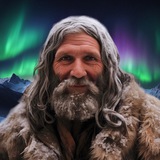
The location where the VK531 sample was found. He is evidence of a late survival of hunter gatherer DNA in the far north of Europe. It’s possible they survived long enough to come into contact with early Sámi migrants, which could explain the high amount of mesolithic European DNA in modern Sámi
❤12
Forwarded from Genos Historia (Samuel Andrews)
New blog post by Davidski on what the HARVARD LAB got wrong about the origins of the Khvalnksy culture.
Dear David, Nick, Iosif...let's set the record straight
https://eurogenes.blogspot.com/2023/01/dear-david-nick-iosiflets-set-record.html
*Btw, the men he is referring to in the noscript are Harvard scientists. He is directing this blog post to them.
Dear David, Nick, Iosif...let's set the record straight
https://eurogenes.blogspot.com/2023/01/dear-david-nick-iosiflets-set-record.html
*Btw, the men he is referring to in the noscript are Harvard scientists. He is directing this blog post to them.
Blogspot
Dear David, Nick, Iosif...let's set the record straight
Almost a decade ago, scientists at the David Reich Lab extracted DNA from the remains of three men from the Khvalynsk II Eneolithic cemetery...
Below are simple but very reliable models for Khvalynsk. They were mostly a 50/50 mix of south migrating EHG’s and Progress eneolithic from the southern steppe region
Chart showing the relationship between early Eurasian samples from before 30,000 years ago
The most interesting aspect is how the Salkhit sample from modern Mongolia shares some DNA with the Yana RHS samples (Ancient North Siberians)
Given the age of the Salkhit sample, this means early West Eurasians were in Eastern Siberia at least 34,000 years ago. In fact, some studies suggest they were there as early as 38,000 years ago
This would also indicate the West Eurasian component in ANS (and later ANE) is Aurignacian in origin, rather than Gravettian
Source for the chart: https://www.researchgate.net/publication/346575040_Denisovan_ancestry_and_population_history_of_early_East_Asians
The most interesting aspect is how the Salkhit sample from modern Mongolia shares some DNA with the Yana RHS samples (Ancient North Siberians)
Given the age of the Salkhit sample, this means early West Eurasians were in Eastern Siberia at least 34,000 years ago. In fact, some studies suggest they were there as early as 38,000 years ago
This would also indicate the West Eurasian component in ANS (and later ANE) is Aurignacian in origin, rather than Gravettian
Source for the chart: https://www.researchgate.net/publication/346575040_Denisovan_ancestry_and_population_history_of_early_East_Asians
👍1
The Bolshoy Oleny Ostrov samples from off the northern coast of the Kola Peninsula are quite interesting. They are dated to around 1,500 BC and represent the earliest known example of Siberian ancestry and Y-DNA N1 in Northern Europe.
This group seems to have left no genetic impact on modern people of the region. Later Siberian migrants, who brought the Finnic languages to Europe, would replace them during the Iron Age
This group seems to have left no genetic impact on modern people of the region. Later Siberian migrants, who brought the Finnic languages to Europe, would replace them during the Iron Age
They were genetically closest to modern West Siberians, but still quite distant due to having higher ANE-rich ancestry (WSHG + EHG) and slight Bronze Age Eastern European admixture
Here are the results of the Levänluhta lake burial samples from Western Finland.
These are the best representatives for early Finnic speakers in Europe. Unfortunately, the soil in Finland is notoriously bad for preserving ancient DNA so we don’t have any other samples to test. We also don’t have any Y-DNA information for these samples…
They were very genetically similar to modern Sámi at a distance of 0.017
These are the best representatives for early Finnic speakers in Europe. Unfortunately, the soil in Finland is notoriously bad for preserving ancient DNA so we don’t have any other samples to test. We also don’t have any Y-DNA information for these samples…
They were very genetically similar to modern Sámi at a distance of 0.017
👍5👎1